



Ankle and foot special tests
These special tests check the integrity of the ankle ligaments, the Achilles tendon, and the plantar fascia. As a PTA, you perform them to collect objective data within the plan of care - document any positive finding and report it to the supervising PT.
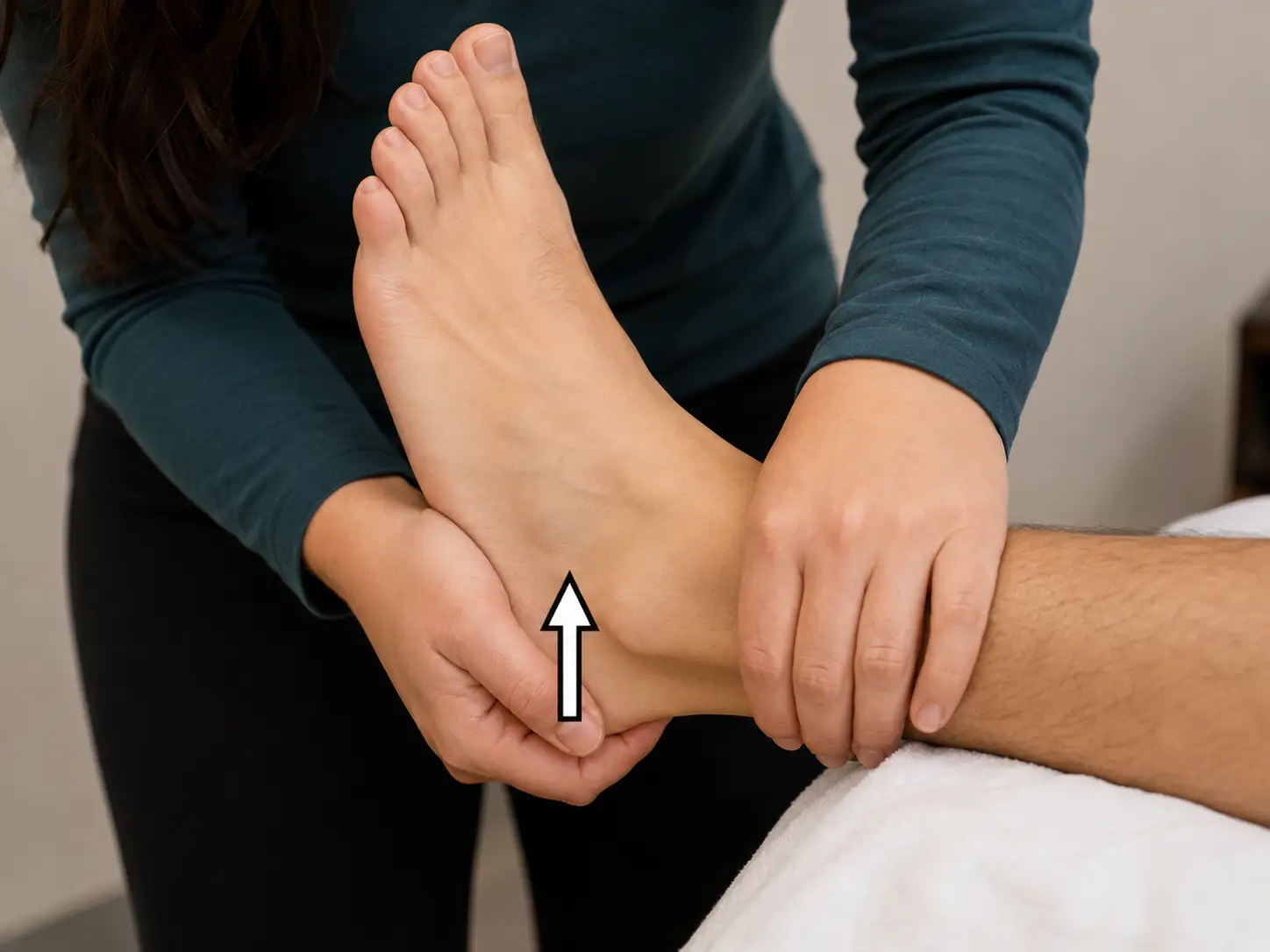
- Anterior drawer test
- Patient supine with foot off the edge of the mat; ankle in 20 degrees of plantarflexion; therapist translates the talus anteriorly while stabilizing the lower leg
- Tests the integrity of the anterior talofibular ligament
- Mechanism: used after an inversion ankle sprain, since the ATFL is the most commonly injured ankle ligament
- Positive: excessive anterior talar translation compared with the uninvolved side, and/or pain
- Patient supine with foot off the edge of the mat; ankle in 20 degrees of plantarflexion; therapist translates the talus anteriorly while stabilizing the lower leg
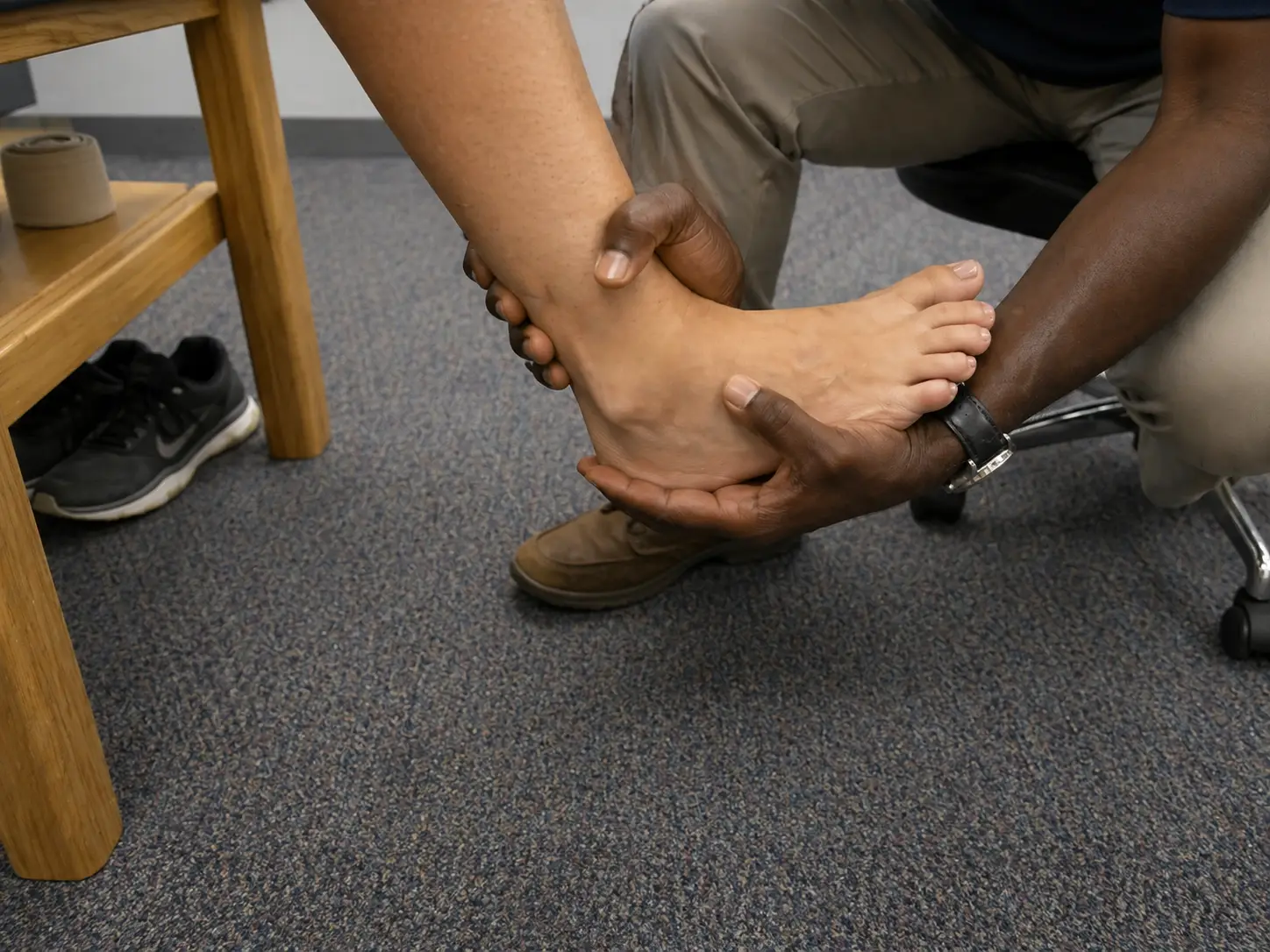
- Talar tilt
- Patient sitting with the knee bent and ankle relaxed in neutral (90 degrees), the position that loads the calcaneofibular ligament (an inversion stress in plantarflexion mainly loads the anterior talofibular ligament instead); therapist stabilizes the distal tibia and moves the foot into adduction (calcaneofibular ligament) and abduction (deltoid ligament)
- Tests the integrity of the calcaneofibular and deltoid ligaments
- Inversion stresses the calcaneofibular ligament, the typical ankle sprain mechanism; eversion stresses the deltoid ligament, a less common injury
- Positive: laxity compared with the uninvolved side, and/or pain
- Patient sitting with the knee bent and ankle relaxed in neutral (90 degrees), the position that loads the calcaneofibular ligament (an inversion stress in plantarflexion mainly loads the anterior talofibular ligament instead); therapist stabilizes the distal tibia and moves the foot into adduction (calcaneofibular ligament) and abduction (deltoid ligament)
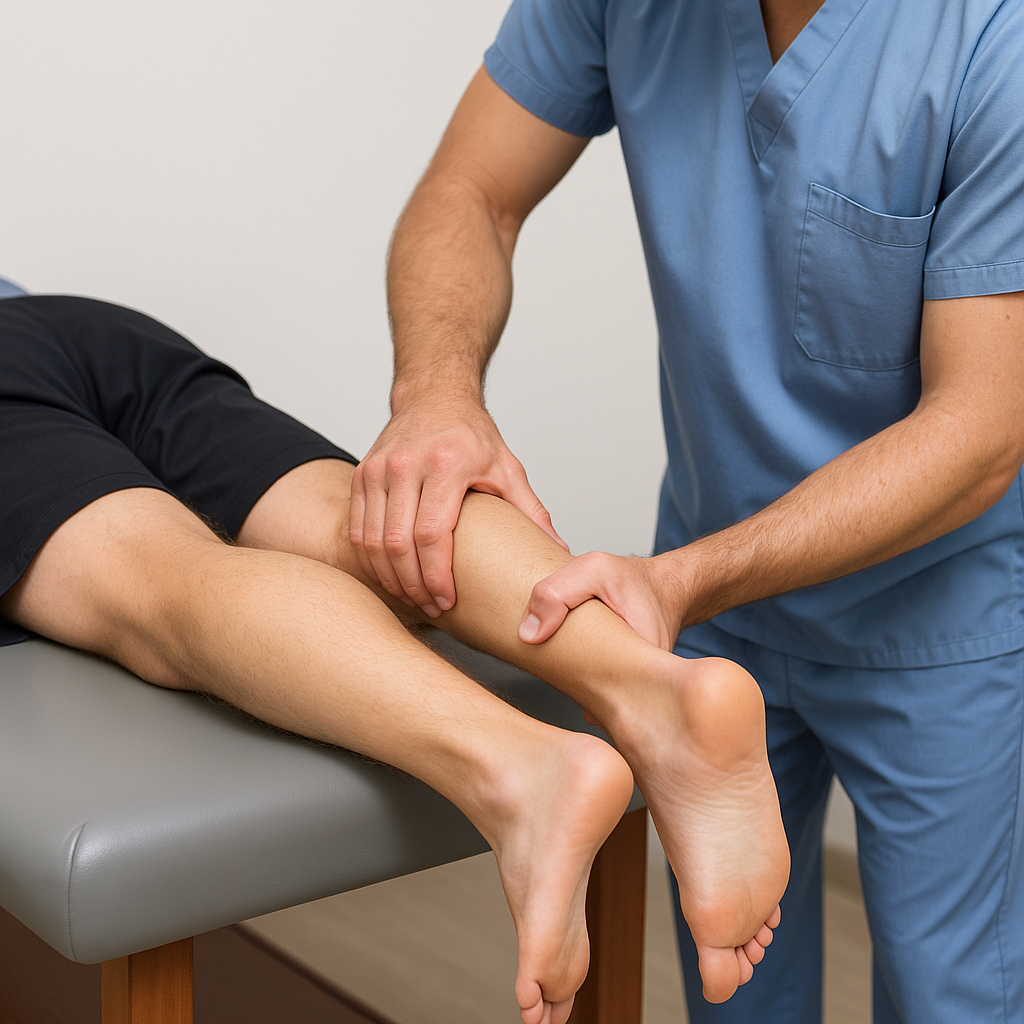
- Thompson’s test
- Patient prone with foot off the edge of the mat; the therapist squeezes the calf muscle; normally the ankle plantarflexes
- Tests the integrity of the Achilles tendon
- Mechanism: a sudden push-off or jumping injury with a reported “pop” and difficulty bearing weight
- Positive: no movement of the foot
- Red flag: suggests Achilles tendon rupture - stop and report to the supervising PT for prompt physician or orthopedic referral
- Patient prone with foot off the edge of the mat; the therapist squeezes the calf muscle; normally the ankle plantarflexes
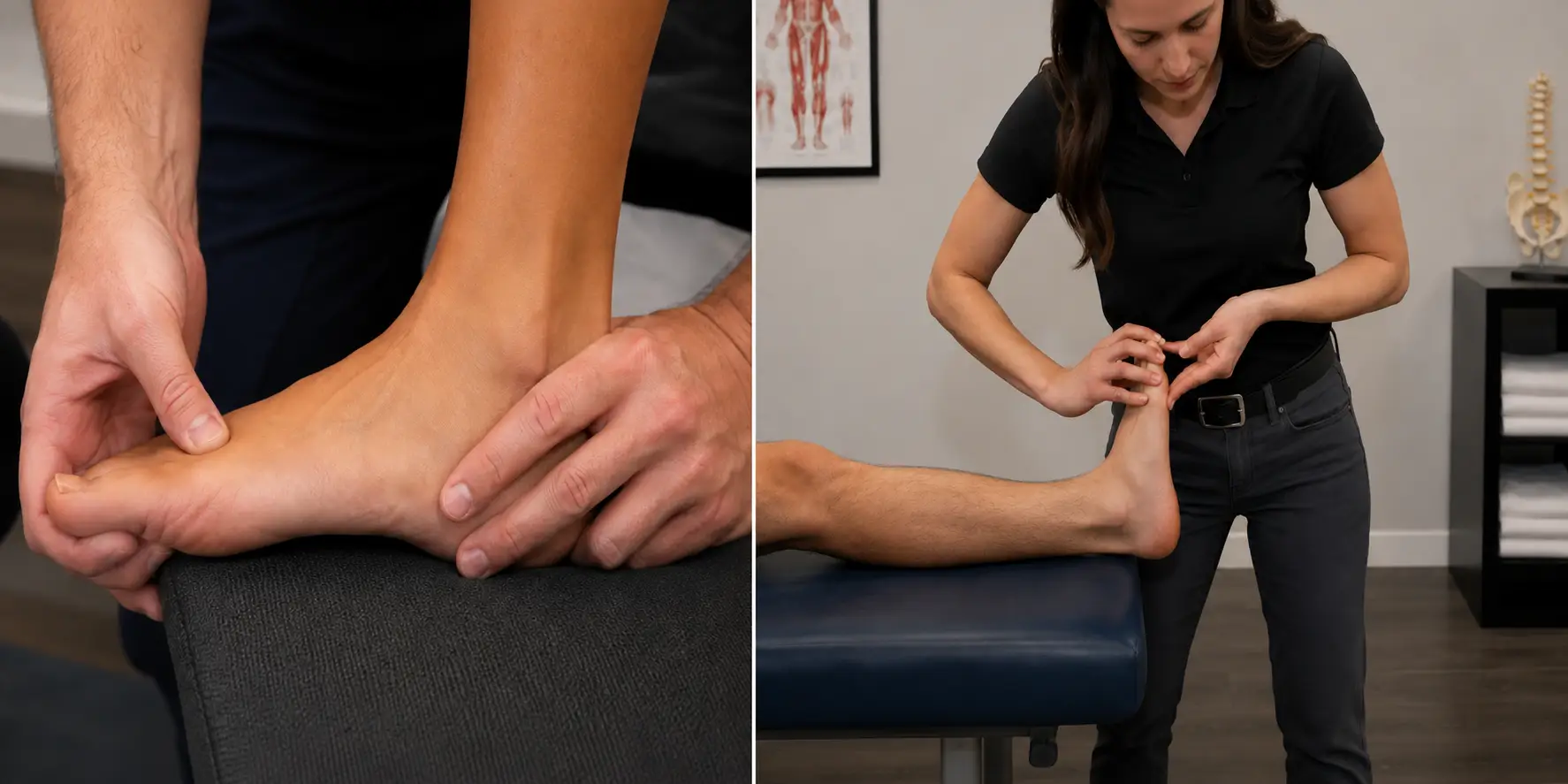
- Windlass test
- Weight bearing: patient stands with toes over the edge of a step while the examiner passively dorsiflexes the first metatarsophalangeal (MTP), or big toe, joint
- Non-weight bearing: patient seated with knee flexed to 90 degrees while the examiner stabilizes the ankle and passively dorsiflexes the first MTP joint
- Both positions test for the presence of plantar fasciitis
- Mechanism: a common cause of first-step morning heel pain
- Positive: reproduction of heel/plantar fascia pain at end-range great-toe extension
The pathophysiology, clinical presentation, and intervention considerations for these lower extremity conditions are covered in the next chapter, Comparing clinical presentation and interventions for lower extremity.