



Shoulder impingement, labral, and biceps tests
These shoulder tests address impingement, the acromioclavicular joint, the labrum, and the biceps tendon; as with all special tests, the supervising physical therapist selects and interprets them.
Impingement tests
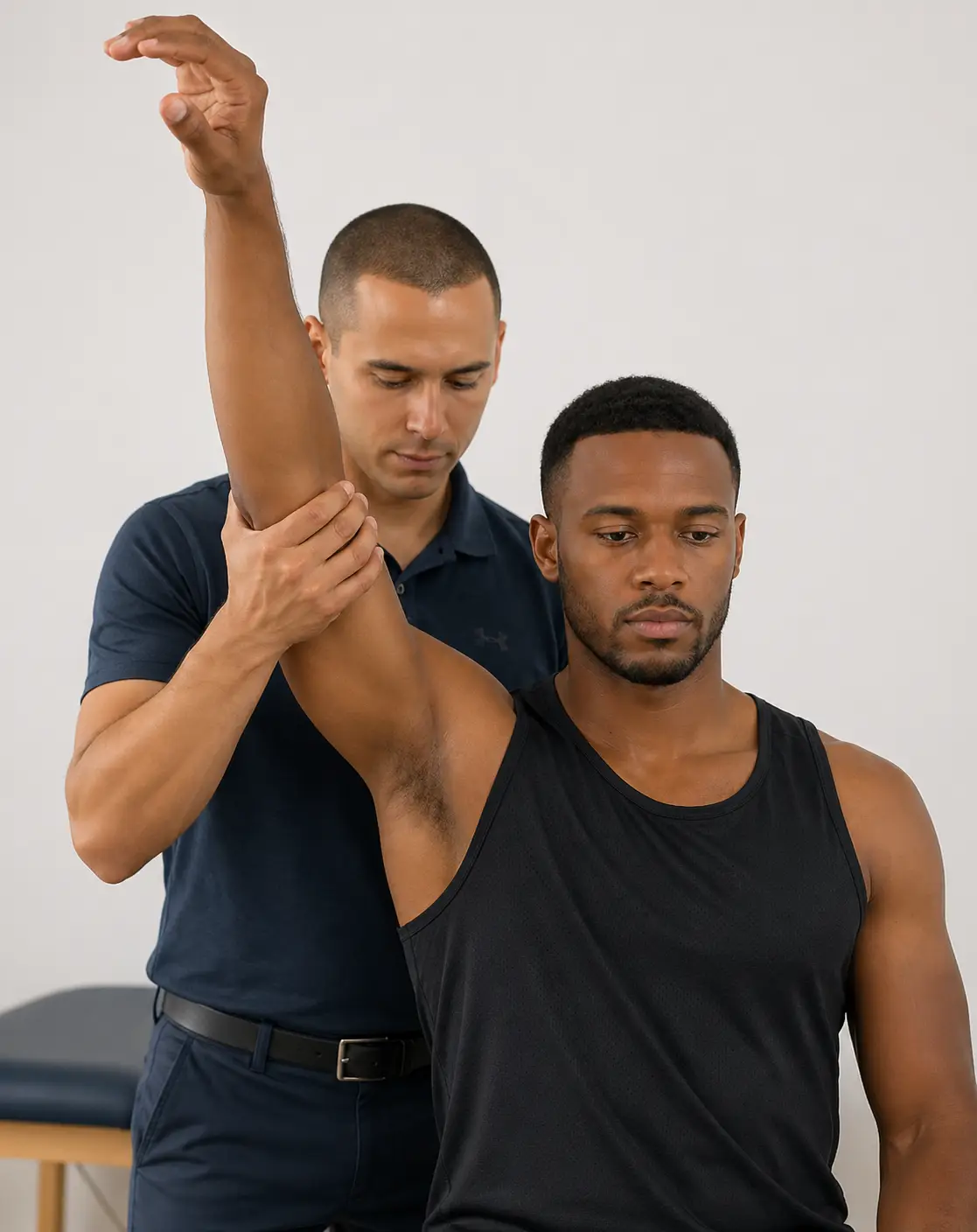
- Neer’s test
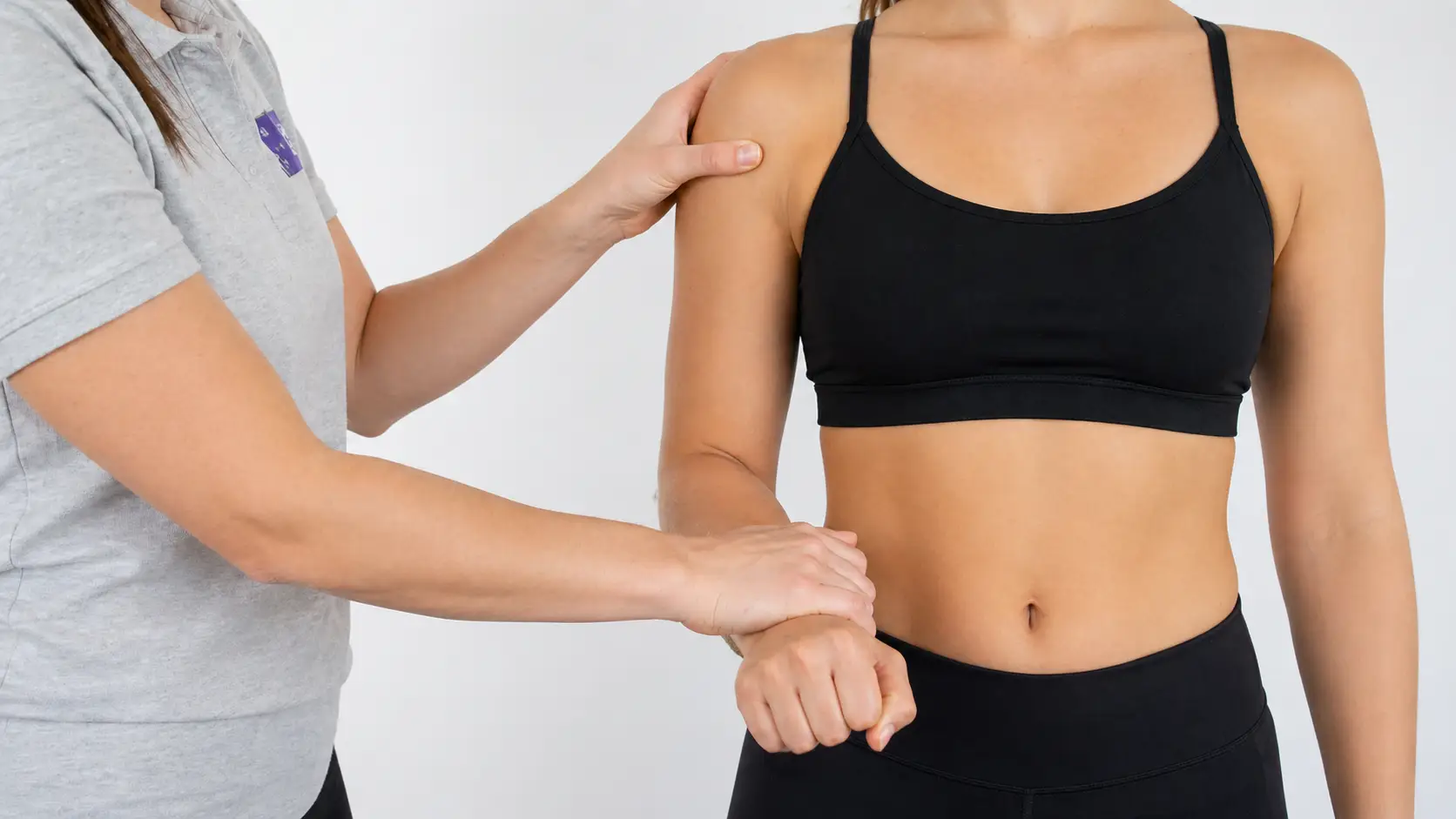
- The patient sits comfortably while the examiner stands behind them, stabilizing the patient’s scapula with one hand to prevent scapular movement. The examiner passively flexes the patient’s arm forward while internally rotating it, bringing the greater tuberosity of the humerus under the acromion.
- Tests for impingement
- Positive: the patient reports pain or tenderness during arm movement, particularly in the anterior or lateral shoulder
- PTA scope of practice: if a new positive Neer’s sign appears during a treatment session, stop the provoking activity (such as an overhead exercise) and report the finding to the supervising PT
- The patient sits comfortably while the examiner stands behind them, stabilizing the patient’s scapula with one hand to prevent scapular movement. The examiner passively flexes the patient’s arm forward while internally rotating it, bringing the greater tuberosity of the humerus under the acromion.
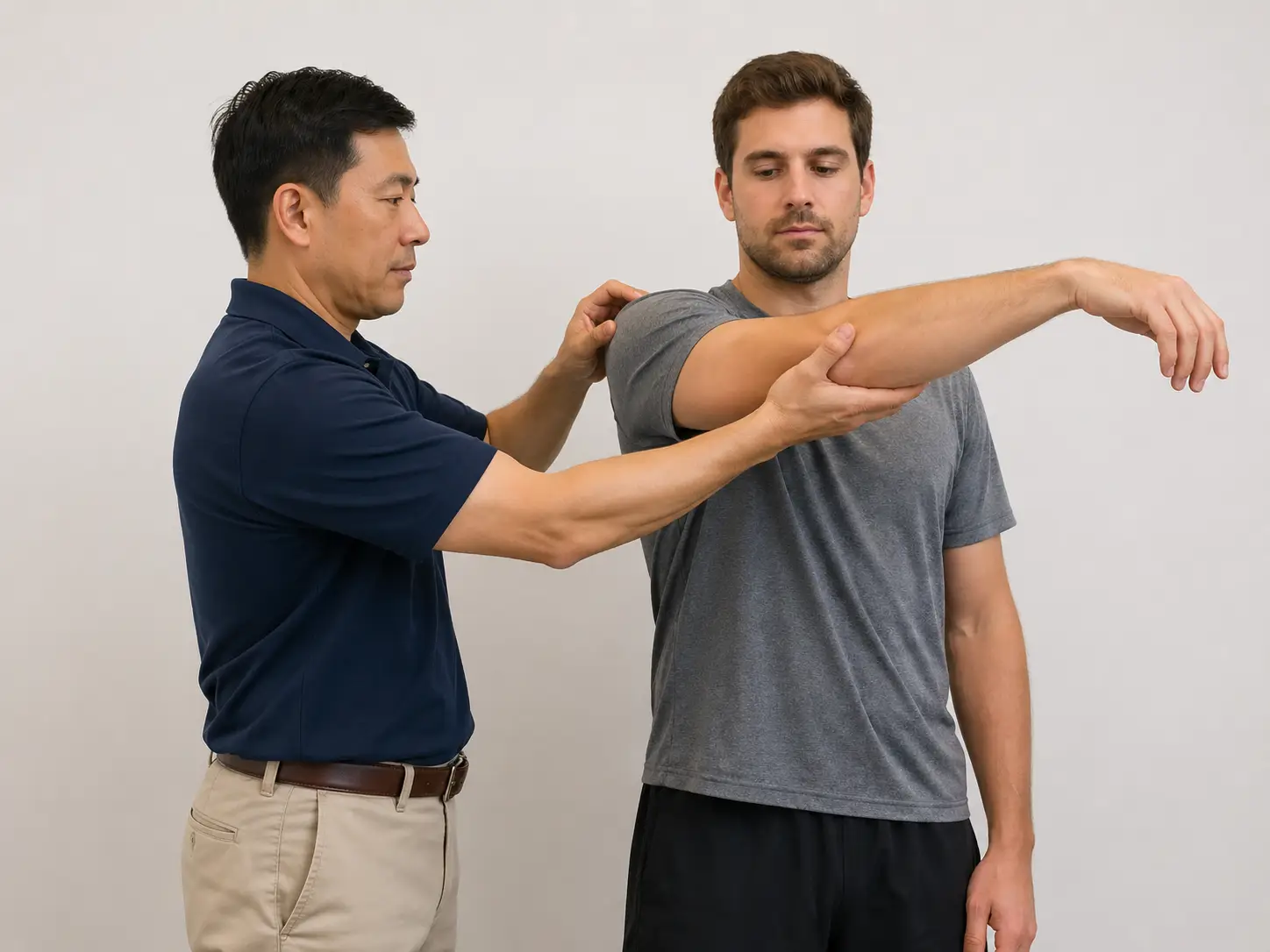
- Hawkins-Kennedy test
- A similar impingement test: the patient sits with the shoulder and elbow flexed to 90 degrees while the examiner internally rotates the arm
- Positive: pain in the anterior shoulder during internal rotation
- A similar impingement test: the patient sits with the shoulder and elbow flexed to 90 degrees while the examiner internally rotates the arm
Acromioclavicular (AC) joint test
- Horizontal adduction test
- Patient standing with shoulder flexed to 90 degrees and adducted across the chest
- Positive: localized pain over the AC joint
- Patient standing with shoulder flexed to 90 degrees and adducted across the chest
SLAP (superior labrum anterior to posterior) lesion tests
- O’Brien’s test
- The patient stands or sits with the affected arm flexed to 90 degrees and adducted 10-15 degrees; the patient internally rotates the shoulder while the examiner applies downward pressure on the arm and the patient resists; repeated with the arm in external rotation
- Positive: pain or a clicking noise during internal rotation, with symptoms relieved during external rotation
- Where the pain is felt helps distinguish the two: pain on top of the shoulder over the AC joint suggests AC joint pathology, while pain or a painful click deep inside the shoulder suggests a labral (SLAP) lesion
- The PT interprets which structure is involved; the PTA’s role is to report the location and quality of the symptoms
- The patient stands or sits with the affected arm flexed to 90 degrees and adducted 10-15 degrees; the patient internally rotates the shoulder while the examiner applies downward pressure on the arm and the patient resists; repeated with the arm in external rotation
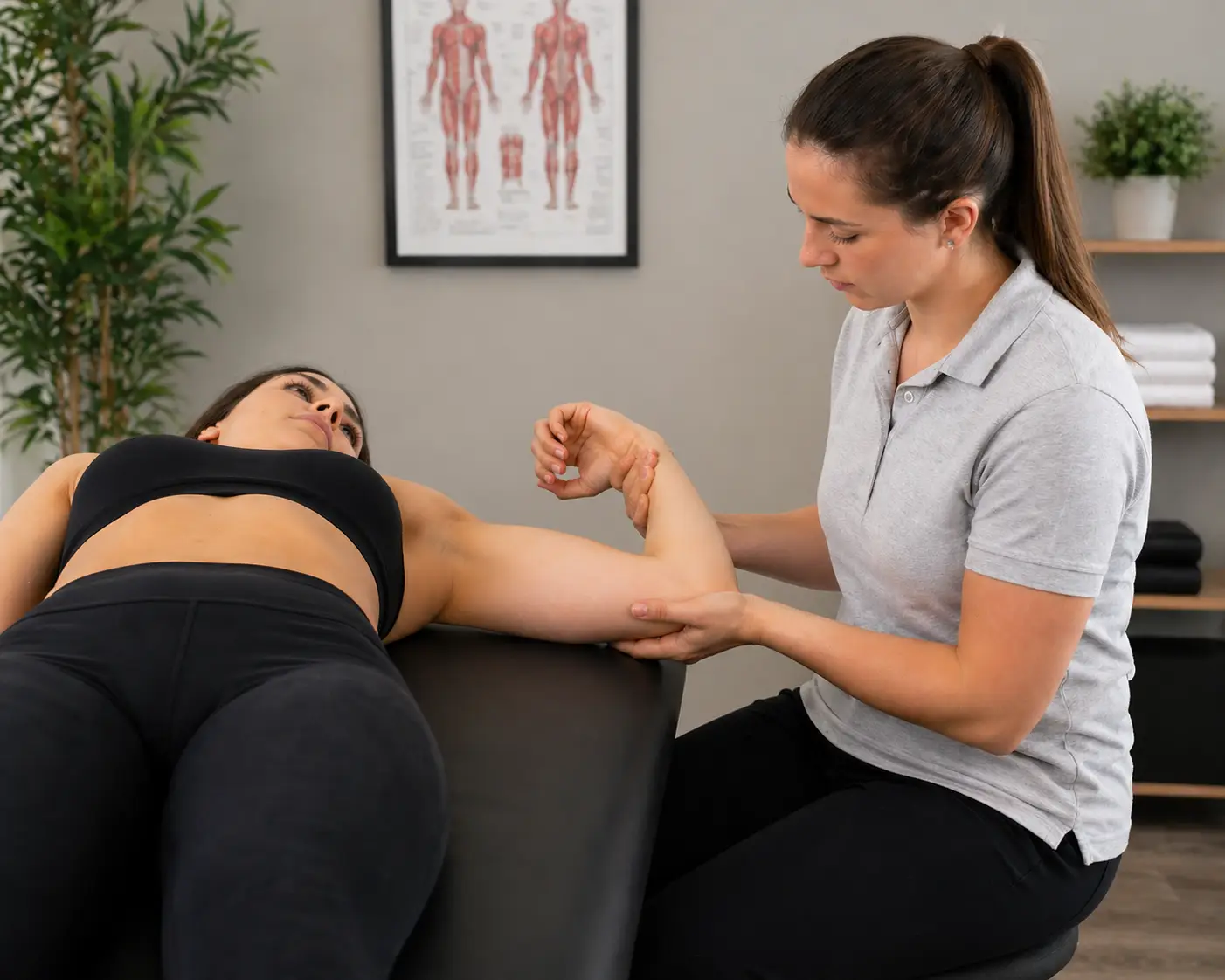
- Biceps load II test
- Patient supine with the shoulder abducted to 120 degrees, elbow flexed to 90 degrees, forearm supinated, and the shoulder fully externally rotated. The patient then flexes the elbow against the examiner’s resistance.
- Positive: pain is produced or increased during resisted elbow flexion (suggests a SLAP lesion)
- Patient supine with the shoulder abducted to 120 degrees, elbow flexed to 90 degrees, forearm supinated, and the shoulder fully externally rotated. The patient then flexes the elbow against the examiner’s resistance.
Biceps tendon tests (can also be positive with SLAP lesions)
- Yergason’s test
- Patient sitting with the shoulder in a neutral position against the trunk, elbow at 90 degrees, forearm pronated; examiner resists supination of the forearm and external rotation of the shoulder
- Tests for transverse humeral ligament involvement, bicipital tendonitis, and SLAP lesions
- Positive: the biceps tendon of the long head becomes palpable outside the bicipital groove, or pain is reproduced
- Patient sitting with the shoulder in a neutral position against the trunk, elbow at 90 degrees, forearm pronated; examiner resists supination of the forearm and external rotation of the shoulder
- Speed’s test
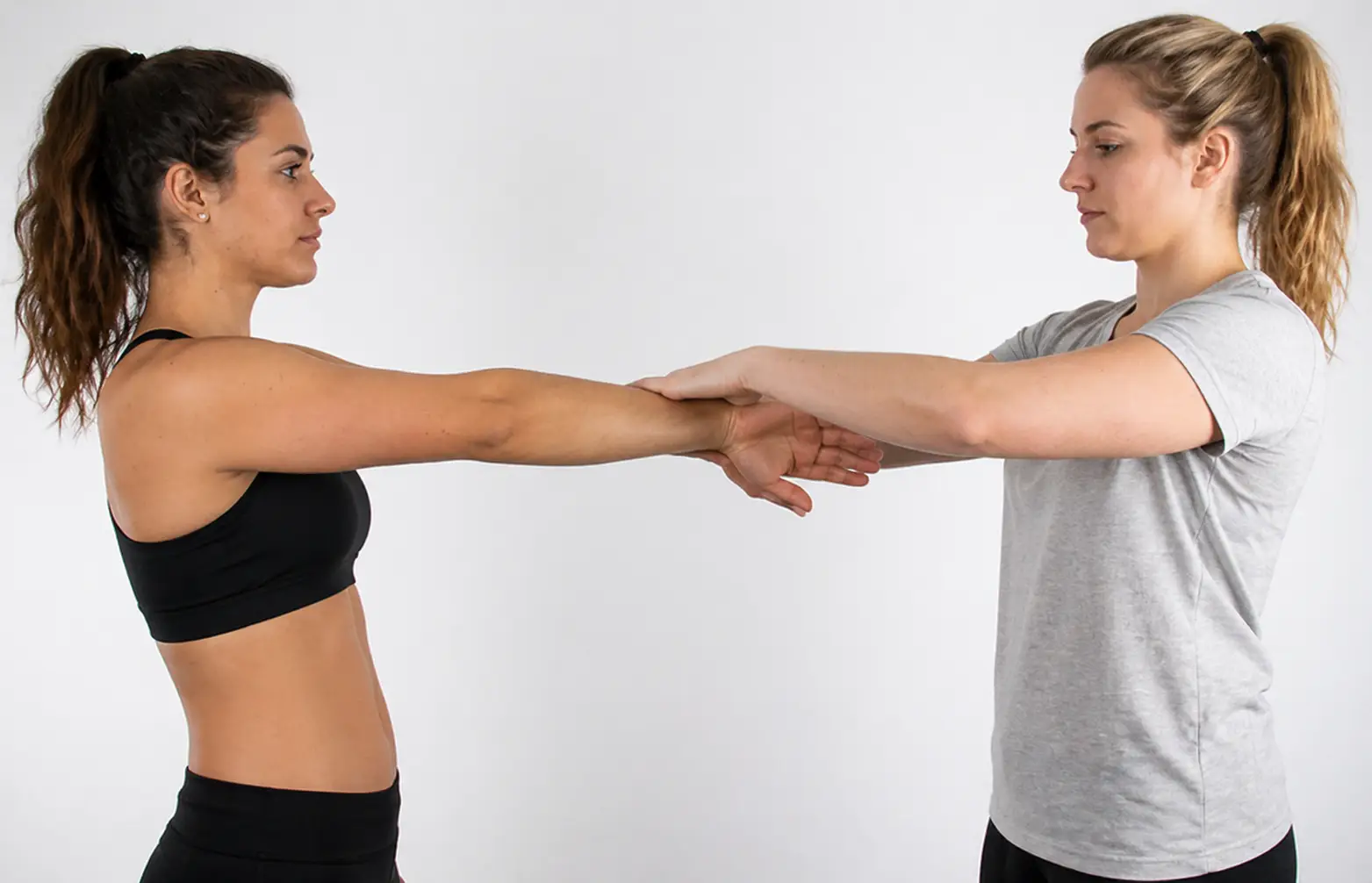
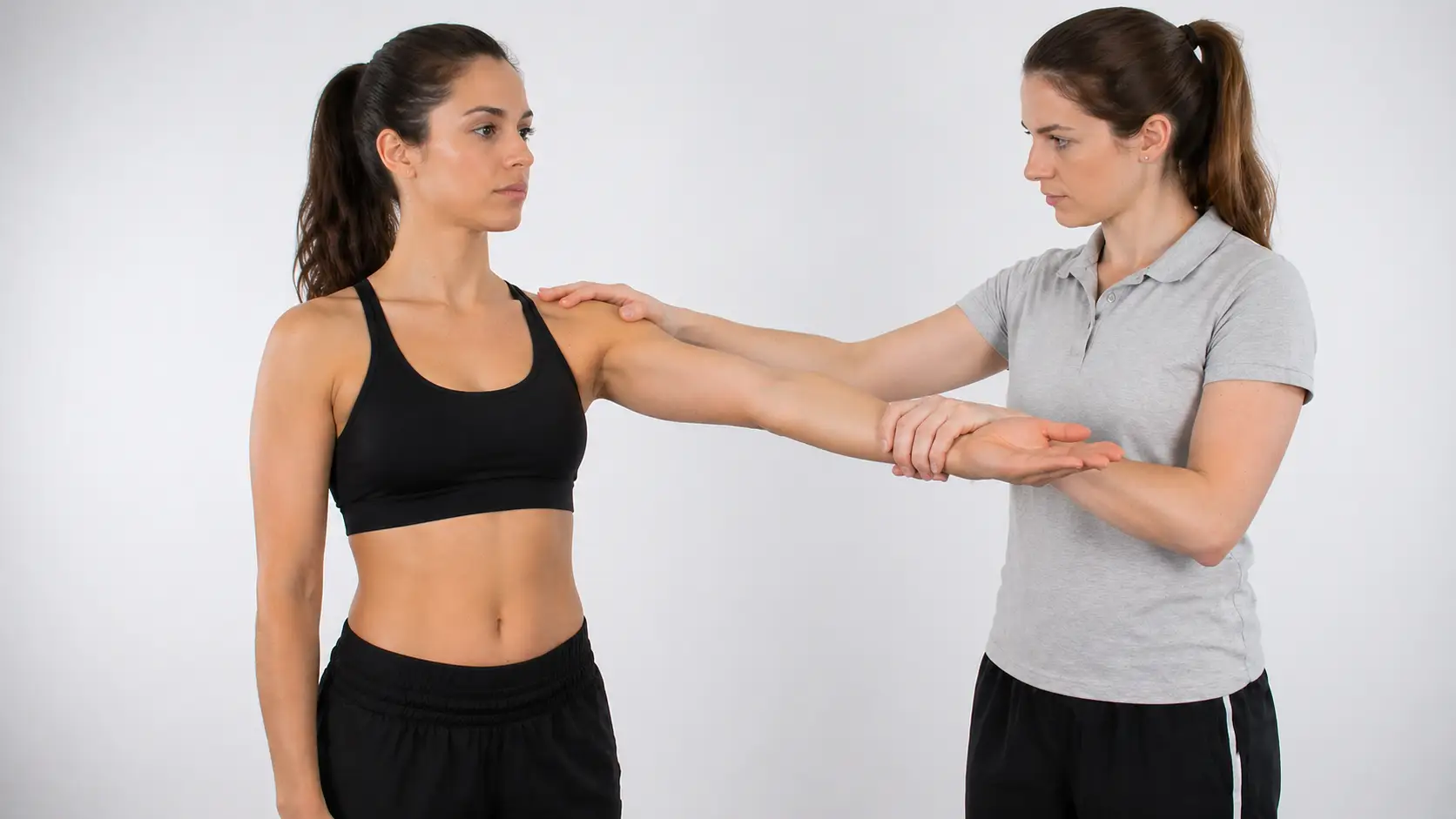
- Patient sitting or standing with the shoulder forward flexed to about 90 degrees, elbow extended, and forearm supinated; examiner applies downward pressure at the forearm while the patient resists further shoulder flexion
- Tests for bicipital tendonitis and SLAP lesions
- Positive: pain in the bicipital groove at the anterior shoulder
- Patient sitting or standing with the shoulder forward flexed to about 90 degrees, elbow extended, and forearm supinated; examiner applies downward pressure at the forearm while the patient resists further shoulder flexion
Telling them apart: Yergason’s = elbow bent to 90°, resisted supination; Speed’s = elbow straight, resisted shoulder flexion. Both can also be positive with SLAP lesions, so a positive result is passed to the PT to interpret alongside O’Brien’s and biceps load II.