



Anxiety and stress-related disorders (PTSD, OCD)
Introduction
Anxiety is a universal human response to stress, but in clinical settings it can escalate quickly, impair decision-making, and heighten safety risks. A crisis occurs when a person’s coping mechanisms become overwhelmed, leading to emotional disequilibrium and impaired functioning. Trauma adds another layer; past experiences of harm or threat can shape how clients behave, communicate, and respond to care.
Nurses must be able to recognize anxiety early, support clients in crisis, and deliver trauma-informed care that avoids retraumatization and fosters psychological safety. NCLEX frequently tests this skill set through communication scenarios, prioritization questions, and mental health safety items.
Learning objectives
By the end of this section, you should be able to:
- Differentiate mild, moderate, severe, and panic-level anxiety.
- Identify physiological and behavioral signs of escalating anxiety.
- Apply evidence-based interventions to de-escalate anxiety.
- Understand types of crisis and their phases.
- Implement trauma-informed care principles.
- Select the most therapeutic, safe nursing actions in NCLEX-style scenarios.
Understanding anxiety
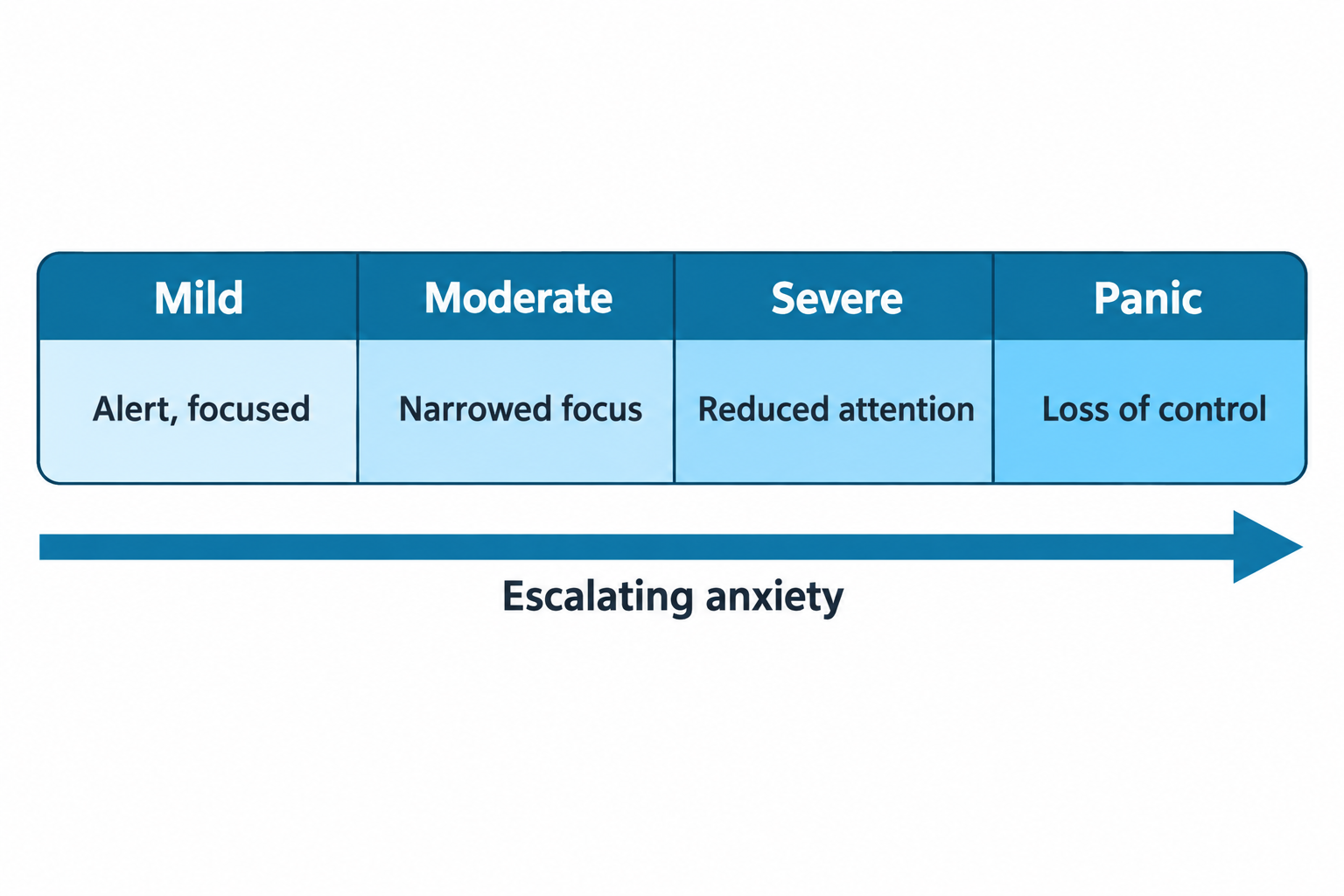
Anxiety exists on a continuum, from everyday stress to panic-level disruption.
Levels of anxiety
Mild anxiety
- Heightened awareness
- Improved focus
- Restlessness
Interventions: Teaching, problem-solving, and grounding techniques.
Moderate anxiety
- Narrowed perceptual field
- Shakiness, rapid speech
- Selective inattention
Interventions: Short, simple sentences; help client focus on one task; reduce stimuli.
Severe anxiety
- Greatly reduced attention
- Feeling of doom
- Trembling, tachycardia
- Confusion
Interventions: Remain calm; ensure safety; reduce stimuli; use reassurance and grounding.
Panic level
- Inability to communicate
- Transient perceptual distortions may occur (not true hallucinations or delusions, and not indicative of psychosis)
- Hyperventilation, chest pain
- Risk for injury
Interventions: Stay with client to prevent feelings of abandonment; provide gentle, firm commands; prioritize physiological safety; assess for suicidal ideation and remove harmful objects; notify the provider if medication may be needed; avoid teaching or reasoning.
Crisis: types and phases
A crisis develops when a person’s usual coping strategies can’t manage a stressor, leading to the emotional disequilibrium described above. Crises generally fall into three types:
- Maturational (developmental) crisis: triggered by normal life transitions, such as marriage, parenthood, or retirement.
- Situational crisis: triggered by an unanticipated external event, such as job loss, divorce, or a new medical diagnosis.
- Adventitious crisis: triggered by an unexpected, often traumatic event outside the person’s control, such as a natural disaster, violent crime, or mass casualty event.
Crisis intervention theory describes four phases of escalation:
- Anxiety rises, and the person tries familiar coping methods.
- Anxiety continues to rise as familiar coping methods fail.
- Anxiety becomes severe, and the person tries new problem-solving approaches or avoidance behaviors.
- If nothing resolves the anxiety, the person reaches the actual crisis state, marked by disorganized behavior and impaired functioning.
Example: Applying crisis intervention
A 45-year-old client arrives in the emergency department after her house burned down overnight. She is pacing, speaking rapidly, and says, “I don’t know what to do, everything is gone.”
This is an adventitious crisis — an unexpected, traumatic event outside the client’s control. The nurse’s priority is to remain with the client, use short and calm statements, and help her identify one immediate, concrete next step (such as contacting a family member) rather than trying to address every loss at once.
Answer: Adventitious crisis; prioritize safety, calm presence, and one manageable task at a time.
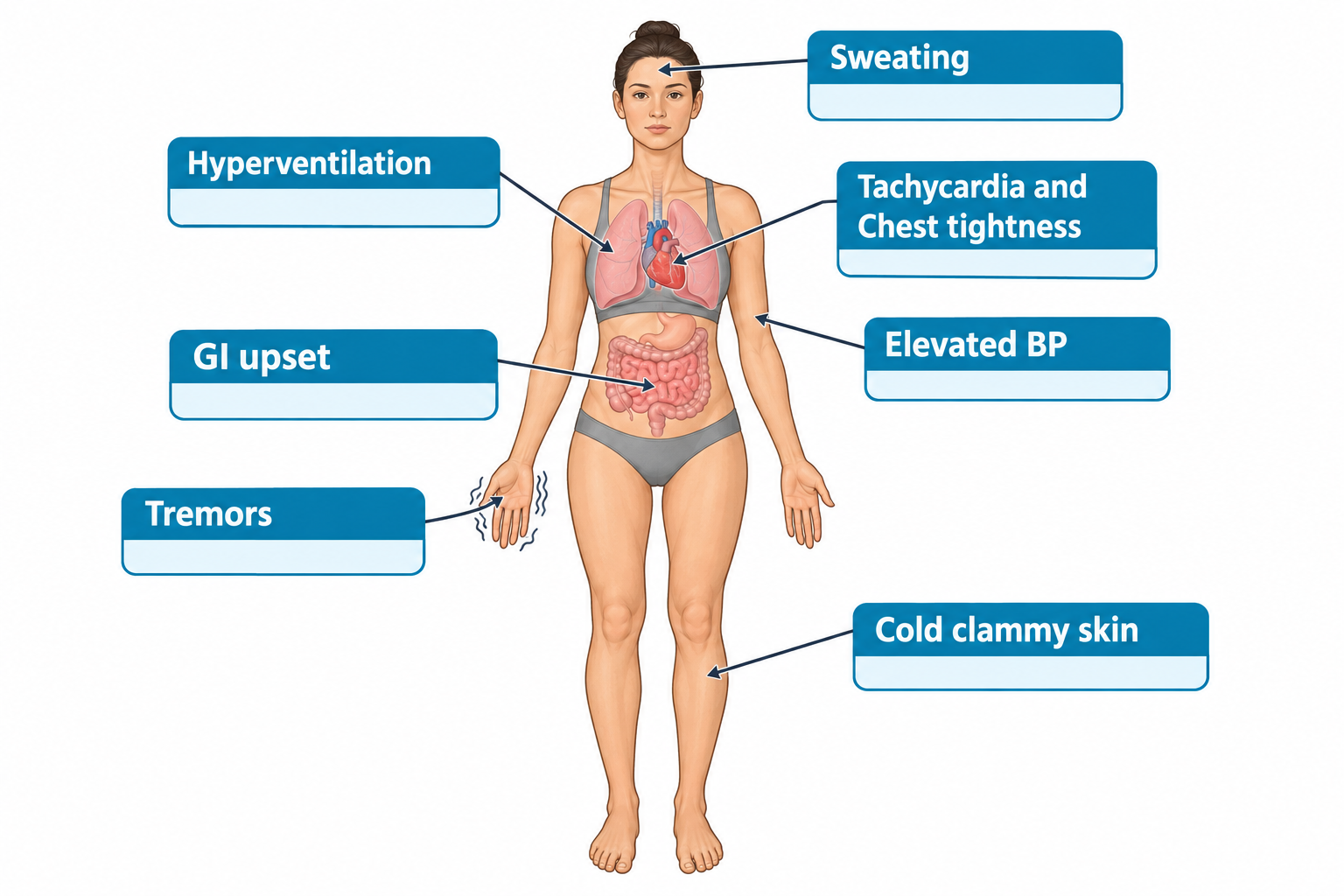
Physiological signs of escalating anxiety
- Tachycardia
- Hyperventilation
- Increased blood pressure
- Sweating
- Tremors
- Gastrointestinal upset
- Cold, clammy skin
- Chest tightness
NCLEX often embeds these clues in crisis or safety questions.
Nursing interventions for anxiety
Therapeutic strategies
- Encourage slow, controlled breathing
- Validate feelings without judgment
- Avoid asking “why” questions
Environmental strategies
- Maintain quiet environment
- Provide personal space
- Control noise and unnecessary interruptions
Clinical vignette: A 29-year-old woman becomes visibly distressed during a physical exam, pulling away and shaking. Instead of insisting on the assessment, the nurse pauses and says gently, “I want to make sure you feel safe. Would you like me to explain each step first, or would you prefer a break?” The client begins to breathe more steadily and chooses to proceed slowly with explanations. The nurse’s trauma-informed approach prevents retraumatization and builds trust.
Overview of anxiety and stress-related disorders
Anxiety-related disorders are among the most commonly diagnosed psychiatric conditions. They vary in severity but share a core feature: persistent fear or worry that interferes with functioning.
Generalized anxiety disorder (GAD)
- Chronic, excessive worry lasting 6 months or more.
- Symptoms: restlessness, fatigue, irritability, muscle tension, sleep disturbance, difficulty concentrating.
- Clients may worry about health, finances, family, or minor details constantly.
- Often coexists with depression.
Panic disorder
- Sudden episodes of intense fear (panic attacks) with chest pain, shortness of breath, dizziness, or palpitations.
- Client may fear losing control or dying.
- Symptoms peak within minutes and often occur unexpectedly.
Phobias
- Irrational fears triggered by specific objects, situations, or activities (e.g., spiders, heights, flying).
- Avoidance behavior is common.
- Treatment often includes exposure therapy and desensitization.
Post-traumatic stress disorder (PTSD)
A trauma- and stressor-related disorder that develops after exposure to a life-threatening or terrifying event.
Symptoms of PTSD
- Intrusive thoughts or flashbacks
- Nightmares
- Avoidance of triggers (places, people, smells)
- Hypervigilance or exaggerated startle response
- Emotional numbness or detachment
PTSD may emerge weeks to months after the trauma. It’s common in veterans, abuse survivors, and those who’ve experienced violence or disasters.
Obsessive-compulsive disorder (OCD)
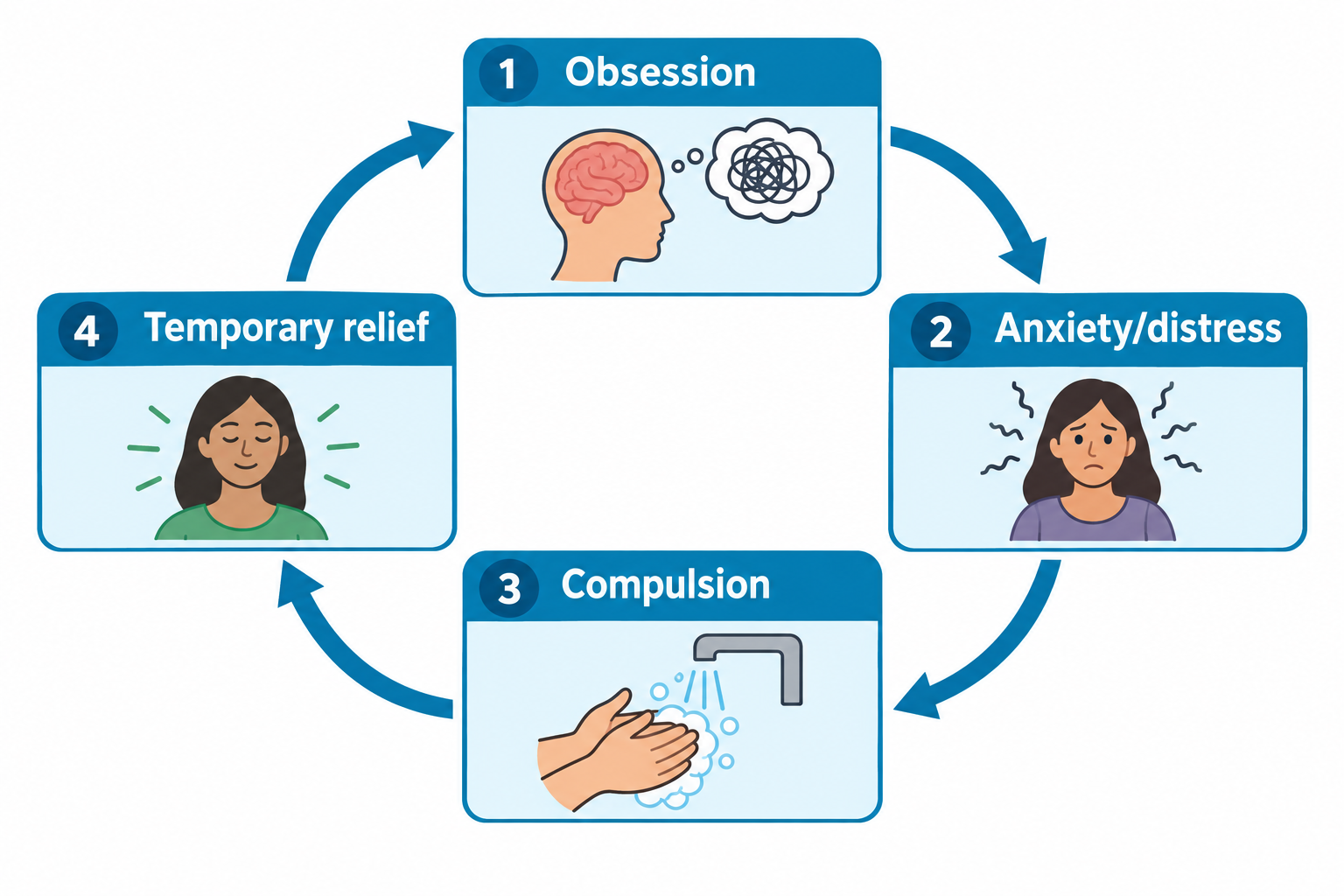
OCD is characterized by obsessions (recurrent intrusive thoughts) and compulsions (repetitive behaviors aimed at reducing anxiety).
- Obsessions: fear of contamination, need for symmetry, intrusive violent thoughts.
- Compulsions: excessive handwashing, checking, repeating rituals.
- Clients often recognize their thoughts and behaviors are irrational, but feel powerless to stop them.
- To meet diagnostic criteria, obsessions or compulsions must be time-consuming (more than 1 hour per day) or cause significant distress or functional impairment.
Clinical vignette: A 31-year-old veteran is admitted with insomnia, irritability, and nightmares. He avoids crowds and startles easily. He reports daily flashbacks to combat. The nurse recognizes symptoms of PTSD and ensures a quiet room, therapeutic support, and trauma-informed care.
Nursing interventions for anxiety, PTSD, and OCD
Assessment
- Assess physical symptoms (e.g., increased HR, GI issues, insomnia).
- Observe behaviors such as avoidance, hypervigilance, or ritualistic acts.
- Inquire gently about trauma history without pressuring disclosure.
- Screen for suicidal ideation or self-harm.
Interventions
- Establish calm, predictable routines.
- Use short, simple instructions.
- Validate fears without reinforcing them.
- Avoid forcing exposure to trauma triggers or compulsive interruption.
- Encourage gradual exposure (for phobias) and structured therapies (CBT, EMDR).
- Reinforce coping strategies such as slow, controlled breathing, grounding, or journaling.
- Provide quiet space during panic or flashback episodes.
Therapeutic communication
- Acknowledge distress: “This must feel overwhelming for you.”
- Avoid dismissive reassurance: “You’ll be fine.”
- Focus on safety, control, and empowerment.
- Avoid touching clients during flashbacks or high anxiety unless clearly permitted.
Medications commonly used
- SSRIs (e.g., sertraline, fluoxetine): first-line for GAD, PTSD, OCD.
- Benzodiazepines (e.g., lorazepam, alprazolam): short-term use only.
- Beta-blockers (e.g., propranolol): help with physical symptoms (e.g., performance anxiety).
- Buspirone: anti-anxiety agent without sedative effects.
- Antipsychotics or mood stabilizers: used adjunctively for severe OCD or PTSD.
Trauma-informed care principles
- Promote safety and predictability.
- Avoid retraumatization (e.g., invasive questioning, loss of control).
- Respect autonomy and provide choices.
- Maintain clear, consistent communication.