


Achievable logoAchievable logo
NCLEX
Sign in
Sign up
Purchase
Textbook
Practice exams
Support
How it works
Exam catalog
Mountain with a flag at the peak
Textbook
Introduction
1. Safe and effective care environment
2. Health promotion and maintenance
3. Psychosocial Integrity
3.1 Mental health concepts
3.2 Psychiatric disorders
3.2.1 Mood disorders (depression and bipolar)
3.2.2 Anxiety and stress-related disorders (PTSD, OCD)
3.2.3 Psychotic disorders
3.2.4 Personality disorders
3.2.5 Substance use and addiction
3.2.6 Eating disorders
3.3 Crisis intervention and safety
3.4 End-of-life care and grief counseling
3.5 Behavioral Interventions and Safety Precautions
4. Physiological Integrity
Wrapping up
Achievable logoAchievable logo
3.2.6 Eating disorders
Achievable NCLEX
3. Psychosocial Integrity
3.2. Psychiatric disorders
Our NCLEX course is currently in development and is a work-in-progress.

Eating disorders

6 min read
Font
Discuss
Share
Feedback

Introduction

Eating disorders are serious psychiatric conditions characterized by disturbances in eating behaviors, body image, and weight regulation. They carry some of the highest morbidity and mortality rates among mental health disorders due to medical complications, electrolyte imbalances, and cardiac instability.

On the NCLEX, eating disorders are tested through physiological risk recognition, safety prioritization, therapeutic communication, and nutrition management rather than diagnostic labels. Nurses must identify life-threatening complications early and respond with calm, structured, and supportive care.

Learning objectives

By the end of this section, you should be able to:

  • Differentiate common eating disorders based on behavior patterns.
  • Recognize medical and psychological assessment findings.
  • Identify life-threatening complications and prioritize safety.
  • Apply therapeutic communication strategies.
  • Support nutritional rehabilitation and client education.
  • Answer NCLEX-style questions involving eating disorders.

Overview of eating disorders

Eating disorders involve maladaptive behaviors related to food intake, weight control, and body perception.

Common eating disorders

  • Anorexia nervosa
  • Bulimia nervosa
  • Binge-eating disorder
alt_text
//////Caption: Comparison of the major eating disorders.
Illustration type: Comparison infographic
Illustration note: An infographic comparing anorexia nervosa, bulimia nervosa, and binge-eating disorder, highlighting their defining behaviors, typical weight patterns, compensatory behaviors, and major medical risks.///////
Definitions
Anorexia nervosa
An eating disorder marked by restriction of energy intake, intense fear of gaining weight or becoming fat, and disturbance in body image, resulting in significantly low body weight.
Bulimia nervosa
An eating disorder involving recurrent binge eating followed by compensatory behaviors such as self-induced vomiting, laxative misuse, fasting, or excessive exercise. Clients often have normal or near-normal body weight.
Binge-eating disorder
Recurrent episodes of binge eating without regular compensatory behaviors. Many clients are overweight or obese, but binge-eating disorder can occur at any body weight.
Refeeding syndrome
This is a life-threatening complication marked by electrolyte shifts, especially hypophosphatemia, during nutritional rehabilitation.

Anorexia nervosa

Anorexia nervosa has one of the highest mortality rates of any psychiatric disorder due to medical complications of starvation and an increased risk of suicide.

Assessment findings

  • Significantly low body weight relative to age, sex, developmental trajectory, and physical health. BMI may be used to assess severity in adults but is not, by itself, diagnostic of anorexia nervosa.
  • Intense fear of gaining weight
  • Distorted body image
  • Bradycardia
  • Hypotension
  • Hypothermia
  • Lanugo hair
  • Dry skin and brittle nails
  • Electrolyte imbalances
  • Amenorrhea may occur in menstruating clients but is not required for diagnosis.
alt_text
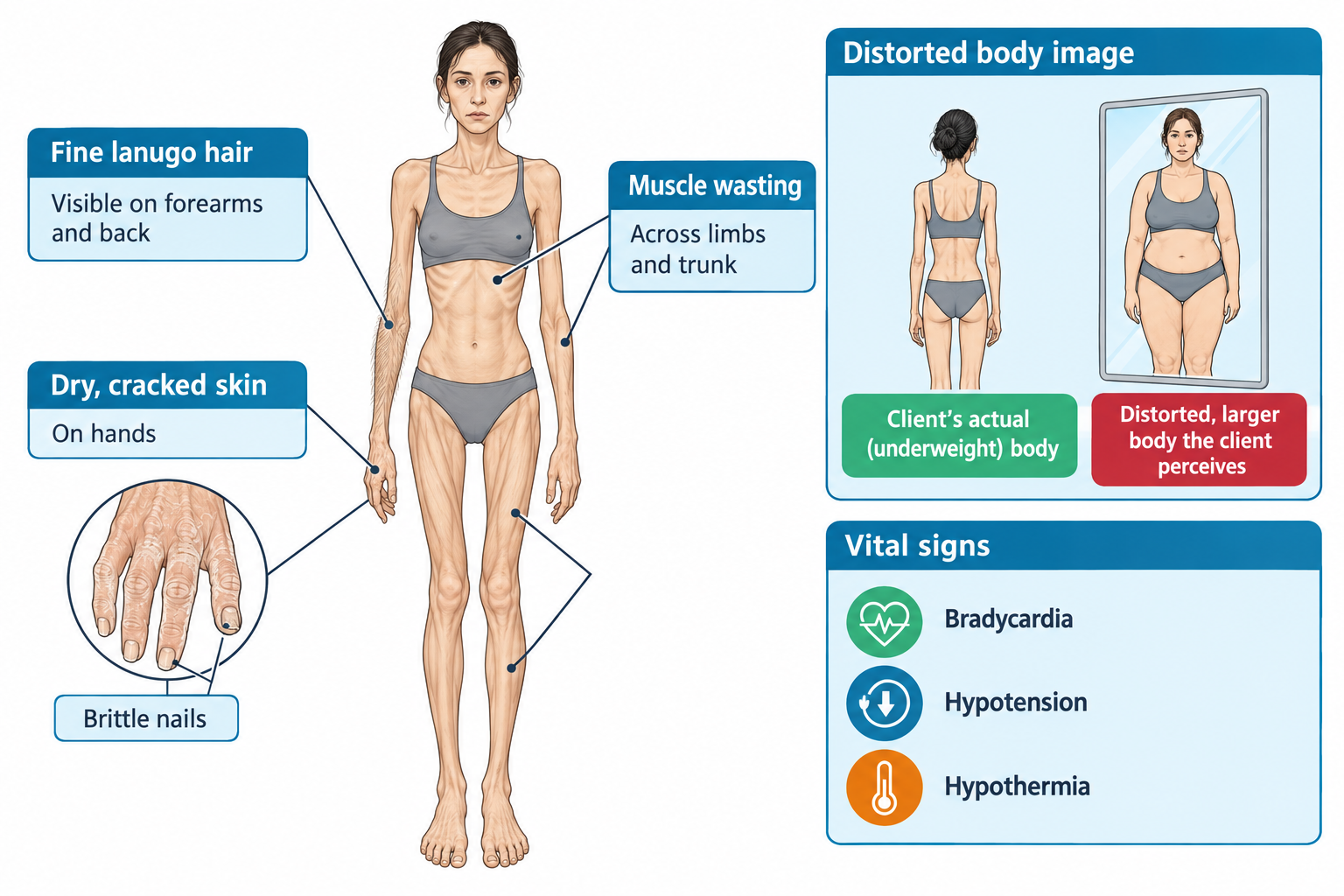
//////Caption: Common physical and psychological findings in anorexia nervosa.
Illustration type: Human body infographic
Illustration note: A labeled illustration showing common manifestations of anorexia nervosa, including severe weight loss, lanugo hair, dry skin, brittle nails, bradycardia, hypotension, hypothermia, muscle wasting, amenorrhea (where applicable), and distorted body image.///////

Nursing priorities

  • Monitor vital signs closely
  • Assess for cardiac dysrhythmias
  • Monitor electrolytes
  • Supervise meals as ordered
  • Restrict exercise
  • Maintain structured routines
  • Use neutral language around food and weight

Atypical anorexia nervosa

Atypical anorexia nervosa is a subtype of anorexia in which patients exhibit classic anorexic behaviors and medical complications but maintain a weight that is within or above the normal range. Despite having “normal” weight, patients are at high risk for serious medical issues similar to classic anorexia.

Assessment findings

  • Restrictive eating patterns or extreme dieting
  • Intense fear of gaining weight
  • Distorted body image
  • Signs of malnutrition despite normal weight (fatigue, dizziness, hypotension)
  • Bradycardia or other cardiac changes
  • Electrolyte imbalances
  • Psychological comorbidities such as depression or anxiety

Nursing priorities

  • Monitor vital signs and cardiac status.
  • Assess for electrolyte disturbances and dehydration.
  • Support structured meal supervision and nutrition rehabilitation.
  • Provide therapeutic communication to validate anxiety about weight while maintaining safety.
  • Collaborate with dietitians and mental health providers for a comprehensive care plan.

Bulimia nervosa

Bulimia involves cycles of binge eating and compensatory behaviors.

Assessment findings

  • Normal or near-normal body weight is common, although clients may have body weights outside this range.
  • Frequent bathroom use after meals
  • Parotid gland swelling
  • Dental erosion (from stomach acid)
  • Callused knuckles (Russell sign, from finger-forced vomiting)
  • Electrolyte imbalances (especially hypokalemia)
alt_text
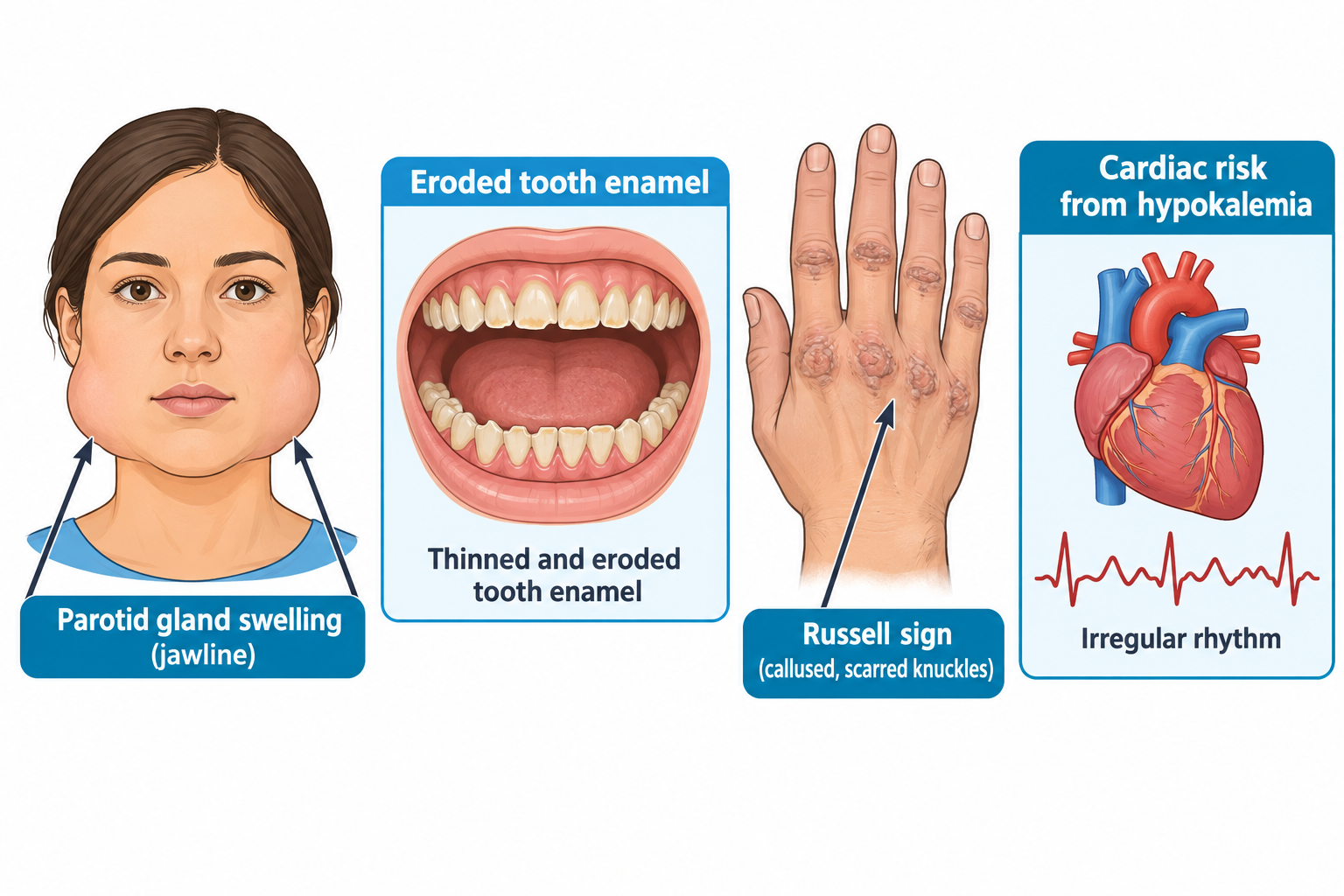
//////Caption: Characteristic findings in bulimia nervosa.
Illustration type: Medical infographic
Illustration note: A labeled illustration highlighting frequent post-meal purging, parotid gland enlargement, dental enamel erosion, Russell sign (callused knuckles), dehydration, hypokalemia, and associated cardiac risks.///////

Nursing priorities

  • Assess for dehydration and electrolyte imbalance
  • Monitor cardiac rhythm
  • Discourage purging behaviors
  • Provide post-meal supervision
  • Encourage therapeutic support

Binge-eating disorder

Binge-eating disorder is characterized by recurrent binge eating without regular compensatory behaviors. (e.g., self-induced vomiting, laxative misuse, fasting, or excessive exercise).

Assessment findings

  • Episodes of loss of control eating
  • Eating rapidly or until uncomfortably full
  • Eating when not hungry
  • Feelings of shame or guilt
  • Increased risk for obesity-related conditions

Nursing priorities

  • Support healthy eating patterns
  • Address emotional triggers
  • Promote nonjudgmental care
  • Coordinate nutritional counseling

Medical complications

Eating disorders can lead to severe physiological instability.

Complications to monitor

  • Electrolyte disturbances (hypokalemia, hyponatremia)
  • Cardiac dysrhythmias
  • Hypotension and syncope
  • Dehydration
  • Gastrointestinal rupture (in severe vomiting)
  • Refeeding syndrome
alt_text
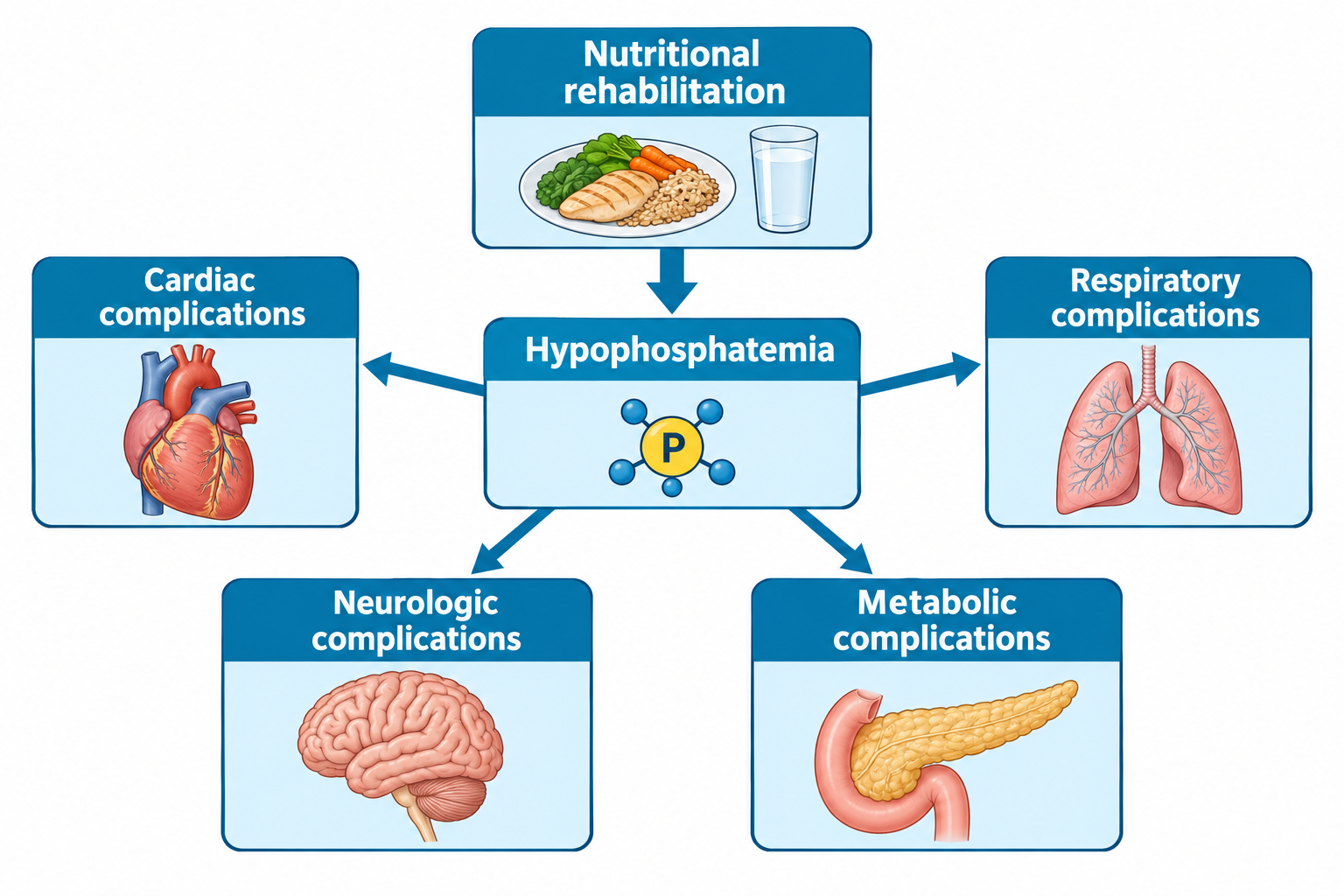
//////Caption: Understanding refeeding syndrome.
Illustration type: Medical process infographic
Illustration note: An infographic illustrating how rapid nutritional rehabilitation causes electrolyte shifts, particularly hypophosphatemia, leading to cardiac, respiratory, neurologic, and metabolic complications, with emphasis on careful monitoring during refeeding.///////

Therapeutic communication

  • Avoid power struggles around food.
  • Use neutral, nonjudgmental language.
  • Focus on health, not appearance.
  • Acknowledge anxiety related to eating.
  • Reinforce treatment structure calmly.
  • Avoid statements such as “just eat” or “you look fine.”
  • Reflect feelings: “It sounds scary to eat right now.”
  • Avoid judgment or reassurance.
  • Set boundaries: calmly enforce meal plan compliance.
alt_text
//////Caption: Effective therapeutic communication with clients who have eating disorders.
Illustration type: Communication infographic
Illustration note: A comparison infographic showing therapeutic responses (validating emotions, using neutral language, focusing on health rather than weight, calmly reinforcing treatment plans) alongside nontherapeutic responses (arguing about food, commenting on appearance, forcing meals through confrontation, or offering false reassurance).///////

Client education

  • Eating disorders are treatable medical conditions.
  • Recovery requires time and support.
  • Consistent nutrition supports brain and body healing.
  • Medications and therapy may be part of care.
  • Relapse risk exists; early intervention matters.
  • Explain the role of refeeding syndrome during early nutrition.
  • Emphasize consistency in meals and snacks.
  • Teach early warning signs of relapse.

Clinical vignette: A 19-year-old college student with anorexia nervosa presents with dizziness and a heart rate of 42 bpm. The nurse places the client on cardiac monitoring, restricts activity, and follows the structured meal plan. When the client expresses fear of weight gain, the nurse validates the anxiety while maintaining treatment boundaries.

Nursing considerations

  • Medical instability is the priority.
  • Bradycardia and electrolyte imbalance are red flags.
  • Avoid power struggles over food.
  • Structured care supports safety.
  • Refeeding syndrome is a critical risk.

Common NCLEX pitfalls

  • Focusing on weight instead of medical stability.
  • Assuming normal weight rules out an eating disorder.
  • Overlooking electrolyte abnormalities.
  • Engaging in arguments about food.
  • Missing signs of refeeding syndrome
  • Minimizing cardiac risks.
  • Eating disorders affect both mind and body.
  • Medical complications can be life-threatening.
  • Structured, consistent care improves safety.
  • Therapeutic communication avoids judgment.
  • Early intervention improves outcomes.

Sign up for free to take 5 quiz questions on this topic

Previous
Next  | 3.3 Crisis intervention and safety
All rights reserved ©2016 - 2026 Achievable, Inc.

Eating disorders

Introduction

Eating disorders are serious psychiatric conditions characterized by disturbances in eating behaviors, body image, and weight regulation. They carry some of the highest morbidity and mortality rates among mental health disorders due to medical complications, electrolyte imbalances, and cardiac instability.

On the NCLEX, eating disorders are tested through physiological risk recognition, safety prioritization, therapeutic communication, and nutrition management rather than diagnostic labels. Nurses must identify life-threatening complications early and respond with calm, structured, and supportive care.

Learning objectives

By the end of this section, you should be able to:

  • Differentiate common eating disorders based on behavior patterns.
  • Recognize medical and psychological assessment findings.
  • Identify life-threatening complications and prioritize safety.
  • Apply therapeutic communication strategies.
  • Support nutritional rehabilitation and client education.
  • Answer NCLEX-style questions involving eating disorders.

Overview of eating disorders

Eating disorders involve maladaptive behaviors related to food intake, weight control, and body perception.

Common eating disorders

  • Anorexia nervosa
  • Bulimia nervosa
  • Binge-eating disorder
alt_text
//////Caption: Comparison of the major eating disorders.
Illustration type: Comparison infographic
Illustration note: An infographic comparing anorexia nervosa, bulimia nervosa, and binge-eating disorder, highlighting their defining behaviors, typical weight patterns, compensatory behaviors, and major medical risks.///////
Definitions
Anorexia nervosa
An eating disorder marked by restriction of energy intake, intense fear of gaining weight or becoming fat, and disturbance in body image, resulting in significantly low body weight.
Bulimia nervosa
An eating disorder involving recurrent binge eating followed by compensatory behaviors such as self-induced vomiting, laxative misuse, fasting, or excessive exercise. Clients often have normal or near-normal body weight.
Binge-eating disorder
Recurrent episodes of binge eating without regular compensatory behaviors. Many clients are overweight or obese, but binge-eating disorder can occur at any body weight.
Refeeding syndrome
This is a life-threatening complication marked by electrolyte shifts, especially hypophosphatemia, during nutritional rehabilitation.

Anorexia nervosa

Anorexia nervosa has one of the highest mortality rates of any psychiatric disorder due to medical complications of starvation and an increased risk of suicide.

Assessment findings

  • Significantly low body weight relative to age, sex, developmental trajectory, and physical health. BMI may be used to assess severity in adults but is not, by itself, diagnostic of anorexia nervosa.
  • Intense fear of gaining weight
  • Distorted body image
  • Bradycardia
  • Hypotension
  • Hypothermia
  • Lanugo hair
  • Dry skin and brittle nails
  • Electrolyte imbalances
  • Amenorrhea may occur in menstruating clients but is not required for diagnosis.
alt_text
//////Caption: Common physical and psychological findings in anorexia nervosa.
Illustration type: Human body infographic
Illustration note: A labeled illustration showing common manifestations of anorexia nervosa, including severe weight loss, lanugo hair, dry skin, brittle nails, bradycardia, hypotension, hypothermia, muscle wasting, amenorrhea (where applicable), and distorted body image.///////

Nursing priorities

  • Monitor vital signs closely
  • Assess for cardiac dysrhythmias
  • Monitor electrolytes
  • Supervise meals as ordered
  • Restrict exercise
  • Maintain structured routines
  • Use neutral language around food and weight

Atypical anorexia nervosa

Atypical anorexia nervosa is a subtype of anorexia in which patients exhibit classic anorexic behaviors and medical complications but maintain a weight that is within or above the normal range. Despite having “normal” weight, patients are at high risk for serious medical issues similar to classic anorexia.

Assessment findings

  • Restrictive eating patterns or extreme dieting
  • Intense fear of gaining weight
  • Distorted body image
  • Signs of malnutrition despite normal weight (fatigue, dizziness, hypotension)
  • Bradycardia or other cardiac changes
  • Electrolyte imbalances
  • Psychological comorbidities such as depression or anxiety

Nursing priorities

  • Monitor vital signs and cardiac status.
  • Assess for electrolyte disturbances and dehydration.
  • Support structured meal supervision and nutrition rehabilitation.
  • Provide therapeutic communication to validate anxiety about weight while maintaining safety.
  • Collaborate with dietitians and mental health providers for a comprehensive care plan.

Bulimia nervosa

Bulimia involves cycles of binge eating and compensatory behaviors.

Assessment findings

  • Normal or near-normal body weight is common, although clients may have body weights outside this range.
  • Frequent bathroom use after meals
  • Parotid gland swelling
  • Dental erosion (from stomach acid)
  • Callused knuckles (Russell sign, from finger-forced vomiting)
  • Electrolyte imbalances (especially hypokalemia)
alt_text
//////Caption: Characteristic findings in bulimia nervosa.
Illustration type: Medical infographic
Illustration note: A labeled illustration highlighting frequent post-meal purging, parotid gland enlargement, dental enamel erosion, Russell sign (callused knuckles), dehydration, hypokalemia, and associated cardiac risks.///////

Nursing priorities

  • Assess for dehydration and electrolyte imbalance
  • Monitor cardiac rhythm
  • Discourage purging behaviors
  • Provide post-meal supervision
  • Encourage therapeutic support

Binge-eating disorder

Binge-eating disorder is characterized by recurrent binge eating without regular compensatory behaviors. (e.g., self-induced vomiting, laxative misuse, fasting, or excessive exercise).

Assessment findings

  • Episodes of loss of control eating
  • Eating rapidly or until uncomfortably full
  • Eating when not hungry
  • Feelings of shame or guilt
  • Increased risk for obesity-related conditions

Nursing priorities

  • Support healthy eating patterns
  • Address emotional triggers
  • Promote nonjudgmental care
  • Coordinate nutritional counseling

Medical complications

Eating disorders can lead to severe physiological instability.

Complications to monitor

  • Electrolyte disturbances (hypokalemia, hyponatremia)
  • Cardiac dysrhythmias
  • Hypotension and syncope
  • Dehydration
  • Gastrointestinal rupture (in severe vomiting)
  • Refeeding syndrome
alt_text
//////Caption: Understanding refeeding syndrome.
Illustration type: Medical process infographic
Illustration note: An infographic illustrating how rapid nutritional rehabilitation causes electrolyte shifts, particularly hypophosphatemia, leading to cardiac, respiratory, neurologic, and metabolic complications, with emphasis on careful monitoring during refeeding.///////

Therapeutic communication

  • Avoid power struggles around food.
  • Use neutral, nonjudgmental language.
  • Focus on health, not appearance.
  • Acknowledge anxiety related to eating.
  • Reinforce treatment structure calmly.
  • Avoid statements such as “just eat” or “you look fine.”
  • Reflect feelings: “It sounds scary to eat right now.”
  • Avoid judgment or reassurance.
  • Set boundaries: calmly enforce meal plan compliance.
alt_text
//////Caption: Effective therapeutic communication with clients who have eating disorders.
Illustration type: Communication infographic
Illustration note: A comparison infographic showing therapeutic responses (validating emotions, using neutral language, focusing on health rather than weight, calmly reinforcing treatment plans) alongside nontherapeutic responses (arguing about food, commenting on appearance, forcing meals through confrontation, or offering false reassurance).///////

Client education

  • Eating disorders are treatable medical conditions.
  • Recovery requires time and support.
  • Consistent nutrition supports brain and body healing.
  • Medications and therapy may be part of care.
  • Relapse risk exists; early intervention matters.
  • Explain the role of refeeding syndrome during early nutrition.
  • Emphasize consistency in meals and snacks.
  • Teach early warning signs of relapse.

Clinical vignette: A 19-year-old college student with anorexia nervosa presents with dizziness and a heart rate of 42 bpm. The nurse places the client on cardiac monitoring, restricts activity, and follows the structured meal plan. When the client expresses fear of weight gain, the nurse validates the anxiety while maintaining treatment boundaries.

Nursing considerations

  • Medical instability is the priority.
  • Bradycardia and electrolyte imbalance are red flags.
  • Avoid power struggles over food.
  • Structured care supports safety.
  • Refeeding syndrome is a critical risk.

Common NCLEX pitfalls

  • Focusing on weight instead of medical stability.
  • Assuming normal weight rules out an eating disorder.
  • Overlooking electrolyte abnormalities.
  • Engaging in arguments about food.
  • Missing signs of refeeding syndrome
  • Minimizing cardiac risks.
Key points
  • Eating disorders affect both mind and body.
  • Medical complications can be life-threatening.
  • Structured, consistent care improves safety.
  • Therapeutic communication avoids judgment.
  • Early intervention improves outcomes.

More from Psychiatric disorders

  • Mood disorders (depression and bipolar)
  • Anxiety and stress-related disorders (PTSD, OCD)
  • Psychotic disorders
  • Personality disorders
  • Substance use and addiction