



Immediate newborn adaptation & stabilization
Introduction
The first minutes of life demand silent heroics: a newborn’s lungs must awaken, their circulation must reroute itself, and their tiny body must rapidly marshal every resource to survive outside the womb. Nurses stand at this threshold, guiding the transition from intrauterine dependence to extrauterine independence.
NCLEX emphasizes this period because subtle signs, such as weak cry, poor tone, or hypothermia, can reveal life-threatening complications. Mastery of newborn stabilization allows nurses to protect infants when they are most fragile.
Learning objectives
By the end of this section, you should be able to:
- Describe normal physiologic transitions after birth.
- Interpret Apgar scoring correctly and apply its clinical meaning.
- Recognize early signs of neonatal distress requiring urgent intervention.
- Perform airway, breathing, and thermoregulation steps based on NRP principles.
- Provide safe, evidence-based newborn prophylaxis and immediate care.
Physiologic transition to extrauterine life
The shift to extrauterine life is a complex, multi-system overhaul initiated by the first breath. The newborn must immediately establish independent respiratory function and transition from fetal shunting to a permanent neonatal circulatory pattern.
Cardiopulmonary shift
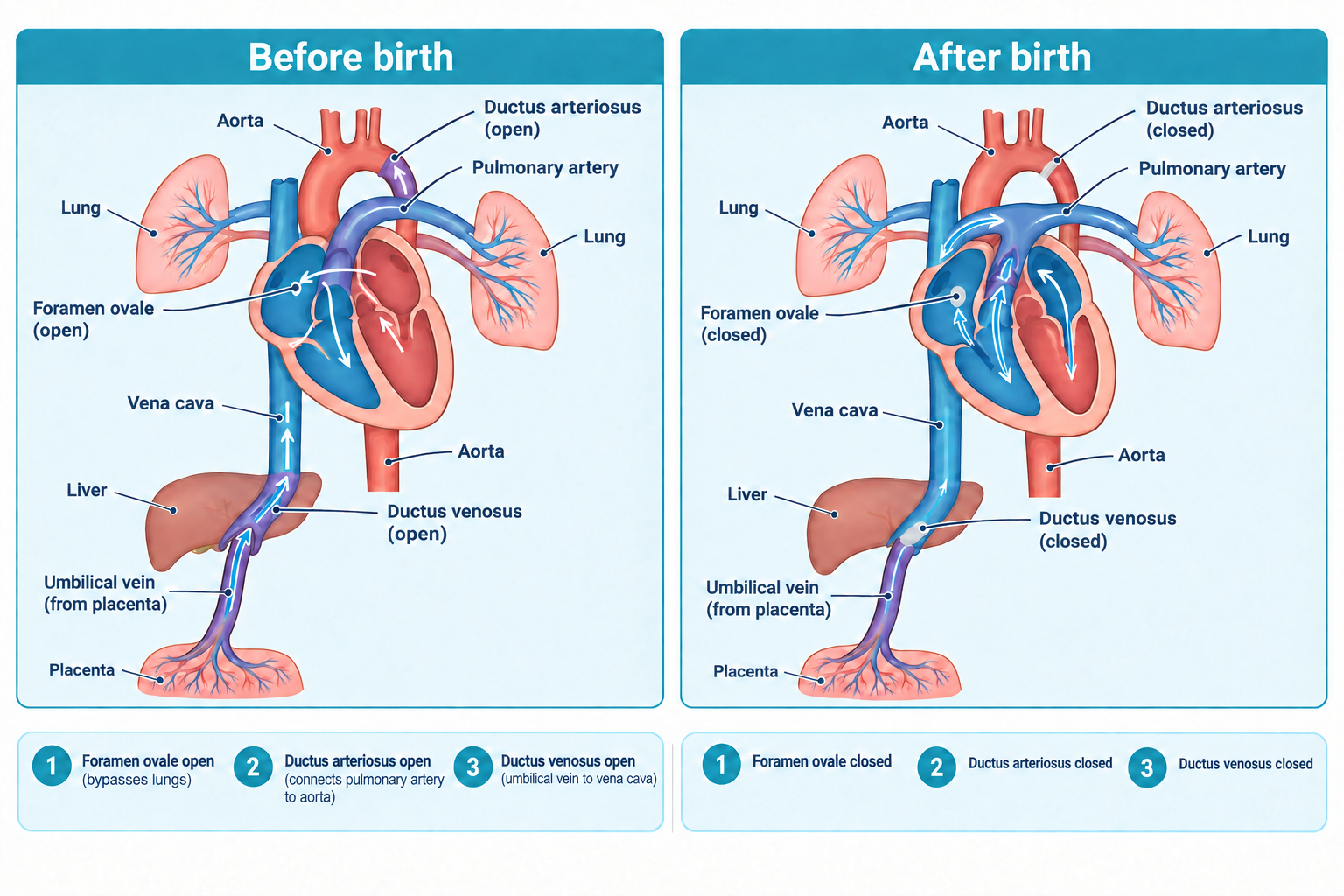
Immediately after birth, three major fetal shunts begin to close:
- Foramen ovale (right → left atrial communication)
- Ductus arteriosus (pulmonary artery → aorta)
- Ductus venosus (umbilical vein → IVC)
Breathing
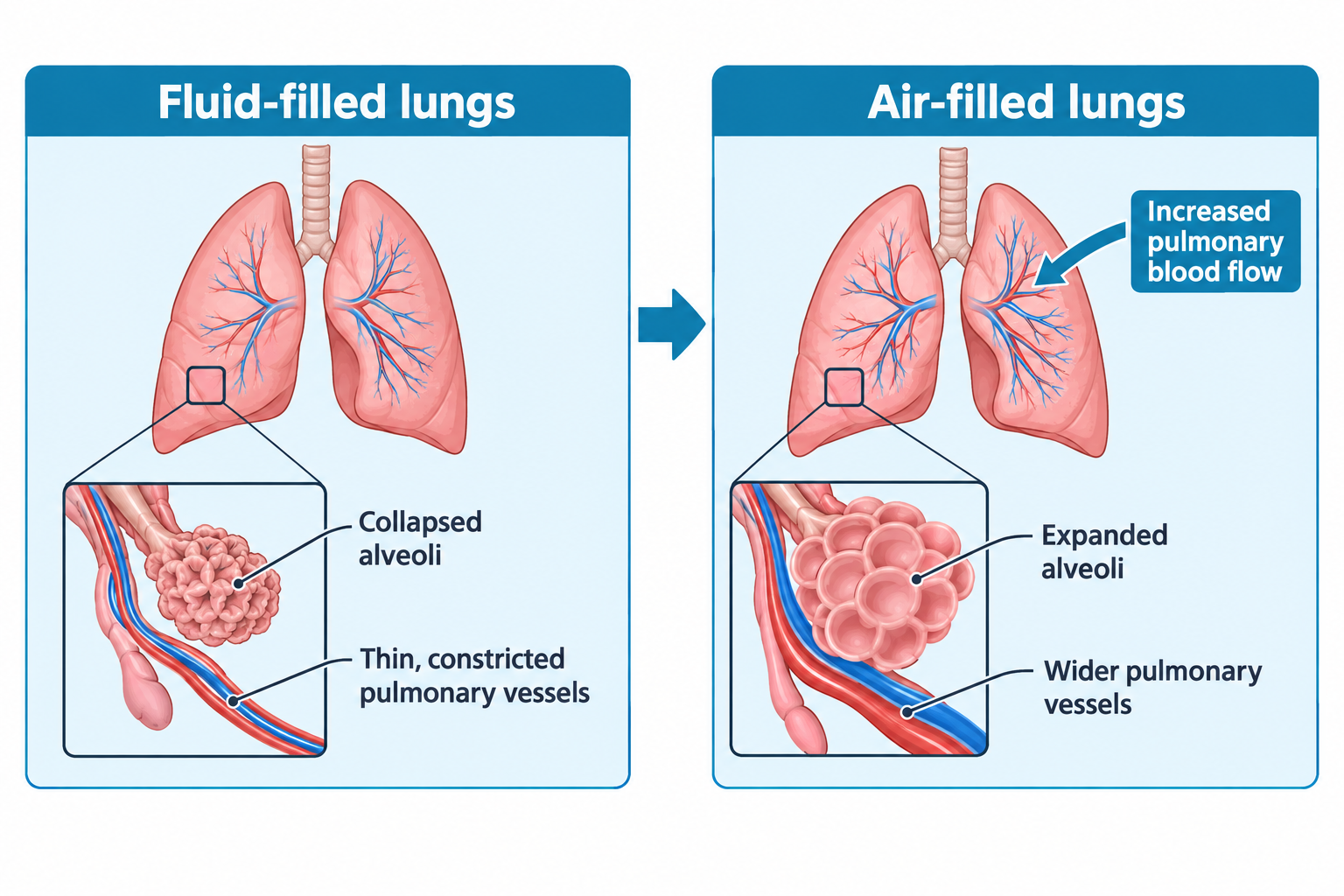
It triggers pulmonary vasodilation → increased lung perfusion → shunt closure. The first breath should occur within 30 seconds. A strong cry signals successful lung aeration.
Normal newborn respirations:
- 30-60/min
- Occasional pauses <10 seconds
- Irregular belly-breathing is common
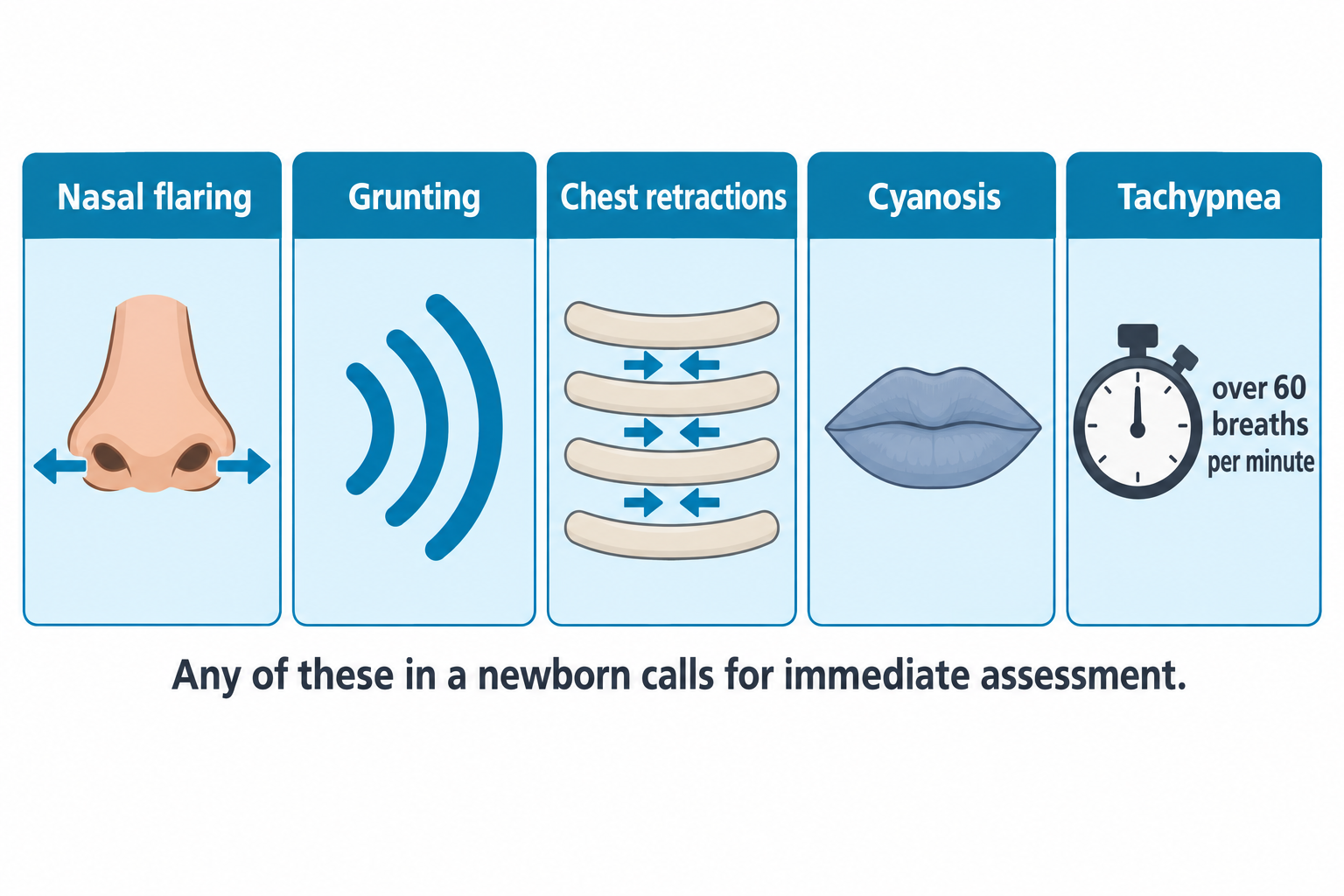
Red flags:
- Nasal flaring
- Retractions
- Grunting
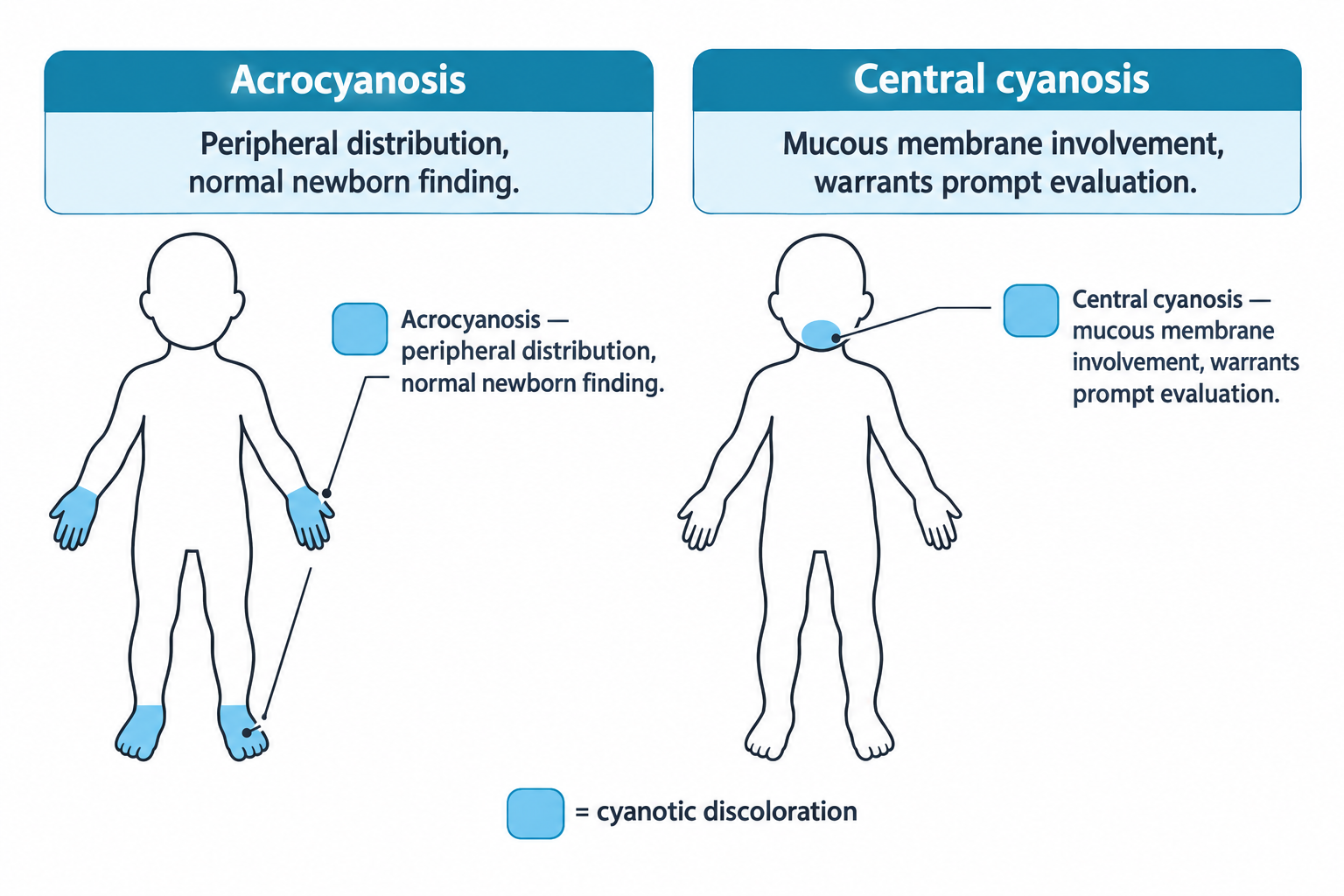
- Cyanosis
- Apnea >20 seconds
Circulation
Normal heart rate:
- 110-160 bpm
- May dip briefly during sleep
- Sustained HR <100 in the first minute requires resuscitation steps
Apgar scoring (1 and 5 minutes)
Apgar scoring (1 and 5 minutes)
The Apgar measures five components, each scored 0–2 points:
| Component | Assessment |
|---|---|
| A | Appearance (color) |
| P | Pulse |
| G | Grimace (reflex irritability) |
| A | Activity (muscle tone) |
| R | Respiratory effort |
Interpretation
| Total score | Interpretation |
|---|---|
| 7–10 | Stable transition |
| 4–6 | Moderate distress → resuscitation and reassessment |
| 0–3 | Severe distress → immediate resuscitation and possible NICU admission |
Immediate nursing actions at birth (NRP framework)
The Neonatal Resuscitation Program (NRP) framework guides the nurse through a rapid, standardized sequence of interventions. These steps focus on thermoregulation, airway patency, and respiratory support to stabilize the infant within the “Golden Minute” of life.
| NRP initial step | What to do |
|---|---|
| Warm | Place the newborn under a radiant warmer and remove wet linens. |
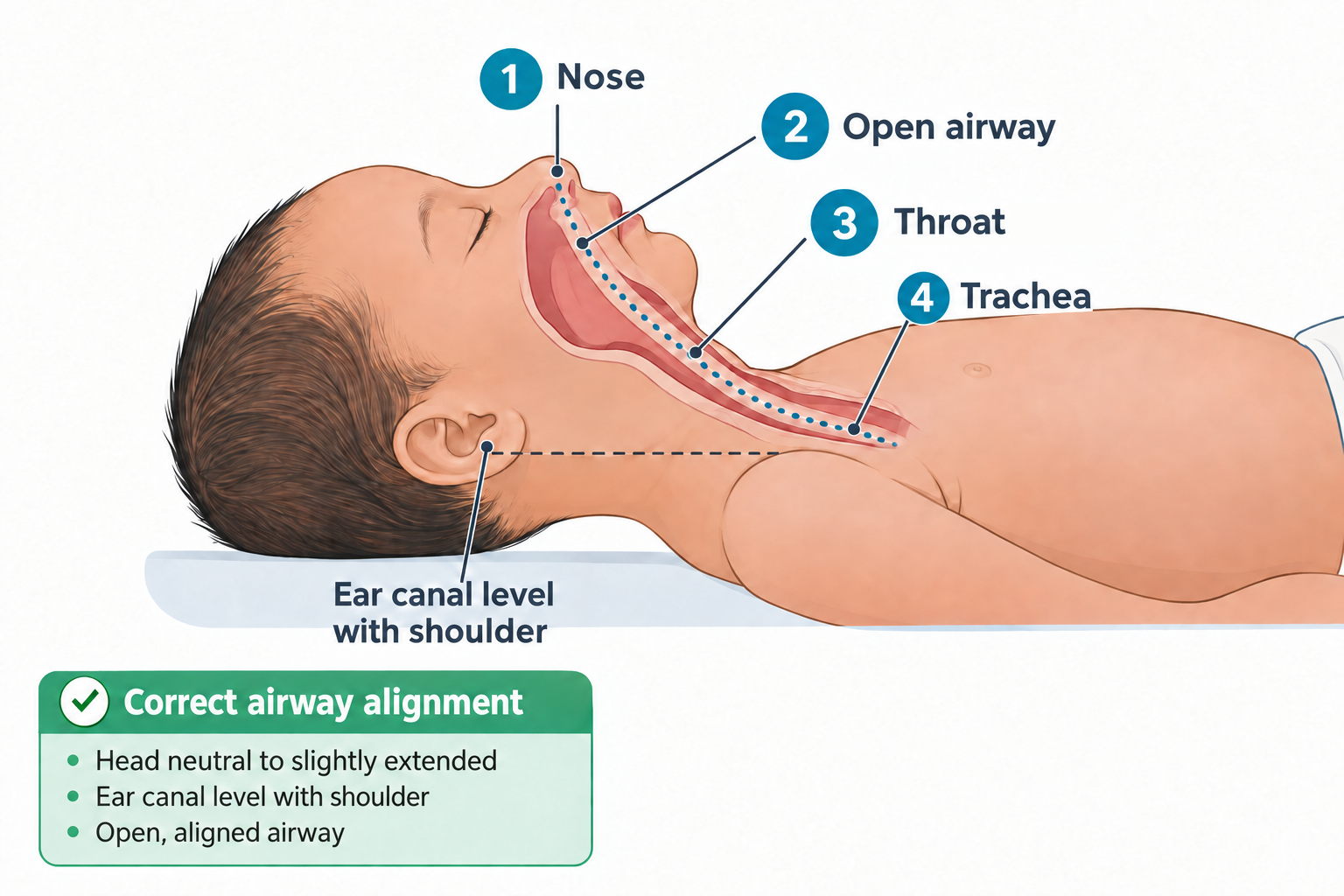
| Position airway | Position the head and neck in a neutral “sniffing” position to open the airway. |
| Clear secretions if needed | Suction only when secretions obstruct the airway or interfere with ventilation. |
| Dry and stimulate | Dry the newborn thoroughly and gently stimulate the back or soles of the feet. |
| Assess breathing and heart rate | Evaluate respirations and determine the heart rate. |
| Provide PPV if indicated | Begin positive-pressure ventilation if the newborn is apneic, gasping, or has a heart rate below 100 beats/min. |
1. Warmth
Newborns cannot shiver, and they lose heat four times faster than adults. Heat escapes through four mechanisms: evaporation (wet skin dries and cools quickly), conduction (contact with cold surfaces), convection (cool room air or drafts), and radiation (nearby cold objects, such as a window). Unchecked heat loss causes hypothermia, which can lead to hypoglycemia, respiratory distress, and metabolic acidosis.
Methods to prevent heat loss:
- Warm delivery room (≥26°C, 79°F)
- Dry thoroughly immediately
- Warm blankets or a radiant warmer
- Skin-to-skin on the parent’s chest
- Monitor temperature frequently
2. Airway
- Position head neutral (“sniffing” position)
- Suction the mouth before the nose only if copious secretions
- Avoid deep or routine suctioning (can cause vagal bradycardia)
3. Breathing
If no cry or HR <100:
- Stimulate: drying, rubbing back
- Provide positive-pressure ventilation if needed
- Avoid overventilation (risk of pneumothorax)
4. Circulation
If HR < 60 after 30 seconds of effective ventilation:
- Begin chest compressions (3:1 ratio)
- Continue ventilation with room air or oxygen per NRP guidelines
- Prepare for advanced resuscitation
Initial prophylactic treatments
Vitamin K (IM, vastus lateralis)
- Prevents hemorrhagic disease of the newborn.
- Newborns have sterile intestines → no bacteria to synthesize vitamin K.
- Administer in vastus lateralis.
Erythromycin ophthalmic ointment
- Prevents gonorrheal ophthalmia neonatorum.
- Administer within 1-2 hours of birth.
Hepatitis B vaccine
- Prevents hepatitis B.
- Administer within 12 hours; if the mother is Hep B positive, give HBIG + vaccine.
Newborn vital signs (first hours)
- Temperature: 36.5-37.5°C (97.7-99.5°F)
- HR: 110-160 bpm
- RR: 30-60/min
- BP: ~60-80/40-50 mmHg (not routinely measured in healthy newborns)
- Glucose: ≥40 mg/dL (first 4 hours), ≥45 mg/dL after 4 hours
Immediate red flags (NCLEX priority)
Effective neonatal nursing requires the ability to differentiate between normal transition and high-priority “red flags.” Signs such as respiratory grunting, central cyanosis, or profound hypoglycemia signal a failure to adapt and demand immediate, life-saving intervention.
Respiratory distress
- Signs:
- Grunting
- Nasal flaring
- Chest retractions
- Tachypnea >60/min
- Cyanosis
- Possible causes:
- Potential respiratory distress syndrome
- Pneumonia
- TTN
- Nursing action:
- NRP airway/breathing steps
- Oxygen
- Notify provider
Cardiac instability
- Signs:
- HR <100
- Central cyanosis
- Possible causes:
- Hypoxia
- Cardiac malformation
- Nursing action:
- Initiate NRP resuscitation
- Monitor HR & perfusion
Metabolic
Hypoglycemia:
- Signs:
- Jitteriness
- Poor feeding
- Hypotonia
- Seizures
- Possible causes:
- SGA/LGA
- Maternal diabetes
- Cold stress
- Nursing action:
- Early feeding
- Glucose monitoring
- IV dextrose if severe
Neurologic
- Signs:
- Poor tone, weak cry
- Possible causes:
- Hypoxia
- Sepsis
- Metabolic disorder
- Nursing action:
- Assess airway/breathing
- Notify provider
- Monitor closely
Temperature instability
May indicate sepsis or ineffective thermoregulation.
- Signs:
- Temperature <36.5°C or >37.5°C
- Possible causes:
- Sepsis
- Ineffective thermoregulation
- Environmental heat loss
- Nursing action:
- Recheck temperature
- Initiate warming measures
- Assess for infection
- Notify provider
Example: Newborn requiring PPV
A newborn is placed on the warmer and does not cry. The nurse positions the head in a sniffing position, dries and stimulates the infant, but there is still no cry and the heart rate is 90 bpm. What is the nurse’s next action?
- HR <100 with ineffective breathing after drying and stimulation is the trigger for assisted ventilation, not for chest compressions.
- Compressions are added only if HR stays <60 after 30 seconds of effective positive-pressure ventilation.
Answer: Begin positive-pressure ventilation. (After 30 seconds of effective PPV the HR rises to 140 bpm with spontaneous breathing, so compressions are not needed.)
Client education
- Benefits of skin-to-skin care (temperature stability, bonding, glucose regulation).
- Explanation of the Apgar score.
- Importance of Vitamin K and eye prophylaxis.
- Normal transition signs (sneezing, irregular breathing).
- When to alert the nurse: poor feeding, color changes, limpness.