



Comprehensive newborn assessment
Introduction
Once the newborn has taken their first breaths and stabilized, the next task is a comprehensive assessment: gestational age, physical wellbeing, and the subtle cues that reveal whether the transition to life outside the womb is progressing smoothly. Newborn assessment requires distinguishing what is normal, what is concerning, and what is an early warning sign of pathology.
On the NCLEX, newborn assessment questions test your ability to discriminate normal transitional findings from red-flag abnormalities.
Learning objectives
By the end of this section, you should be able to:
- Perform a complete newborn head-to-toe assessment, including skin, head, respiratory, cardiac, abdominal, musculoskeletal, and neurological domains.
- Distinguish normal transitional findings from abnormal or pathological findings.
- Recognize early signs of sepsis, respiratory distress, birth trauma, and congenital abnormalities.
- Interpret common newborn reflexes and understand their developmental significance.
- Identify normal elimination patterns and indicators of dehydration or GI/GU obstruction.
- Assess gestational age using standardized tools (Ballard exam).
Newborn measurements (baseline)
These measurements give the first clues about growth, gestational age, and potential complications.
- Weight: 2500-4000 g (5.5-8.8 lbs)
- Weight loss up to 10% in the first week is normal
- Length: 18-22 in (45-55 cm)
- Head circumference: 32-36.8 cm
- Chest circumference: 30-33 cm
- Temperature: 36.5-37.5°C
- HR: 110-160 bpm
- RR: 30-60/min
General appearance
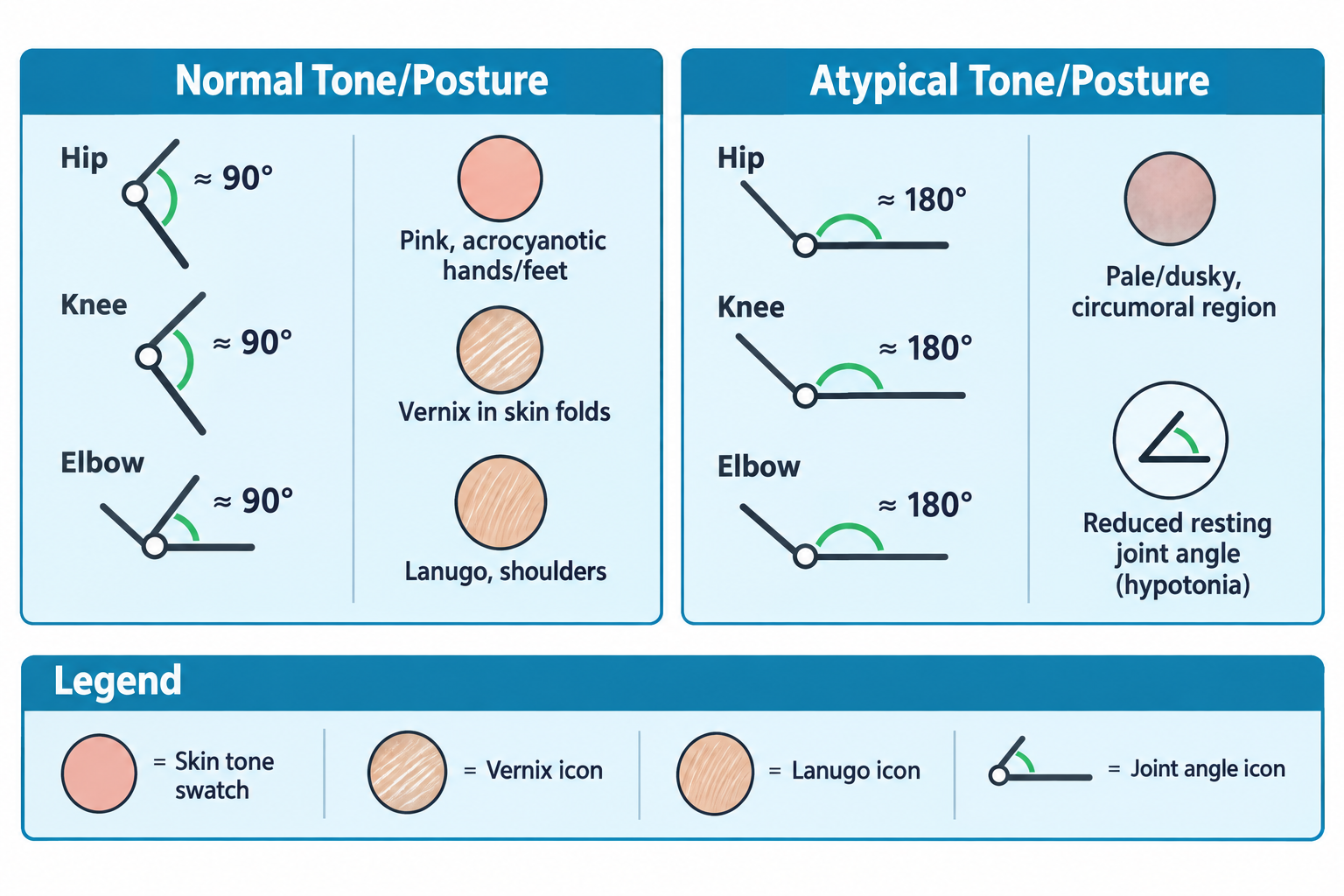
Normal transitional findings include:
- Flexed posture
- Strong cry
- Pink coloring with possible acrocyanosis
- Lanugo (fine hair) on shoulders/back
- Vernix caseosa (white creamy coating)
Abnormal:
- Limp or hypotonic posture
- Weak or high-pitched cry (neurologic concern)
- Pallor or central cyanosis
- Flaccidity
- Poor weight or abnormal proportions
Skin assessment
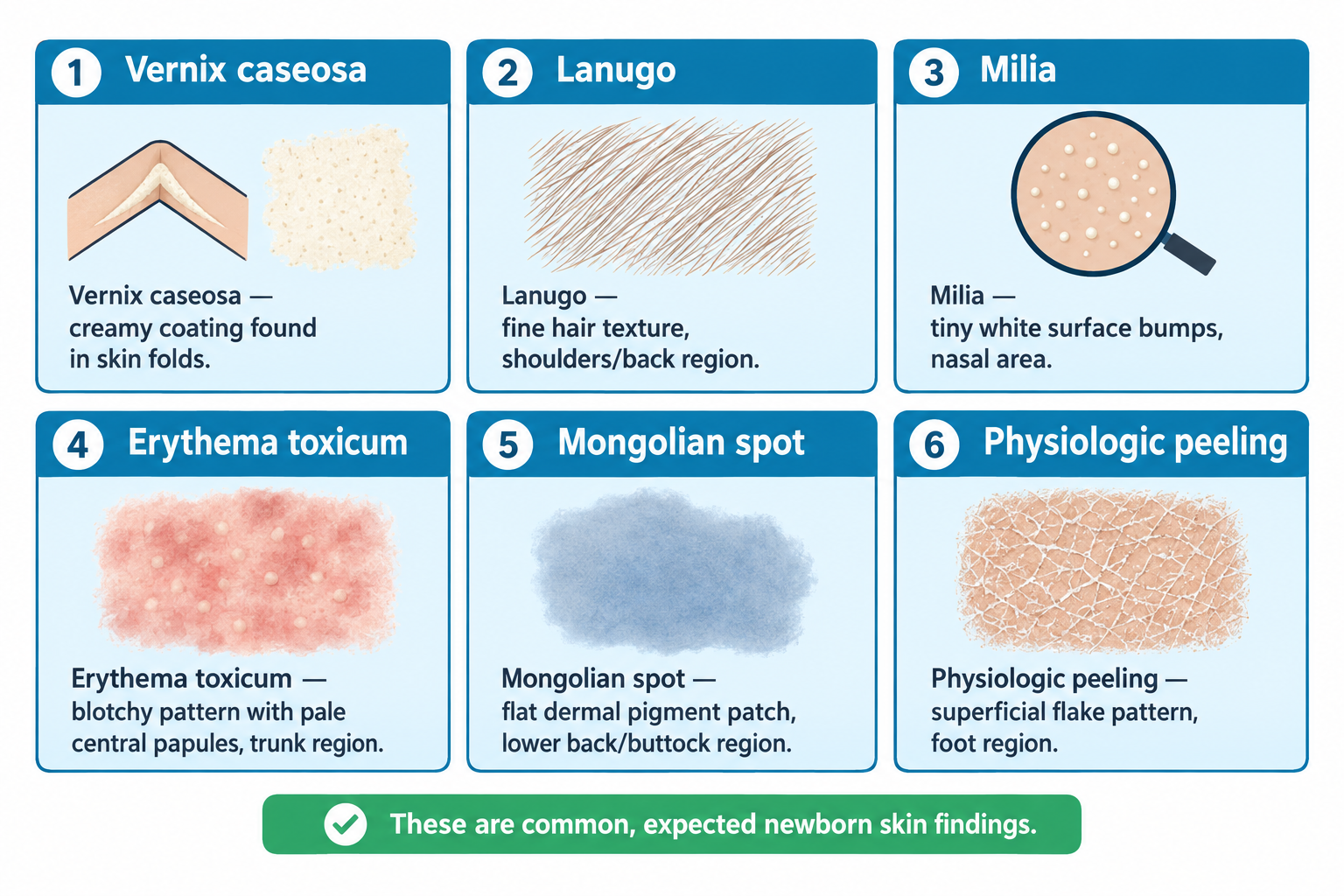
Normal findings
- Vernix: white, creamy protective coating
- Lanugo: fine hair, more common in premature infants
- Milia: tiny white sebaceous cysts
- Erythema toxicum: newborn rash, benign
- Mongolian spots: blue-gray patches often on sacrum/buttocks
- Peeling skin after 24 hours is normal
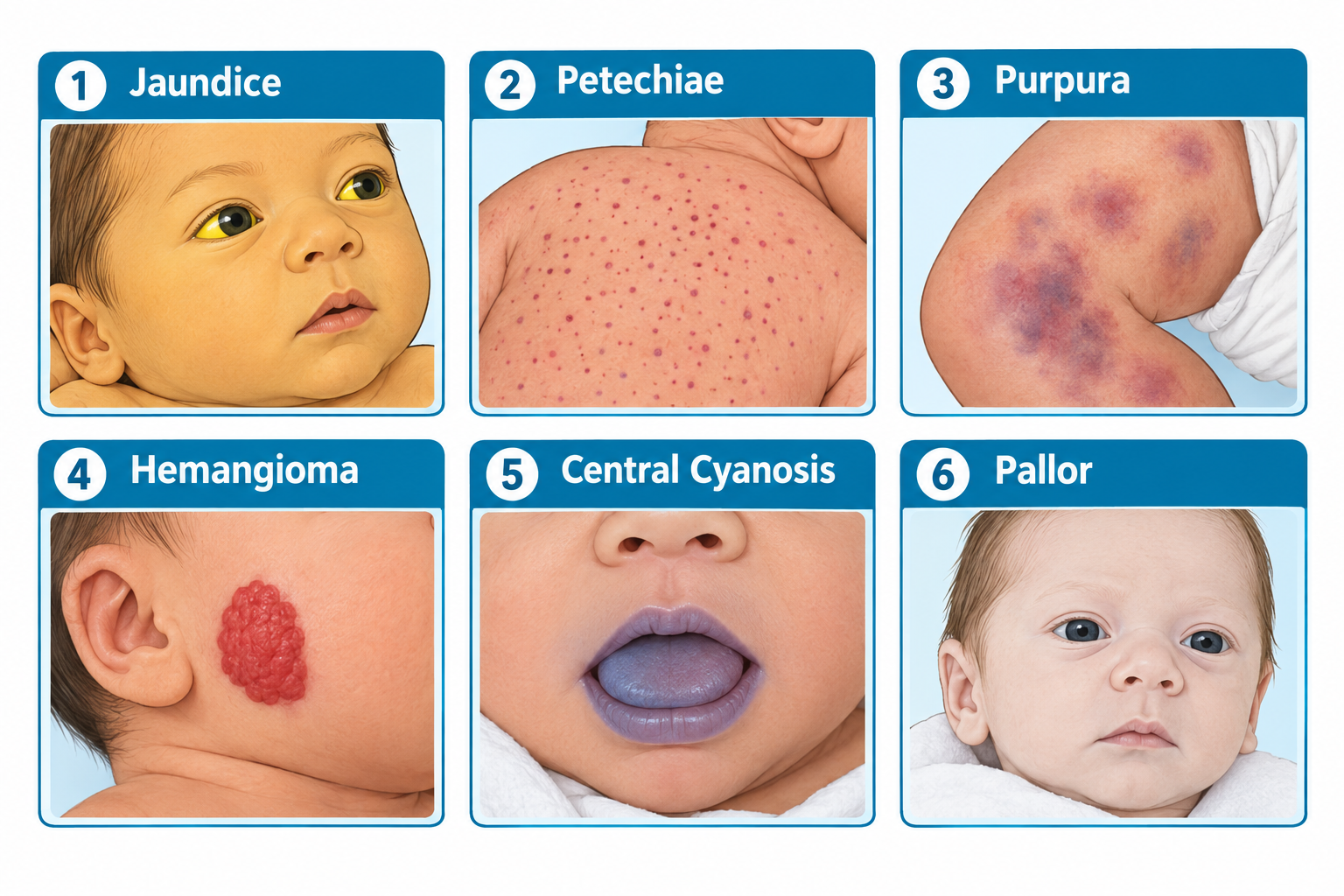
Abnormal findings
- Jaundice within first 24 hours (pathologic)
- Petechiae, purpura
- Large hemangiomas
- Cyanosis of lips/tongue
- Pallor (may indicate anemia, shock, sepsis)
Head assessment
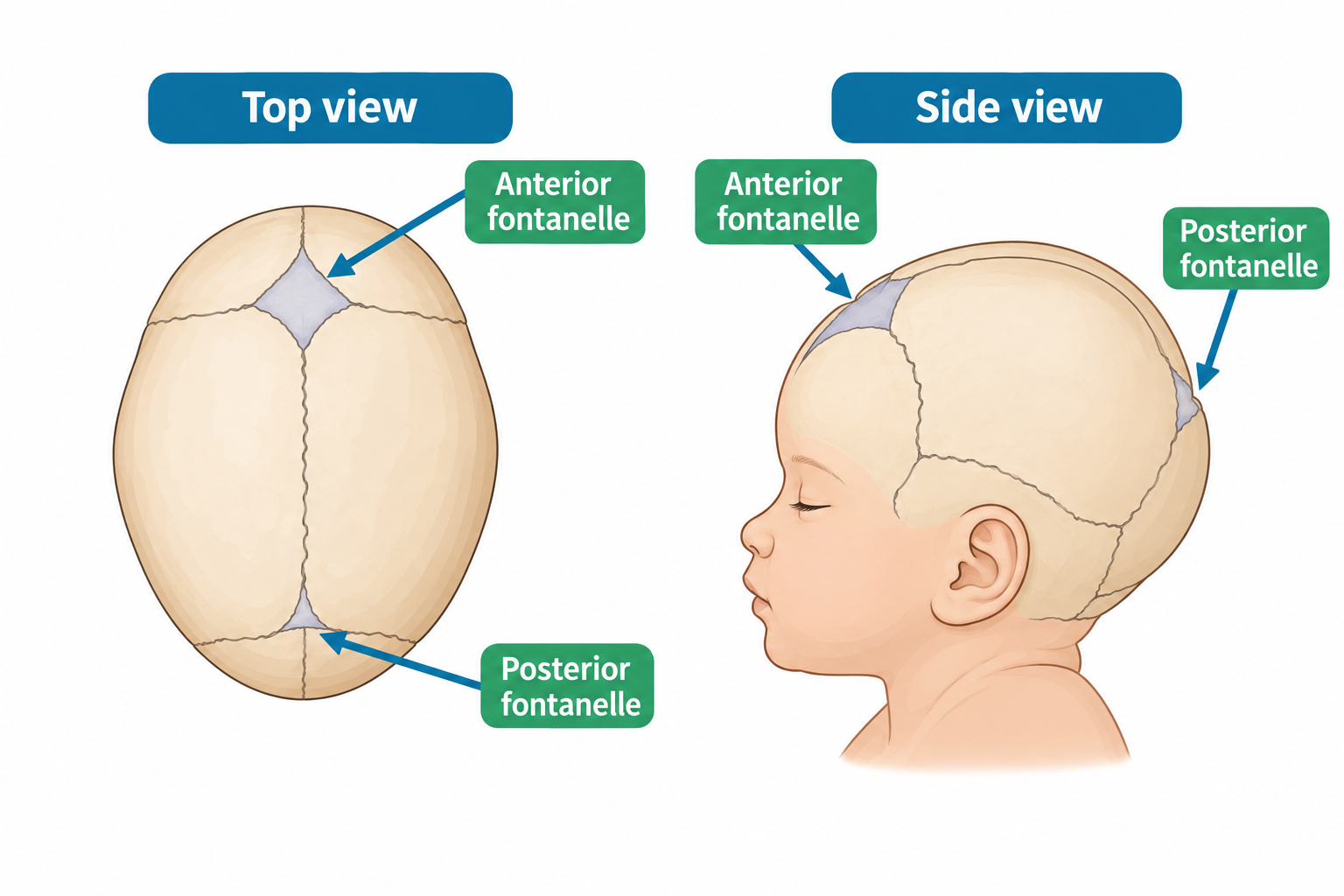
Fontanelles
- Anterior fontanelle: diamond-shaped, closes by 12-18 months
- Posterior fontanelle: triangular, closes by 2-3 months
Normal: soft, flat.
Abnormal:
- Bulging (↑ ICP, infection)
- Sunken (dehydration)
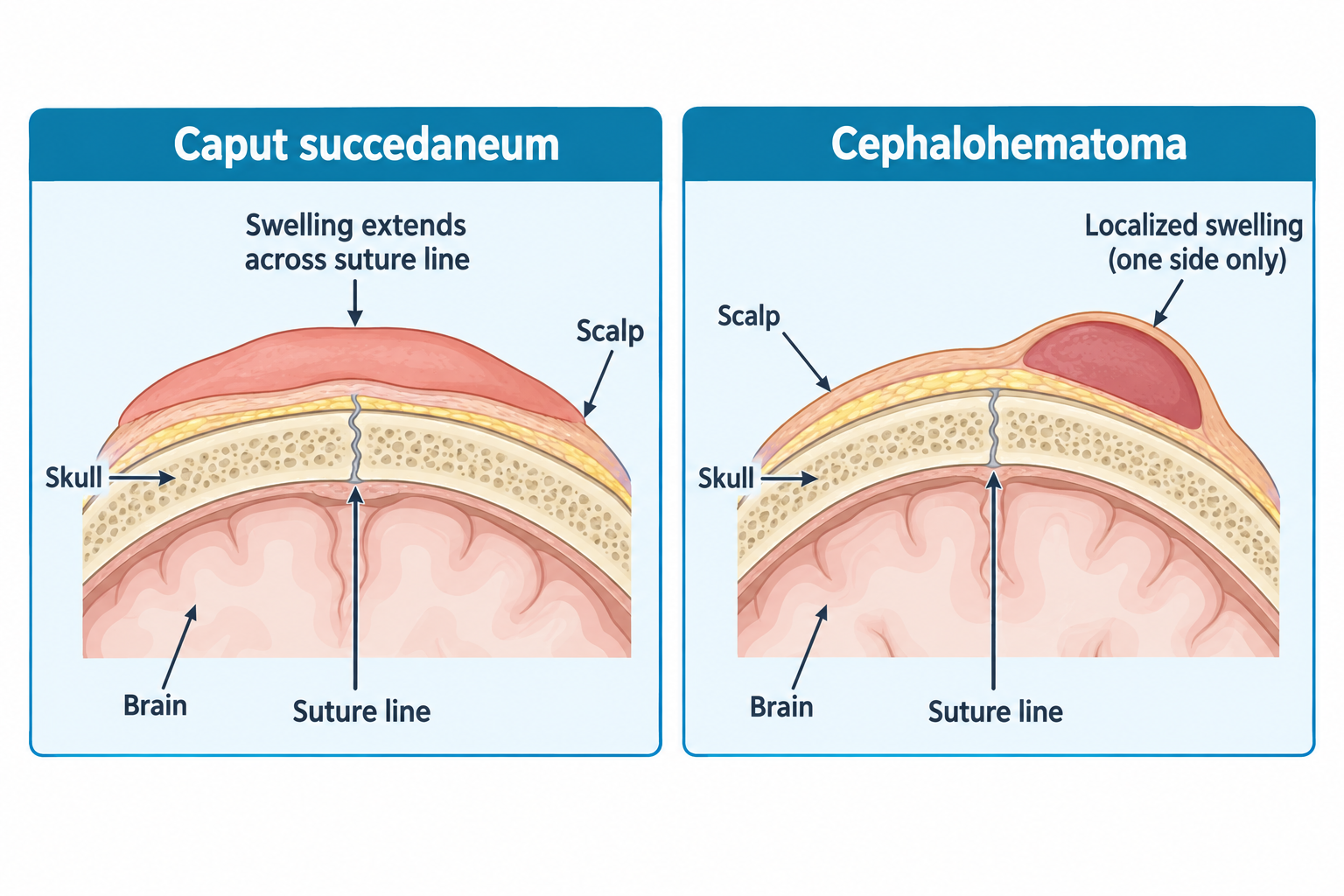
Caput succedaneum vs cephalohematoma
-
Caput succedaneum
- Crosses suture lines
- Soft, boggy swelling from birth trauma
- Resolves in 24-48 hours
-
Cephalohematoma
- Does not cross suture lines
- Blood between skull bone & periosteum
- Risk for jaundice
Eyes, ears, nose, throat (EENT)
Eyes
Normal:
- Symmetrical placement
- Pupillary reflex present
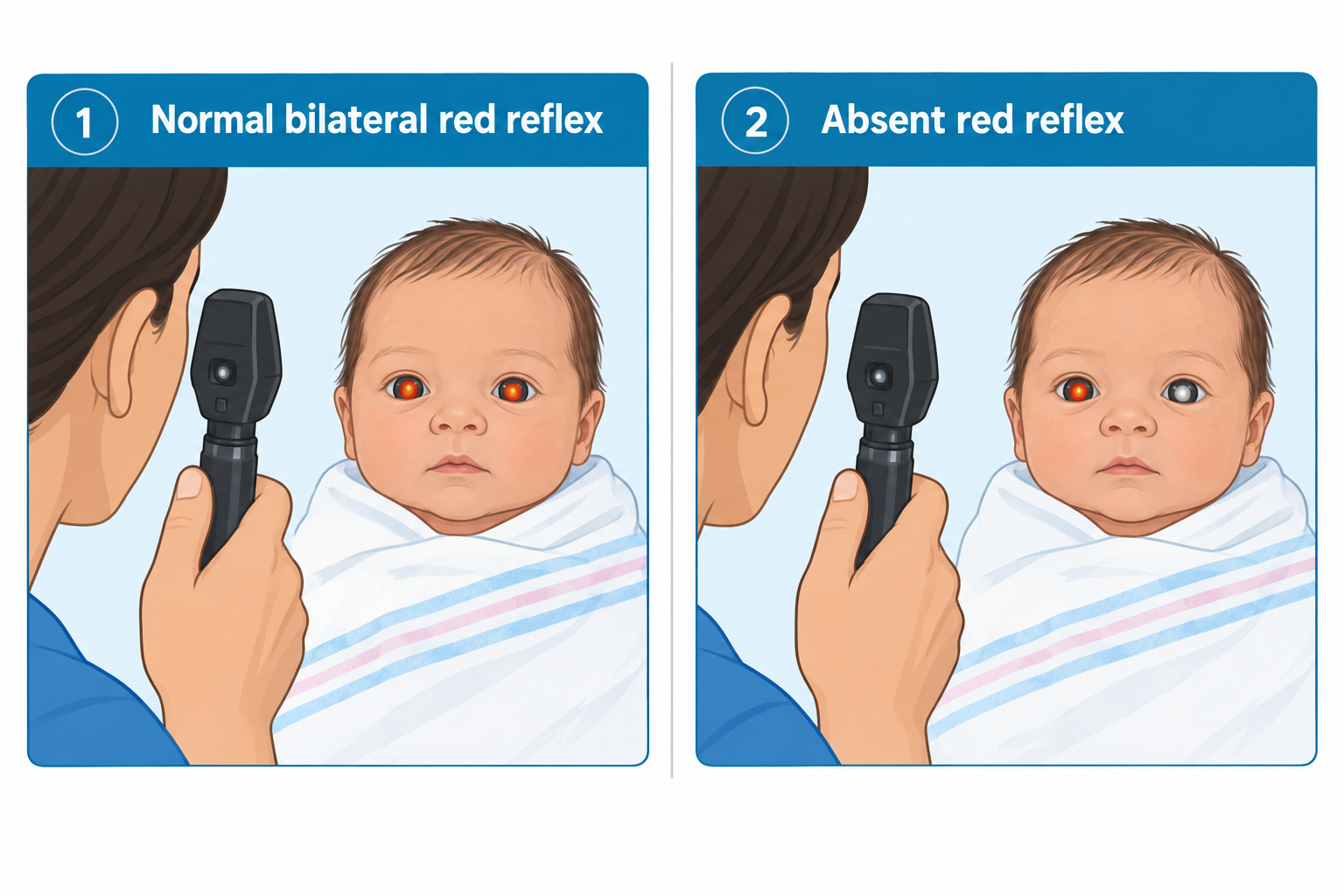
- Red reflex present
Abnormal:
- Absent red reflex (retinoblastoma, cataracts)
- Persistent drainage (blocked tear duct)
- Subconjunctival hemorrhages can be normal from birth pressure
Ears
Normal:
- Alignment with outer canthus of eye
- Well-formed pinna
Abnormal:
- Low-set ears → genetic syndromes (Trisomy 21)
- Ear tags/pits may require renal investigation
Nose & mouth
Normal:
- Obligate nose breather
- Rooting reflex
- Sucking reflex
- Palate intact
Abnormal:
- Cleft lip/palate
- Choanal atresia (cyanosis relieved by crying)
- Asymmetric cry (possible nerve injury)
- White plaques that scrape off = milk; do not scrape off = thrush
Chest & lungs
Normal
- Symmetrical movement
- Breathing irregular
- Fine crackles first hours of life
- RR 30-60/min
Red flags
- Retractions
- Nasal flaring
- Grunting
- Tachypnea >60
- Absent breath sounds (pneumothorax)
Cardiac assessment
Normal
- HR 110-160 bpm
- Murmurs common in first 24 hours
- Acrocyanosis normal
Abnormal
- Central cyanosis
- Persistent murmur
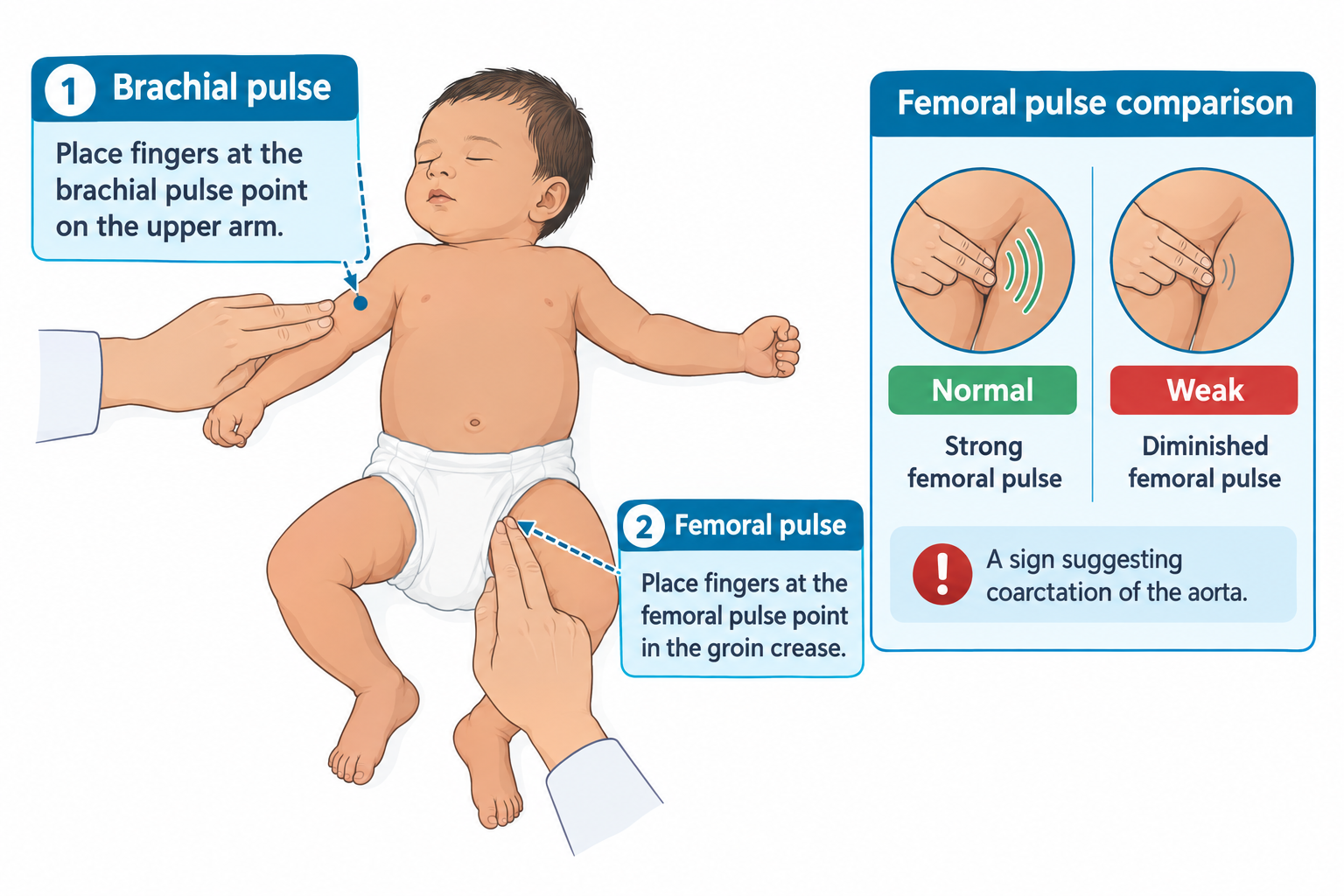
- Weak pulses or femoral < brachial (suspect coarctation of the aorta)
- HR <100 or >180 sustained
Abdominal & GI assessment
Normal
- Soft, round abdomen
- Bowel sounds present
- Meconium within 24 hours
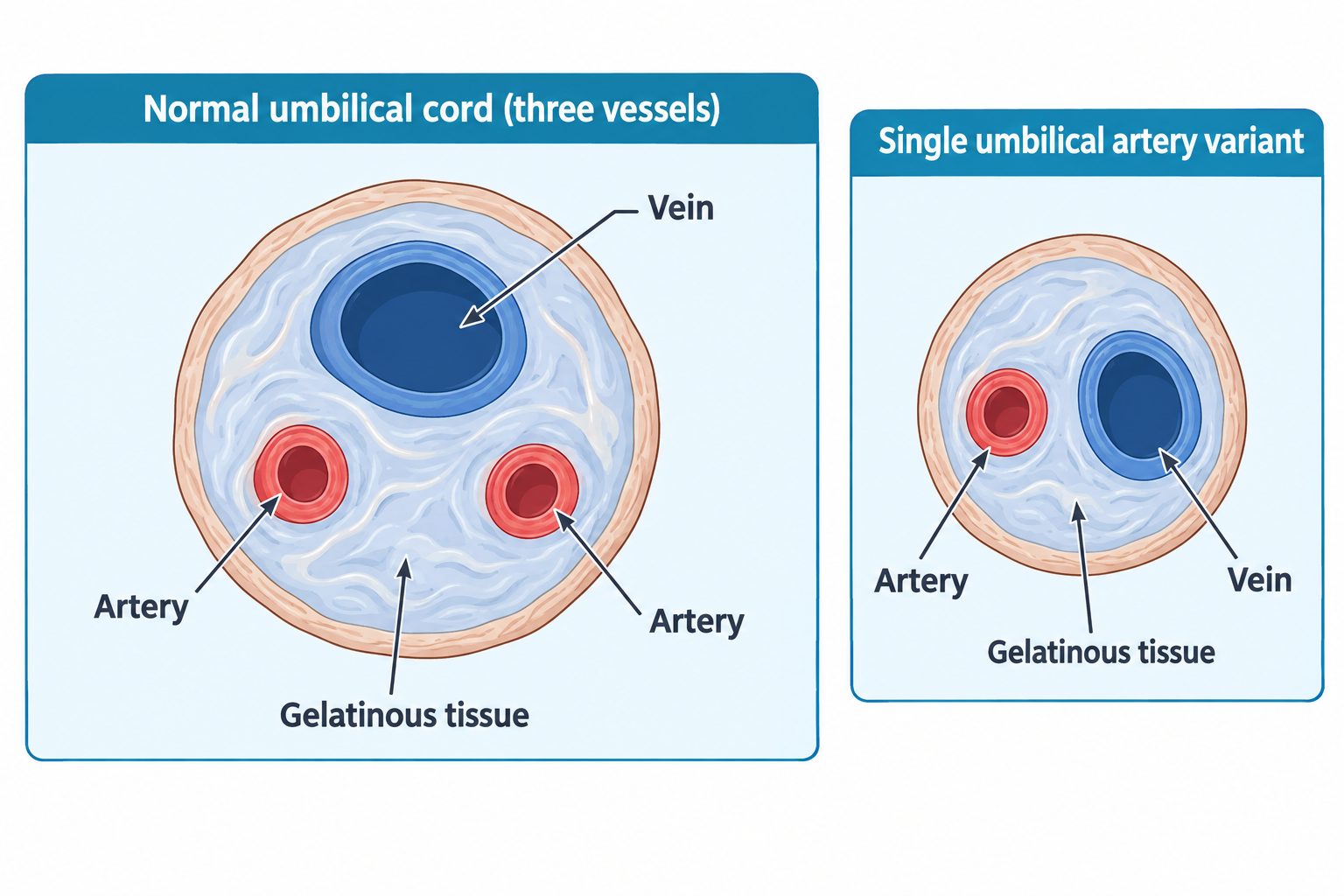
- Umbilical cord: 2 arteries + 1 vein
Abnormal
- Distended, rigid abdomen
- Absent bowel sounds
- Failure to pass meconium (Hirschsprung, CF)
- Single umbilical artery (renal or cardiac anomalies)
Genitourinary assessment
Normal
- First void within 24 hours
- Scrotal swelling (hydrocele)
- Pseudomenstruation in newborn girls
- Labial swelling, vernix in folds
Abnormal
- Ambiguous genitalia
- Hypospadias/epispadias
- No urine after 24 hours
- Enlarged clitoris + fused labia (CAH concern)
Musculoskeletal assessment
Normal
- Flexed posture
- Equal limb movement
- Symmetric folds
- Spine straight
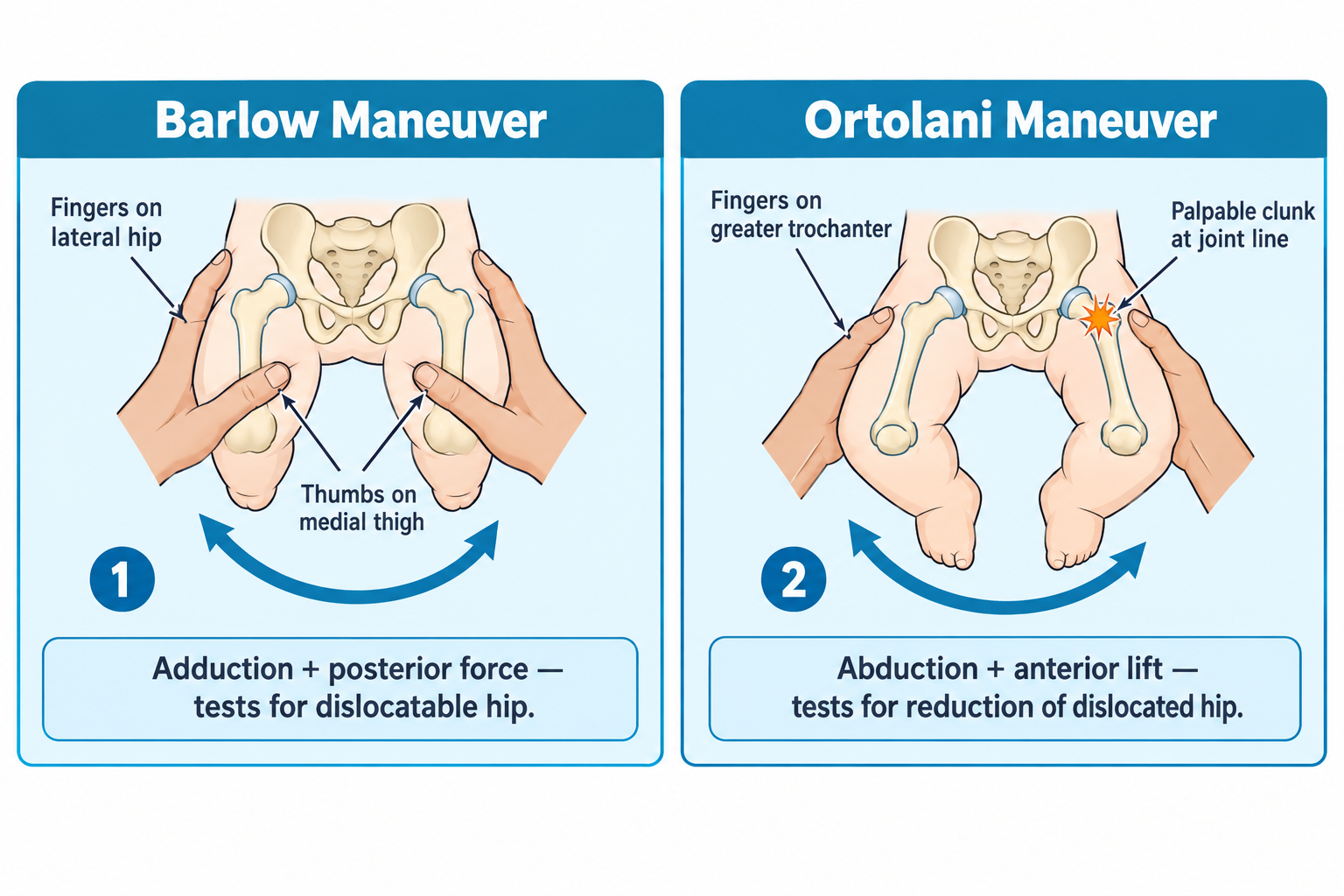
Hip dysplasia screening
- Ortolani & Barlow tests
- Uneven gluteal folds → suspicion
Abnormal
- Limb asymmetry
- Clubfoot
- Polydactyly
- Neural tube defects (tuft of hair, sacral dimple with base not visualized)
Gestational age assessment (Ballard exam)
When the newborn’s gestational age is uncertain from maternal dates, the nurse can estimate it using the New Ballard score, a standardized scoring tool based on physical and neuromuscular maturity.
- Neuromuscular maturity signs: posture, square window (wrist flexion), arm recoil, popliteal angle, scarf sign, and heel-to-ear.
- Physical maturity signs: skin texture, lanugo amount, plantar surface creases, breast tissue, eye/ear development, and genital maturity.
- Each sign is scored, the scores are totaled, and the total maps to an estimated gestational age in weeks.
- The resulting score classifies the newborn as preterm, term, or post-term, which sets expectations for findings like vernix, lanugo, and reflex strength seen elsewhere in the assessment.
Neurological assessment
Normal newborn reflexes
| Reflex | Expected response | Disappears |
| Moro (startle) | Arms extend then flex | 4-6 months |
| Rooting | Turns to cheek touch | 4 months |
| Sucking | Rhythmic sucking | 6 months |
| Palmar grasp | Grasps object | 6 months |
| Plantar grasp | Toes curl downward | 9-12 months |
| Babinski | Toes fan out | 1 year |
| Stepping | Stepping motion when upright | 4-8 weeks |
| Tonic neck | “Fencing” posture | 3-4 months |
Abnormal findings
- Absent reflexes
- Persistent reflexes beyond expected age
- Seizure-like activity
- High-pitched cry
Clinical instance: Cephalohematoma and jaundice risk
A newborn appears pale and irritable. The nurse notes a large cephalohematoma and rising bilirubin. Recognizing the risk for hyperbilirubinemia, the nurse notifies the provider, obtains a serum bilirubin level, and initiates phototherapy as ordered, preventing progression to kernicterus.
Client education
The caregiver or family is the client for newborn teaching, since the newborn cannot participate in their own care. Teach the client to expect the following:
- Milia, Mongolian spots, and peeling skin are normal in the first days.
- 6-8 wet diapers/day by the end of the first week are expected.
- Report poor feeding, fever, or persistent vomiting to the provider.
- Redness or foul smell from the umbilical cord is not normal and should be reported.
- Sneezing and hiccups are common and are not signs of illness.