



Aging, transitions, and end-of-life considerations
Introduction
Aging is not a disease; it is a complex physiological transition that touches every organ, every relationship, and every layer of identity. Nurses play a pivotal role in recognizing normal aging vs. pathology, supporting independence, ensuring safety, and guiding families through some of life’s hardest decisions.
The NCLEX frequently tests your ability to distinguish expected age-related changes from red-flag symptoms, understand palliative and end-of-life care, and navigate ethical situations involving autonomy, dignity, advance directives, and grief. This chapter supports you in approaching older adults with competence, compassion, and clinical clarity. The chapters that follow build on this foundation, covering growth and development across the lifespan and antepartum, intrapartum, and postpartum care in more depth.
Learning objectives
By the end of this section, you should be able to:
- Differentiate normal age-related changes from abnormal findings.
- Conduct functional assessments and identify fall, safety, and nutritional risks.
- Support clients through major aging transitions (retirement, frailty, caregiving needs).
- Apply principles of palliative care and hospice.
- Understand advance directives, POLST forms, and ethical end-of-life communication.
- Recognize types of grief and provide culturally sensitive support.
- Apply NCLEX reasoning to prioritization and safety scenarios involving older adults.
Physiological changes of aging
Aging affects every body system. NCLEX tests what is expected, what is concerning, and what requires immediate action.
Cardiovascular
Expected changes
- Decreased baroreceptor sensitivity → orthostatic hypotension.
- Increased vascular stiffness → higher systolic blood pressure.
- Reduced cardiac output with exertion.
Red flags
- Chest pain
- Syncope
- New heart failure symptoms
- Rapid arrhythmias
Respiratory
Expected changes:
- Decreased lung elasticity
- Diminished cough reflex
- Decreased ciliary activity
Red flags:
- Pneumonia
- Aspiration
- Hypoventilation with sedatives/opioids
Renal
Expected changes:
- Reduced GFR
- Decreased renal blood flow
Implication:
- Adjust medication dosing
- Increased risk for dehydration
Neurologic
Expected changes:
- Slower reaction time
- Mild memory changes
Red flags:
- Sudden confusion
- Disorientation
- Difficulty speaking or walking
- New incontinence
These sudden changes suggest delirium, stroke, or infection, and call for immediate evaluation.
Musculoskeletal
- Decreased bone density (osteopenia/osteoporosis)
- Reduced muscle mass (sarcopenia)
- Stiff joints
These changes increase the risk of falls, fractures, and mobility limitations.
Gastrointestinal
- Slowed GI motility → constipation
- Decreased appetite and thirst perception
Red flags:
- Dysphagia
- Weight loss
- Bleeding (black or bloody stools)
Functional assessment and independence
Functional ability determines quality of life more than disease burden.
Activities of daily living (ADLs)
Basic self-care:
- Bathing
- Dressing
- Toileting
- Transferring
- Continence
- Eating
Instrumental activities of daily living (IADLs)
Higher-level functioning:
- Managing medications
- Finances
- Transportation
- Shopping
- Cooking
- Housekeeping
Fall risk assessment
Falls are the leading cause of injury-related death in older adults.
Risk factors
- Polypharmacy (sedatives, antihypertensives)
- Previous falls
- Poor vision
- Lower extremity weakness
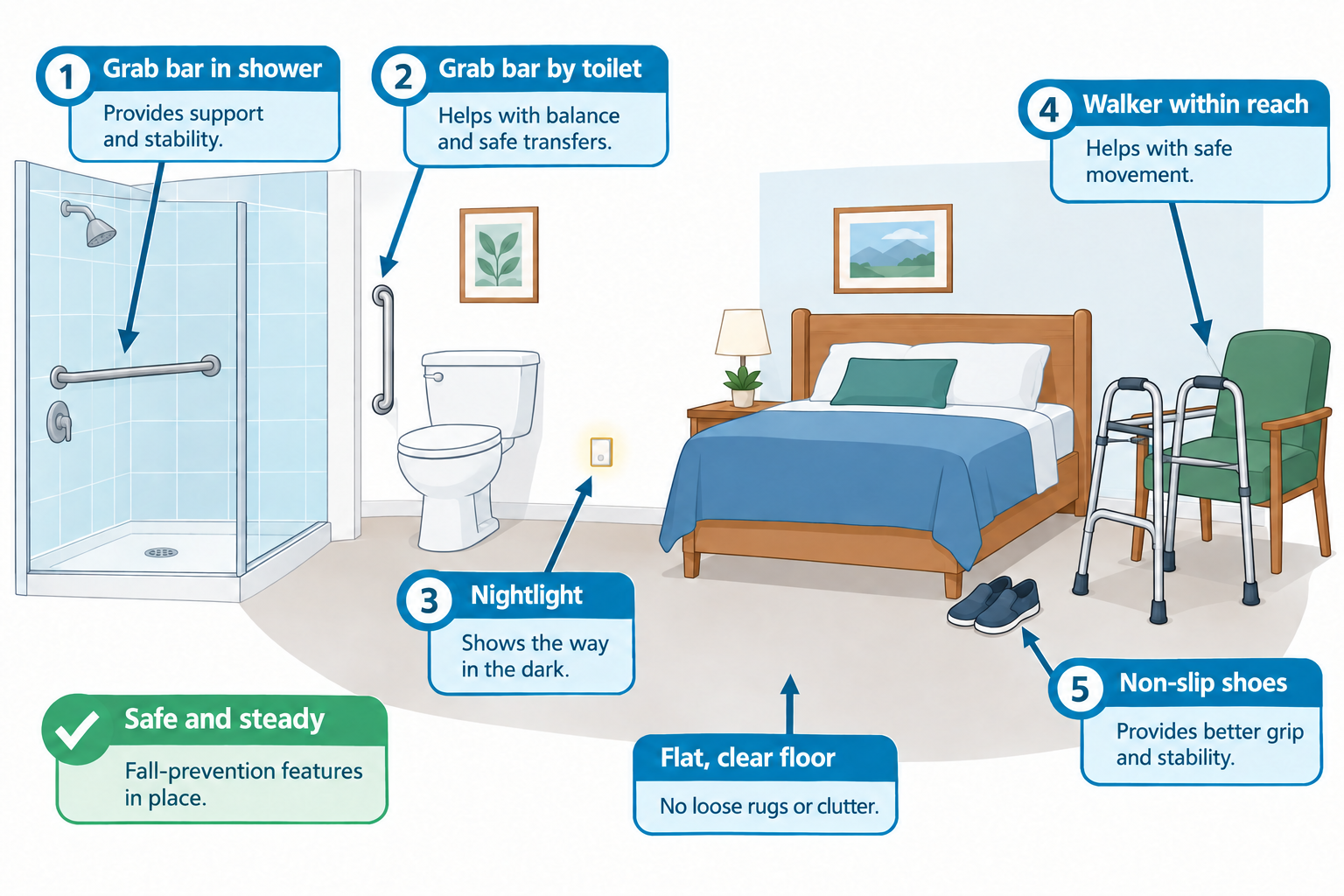
- Environmental hazards (loose rugs, clutter)
Nursing interventions
- Remove hazards
- Install grab bars and lighting
- Ensure well-fitting shoes
- Review medications
- Strengthen balance through PT referrals
Transitions in aging
Aging includes major emotional, social, and physical transitions.
Retirement
- Changes in identity, purpose, financial security.
- Risk of depression or isolation.
Caregiving and role shifts
- Adult children caring for aging parents.
- Caregiver burnout is a high-risk condition; screening is essential.
Frailty
Frailty = decreased physiologic reserve + vulnerability to stressors.
- Weight loss
- Weakness
- Slow gait
- Exhaustion
Frail clients require gentle transitions of care and early discharge planning.
Palliative care and hospice
Palliative care is not limited to end-of-life; it can begin at diagnosis of any serious illness.
Palliative care goals
- Symptom relief
- Quality of life
- Emotional, spiritual, and family support
- Coordination of care
Hospice
Hospice is for individuals with life expectancy of 6 months or less who choose comfort-focused care.
Key principles:
- No curative treatments.
- Interdisciplinary team support.
- Symptom management: pain, dyspnea, nausea, anxiety.
- Prioritizing dignity and comfort.
Symptom management basics
Pain
- Opioids are appropriate and safe when titrated carefully.
- Constipation prophylaxis required.
Dyspnea
- Oxygen for comfort.
- Opioids reduce air hunger.
- Fan or cool air improves perception of breathing.
Nausea
- Ondansetron, haloperidol, metoclopramide depending on cause.
Advance directives, autonomy, and decision-making
Respecting client wishes is central to ethical nursing.
Advance directives
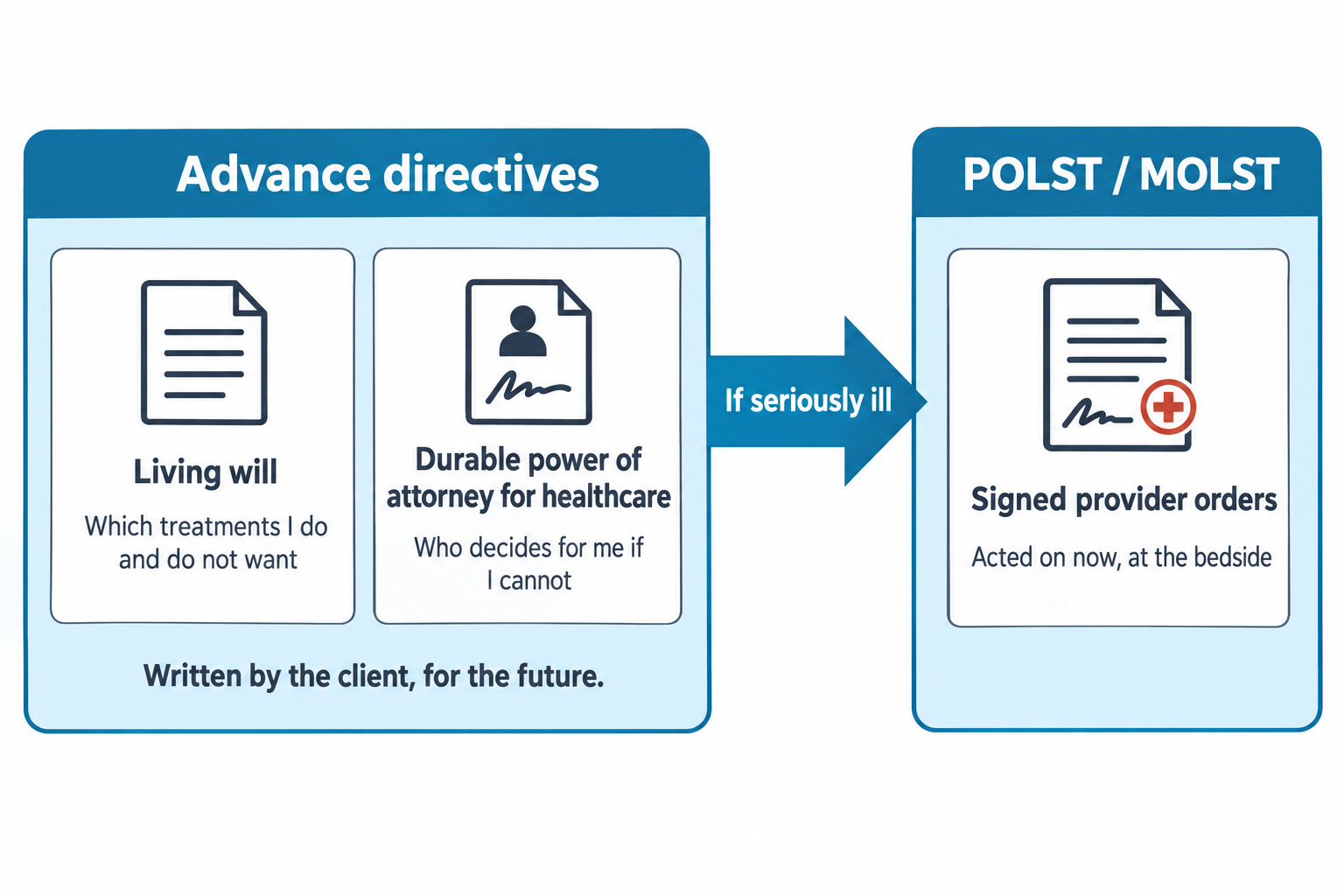
- Outline client preferences for future medical care.
- Include living wills and durable powers of attorney for healthcare.
POLST/MOLST
- Orders from the primary health care provider for life-sustaining treatment.
- Actionable medical orders for seriously ill clients.
Ethical principles
- Autonomy: honoring client choices.
- Beneficence: promoting good.
- Nonmaleficence: avoiding harm.
- Justice: fair allocation of resources.
Capacity
Clients must understand, appreciate, reason, and communicate their choices.
Cultural considerations and spiritual care
End-of-life beliefs vary widely. Nurses must ask open, respectful questions:
- “What helps you feel supported right now?”
- “Are there any practices or traditions we should honor?”
- “Who would you like involved in decision-making?”
Avoid assumptions. Follow the client’s cultural and spiritual framework.
Grief, bereavement, and loss
Grief is not linear, and clients and families may cycle through multiple emotions.
Types of grief
-
Anticipatory grief: before the loss.
-
Acute grief: immediately after.
-
Complicated grief: prolonged, impairing function.
-
Disenfranchised grief: grief not recognized by society (e.g., miscarriage, loss of pet).
Nursing role
- Listen more than you speak.
- Validate feelings.
- Avoid clichés (“he’s in a better place”).
- Offer resources (support groups, counselors, chaplaincy).
Clinical vignette: An 82-year-old woman is admitted after a fall. She is confused, weak, and dehydrated. Her daughter appears overwhelmed and tearful, reporting that she has been caring for her mother alone.
The nurse completes a fall and delirium assessment, initiates hydration, removes tripping hazards, and coordinates PT and social work consults. The nurse also gently explores caregiver strain and provides resources for respite care. This holistic approach addresses both client safety and family well-being.
Client education
- Report sudden confusion or behavior changes immediately.
- Stay physically active to maintain strength and balance.
- Keep home environments well-lit and free of hazards.
- Use assistive devices consistently.
- Complete advance directives early, before crises arise.
- Stay connected socially. Isolation worsens health outcomes.
- Hospice and palliative care focus on comfort and dignity, not “giving up.”