



Lifestyle counseling and high-risk behaviors
Introduction
Lifestyle counseling is one of the most powerful tools in nursing practice, not because it’s dramatic or complex, but because it quietly shapes decades of a client’s health trajectory. A brief conversation about alcohol intake, safer sex, exercise, or vaping may prevent disease, reduce hospitalizations, or even save a life.
NCLEX evaluates lifestyle counseling through clinical judgment: recognizing risk, prioritizing interventions, communicating empathetically, and tailoring education to each client. Throughout this chapter - and throughout NCLEX - the person receiving care is the client (an individual, family, or population), and the person directing medical treatment is the primary health care provider. In this chapter, you will learn how to assess behaviors, address sensitive topics without judgment, and support clients through evidence-based guidance.
Learning objectives
By the end of this section, you should be able to:
- Identify lifestyle-related risks contributing to chronic disease, injury, or infection.
- Provide nonjudgmental, evidence-based counseling on substance use, sexual health, exercise, diet, and mental health.
- Recognize red-flag behaviors requiring immediate intervention.
- Use motivational interviewing to engage clients in behavior change.
- Apply NCLEX reasoning to questions that assess safer sex practices, substance misuse, STI prevention, and harm reduction.
Substance use (alcohol, tobacco, vaping, opioids, stimulants)
Substance use disorders are common, deadly, and often silent until complications emerge. Nurses must screen, educate, intervene early, and provide resources without shaming or alienating clients.
Alcohol
Risks of unhealthy alcohol use
- Liver disease (hepatitis, cirrhosis).
- Hypertension and cardiomyopathy.
- Pancreatitis.
- Cancers (oral, esophageal, liver, colon).
- Depression and suicidality.
- Falls, trauma, unsafe sex, unintended pregnancy.
Recommended limits
- Men (adult): ≤2 drinks/day
- Women (adult): ≤1 drink/day
- Pregnancy: zero alcohol
Unless a question states a pediatric or adolescent age, NCLEX defaults to an adult client for guidelines like these.
Tobacco and vaping
Key harms
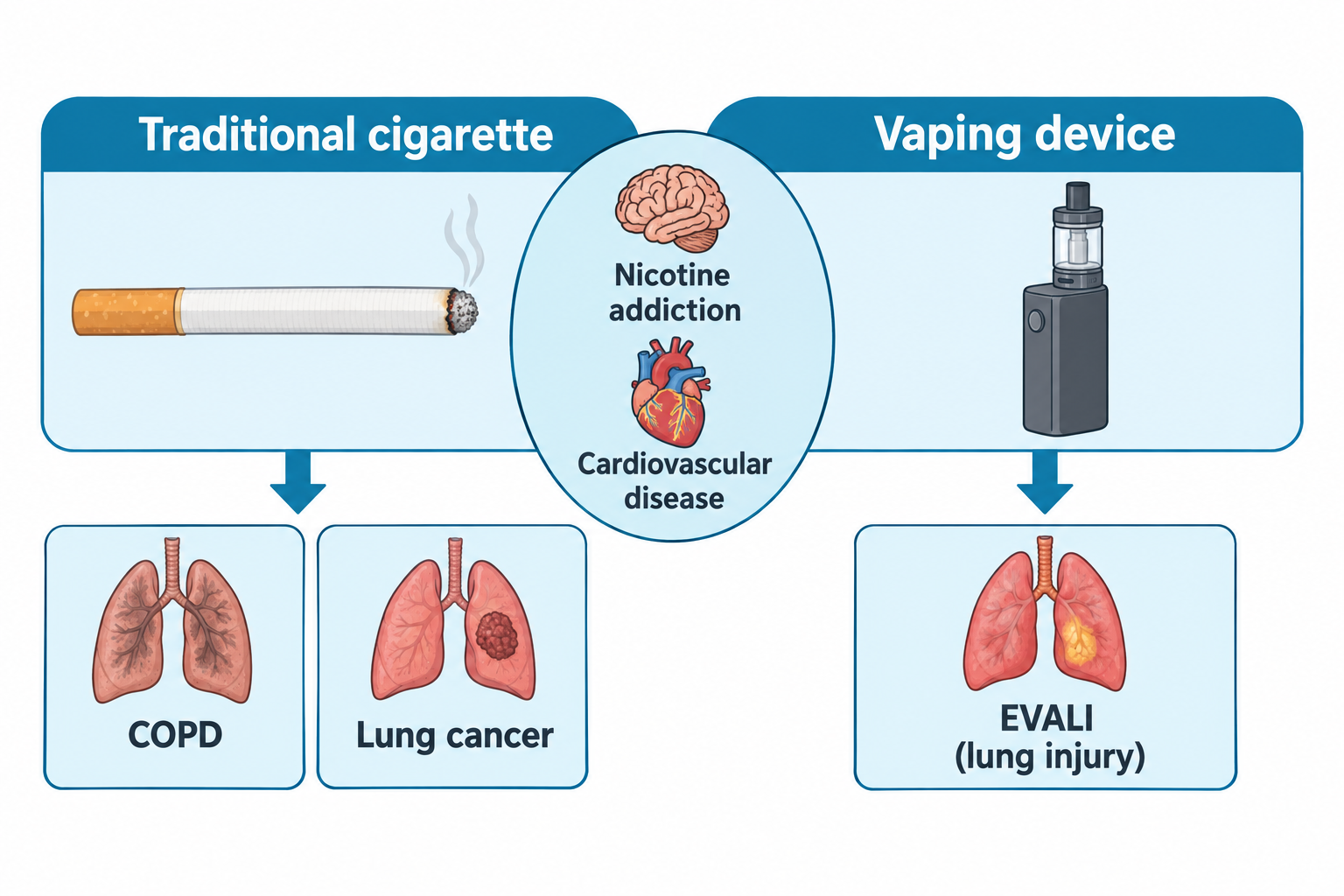
- COPD, lung cancer, heart disease, stroke.
- Increased post-op complications.
- Vaping risks: EVALI (lung injury), nicotine addiction, metallic exposure.
Counseling points
- Quitting at any age improves lung and heart health.
- Nicotine replacement therapy (patch, gum, lozenge) is safe for adults.
- Combine pharmacotherapy + counseling for best results.
Opioids, stimulants, and other drugs
Example: Recognizing opioid overdose
A nurse finds a client unresponsive, with pinpoint pupils and a respiratory rate of 6 breaths/min. What’s the priority action?
- Recognize this triad - unresponsiveness, pinpoint pupils, and respiratory depression - as opioid overdose until proven otherwise.
- Support the airway and breathing first; oxygenation is the immediate life threat.
- Administer naloxone per protocol and notify the primary health care provider.
Answer: Support the airway and administer naloxone right away - opioid overdose is a life-threatening emergency that requires immediate reversal and airway support.
Stimulants (cocaine, methamphetamine)
- Risk of arrhythmias, stroke, psychosis.
- Avoid concomitant alcohol or caffeine.
Cannabis
- Affects memory, coordination, driving ability.
- Avoid in pregnancy and breastfeeding.
Motivational interviewing (MI)
A communication tool to encourage behavior change without confrontation.
Key MI principles:
- Ask open-ended questions: “What concerns you about your vaping?”
- Affirm strengths: “You’ve taken an important step by asking about help.”
- Reflect: “You’re worried but also unsure where to start.”
- Summarize: “Your goal is to cut back, and you want options that feel realistic.”
NCLEX commonly tests MI as a correct therapeutic communication option.
Sexual health and STI prevention
Sexual health counseling must be inclusive, nonjudgmental, culturally sensitive, and fact-based.
Safer sex practices
- Consistent condom use.
- Regular STI testing, especially with new or multiple partners.
- Avoid douching (alters vaginal flora).
- PrEP for high-risk individuals to prevent HIV.
- PEP (post-exposure prophylaxis) within 72 hours after suspected HIV exposure.
High-priority STIs on NCLEX
- Chlamydia: Often asymptomatic; first-line treatment is doxycycline (azithromycin is an alternative for adherence concerns; in pregnancy, azithromycin is preferred); test partners.
- Gonorrhea: Treat with ceftriaxone; test for co-infection.
- Syphilis: Painless chancre → rash on palms/soles → neurological sequelae.
- HIV: Routine screening ages 13-64.
- HPV: Vaccination starting at 9-12 years.
- HSV: Recurrent ulcers; emphasize safe sex and suppressive therapy.
Red-flag symptoms requiring urgent evaluation
- Pelvic pain or fever (possible PID).
- Testicular pain/swelling.
- Purulent discharge.
- Jaundice with STI exposure (possible hepatitis).
Consent, confidentiality, and minors
In many jurisdictions, adolescents can consent to STI treatment without parental involvement.
Exercise, diet, sleep, and chronic disease prevention
These lifestyle domains are consistently linked to long-term health outcomes.
Exercise
Recommendations
- Adults: ≥150 minutes/week moderate activity.
- Children/adolescents: ≥60 minutes/day activity.
Benefits
- Improved mood and cognition.
- Reduced risk of diabetes, hypertension, and heart disease.
- Better sleep.
- Weight maintenance.
NCLEX may phrase this as “which recommendation should the nurse make to reduce cardiovascular risk?”
Nutrition
- Increase fruits, vegetables, and whole grains; limit saturated fat, sodium, and sugary drinks - these choices directly affect cardiovascular and metabolic risk.
Sleep
- Adults: 7-9 hours/night; children and teens need more, following age-specific schedules.
- Insufficient sleep raises risk for obesity, depression, hypertension, and accidents.
High-risk behaviors: assessment and intervention
Identifying risk
Ask about:
- Unprotected sex
- Multiple partners
- Substance use
- Texting while driving
- Extreme dieting or eating disorders
- Self-harm behaviors
- Firearm exposure
- Intimate partner violence
Use nonjudgmental, open-ended questions:
- “Can you tell me about your alcohol use?”
- “What strategies do you use to stay safe during sex?”
- “How often do you vape?”
Client-centered counseling strategies
Therapeutic communication
- Avoid judgment, lecturing, or moralizing
- Use open-ended questions
- Validate concerns
- Give clear, simple education
- Focus on client goals
Harm-reduction strategies
- Provide naloxone to opioid-using clients.
- Recommend condoms even if abstinence isn’t chosen.
- Clean needles and safe injection education (where legally supported).
- Encourage designated drivers or ride-share.
Building readiness for change
Use the stages of change model (pre-contemplation → contemplation → preparation → action → maintenance).
NCLEX often tests the nurse’s ability to meet clients where they are, not where the nurse wants them to be.
Clinical vignette: A 19-year-old college student reports “hooking up a lot” and not always using condoms. She recently had chlamydia and admits she sometimes drinks heavily on weekends.
The nurse responds by:
- Using motivational interviewing to explore readiness for safer sex.
- Educating on consistent condom use, STI screening, and alcohol-related risk.
- Offering resources for contraception and STI testing.
- Screening for intimate partner violence and substance misuse.
This nonjudgmental, client-centered approach maximizes safety and trust.