



Health screenings and preventive care (vision, cancer, immunizations)
Introduction
Preventive care is incomplete without vaccination, but it also stretches far beyond shots and lab slips. Health screenings and immunizations together form the backbone of proactive health management across the lifespan. Instead of waiting for illness to appear, preventive care aims to catch disease early or stop it before it ever starts.
Vaccines train the immune system to recognize specific pathogens without the person having to suffer the actual infection. Screenings help uncover silent problems like hypertension, early cancers, and vision loss at a stage when treatment is most effective.
On the NCLEX, you will be tested on what to screen, when to screen, and which immunizations are due based on age and risk.
Health screening and preventive care in infants and children
Preventive care in childhood follows a carefully structured schedule, most commonly guided by CDC well-child visit and immunization recommendations. Each visit is an opportunity to screen, counsel, and immunize so that children grow and develop safely.
Key components of the pediatric preventive schedule
-
Health screenings and developmental surveillance
- Well-child visits monitor overall health, development, behavior, and family dynamics.
- Providers assess milestones, nutrition, sleep, safety practices, and family concerns.
-
Growth monitoring
- Height, weight, and head circumference (in infants) are plotted on growth charts.
- Outliers may indicate failure to thrive, obesity, endocrine disorders, or chronic disease.
-
Developmental screening
- Formal screening tools check motor, language, cognitive, and social-emotional skills.
- Structured screening is often done at 9, 18, and 30 months.
- Autism spectrum disorder screening is typically performed at 18 and 24 months.
-
Vision and hearing screening
-
Vision
- Newborns: red reflex and eye alignment.
- Young children: visual acuity testing often begins around age 3-4.
- Goal: detect refractive errors, strabismus, and other conditions early.
-
Hearing
- Universal newborn hearing screening is standard.
- Follow-up screenings occur throughout childhood to detect conductive or sensorineural loss.
-
-
Anemia and lead exposure screening
- Hemoglobin or hematocrit around 1 year of age to detect iron deficiency anemia.
- Lead screening is performed at recommended intervals, especially in high-risk areas or older housing.
-
Preventive care and counseling
- Each visit includes age-appropriate counseling on:
- Safety (car seats, helmets, water safety, safe sleep).
- Nutrition (breastfeeding, formula, solids, limiting sugary drinks).
- Behavior and mental health.
- Oral health (fluoride, dental visits).
- Injury prevention (falls, burns, poisoning).
- Each visit includes age-appropriate counseling on:
Adult health screening and preventive care
For adults, screening and preventive care aim to catch silent disease before it causes organ damage or disability. NCLEX expects you to know what is recommended for the average-risk adult and which higher-risk individuals need intensified surveillance.
Vision health
Regular eye examinations help catch vision problems and eye disease before permanent damage occurs.
-
Routine eye exams
- Check visual acuity and refractive errors (myopia, hyperopia, astigmatism).
- Recommended frequency varies with age, existing conditions, and guidance from the primary health care provider.
-
Screening for eye disease
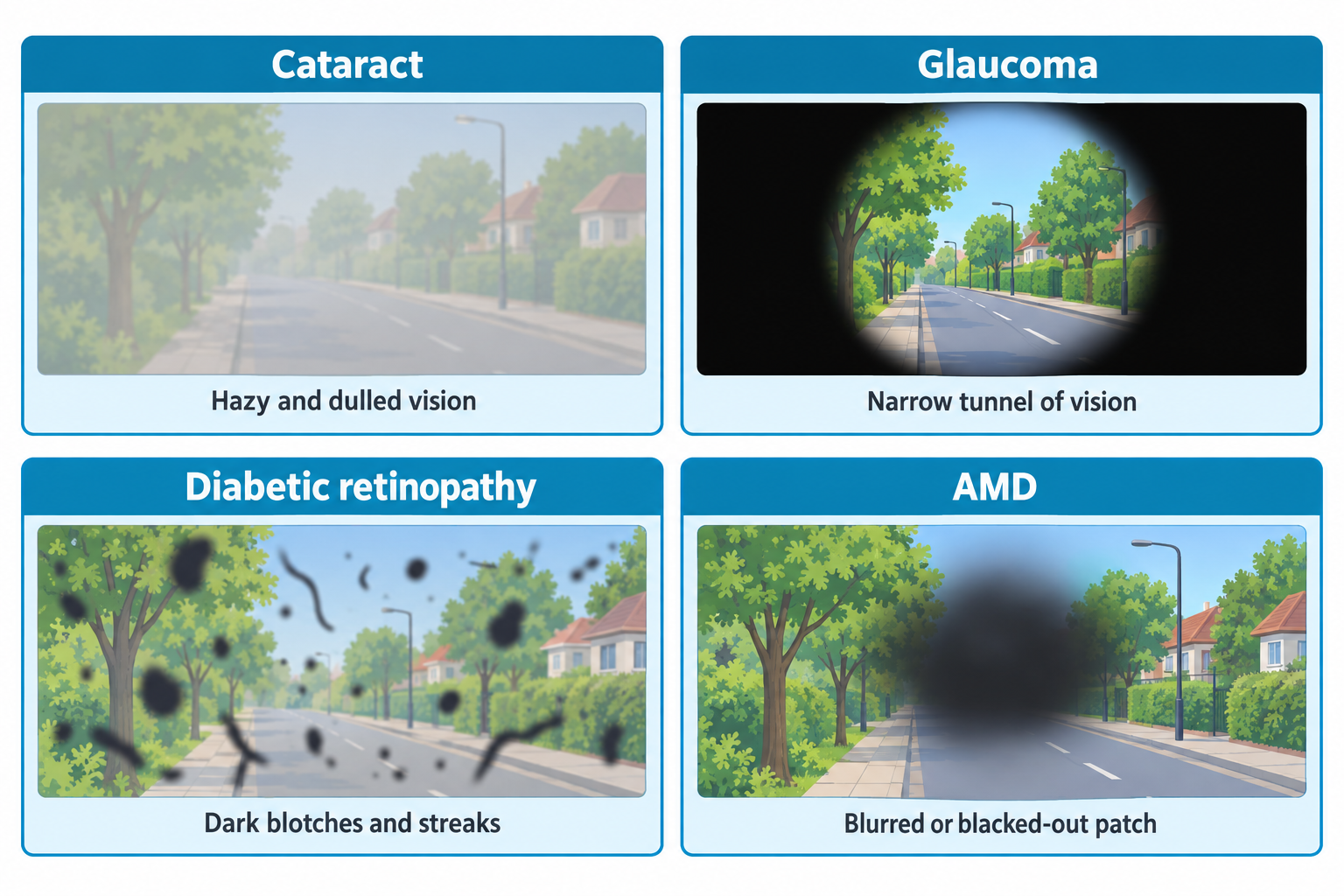
- Glaucoma - progressive optic nerve damage, often due to increased intraocular pressure; early detection prevents vision loss.
- Cataracts - clouding of the lens, common with aging; treatable with surgery.
- Diabetic retinopathy - microvascular damage of the retina in people with diabetes; screened by regular dilated eye exams.
- Age-related macular degeneration - degeneration of central retina; leading cause of central vision loss in older adults.
Cancer screenings
Screenings detect cancers early, often before symptoms. Exact guidelines vary slightly by organization, but NCLEX focuses on general patterns for average-risk adults.
-
Colorectal cancer
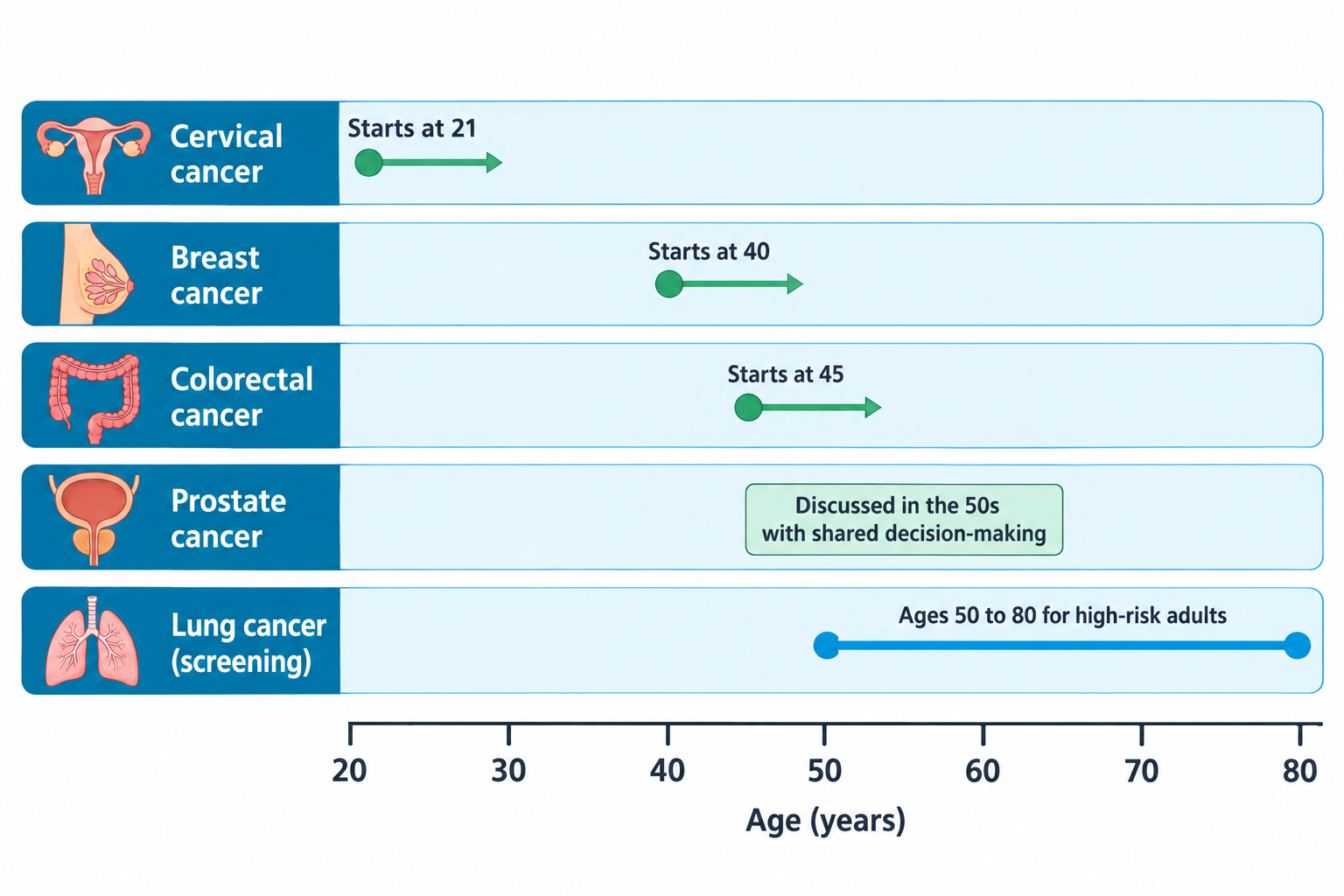
- Screening typically begins around age 45 for average-risk adults.
- Methods include:
- Fecal occult blood test (FOBT) or fecal immunochemical test (FIT).
- Colonoscopy (often every 10 years if normal).
- Sigmoidoscopy at defined intervals.
-
Breast cancer
- Biennial (every 2 years) screening for average-risk women ages 40 through 74 (2024 USPSTF).
- Tools: mammography ± clinical breast exam.
-
Cervical cancer
- Pap tests begin at age 21 for women.
- Age 21-29: pap every 3 years.
- Age 30-65: pap plus HPV co-testing every 5 years, or pap alone every 3 years.
-
Prostate cancer
- Screening (PSA ± digital rectal exam) typically discussed with men beginning in their 50s.
- Shared decision-making is crucial, especially in men with higher risk (family history, Black race).
-
Lung cancer
- Annual low-dose CT screening is recommended for high-risk adults aged 50-80 with a 20+ pack-year smoking history who currently smoke or quit within the past 15 years.
Example: Applying lung cancer screening criteria
A 52-year-old client smoked 1 pack per day for 25 years and quit smoking 5 years ago. Does this client meet the criteria for annual low-dose CT lung cancer screening?
- Age: 52 falls within the 50-80 range. ✓
- Smoking history: 1 pack/day × 25 years = 25 pack-years, which exceeds the 20 pack-year threshold. ✓
- Time since quitting: 5 years, within the 15-year window. ✓
Answer: Yes - this client meets all three criteria for annual low-dose CT lung cancer screening.
- Other key concepts
- Sensitivity: how often a screening test correctly identifies those with disease.
- Specificity: how often it correctly identifies those without disease.
- Positive predictive value: probability that a positive test actually indicates disease.
Other essential preventive care components
-
Blood pressure screening
- Detects hypertension, a major risk factor for heart attack, stroke, and kidney disease.
-
Cholesterol and lipid screening
- Identifies hyperlipidemia and guides statin therapy to prevent cardiovascular disease.
-
Diabetes screening
- A1C, fasting glucose, or oral glucose tolerance tests for high-risk adults (e.g., overweight, family history, gestational diabetes).
-
Osteoporosis screening
- DEXA scans typically for women beginning at age 65 and earlier for high-risk individuals.
-
Mental health screening
- Brief tools for depression, anxiety, and substance use disorders.
-
Counseling
- Smoking cessation, alcohol moderation, healthy diet, physical activity, sleep hygiene, and injury prevention.
By staying current with recommended screenings and immunizations, adults greatly improve their chances of early detection, effective treatment, and maintaining quality of life.
Older adults: comprehensive screening and preventive care
Older adults experience rising risk for chronic diseases, sensory losses, falls, mood changes, and cognitive decline. Preventive care in this group follows the same screening categories as the adult baseline above, adjusted for life expectancy, comorbidities, and functional status. The points below highlight where older-adult care diverges from that baseline.
- Cancer screening may be individualized or discontinued. Colorectal, breast, and cervical cancer screening are continued, adjusted, or stopped based on life expectancy, comorbidities, and adequate prior negative results, guided by the primary health care provider.
- Hearing loss becomes a screening priority. Periodic audiology screening detects presbycusis (age-related hearing loss); hearing support reduces isolation and may slow cognitive decline.
- Abdominal aortic aneurysm (AAA) screening is added: a one-time ultrasound for men age 65-75 who have ever smoked.
- Fall prevention is added alongside routine bone-density screening: home safety assessment, strength and balance exercises, and assistive devices when indicated.
- Cognitive screening is added: early detection of dementia signs so clients and families can plan and access support.
- Medication review is prioritized: periodic reconciliation catches polypharmacy, drug interactions, and potentially inappropriate medications; simplifying regimens improves adherence and safety.
A systematic and individualized approach helps older adults maintain independence and function, not just survive.
Immunization scheduling across the lifespan
Overview of immunization scheduling
Immunization schedules are designed to deliver vaccines at ages when they will be most effective and safest. By following recommended schedules, individuals gain protection, and communities gain herd immunity.
Key principles:
- Use age-appropriate schedules.
- Follow catch-up guidance if doses were missed.
- Respect contraindications and precautions.
- Keep accurate records.
- Follow current public health recommendations (CDC, WHO, local guidelines).
Immunization principles by life stage
Rather than memorizing exact dose ages here, focus on the scheduling principles above - dose-by-dose timing for each age group is covered in the growth and development chapters (for example, Infancy (0-1 year) through Older adults (65+ years)).
- Children and adolescents follow the CDC childhood immunization schedule, covering hepatitis B, DTaP, polio, Hib, pneumococcal conjugate, rotavirus, MMR, varicella, hepatitis A, HPV, and meningococcal vaccines, with age-based boosters through adolescence.
- Adults need a Tdap/Td booster every 10 years - pregnant clients must receive a Tdap booster during every pregnancy regardless of prior timing - plus annual influenza vaccination, HPV catch-up through age 26 (ages 27-45 with shared decision-making), and hepatitis B if not previously vaccinated.
- Older adults add shingles (Shingrix) and pneumococcal vaccination starting between ages 50 and 65, plus COVID-19 boosters as recommended by public health authorities.
General considerations for scheduling
-
Catch-up schedules
- Used for children, adolescents, or adults who started late or fell behind.
-
Contraindications and precautions
- Severe allergic reaction to a prior dose or component.
- Certain immunocompromised states (especially for live vaccines).
- Pregnancy considerations for specific vaccines.
-
Record keeping
- Essential for tracking doses and preventing unnecessary repeat vaccination.
-
Public health guidelines
- Schedules are continuously updated as new evidence and vaccines emerge.
Clinical vignette: A 47-year-old woman presents for a routine visit. She reports no pap smear in 8 years and has new sexual partners. The nurse schedules cervical cancer screening, conducts STI testing, updates her immunizations, and provides HPV counseling. Proactive preventive care identifies early cervical dysplasia, leading to treatment that prevents progression to invasive cancer.
Client education
- Schedule routine wellness visits even when you feel well.
- Keep vaccines up to date at every stage of life.
- Pap smears, mammograms, and colonoscopies save lives by catching cancer early.
- Report unexplained weight loss, bleeding, fatigue, or persistent pain.
- Know your family history to guide screening decisions.
- Lifestyle choices (diet, physical activity, sleep, stress management, tobacco and alcohol use) are powerful preventive tools.