


Achievable logoAchievable logo
NCLEX
Sign in
Sign up
Purchase
Textbook
Practice exams
Support
How it works
Exam catalog
Mountain with a flag at the peak
Textbook
Introduction
1. Safe and effective care environment
2. Health promotion and maintenance
2.1 Growth and development across the lifespan
2.1.1 Infancy (0–1 year)
2.1.2 Early childhood (1–5 years)
2.1.3 School age (6–12 years)
2.1.4 Adolescence (13–18 years)
2.1.5 Adulthood (19–64 years)
2.1.6 Older adults (65+ years)
2.2 Antepartum, intrapartum and postpartum
2.3 Newborn care and developmental milestones
2.4 Health screenings and preventive care (vision, cancer, immunizations)
2.5 Lifestyle counseling and high-risk behaviors
2.6 Aging, transitions, and end-of-life considerations
3. Psychosocial Integrity
4. Physiological Integrity
Wrapping up
Achievable logoAchievable logo
2.1.6 Older adults (65+ years)
Achievable NCLEX
2. Health promotion and maintenance
2.1. Growth and development across the lifespan
Our NCLEX course is currently in development and is a work-in-progress.

Older adults (65+ years)

9 min read
Font
Discuss
Share
Feedback

Introduction

Older adulthood is a season marked by wisdom, reflection, and profound transitions, but also increased vulnerability. As the body ages, physical reserves decline, chronic conditions accumulate, and social roles shift. Yet many older adults remain active, engaged, and independent with proper support.

NCLEX emphasizes this stage because nurses are central to recognizing subtle changes, preventing complications, preserving dignity, and promoting quality of life in a population that is living longer, and often living with multiple comorbidities.

Learning objectives

By the end of this section, you should be able to:

  • Describe the physical, cognitive, emotional, and social changes of aging.
  • Recognize common geriatric syndromes and safety risks.
  • Apply evidence-based interventions to support independence and quality of life.
  • Identify red flags requiring immediate assessment and intervention.
  • Provide age-appropriate health screenings and preventive care.
Definitions
Delirium
Acute, reversible disturbance in attention and cognition.
Dementia
Progressive, irreversible cognitive decline.
Polypharmacy
Use of multiple medications increasing risk for adverse events.
Functional decline
Reduced ability to perform ADLs and IADLs.
Elder abuse
Physical, emotional, financial, or neglectful harm to older adults.

Physical development

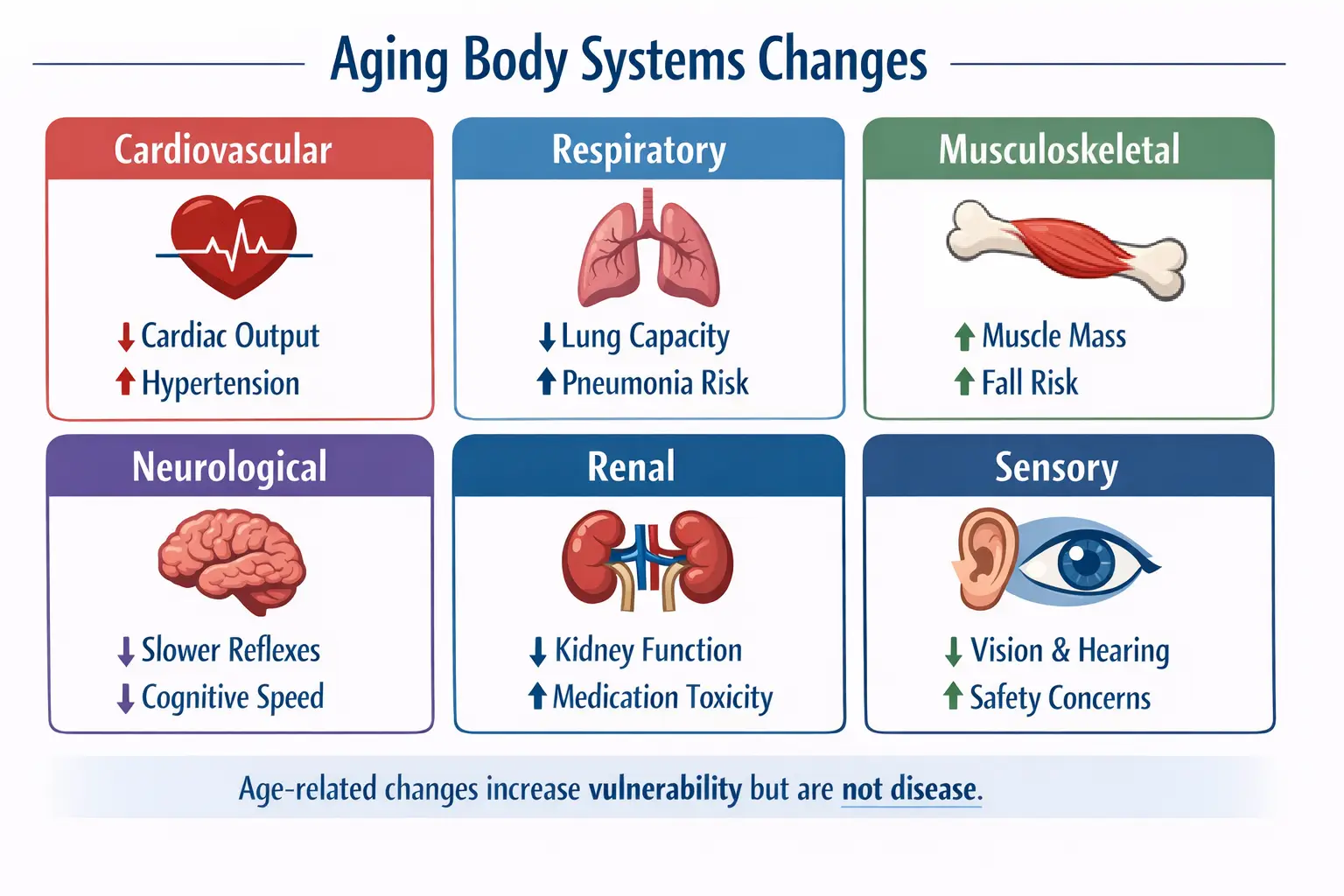
Aging is not a disease: it is a predictable physiological process. However, age-related changes increase susceptibility to illness and functional decline.

Cardiovascular

  • Decreased cardiac output and vessel elasticity → higher risk of hypertension, arrhythmias.
  • Orthostatic hypotension common due to baroreceptor insensitivity.

Respiratory

  • Reduced lung elasticity and chest wall compliance.
  • Diminished cough reflex increases pneumonia risk.

Musculoskeletal

  • Sarcopenia (loss of muscle mass) reduces strength and mobility.
  • Bone density declines → osteoporosis and fracture risk.

Neurological

  • Slower reaction time and processing speed.
  • Minimal memory changes are normal; significant decline is not.

Renal

  • Reduced renal blood flow and GFR → medication accumulation risk.

Gastrointestinal

  • Slower peristalsis → constipation common.
  • Decreased appetite and changes in taste/smell.

Sensory

  • Presbyopia (difficulty seeing near objects).
  • Presbycusis (age-related hearing loss, especially high-frequency).
  • Diminished sensitivity to temperature (burn risk).
Organ systems affected by aging
Aging body system

Cognitive development

Minimal memory changes are normal, but nurses must recognize that significant cognitive decline is not a normal part of aging and requires immediate evaluation, a key focus for NCLEX preparedness.

Normal cognitive aging

  • Mild forgetfulness, slower recall, reduced multitasking.
  • Crystallized intelligence (knowledge, skills) remains strong.

Abnormal cognitive decline

Requires immediate evaluation.

  • Difficulty recognizing familiar people.
  • Getting lost in familiar places.
  • Significant memory loss.
  • Personality or behavior changes.

Piaget: Formal operational stage continues

Older adults retain the ability for abstract thought, reasoning, and problem solving, unless disease interferes.

Psychosocial development

Psychosocially, older adults navigate Erikson’s Integrity vs Despair stage, and the NCLEX prioritizes nursing interventions that support autonomy, dignity, and social engagement to combat isolation and foster life satisfaction.

Erikson: Integrity vs Despair

  • Integrity: satisfaction with life, acceptance of past choices, wisdom.
  • Despair: regret, guilt, fear of death, hopelessness.

Emotional and social transitions

  • Retirement, loss of spouse, financial changes, and increasing health needs affect identity.
  • Social isolation increases risk for depression and cognitive decline.
  • Many older adults thrive through community involvement, spirituality, and meaningful routines.

Geriatric syndromes (NCLEX Priority)

Geriatric syndromes are common, complex health conditions in older adults (such as falls, delirium, and polypharmacy) that nurses taking the NCLEX must recognize as a high priority to prevent functional decline and severe complications.

alt_text
//////Caption: High-yield geriatric syndromes
Illustration type: Summary infographic
Illustration note: Six-panel infographic showing Falls, Delirium, Dementia, Polypharmacy, Urinary Incontinence, and Functional Decline, each with a simple icon and one-line NCLEX takeaway emphasizing recognition and prevention.///////

Falls

The leading cause of injury and death in older adults. Risk factors: medications, orthostatic hypotension, poor vision, muscle weakness, and cluttered home environment.

Dementia

Chronic, progressive cognitive decline affecting memory, personality, and function. It includes Alzheimer’s dementia, Frontotemporal dementia, Lewy body dementia, and Parkinson’s dementia.

Delirium

Acute, fluctuating confusion: a medical emergency. Of the cognitive domains, attention is most affected.

Common causes: infection, medications, dehydration, pain, hypoxia.

Comparing two altered mental states in the elderly
Delirium vs Dementia

Delirium = sudden, reversible, fluctuating.

Dementia = gradual, irreversible, progressive.

Polypharmacy

Use of ≥5 medications increases adverse effects, interactions, falls, and hospitalizations.

Urinary incontinence

An inability to control when and where one urinates is not a normal part of aging. There are several types of urinary incontinence. They include

Stress Incontinence: Urine leaks when physical movement or activity, such as coughing, sneezing, laughing, or exercising, puts sudden pressure on the bladder.

Urge Incontinence: Also known as “overactive bladder,” this involves a sudden, intense, and involuntary need to urinate that is then followed by a loss of urine.

Overflow Incontinence: Frequent or constant dribbling occurs because the bladder does not empty completely, causing it to overfill and leak. There is a lack of ‘filling sensation’, so the bladder overfills and overflows.

None of these are normal, and they all require assessment for reversible causes.

Functional decline

ADLs are activities of daily living. These are basic skills needed for survival and include bathing, dressing, and eating. IADLs are instrumental activities of daily living. These are complex skills that allow an individual to live independently in a community. It includes managing finances, shopping, and taking medications. It is often affected earlier than ADLs.

alt_text
//////Caption: Activities of Daily Living (ADLs) vs Instrumental Activities of Daily Living (IADLs)
Illustration type: Comparison infographic
Illustration note: Split-panel graphic showing ADLs (bathing, dressing, toileting, feeding, transferring) versus IADLs (shopping, cooking, finances, transportation, medication management, housekeeping, telephone use), highlighting that IADLs are usually affected before ADLs.///////

Sexual and reproductive health

Older adults maintain sexual interest but face changes:

  • Women: vaginal dryness, dyspareunia (pain with intercourse).

  • Men: Erectile dysfunction, decreased testosterone.

Nurses should provide supportive, nonjudgmental sexual health counseling and STI education. Older adults remain sexually active but are often forgotten in STI screening.

Nutrition

  • Reduced calorie needs but increased nutrient needs (protein, calcium, vitamin D).
  • Risk for malnutrition due to poor dentition, dysphagia, decreased appetite, and limited resources.
  • Hydration is often inadequate due to diminished thirst sensation.
  • Encourage small, nutrient-dense meals and regular hydration.

Physical activity

Nurses should promote a balanced regimen of aerobic, strength, and balance training (like walking and tai chi) to improve mobility and prevent falls, which is a critical safety priority on the NCLEX.

  • Promote aerobic, strength, and balance training.
  • Walking, tai chi, resistance bands, and swimming improve mobility and prevent falls.
alt_text
//////Caption: Recommended physical activity for older adults
Illustration type: Health promotion infographic
Illustration note: Older adults performing walking, resistance-band exercises, balance training, and tai chi with brief labels emphasizing aerobic, strength, flexibility, and balance exercises for fall prevention and healthy aging.///////

Health screening and preventive care

Screenings (general guidelines)

  • Blood pressure: annually.
  • Cholesterol: yearly depending on risk.
  • Bone density (DEXA): women ≥65, earlier if high-risk.
  • Colorectal cancer: until age 75 (individualized after).
  • Vision and hearing: annually.
  • Depression screening: annually.
  • Fall risk assessment: every visit.

Immunizations

  • Influenza: yearly.
  • Tdap: every 10 years.
  • Pneumococcal: PCV20 or PCV15 + PPSV23 depending on schedule.
  • Shingles (Shingrix): ≥50 years, 2-dose series.
  • COVID boosters per CDC guidance.
alt_text
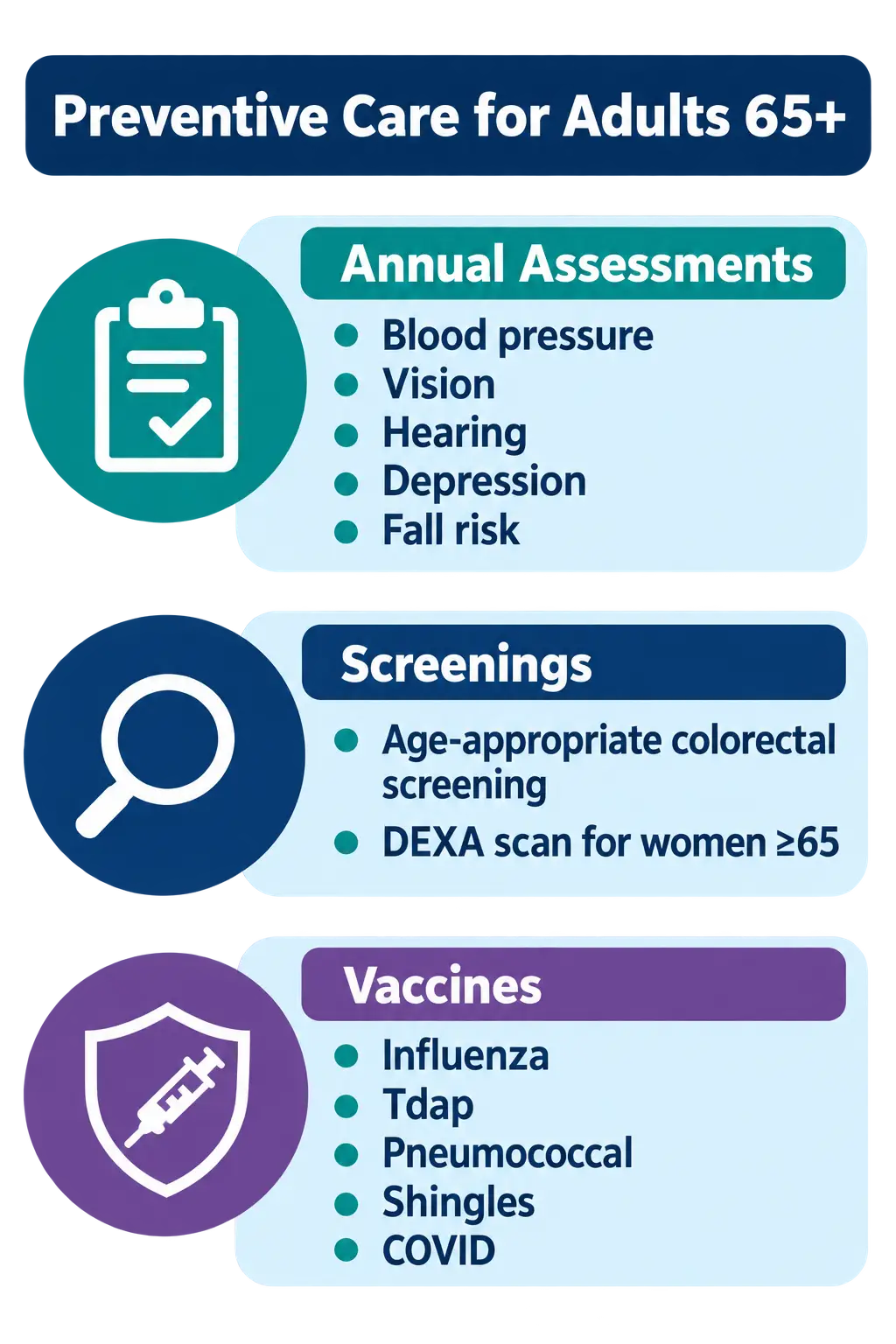
//////Caption: Routine preventive care for older adults (65+)
Illustration type: Preventive care timeline/checklist
Illustration note: Timeline or checklist summarizing annual blood pressure, vision, hearing, depression, fall-risk assessments, age-appropriate colorectal screening, DEXA scan (women ≥65), and recommended vaccines (influenza, Tdap, pneumococcal, shingles, COVID).///////

Safety and injury prevention

  • Remove tripping hazards; install grab bars, nonslip mats.
  • Adequate lighting in hallways and bathrooms.
  • Encourage assistive devices (canes, walkers).
  • Medication reconciliation every visit to reduce polypharmacy.
  • Avoid sedatives that increase fall risk.
  • Teach safe driving habits and evaluate ability to drive as needed.

Red flags (65+)

  • New confusion or agitation (possible delirium).
  • Sudden mobility loss.
  • Unintentional weight loss.
  • Inability to manage medications or finances.
  • Frequent falls.
  • Signs of elder abuse: bruising, poor hygiene, fearfulness around caregiver.
Red flags for reporting or addmision in elderly patients
Geriatric emergency red flags

Nursing interventions

  • Use clear, slow, respectful communication.
  • Screen for depression, cognitive impairment, fall risk, substance use.
  • Simplify medication regimens; encourage pill organizers.
  • Promote independence and autonomy whenever possible.
  • Provide caregiver support and resources.
  • Teach energy conservation and pacing for chronic illnesses.

Clinical vignette: An 82-year-old presents with sudden confusion and hallucinations. The nurse notes a recent UTI diagnosis and dehydration. Recognizing this as delirium, she initiates urgent assessment, ensures hydration, communicates calmly, and avoids restraints. Early intervention prevents progression and reduces the risk of functional decline.

Client education

  • Maintain physical activity and hydration.
  • Follow recommended screening schedules.
  • Keep the home environment safe and uncluttered.
  • Maintain social connections to reduce isolation.
  • Use hearing aids, glasses, and mobility devices as needed.
  • Seek help early for memory concerns.

Common pitfalls on NCLEX

  • Treating delirium as dementia (delirium = emergency).
  • Assuming cognitive decline is “normal aging.”
  • Using restraints instead of identifying causes of agitation.
  • Overlooking dehydration as a cause of confusion.
  • Ignoring elder abuse warning signs.
  • Failing to evaluate fall risks each encounter.
  • Aging = predictable changes, NOT inevitable decline.

  • Delirium is acute and reversible; dementia is chronic and progressive.

  • Fall prevention is a top NCLEX priority.

  • Social isolation severely impacts mental and cognitive health.

  • Support autonomy, dignity, and independence in all care.

Sign up for free to take 5 quiz questions on this topic

Previous
Next  | 2.2.1 Antepartum care
All rights reserved ©2016 - 2026 Achievable, Inc.

Older adults (65+ years)

Introduction

Older adulthood is a season marked by wisdom, reflection, and profound transitions, but also increased vulnerability. As the body ages, physical reserves decline, chronic conditions accumulate, and social roles shift. Yet many older adults remain active, engaged, and independent with proper support.

NCLEX emphasizes this stage because nurses are central to recognizing subtle changes, preventing complications, preserving dignity, and promoting quality of life in a population that is living longer, and often living with multiple comorbidities.

Learning objectives

By the end of this section, you should be able to:

  • Describe the physical, cognitive, emotional, and social changes of aging.
  • Recognize common geriatric syndromes and safety risks.
  • Apply evidence-based interventions to support independence and quality of life.
  • Identify red flags requiring immediate assessment and intervention.
  • Provide age-appropriate health screenings and preventive care.
Definitions
Delirium
Acute, reversible disturbance in attention and cognition.
Dementia
Progressive, irreversible cognitive decline.
Polypharmacy
Use of multiple medications increasing risk for adverse events.
Functional decline
Reduced ability to perform ADLs and IADLs.
Elder abuse
Physical, emotional, financial, or neglectful harm to older adults.

Physical development

Aging is not a disease: it is a predictable physiological process. However, age-related changes increase susceptibility to illness and functional decline.

Cardiovascular

  • Decreased cardiac output and vessel elasticity → higher risk of hypertension, arrhythmias.
  • Orthostatic hypotension common due to baroreceptor insensitivity.

Respiratory

  • Reduced lung elasticity and chest wall compliance.
  • Diminished cough reflex increases pneumonia risk.

Musculoskeletal

  • Sarcopenia (loss of muscle mass) reduces strength and mobility.
  • Bone density declines → osteoporosis and fracture risk.

Neurological

  • Slower reaction time and processing speed.
  • Minimal memory changes are normal; significant decline is not.

Renal

  • Reduced renal blood flow and GFR → medication accumulation risk.

Gastrointestinal

  • Slower peristalsis → constipation common.
  • Decreased appetite and changes in taste/smell.

Sensory

  • Presbyopia (difficulty seeing near objects).
  • Presbycusis (age-related hearing loss, especially high-frequency).
  • Diminished sensitivity to temperature (burn risk).

Cognitive development

Minimal memory changes are normal, but nurses must recognize that significant cognitive decline is not a normal part of aging and requires immediate evaluation, a key focus for NCLEX preparedness.

Normal cognitive aging

  • Mild forgetfulness, slower recall, reduced multitasking.
  • Crystallized intelligence (knowledge, skills) remains strong.

Abnormal cognitive decline

Requires immediate evaluation.

  • Difficulty recognizing familiar people.
  • Getting lost in familiar places.
  • Significant memory loss.
  • Personality or behavior changes.

Piaget: Formal operational stage continues

Older adults retain the ability for abstract thought, reasoning, and problem solving, unless disease interferes.

Psychosocial development

Psychosocially, older adults navigate Erikson’s Integrity vs Despair stage, and the NCLEX prioritizes nursing interventions that support autonomy, dignity, and social engagement to combat isolation and foster life satisfaction.

Erikson: Integrity vs Despair

  • Integrity: satisfaction with life, acceptance of past choices, wisdom.
  • Despair: regret, guilt, fear of death, hopelessness.

Emotional and social transitions

  • Retirement, loss of spouse, financial changes, and increasing health needs affect identity.
  • Social isolation increases risk for depression and cognitive decline.
  • Many older adults thrive through community involvement, spirituality, and meaningful routines.

Geriatric syndromes (NCLEX Priority)

Geriatric syndromes are common, complex health conditions in older adults (such as falls, delirium, and polypharmacy) that nurses taking the NCLEX must recognize as a high priority to prevent functional decline and severe complications.

alt_text
//////Caption: High-yield geriatric syndromes
Illustration type: Summary infographic
Illustration note: Six-panel infographic showing Falls, Delirium, Dementia, Polypharmacy, Urinary Incontinence, and Functional Decline, each with a simple icon and one-line NCLEX takeaway emphasizing recognition and prevention.///////

Falls

The leading cause of injury and death in older adults. Risk factors: medications, orthostatic hypotension, poor vision, muscle weakness, and cluttered home environment.

Dementia

Chronic, progressive cognitive decline affecting memory, personality, and function. It includes Alzheimer’s dementia, Frontotemporal dementia, Lewy body dementia, and Parkinson’s dementia.

Delirium

Acute, fluctuating confusion: a medical emergency. Of the cognitive domains, attention is most affected.

Common causes: infection, medications, dehydration, pain, hypoxia.

Delirium = sudden, reversible, fluctuating.

Dementia = gradual, irreversible, progressive.

Polypharmacy

Use of ≥5 medications increases adverse effects, interactions, falls, and hospitalizations.

Urinary incontinence

An inability to control when and where one urinates is not a normal part of aging. There are several types of urinary incontinence. They include

Stress Incontinence: Urine leaks when physical movement or activity, such as coughing, sneezing, laughing, or exercising, puts sudden pressure on the bladder.

Urge Incontinence: Also known as “overactive bladder,” this involves a sudden, intense, and involuntary need to urinate that is then followed by a loss of urine.

Overflow Incontinence: Frequent or constant dribbling occurs because the bladder does not empty completely, causing it to overfill and leak. There is a lack of ‘filling sensation’, so the bladder overfills and overflows.

None of these are normal, and they all require assessment for reversible causes.

Functional decline

ADLs are activities of daily living. These are basic skills needed for survival and include bathing, dressing, and eating. IADLs are instrumental activities of daily living. These are complex skills that allow an individual to live independently in a community. It includes managing finances, shopping, and taking medications. It is often affected earlier than ADLs.

alt_text
//////Caption: Activities of Daily Living (ADLs) vs Instrumental Activities of Daily Living (IADLs)
Illustration type: Comparison infographic
Illustration note: Split-panel graphic showing ADLs (bathing, dressing, toileting, feeding, transferring) versus IADLs (shopping, cooking, finances, transportation, medication management, housekeeping, telephone use), highlighting that IADLs are usually affected before ADLs.///////

Sexual and reproductive health

Older adults maintain sexual interest but face changes:

  • Women: vaginal dryness, dyspareunia (pain with intercourse).

  • Men: Erectile dysfunction, decreased testosterone.

Nurses should provide supportive, nonjudgmental sexual health counseling and STI education. Older adults remain sexually active but are often forgotten in STI screening.

Nutrition

  • Reduced calorie needs but increased nutrient needs (protein, calcium, vitamin D).
  • Risk for malnutrition due to poor dentition, dysphagia, decreased appetite, and limited resources.
  • Hydration is often inadequate due to diminished thirst sensation.
  • Encourage small, nutrient-dense meals and regular hydration.

Physical activity

Nurses should promote a balanced regimen of aerobic, strength, and balance training (like walking and tai chi) to improve mobility and prevent falls, which is a critical safety priority on the NCLEX.

  • Promote aerobic, strength, and balance training.
  • Walking, tai chi, resistance bands, and swimming improve mobility and prevent falls.
alt_text
//////Caption: Recommended physical activity for older adults
Illustration type: Health promotion infographic
Illustration note: Older adults performing walking, resistance-band exercises, balance training, and tai chi with brief labels emphasizing aerobic, strength, flexibility, and balance exercises for fall prevention and healthy aging.///////

Health screening and preventive care

Screenings (general guidelines)

  • Blood pressure: annually.
  • Cholesterol: yearly depending on risk.
  • Bone density (DEXA): women ≥65, earlier if high-risk.
  • Colorectal cancer: until age 75 (individualized after).
  • Vision and hearing: annually.
  • Depression screening: annually.
  • Fall risk assessment: every visit.

Immunizations

  • Influenza: yearly.
  • Tdap: every 10 years.
  • Pneumococcal: PCV20 or PCV15 + PPSV23 depending on schedule.
  • Shingles (Shingrix): ≥50 years, 2-dose series.
  • COVID boosters per CDC guidance.
alt_text
//////Caption: Routine preventive care for older adults (65+)
Illustration type: Preventive care timeline/checklist
Illustration note: Timeline or checklist summarizing annual blood pressure, vision, hearing, depression, fall-risk assessments, age-appropriate colorectal screening, DEXA scan (women ≥65), and recommended vaccines (influenza, Tdap, pneumococcal, shingles, COVID).///////

Safety and injury prevention

  • Remove tripping hazards; install grab bars, nonslip mats.
  • Adequate lighting in hallways and bathrooms.
  • Encourage assistive devices (canes, walkers).
  • Medication reconciliation every visit to reduce polypharmacy.
  • Avoid sedatives that increase fall risk.
  • Teach safe driving habits and evaluate ability to drive as needed.

Red flags (65+)

  • New confusion or agitation (possible delirium).
  • Sudden mobility loss.
  • Unintentional weight loss.
  • Inability to manage medications or finances.
  • Frequent falls.
  • Signs of elder abuse: bruising, poor hygiene, fearfulness around caregiver.

Nursing interventions

  • Use clear, slow, respectful communication.
  • Screen for depression, cognitive impairment, fall risk, substance use.
  • Simplify medication regimens; encourage pill organizers.
  • Promote independence and autonomy whenever possible.
  • Provide caregiver support and resources.
  • Teach energy conservation and pacing for chronic illnesses.

Clinical vignette: An 82-year-old presents with sudden confusion and hallucinations. The nurse notes a recent UTI diagnosis and dehydration. Recognizing this as delirium, she initiates urgent assessment, ensures hydration, communicates calmly, and avoids restraints. Early intervention prevents progression and reduces the risk of functional decline.

Client education

  • Maintain physical activity and hydration.
  • Follow recommended screening schedules.
  • Keep the home environment safe and uncluttered.
  • Maintain social connections to reduce isolation.
  • Use hearing aids, glasses, and mobility devices as needed.
  • Seek help early for memory concerns.

Common pitfalls on NCLEX

  • Treating delirium as dementia (delirium = emergency).
  • Assuming cognitive decline is “normal aging.”
  • Using restraints instead of identifying causes of agitation.
  • Overlooking dehydration as a cause of confusion.
  • Ignoring elder abuse warning signs.
  • Failing to evaluate fall risks each encounter.
Key points
  • Aging = predictable changes, NOT inevitable decline.

  • Delirium is acute and reversible; dementia is chronic and progressive.

  • Fall prevention is a top NCLEX priority.

  • Social isolation severely impacts mental and cognitive health.

  • Support autonomy, dignity, and independence in all care.

More from Growth and development across the lifespan

  • Infancy (0–1 year)
  • Early childhood (1–5 years)
  • School age (6–12 years)
  • Adolescence (13–18 years)
  • Adulthood (19–64 years)