




Antepartum care
Introduction
Pregnancy is a physiological marathon, a profound transformation that affects every body system, every routine, and every emotional horizon. Antepartum care is about far more than prenatal vitamins and ultrasound pictures. It is the deliberate monitoring of two clients at once, anticipating complications before they escalate, supporting healthy fetal development, and guiding families through one of life’s most vulnerable and meaningful transitions.
NCLEX heavily emphasizes antepartum nursing because early detection saves lives. From blood pressure changes to fetal movement, every detail matters.
Learning objectives
By the end of this section, you should be able to:
- Describe normal physiologic changes of pregnancy.
- Identify appropriate prenatal screening, labs, and visit schedules.
- Recognize high-risk conditions and red flags requiring immediate action.
- Perform and interpret fetal well-being assessments (NST, BPP, dopplers).
- Provide appropriate client education and anticipatory guidance.
- Navigate NCLEX priority scenarios around maternal safety, fetal oxygenation, and early intervention.
Prenatal care schedule
Routine prenatal visits follow a structured timeline to detect complications early:
- Every 4 weeks until 28 weeks
- Every 2 weeks from 28-36 weeks
- Weekly from 36 weeks until birth
| Stage | Prenatal care and screening |
|---|---|
| First trimester | Visits every 4 weeks Initial laboratory tests |
| Second trimester | Visits every 2 weeks Glucose screening at 24–28 weeks |
| Third trimester | Weekly visits RhoGAM at 28 weeks if Rh-negative Tdap vaccine at 27–36 weeks GBS screening at 35–37 weeks |
| Term and delivery | 37–40+ weeks |
At each visit, the nurse assesses:
- Maternal weight
- Blood pressure
- Fundal height
- Fetal heart tones
- Fetal movement
- Urine dip (protein, glucose)
- Edema, headaches, visual changes
- Contractions, bleeding, discharge
Calculating the expected delivery date
Nurses estimate the estimated date of delivery (EDD) using Naegele’s rule: take the first day of the client’s last menstrual period (LMP), subtract three months, and add seven days, rolling the year forward by one when the result lands in the following calendar year.
Example: Calculating the EDD
A client’s last menstrual period (LMP) began on April 10. What is her estimated date of delivery (EDD)?
- Start with the first day of the LMP: April 10
- Subtract 3 months: January 10
- Add 7 days: January 17
- Since this result falls in the following calendar year, roll the year forward by one
Answer: January 17 of the following year
Prenatal laboratory testing
Initial prenatal labs (first visit)
- CBC
- Blood type & Rh factor
- Antibody screen
- Rubella titer
- Hepatitis B antigen
- HIV
- Syphilis (RPR or VDRL)
- Urine culture
- Pap smear (if due)
- Gonorrhea/chlamydia
- TB testing (if high-risk)
Follow-up testing
-
24-28 weeks:
- 1-hour glucose tolerance test
- CBC to screen for anemia
- Rh-negative clients: administer RhoGAM at 28 weeks
-
35-37 weeks:
- Group B strep (GBS) culture
| Timing | Prenatal tests and interventions |
|---|---|
| Initial prenatal visit | Initial prenatal laboratory tests |
| 24–28 weeks | Glucose test CBC RhoGAM if Rh-negative |
| 27–36 weeks | Tdap vaccination |
| 35–37 weeks | GBS culture |
Vaccines
- Inactivated influenza during pregnancy
- Tdap between 27-36 weeks
- No live vaccines (MMR, varicella): contraindicated due to theoretical risk of viral transmission to the fetus.
Normal physiologic changes in pregnancy
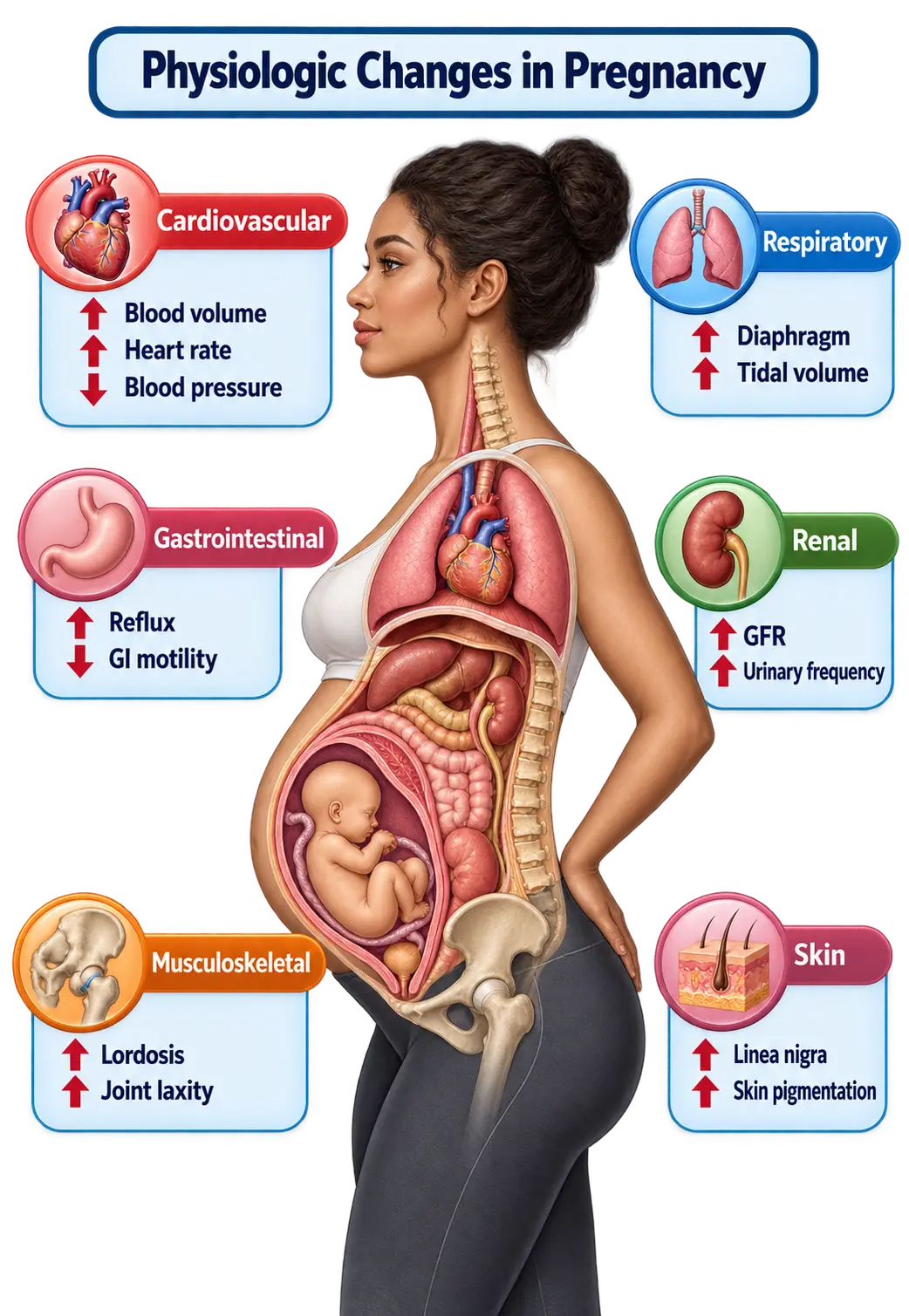
Cardiovascular
- Increased (↑) blood volume (40-50%) - Natural increase, partly due to fluid retention, partly to increase circulatory volume to accommodate placental circulation
- ↑ Heart rate (10-15 bpm)
- Decreased (↓) BP slightly in 2nd trimester
- Physiologic anemia from hemodilution
Respiratory
- ↑ O₂ consumption
- Mild dyspnea is normal
- Elevated diaphragm - due to displacement by the expanding uterus
Gastrointestinal
- Nausea/vomiting
- Constipation (progesterone slows motility)
- Heartburn (reflux)
Renal
- ↑ Glomerular filtration rate (GFR)
- ↑ UTI risk
- Frequency and nocturia
Musculoskeletal
- Lordosis
- Round ligament pain (these ligaments attach the uterus to the abdominal wall)
- Relaxin → A hormone that primarily softens pelvic ligaments to ease/open the birth canal, though it can cause ligament laxity throughout the body
Skin
- Linea nigra (dark vertical line dividing the abdomen)
- Chloasma (facial pigmentation)
- Striae gravidarum (stretch marks)
Psychosocial response to pregnancy
Pregnancy brings psychosocial adjustment alongside the physical changes above, and NCLEX expects you to recognize what’s normal:
- First-trimester ambivalence - mixed feelings about the pregnancy are common, even when it’s wanted.
- Maternal-fetal attachment - bonding typically develops gradually, often deepening with quickening and ultrasound viewing.
- Role transition - the client and family adjust to new roles and build readiness for parenting.
- Body image adjustment - adapting to visible physical changes over the trimesters.
Persistent rejection of the pregnancy, refusal to engage in prenatal care, or lack of any bonding behavior by the third trimester are not expected findings and warrant referral for further psychosocial support.
Fetal well-being assessments
The provider is able to assess the fetus during the antepartum period in several ways. Each of these assessments allows early warning signs, prompting interventions when necessary.
Fetal movement (kick counts)
- The client lies on her left side, counts 10 movements in 2 hours
- Decreased movement → urgent evaluation
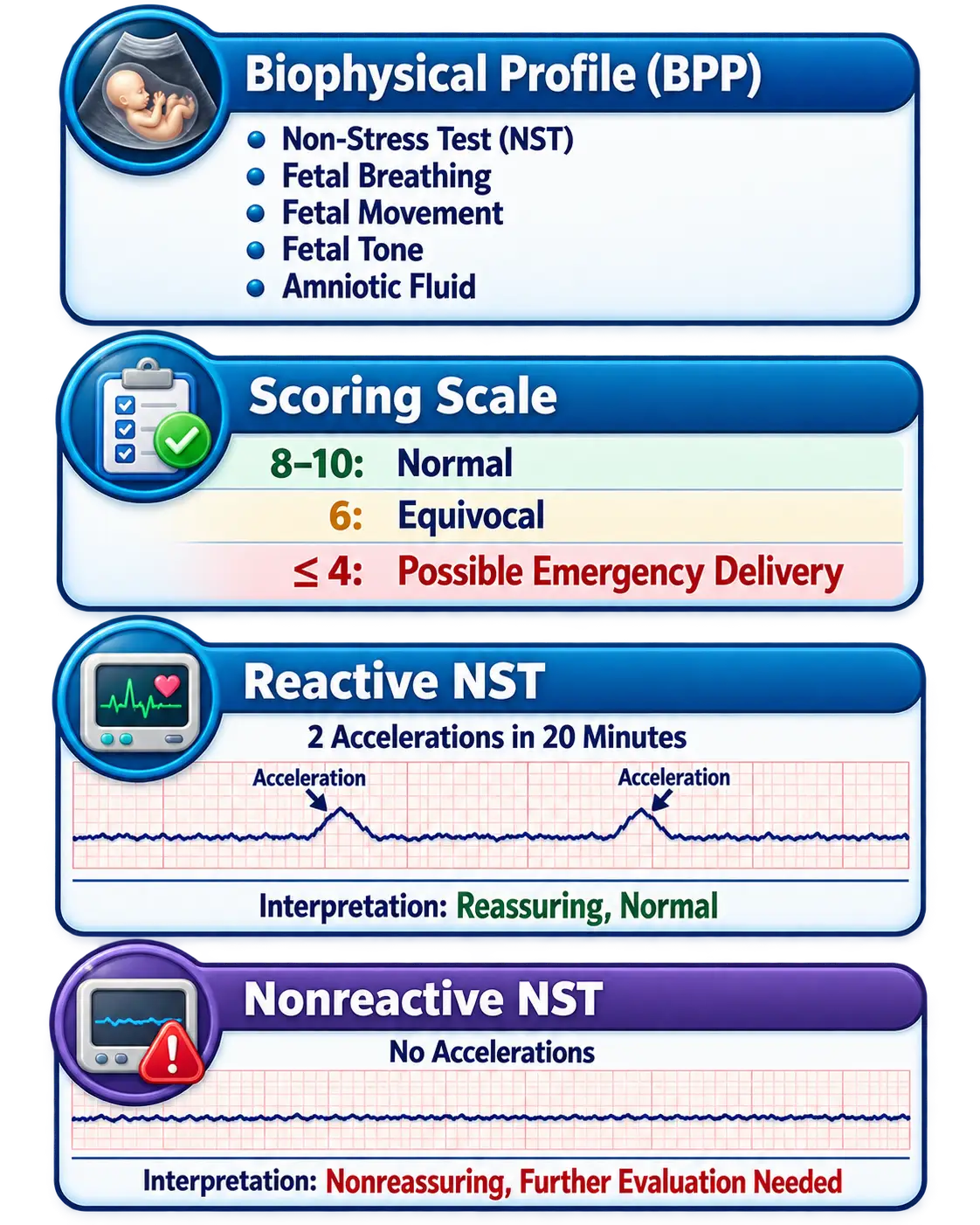
Biophysical profile (BPP)
Five components scored 0-2 each:
- Fetal breathing
- Fetal tone
- Fetal movement
- Amniotic fluid volume
- NST result
- Score 8-10 reassuring
- Score ≤4 → possible emergency delivery
Nonstress test (NST)
Assesses fetal heart rate response to movement.
- Reactive NST: 2 accelerations in 20 minutes (good)
- Nonreactive: requires further testing (BPP)
Ultrasound
Used for dating, anatomy, growth, placental location, and fetal presentation.
High-risk pregnancy conditions (NCLEX priority)
Preeclampsia
Characterized by:
- BP ≥140/90 after 20 weeks
- Proteinuria or signs of end-organ damage
Red flags:
- Severe headache
- Visual changes
- Right upper quadrant (RUQ) pain
- Sudden swelling of face/hands
- Hyperreflexia/clonus
Nursing actions:
- Seizure precautions
- Monitor BP & urine protein
- Administer magnesium sulfate if ordered
- Prepare for possible early delivery
Gestational diabetes
Risk factors: obesity, family history, and previous large baby.
Consequences: macrosomia, hypoglycemia in the newborn, and preeclampsia.
Management:
- Monitor glucose frequently
- Dietary modifications
- Possible insulin
- Fetal growth monitoring
Placenta previa
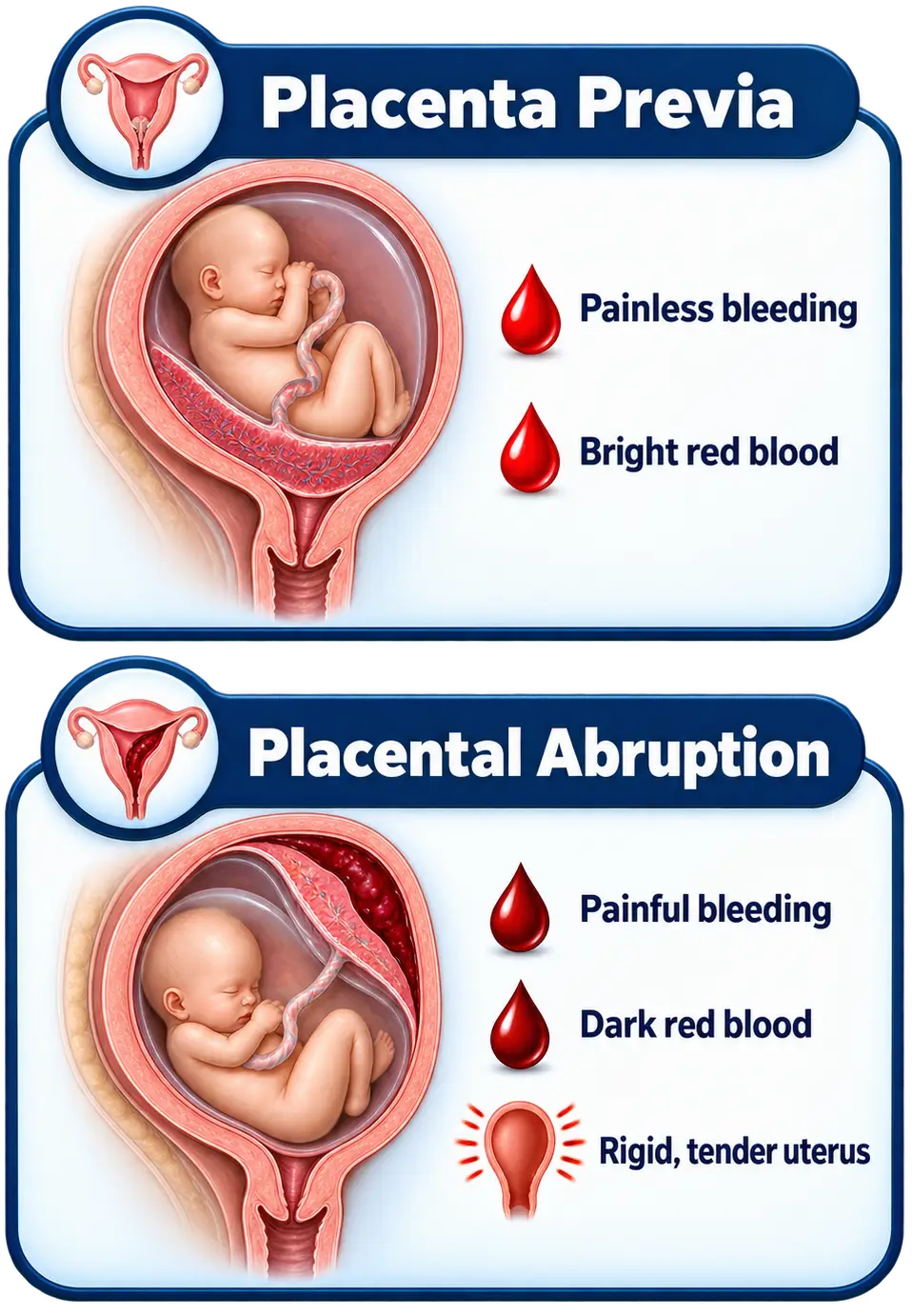
The placenta implants in the lower uterine segment and covers all or part of the internal cervical os, instead of attaching higher in the uterus (the fundus or body, on either the anterior or posterior wall). Symptoms: painless, bright red bleeding.
Nursing actions:
- No vaginal exams
- Bed rest
- Plan for C-section
Placental abruption
Premature separation of the placenta. Symptoms: painful bleeding, rigid abdomen, fetal distress.
Nursing actions:
- Emergency intervention
- Prepare for delivery
- Continuous monitoring
Example: Previa vs. abruption
A client at 34 weeks presents with vaginal bleeding. How should the nurse use the type of bleeding to guide immediate care?
- Painless, bright red bleeding → suspect placenta previa → avoid vaginal exams and prepare for a possible cesarean birth.
- Painful bleeding with a rigid, tender abdomen → suspect placental abruption → treat as an obstetric emergency and prepare for immediate delivery.
Answer: Pain is the key differentiator - painless bleeding points to previa (no vaginal exams), while painful bleeding with uterine rigidity points to abruption (emergency delivery).
Preterm labor (<37 weeks)
Signs: contractions + cervical change.
Management:
- Hydration
- Tocolytics (e.g., nifedipine)
- Betamethasone for fetal lung maturity
- GBS prophylaxis if needed
Danger signs requiring immediate evaluation
| Danger sign | What to watch for |
|---|---|
| Vaginal bleeding | Any bleeding during pregnancy |
| Rupture of membranes | Gush or trickle of fluid from the vagina |
| Severe headache | Intense, unrelieved headache |
| Vision changes | Blurry vision, spots, or flashing lights |
| Fever | Temperature ≥100.4°F (38°C) |
| Severe abdominal pain | Intense, constant, or cramping pain |
| Decreased fetal movement | Baby moving much less than usual |
| Persistent vomiting | Unable to keep fluids down for more than 24 hours |
| Signs of preterm labor | Regular contractions before 37 weeks, pelvic pressure, or low back pain |
Nursing interventions
- Monitor maternal vitals and fetal status
- Provide emotional support and reduce anxiety
- Educate on nutrition, hydration, movement, and safety
- Administer RhoGAM, vaccines, medications as ordered
- Teach signs of labor and when to report to provider
- Encourage regular prenatal appointments
Clinical vignette: A 29-year-old at 32 weeks calls the clinic reporting “stars in my vision” and a pounding headache. The nurse immediately recognizes possible preeclampsia and instructs her to come to labor and delivery. Upon arrival, her BP is 162/104 and she reports RUQ pain. Rapid intervention prevents seizure and fetal distress.
Client education
- Take prenatal vitamins with folic acid
- Avoid alcohol, smoking, marijuana, and drugs
- Limit caffeine
- Eat balanced diet with iron, protein, and calcium
- Manage nausea with small, frequent meals
- Avoid raw fish, deli meat, unpasteurized cheese
- Perform daily fetal kick counts after 28 weeks
- Recognize red flags and report immediately