


Achievable logoAchievable logo
NCLEX
Sign in
Sign up
Purchase
Textbook
Practice exams
Support
How it works
Exam catalog
Mountain with a flag at the peak
Textbook
Introduction
1. Safe and effective care environment
2. Health promotion and maintenance
3. Psychosocial Integrity
4. Physiological Integrity
4.1 Basic care and comfort
4.2 Pharmacological and parenteral therapies
4.3 Reduction of risk potential
4.3.1 Diagnostic tests and lab values
4.3.2 Monitoring for complications of procedures
4.3.3 Changes in vital signs and neurological status
4.3.4 Electrolyte imbalances and fluid status
4.3.5 Medical equipment use and safety
4.3.6 Potential complications of devices and procedures
4.4 Physiological adaptation
Wrapping up
Achievable logoAchievable logo
4.3.3 Changes in vital signs and neurological status
Achievable NCLEX
4. Physiological Integrity
4.3. Reduction of risk potential
Our NCLEX course is currently in development and is a work-in-progress.

Changes in vital signs and neurological status

6 min read
Font
Discuss
Share
Feedback

Introduction

Monitoring changes in vital signs and neurological status is a cornerstone of early complication detection in hospitalized clients. Subtle deviations often precede rapid deterioration, making this domain especially high-yield for the Next Generation NCLEX (NGN).

This section emphasizes trend recognition, early warning signs, and clinical prioritization, with special attention to older adults, post-operative clients, and those undergoing invasive procedures.

Learning objectives

By the end of this section, the learner should be able to:

  • Interpret trends in vital signs rather than isolated readings
  • Recognize early and late signs of clinical deterioration
  • Differentiate expected post-procedure changes from pathological findings
  • Identify neurological red flags requiring immediate escalation

Core concept: Vital signs reflect physiology

Vital signs are not just numbers. They reflect underlying physiology, including perfusion, oxygenation, cardiovascular function, and neurological status.

Small changes, when sustained or progressive, often indicate underlying instability.

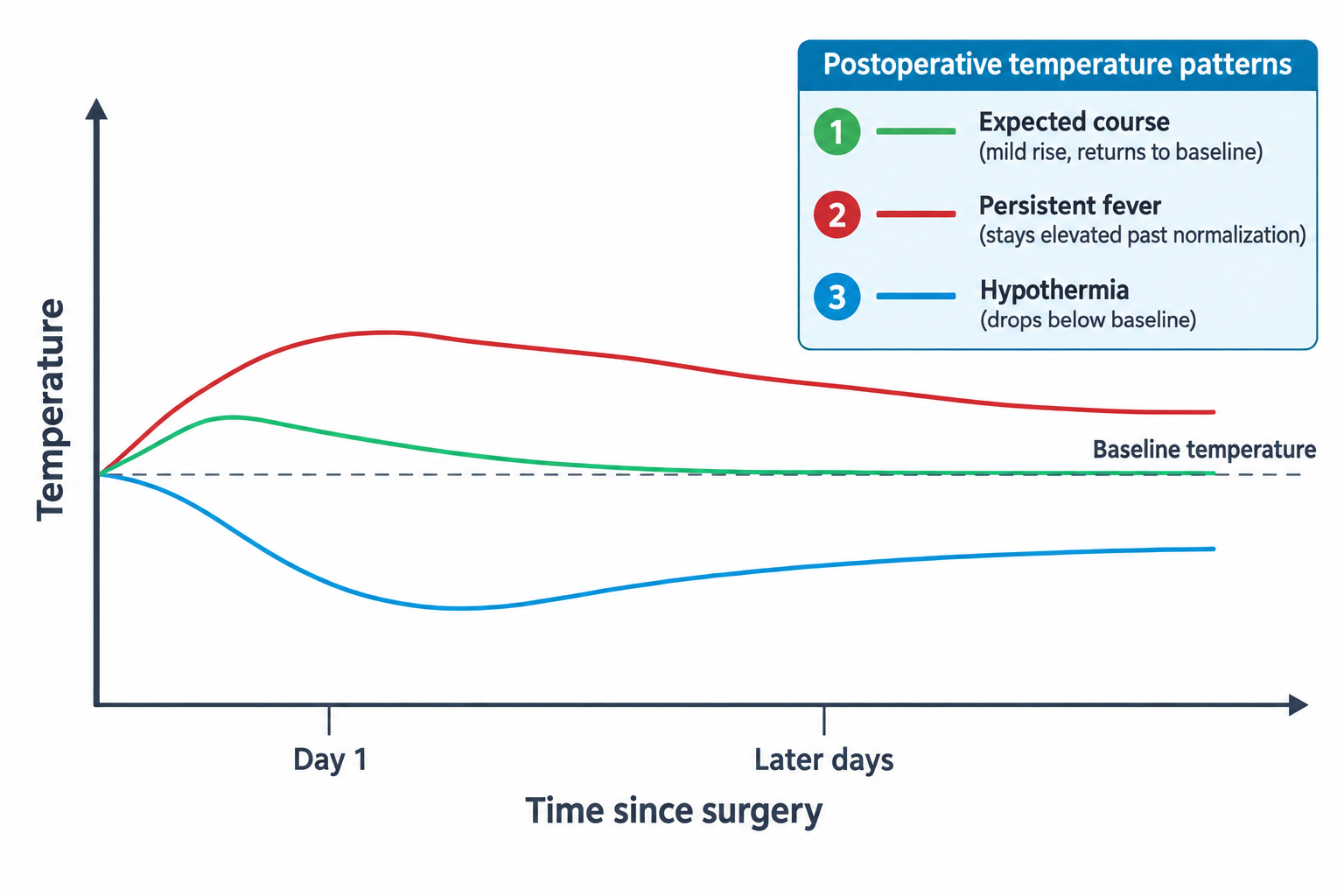
Changes in temperature

Expected findings

  • Mild temperature elevation within 24 hours post-operation due to inflammation
  • Gradual normalization with recovery
  • Mild temperature increase after ovulation

Concerning changes

  • Persistent or new fever after 24–48 hours
  • Hypothermia, particularly in older adults or clients with suspected infection
  • Temperature instability accompanied by other abnormal vitals
alt_text
//////Caption: Recognizing Significant Temperature Changes
Illustration type: Comparison chart
Illustration note: Compare expected postoperative temperature changes with concerning findings such as persistent fever, hypothermia, and temperature instability, including common clinical implications.///////

Changes in heart rate

Early warning signs

  • Progressive tachycardia
  • Heart rate out of proportion to pain or activity

Possible causes

  • Hypovolemia
  • Hemorrhage
  • Infection
  • Hypoxemia or hypoxia
  • Pain or anxiety
NGN tip:
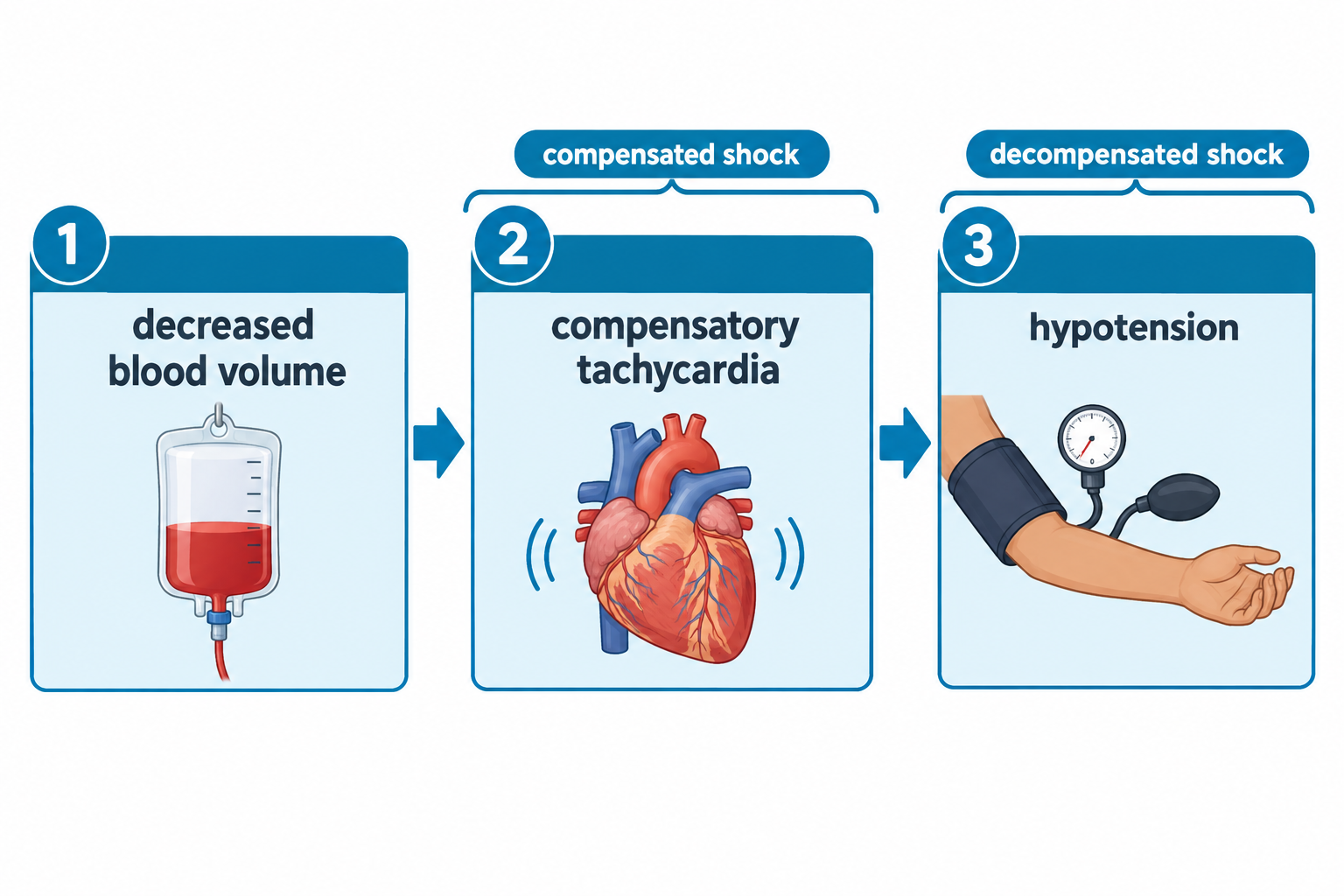
Progressive tachycardia often precedes hypotension in shock. NGN questions commonly test recognition of this early deterioration pattern.
alt_text
//////Caption: Early Compensatory Changes in Shock
Illustration type: Clinical flowchart
Illustration note: Illustrate the progression from decreased blood volume to compensatory tachycardia with initially maintained blood pressure, followed by hypotension as shock progresses. Emphasize the transition from compensated to decompensated shock.///////

Changes in blood pressure

Concerning patterns

  • Gradual decline in systolic blood pressure
  • Narrowing pulse pressure
  • Orthostatic hypotension

Clinical implications

  • Hypotension may signal hemorrhage or sepsis
  • Hypertension may increase bleeding risk post-op

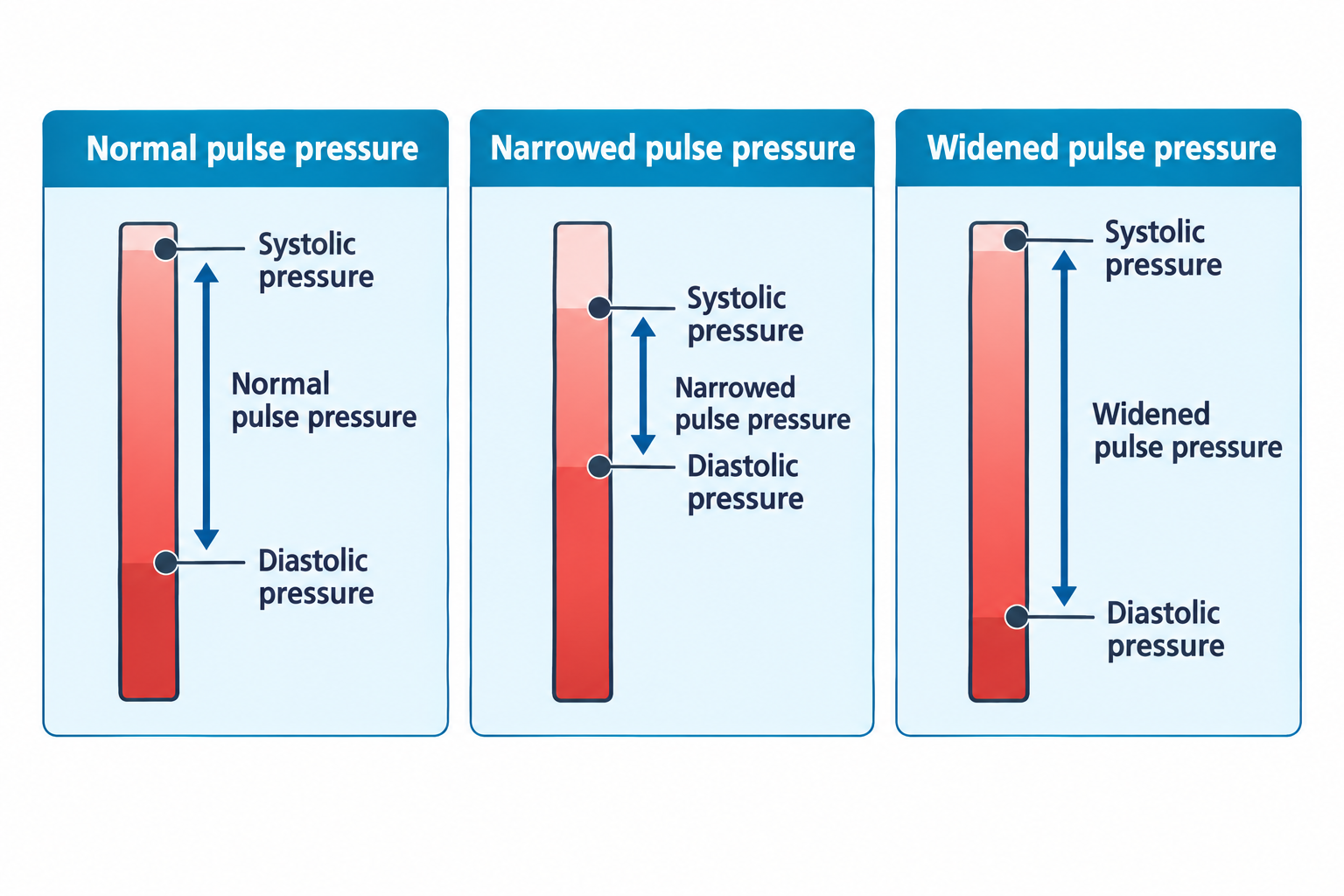
Pulse pressure interpretation

Pulse pressure = Systolic – Diastolic

Normal: Approximately 30–50 mmHg

Narrow pulse pressure

  • Shock
  • Cardiac tamponade
  • Advanced heart failure

Widened pulse pressure

  • Cushing response (increased intracranial pressure)
  • Arterial stiffness (older adults)
NGN insight: Pattern recognition
Don’t look at systolic or diastolic blood pressure values in isolation. A narrowing pulse pressure may precede hypotension in shock states. NGN questions may provide systolic and diastolic blood pressure values and require you to recognize this pattern.
alt_text
//////Caption: Understanding Pulse Pressure
Illustration type: Infographic
Illustration note: Illustrate normal pulse pressure, narrowed pulse pressure, and widened pulse pressure with common clinical associations including shock, cardiac tamponade, heart failure, increased intracranial pressure, and arterial stiffness. Example BP calculations (120/80, 90/70, 180/90)///////

Changes in respiratory rate and oxygenation

Key indicators

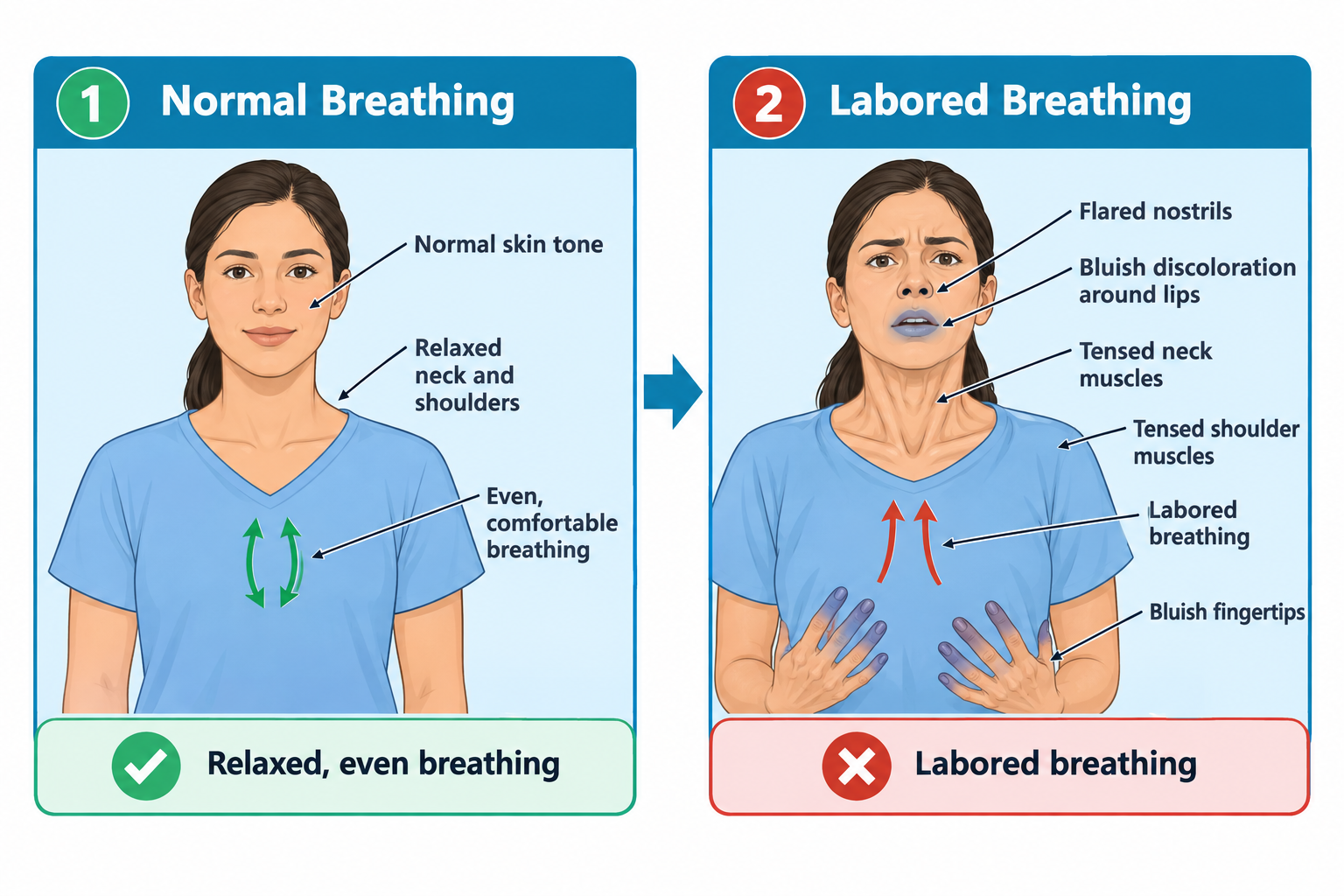
  • Increased respiratory rate (often an early sign of deterioration)
  • Decreased respiratory rate (e.g., respiratory depression from opioids or late respiratory failure)
  • Declining oxygen saturation
  • Use of accessory muscles
NGN tip:
Clients receiving opioids or recovering from anesthesia require close monitoring due to the increased risk of respiratory depression.
alt_text
//////Caption: Recognizing Increased Work of Breathing
Illustration type: Comparison chart
Illustration note: Compare normal breathing with increased work of breathing, highlighting increased respiratory rate, accessory muscle use, and cyanosis as a late sign of respiratory compromise.///////

Changes in neurological status

Neurological changes are often early indicators of systemic decline, especially in older adults.

Key findings to monitor

  • Level of consciousness
  • Orientation (person, place, time, situation)
  • Pupillary size, equality, and response to light
  • Motor strength and symmetry
  • Speech clarity and language changes

Level of consciousness: The most sensitive indicator

A change in level of consciousness (LOC) is often the earliest sign of deterioration.

Subtle changes may include:

  • Irritability
  • Delayed responses
  • New confusion
  • Lethargy
  • Difficulty maintaining attention
alt_text
//////Caption: Early Neurological Changes Requiring Immediate Attention
Illustration type: Clinical assessment infographic
Illustration note: Illustrate assessment of level of consciousness, orientation, pupils, motor strength, speech, and subtle early changes including irritability, delayed responses, confusion, lethargy, and difficulty maintaining attention///////

Glasgow coma scale (GCS)

The GCS provides a structured way to assess neurological function.

  • 15 = Fully alert and oriented
  • 13–14 = Mild impairment
  • 9–12 = Moderate impairment
  • ≤8 = Severe impairment (airway protection likely required)
NGN tip:
Consider both the GCS score and any change from baseline. A decrease of 2 or more points in the GCS is clinically significant and requires immediate evaluation. NGN questions often assess GCS trends rather than memorization of individual scores.
alt_text
//////Caption: Interpreting Glasgow Coma Scale Scores
Illustration type: Infographic
Illustration note: Illustrate GCS score categories (15, 13–14, 9–12, ≤8) with corresponding levels of neurological impairment and emphasize that a decrease of 2 or more points requires immediate evaluation.///////
Definitions
Altered mental status
Any deviation from baseline cognition, alertness, or behavior
Hypoxia
Inadequate oxygen delivery to tissues. Hypoxemia (low blood oxygen saturation, SpO₂ <92%) is one possible cause
Hypotension
Systolic blood pressure <90 mmHg or a significant drop from baseline
Tachycardia
Heart rate >100 beats per minute in adults

Neurological changes in older adults

Common causes

  • Hypoxia
  • Infection
  • Dehydration
  • Electrolyte imbalance
  • Medication effects
NGN insight:
Delirium is often reversible when the underlying cause is identified and treated promptly. Early recognition improves outcomes.

Putting it together: Trend-based assessment

Trend over time matters

  • Rising HR + falling BP = concern for shock
  • Falling SpO₂ + confusion = possible hypoxemia; assess for hypoxia
  • Fever + tachycardia + altered mentation = possible sepsis

NGN questions frequently require the learner to recognize patterns across multiple data points, not just one abnormal value.

Clinical vignette 1

A 68-year-old client is post-operative day 1 following bowel surgery. Over 4 hours, the nurse notes:

  • HR: 92 → 108 bpm
  • BP: 122/76 → 104/64 mmHg
  • Urine output: decreasing
  • Increasing restlessness
(spoiler)

Nursing action: Notify the provider immediately, continue close monitoring, maintain IV access, and prepare for rapid intervention if the client’s condition deteriorates.

Rationale: Progressive tachycardia, falling blood pressure, decreasing urine output, and increasing restlessness suggest early hypovolemia or postoperative bleeding requiring immediate evaluation.

Clinical vignette 2

An older adult admitted for pneumonia becomes acutely confused overnight. SpO₂ is 89% on room air.

(spoiler)

Nursing action: Administer oxygen, assess respiratory status, and notify the provider.

Rationale: Acute confusion with hypoxemia in an older adult suggests impaired oxygenation. Older adults may present with confusion before other classic signs of deterioration.

Common pitfalls on the NCLEX

  • Ignoring gradual trends
  • Attributing confusion solely to age
  • Treating abnormal vital signs without assessing the client
  • Delaying escalation of care
  • Vital signs reflect underlying physiology
  • Neurological changes often precede systemic collapse
  • Trend recognition is central to NGN success
  • Older adults present atypically
  • Early escalation saves lives

Sign up for free to take 5 quiz questions on this topic

Previous
Next  | 4.3.4 Electrolyte imbalances and fluid status
All rights reserved ©2016 - 2026 Achievable, Inc.

Changes in vital signs and neurological status

Introduction

Monitoring changes in vital signs and neurological status is a cornerstone of early complication detection in hospitalized clients. Subtle deviations often precede rapid deterioration, making this domain especially high-yield for the Next Generation NCLEX (NGN).

This section emphasizes trend recognition, early warning signs, and clinical prioritization, with special attention to older adults, post-operative clients, and those undergoing invasive procedures.

Learning objectives

By the end of this section, the learner should be able to:

  • Interpret trends in vital signs rather than isolated readings
  • Recognize early and late signs of clinical deterioration
  • Differentiate expected post-procedure changes from pathological findings
  • Identify neurological red flags requiring immediate escalation

Core concept: Vital signs reflect physiology

Vital signs are not just numbers. They reflect underlying physiology, including perfusion, oxygenation, cardiovascular function, and neurological status.

Small changes, when sustained or progressive, often indicate underlying instability.

Changes in temperature

Expected findings

  • Mild temperature elevation within 24 hours post-operation due to inflammation
  • Gradual normalization with recovery
  • Mild temperature increase after ovulation

Concerning changes

  • Persistent or new fever after 24–48 hours
  • Hypothermia, particularly in older adults or clients with suspected infection
  • Temperature instability accompanied by other abnormal vitals
alt_text
//////Caption: Recognizing Significant Temperature Changes
Illustration type: Comparison chart
Illustration note: Compare expected postoperative temperature changes with concerning findings such as persistent fever, hypothermia, and temperature instability, including common clinical implications.///////

Changes in heart rate

Early warning signs

  • Progressive tachycardia
  • Heart rate out of proportion to pain or activity

Possible causes

  • Hypovolemia
  • Hemorrhage
  • Infection
  • Hypoxemia or hypoxia
  • Pain or anxiety
NGN tip:
Progressive tachycardia often precedes hypotension in shock. NGN questions commonly test recognition of this early deterioration pattern.
alt_text
//////Caption: Early Compensatory Changes in Shock
Illustration type: Clinical flowchart
Illustration note: Illustrate the progression from decreased blood volume to compensatory tachycardia with initially maintained blood pressure, followed by hypotension as shock progresses. Emphasize the transition from compensated to decompensated shock.///////

Changes in blood pressure

Concerning patterns

  • Gradual decline in systolic blood pressure
  • Narrowing pulse pressure
  • Orthostatic hypotension

Clinical implications

  • Hypotension may signal hemorrhage or sepsis
  • Hypertension may increase bleeding risk post-op

Pulse pressure interpretation

Pulse pressure = Systolic – Diastolic

Normal: Approximately 30–50 mmHg

Narrow pulse pressure

  • Shock
  • Cardiac tamponade
  • Advanced heart failure

Widened pulse pressure

  • Cushing response (increased intracranial pressure)
  • Arterial stiffness (older adults)
NGN insight: Pattern recognition
Don’t look at systolic or diastolic blood pressure values in isolation. A narrowing pulse pressure may precede hypotension in shock states. NGN questions may provide systolic and diastolic blood pressure values and require you to recognize this pattern.
alt_text
//////Caption: Understanding Pulse Pressure
Illustration type: Infographic
Illustration note: Illustrate normal pulse pressure, narrowed pulse pressure, and widened pulse pressure with common clinical associations including shock, cardiac tamponade, heart failure, increased intracranial pressure, and arterial stiffness. Example BP calculations (120/80, 90/70, 180/90)///////

Changes in respiratory rate and oxygenation

Key indicators

  • Increased respiratory rate (often an early sign of deterioration)
  • Decreased respiratory rate (e.g., respiratory depression from opioids or late respiratory failure)
  • Declining oxygen saturation
  • Use of accessory muscles
NGN tip:
Clients receiving opioids or recovering from anesthesia require close monitoring due to the increased risk of respiratory depression.
alt_text
//////Caption: Recognizing Increased Work of Breathing
Illustration type: Comparison chart
Illustration note: Compare normal breathing with increased work of breathing, highlighting increased respiratory rate, accessory muscle use, and cyanosis as a late sign of respiratory compromise.///////

Changes in neurological status

Neurological changes are often early indicators of systemic decline, especially in older adults.

Key findings to monitor

  • Level of consciousness
  • Orientation (person, place, time, situation)
  • Pupillary size, equality, and response to light
  • Motor strength and symmetry
  • Speech clarity and language changes

Level of consciousness: The most sensitive indicator

A change in level of consciousness (LOC) is often the earliest sign of deterioration.

Subtle changes may include:

  • Irritability
  • Delayed responses
  • New confusion
  • Lethargy
  • Difficulty maintaining attention
alt_text
//////Caption: Early Neurological Changes Requiring Immediate Attention
Illustration type: Clinical assessment infographic
Illustration note: Illustrate assessment of level of consciousness, orientation, pupils, motor strength, speech, and subtle early changes including irritability, delayed responses, confusion, lethargy, and difficulty maintaining attention///////

Glasgow coma scale (GCS)

The GCS provides a structured way to assess neurological function.

  • 15 = Fully alert and oriented
  • 13–14 = Mild impairment
  • 9–12 = Moderate impairment
  • ≤8 = Severe impairment (airway protection likely required)
NGN tip:
Consider both the GCS score and any change from baseline. A decrease of 2 or more points in the GCS is clinically significant and requires immediate evaluation. NGN questions often assess GCS trends rather than memorization of individual scores.
alt_text
//////Caption: Interpreting Glasgow Coma Scale Scores
Illustration type: Infographic
Illustration note: Illustrate GCS score categories (15, 13–14, 9–12, ≤8) with corresponding levels of neurological impairment and emphasize that a decrease of 2 or more points requires immediate evaluation.///////
Definitions
Altered mental status
Any deviation from baseline cognition, alertness, or behavior
Hypoxia
Inadequate oxygen delivery to tissues. Hypoxemia (low blood oxygen saturation, SpO₂ <92%) is one possible cause
Hypotension
Systolic blood pressure <90 mmHg or a significant drop from baseline
Tachycardia
Heart rate >100 beats per minute in adults

Neurological changes in older adults

Common causes

  • Hypoxia
  • Infection
  • Dehydration
  • Electrolyte imbalance
  • Medication effects
NGN insight:
Delirium is often reversible when the underlying cause is identified and treated promptly. Early recognition improves outcomes.

Putting it together: Trend-based assessment

Trend over time matters

  • Rising HR + falling BP = concern for shock
  • Falling SpO₂ + confusion = possible hypoxemia; assess for hypoxia
  • Fever + tachycardia + altered mentation = possible sepsis

NGN questions frequently require the learner to recognize patterns across multiple data points, not just one abnormal value.

Clinical vignette 1

A 68-year-old client is post-operative day 1 following bowel surgery. Over 4 hours, the nurse notes:

  • HR: 92 → 108 bpm
  • BP: 122/76 → 104/64 mmHg
  • Urine output: decreasing
  • Increasing restlessness
(spoiler)

Nursing action: Notify the provider immediately, continue close monitoring, maintain IV access, and prepare for rapid intervention if the client’s condition deteriorates.

Rationale: Progressive tachycardia, falling blood pressure, decreasing urine output, and increasing restlessness suggest early hypovolemia or postoperative bleeding requiring immediate evaluation.

Clinical vignette 2

An older adult admitted for pneumonia becomes acutely confused overnight. SpO₂ is 89% on room air.

(spoiler)

Nursing action: Administer oxygen, assess respiratory status, and notify the provider.

Rationale: Acute confusion with hypoxemia in an older adult suggests impaired oxygenation. Older adults may present with confusion before other classic signs of deterioration.

Common pitfalls on the NCLEX

  • Ignoring gradual trends
  • Attributing confusion solely to age
  • Treating abnormal vital signs without assessing the client
  • Delaying escalation of care
Key points
  • Vital signs reflect underlying physiology
  • Neurological changes often precede systemic collapse
  • Trend recognition is central to NGN success
  • Older adults present atypically
  • Early escalation saves lives

More from Reduction of risk potential

  • Diagnostic tests and lab values
  • Monitoring for complications of procedures
  • Electrolyte imbalances and fluid status
  • Medical equipment use and safety
  • Potential complications of devices and procedures