



Monitoring for complications of procedures
Introduction
Monitoring for complications after procedures is a core nursing responsibility and a high-yield area on the Next Generation NCLEX (NGN). The nurse is often the first to detect deterioration, subtle changes, or early warning signs following surgery or invasive procedures. Timely recognition and escalation can prevent progression to life-threatening outcomes such as hemorrhage, sepsis, shock, or respiratory failure.
This section focuses on common postoperative and invasive procedure complications, with emphasis on older adults, hospitalized clients, and lines, drains, tubes, and catheters frequently tested on the NCLEX.
Preoperative teaching - covering incentive spirometer use, pain-control expectations, and early ambulation - helps clients recognize and report warning signs after the procedure, so client education is itself part of complication prevention.
Learning objectives
By the end of this section, the learner should be able to:
- Identify expected vs. abnormal post-procedure findings
- Recognize early warning signs of complications
- Prioritize nursing assessments and interventions
- Apply NGN-style clinical reasoning to post-operative scenarios
Core principle: Trend, not snapshot
NGN questions emphasize patterns over time, not isolated values. A single abnormal vital sign may be less concerning than progressive change.
Major categories of post-procedure complications
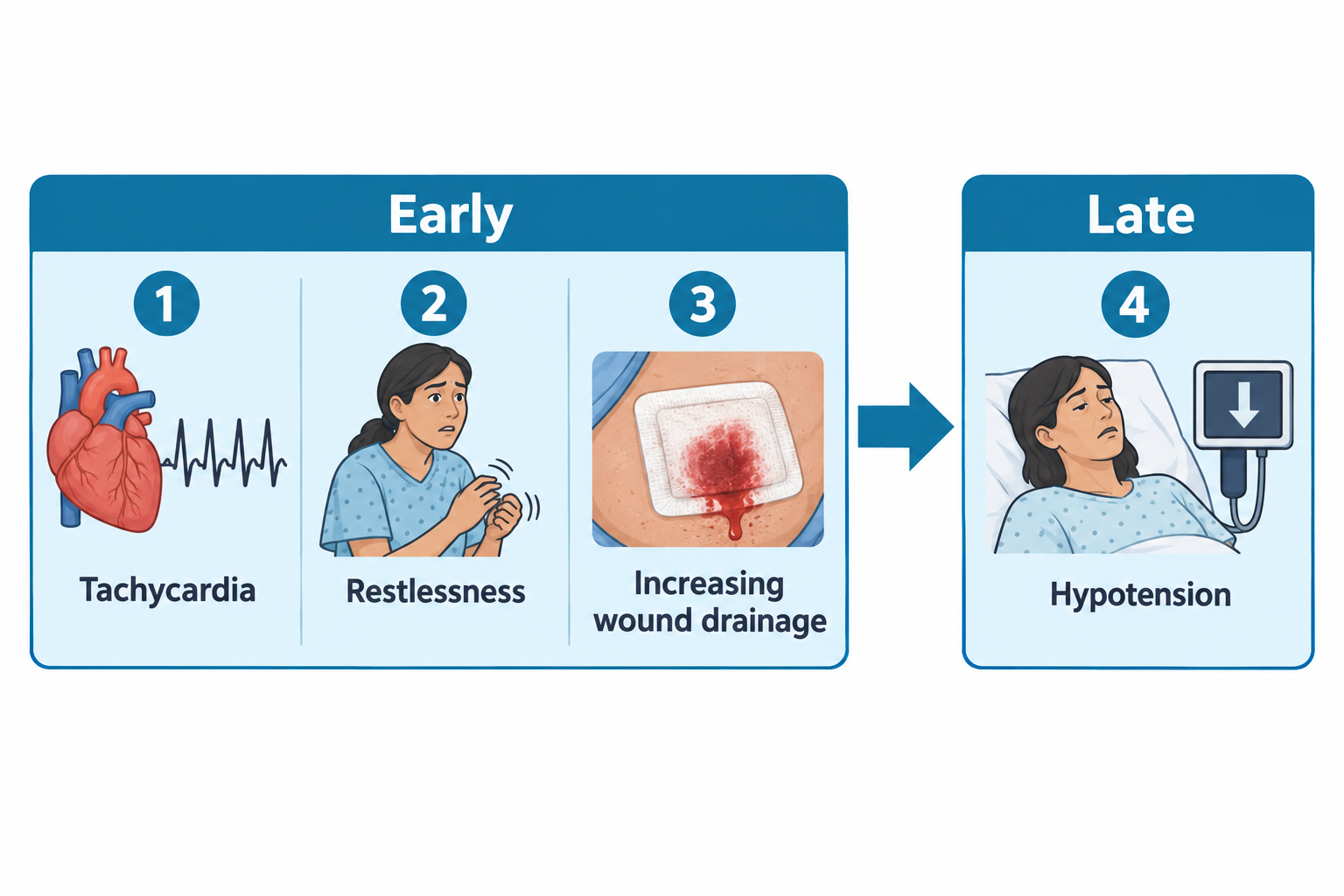
1. Hemorrhage and bleeding
Common causes
Postoperative hemorrhage typically results from inadequate hemostasis, anticoagulant therapy, coagulopathy, or a dislodged suture or drain.
Key assessment findings
- Increasing drainage above the expected amount for the procedure
- Bright red blood soaking dressings
- Hematoma or swelling at surgical site
- Tachycardia, hypotension
- Decreasing hemoglobin/hematocrit
- Restlessness or anxiety (early hypovolemia sign)
Nursing priorities
- Assess and quantify blood loss.
- Reinforce dressing (do not remove first layer of the original postoperative dressing unless directed by the primary health care provider).
- Monitor vital signs closely.
- Maintain IV access.
- Notify the primary health care provider immediately.
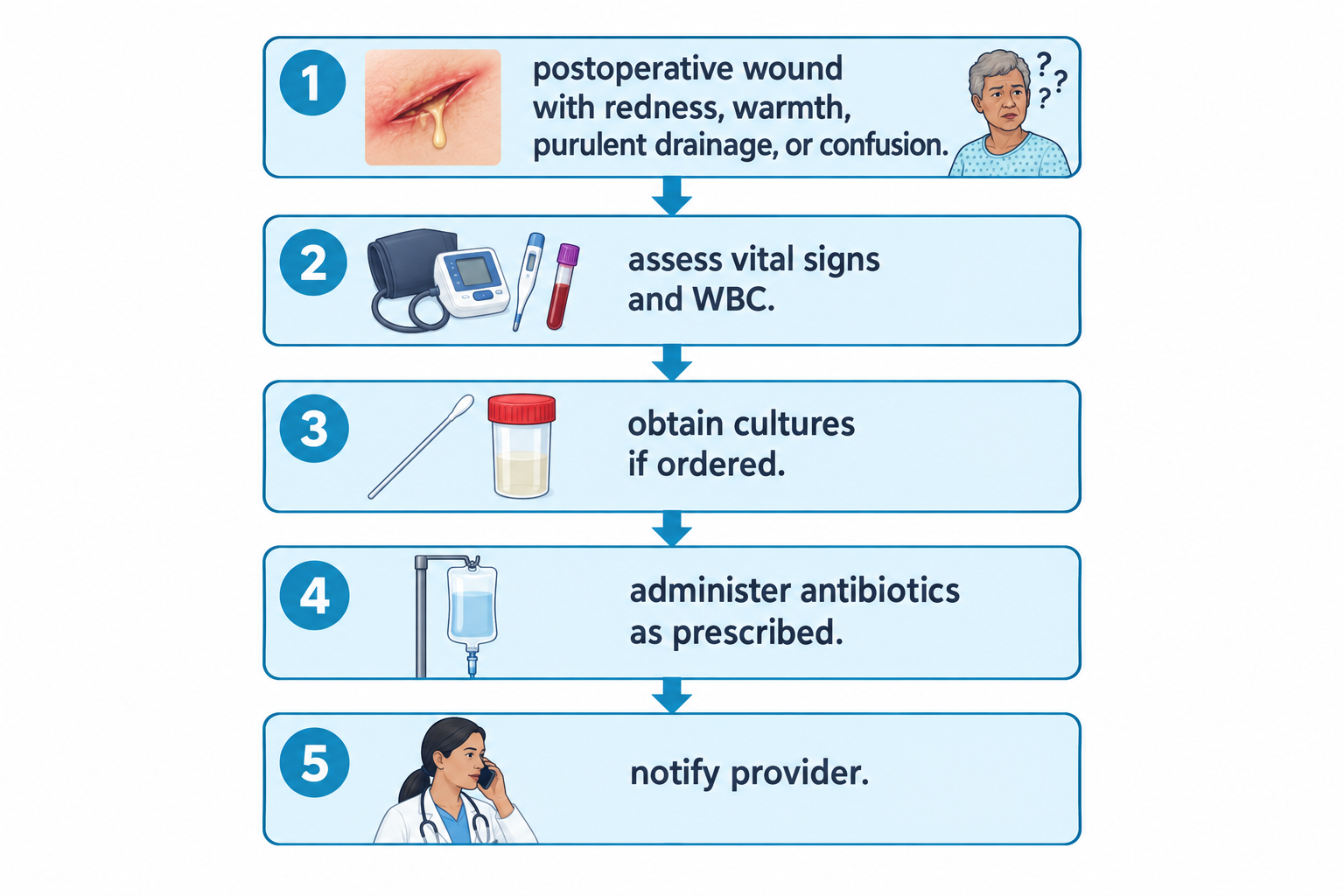
2. Infection and sepsis
Risk factors
Risk increases with older age, diabetes, immunosuppression, prolonged surgery, and indwelling devices such as catheters and lines.
Early warning signs
- Fever or hypothermia
- Increased pain at site
- Purulent drainage
- Redness, warmth, swelling
- Tachycardia
- Altered mental status (especially in older adults)
Nursing actions
- Inspect wound using aseptic technique.
- Monitor WBC trends.
- Obtain cultures if ordered.
- Administer antibiotics as prescribed.
- Escalate concerns promptly.
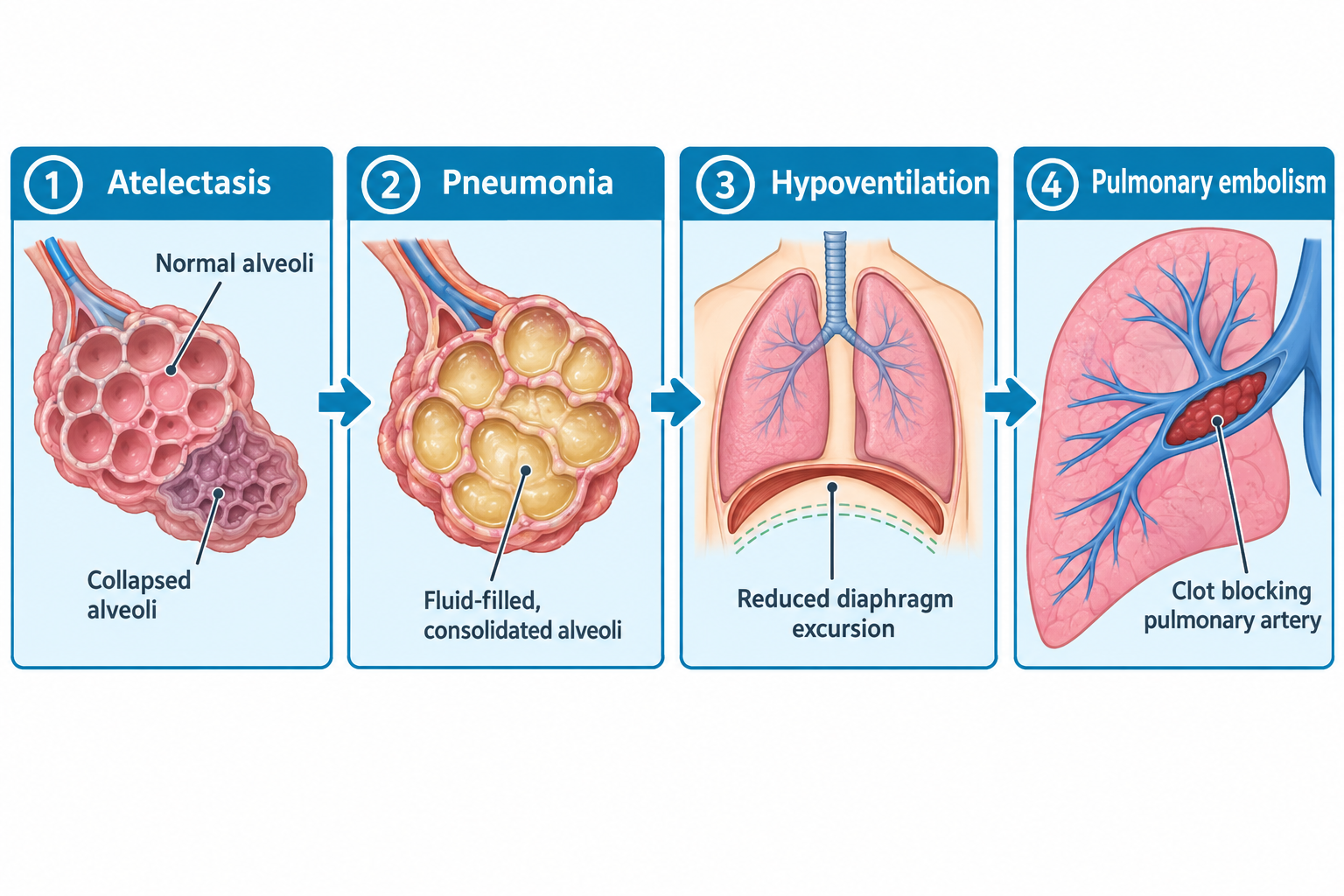
3. Respiratory complications
Common complications
- Atelectasis
- Pneumonia
- Hypoventilation
- Pulmonary embolism
Assessment findings
- Decreased SpO₂
- Shallow respirations
- Crackles or diminished breath sounds
- Dyspnea
- Restlessness
- Chest pain (PE concern)
Nursing interventions
- Encourage incentive spirometry.
- Reposition regularly (commonly every 2 hours).
- Early ambulation.
- Elevate head of bed.
- Assess pain control, as pain and splinting may limit deep breathing and coughing.
- During recovery from moderate sedation or anesthesia, monitor airway patency, level of consciousness, and SpO₂ until the client returns to baseline.
4. Cardiovascular complications
Potential issues
- Hypotension
- Hypertension
- Dysrhythmias
- Deep vein thrombosis (DVT)
- Shock
Assessment focus
- Blood pressure trends
- Heart rate and rhythm
- Unilateral calf pain, swelling, warmth, redness, or tenderness
- Urine output (<30 mL/hr concerning)
- Skin temperature and color
Nursing priorities
- Maintain fluid balance.
- Apply sequential compression devices.
- Monitor telemetry if indicated.
- Report chest pain, sudden dyspnea, or unilateral leg swelling immediately to the primary health care provider.
5. Urinary and renal complications
Common problems
- Urinary retention
- Catheter-associated urinary tract infection (CAUTI)
- Acute kidney injury
Assessment indicators
- Low urine output
- Bladder distention
- Dark or concentrated urine
- Dysuria (if catheter removed)
- Rising creatinine
Nursing actions
- Monitor strict intake and output.
- Perform bladder scan if retention suspected.
- Maintain catheter care and asepsis.
- Encourage hydration if appropriate.
6. Gastrointestinal complications
Potential issues
- Postoperative ileus
- Nausea and vomiting
- Constipation
- Bowel obstruction
Assessment findings
- Absent bowel sounds
- Abdominal distention
- Nausea/vomiting
- Inability to pass flatus
Nursing management
- Assess for return of gastrointestinal function (e.g., bowel sounds, passage of flatus, abdominal distention, nausea/vomiting) before feeding.
- Maintain NPO status if ordered.
- Monitor NG tube output.
- Promote early ambulation.
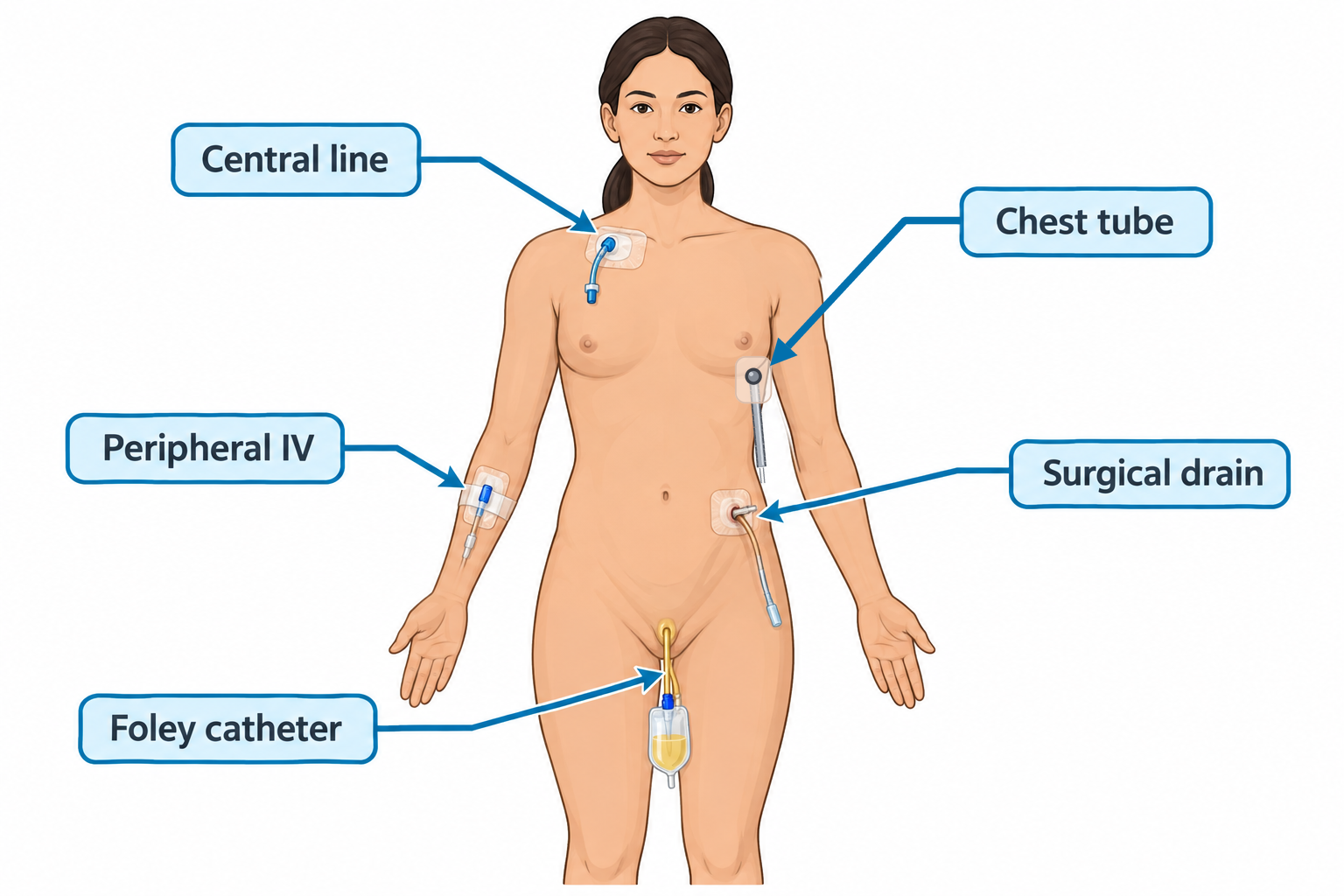
Complications related to invasive devices
Common devices to monitor
- Central lines
- Peripheral IVs
- Surgical drains
- Foley catheters
- Chest tubes
Key monitoring principles
- Assess insertion sites for redness, swelling, leakage, tenderness, or signs of infection.
- Ensure tubing is secured and unobstructed.
- Measure and document output accurately.
- Use aseptic technique when handling invasive devices.
- For chest tubes, expect tidaling (rise and fall with respirations) in the water-seal chamber; continuous bubbling signals an air leak.
- For continuous bladder irrigation (CBI), compare inflow and outflow volumes and watch for outflow that slows, stops, or turns bright red, which suggests obstruction or bleeding.
Clinical vignette
A postoperative orthopedic client becomes confused and restless on day 2.
Vital signs:
- Temp: 37.8°C (100°F)
- HR: 104 bpm
- SpO₂: 90% on room air
Nursing action: Administer oxygen, assess breath sounds and respiratory status, and notify the primary health care provider.
Rationale: Confusion, hypoxemia, tachycardia, and recent surgery suggest postoperative respiratory compromise (e.g., atelectasis or pneumonia) while also raising concern for infection.
Less common but testable complications (brief list)
- Malignant hyperthermia
- Air embolism
- Compartment syndrome
- Anastomotic leak
- Neurovascular compromise
(Recognize signs; detailed management often beyond NCLEX scope.)