



Standard precautions and transmission-based precautions
Introduction
Infection prevention begins with one truth; every client, every fluid, every surface could carry risk. That mindset defines standard precautions, the foundation of all nursing safety. When known or suspected pathogens enter the picture, transmission-based precautions add extra layers of protection. Together, these form the shield between healthcare providers and preventable infection.
Learning objectives
By the end of this section, you should be able to:
- differentiate between standard and transmission-based precautions
- identify correct PPE for airborne, droplet, and contact precautions
- apply safe transport, cleaning, and client-education practices
Precaution classifications
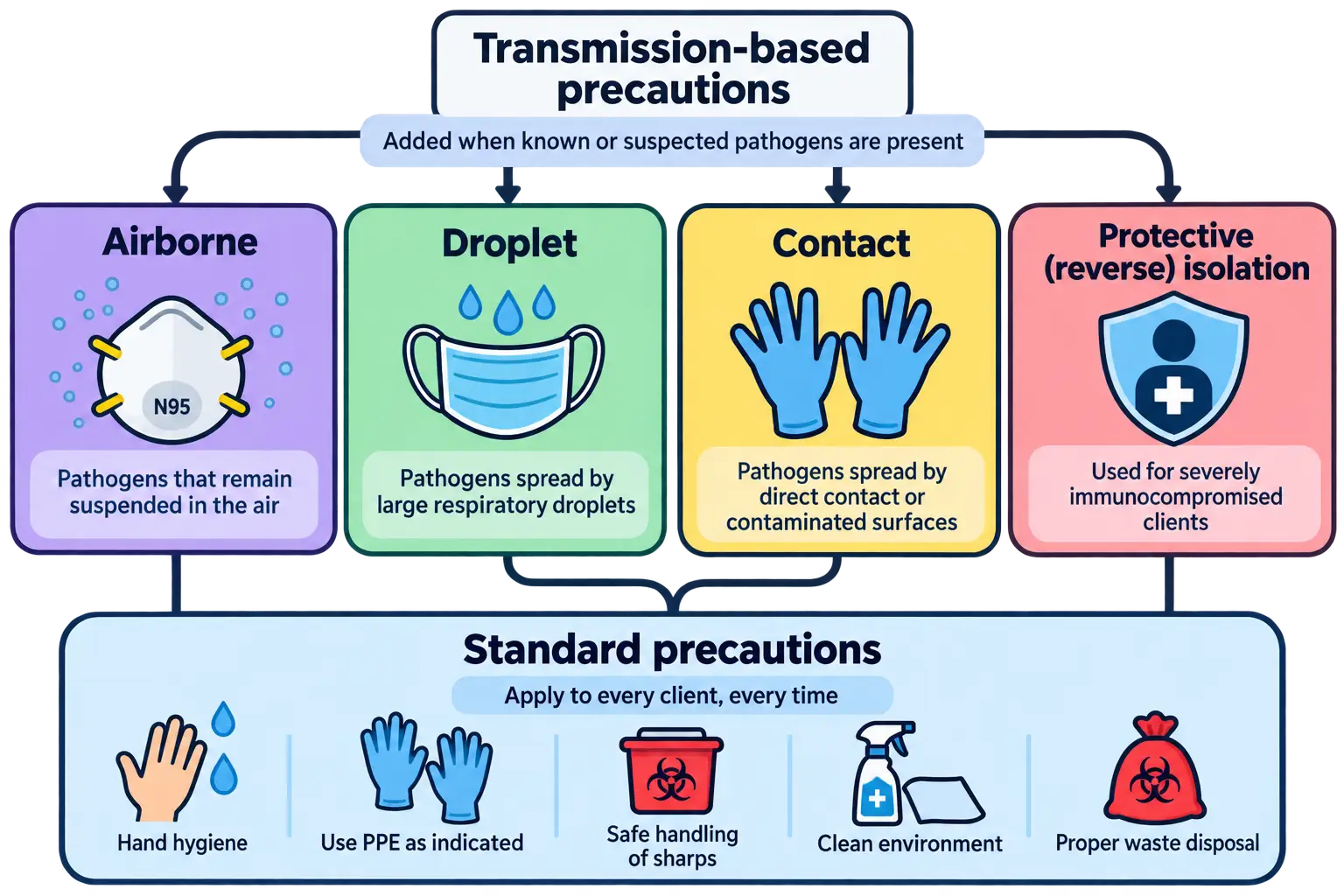
There are two main classifications for precautions. Within these, standard precautions form the universal defense in healthcare, applying to all clients, while transmission-based precautions add specific protective measures when known or suspected pathogens are present, targeting their routes of spread.
| Precaution type | When it applies |
|---|---|
| Standard precautions | Used for every client, regardless of diagnosis |
| Airborne precautions | For pathogens that remain suspended in the air |
| Droplet precautions | For pathogens spread by large respiratory droplets |
| Contact precautions | For pathogens spread by direct contact or contaminated surfaces |
| Protective (reverse) isolation | For severely immunocompromised clients who need protection from outside pathogens |
Key PPE and measures
Standard precautions are the baseline applied to every client, every time. The transmission-based categories layer additional PPE on top of that baseline when a specific route of spread is known or suspected.
- Standard precautions (always applied): Hand hygiene; gloves when touching blood, body fluids, or contaminated items; mask, eye protection, or gown as indicated
On top of standard precautions, add the route-specific measures:
- Airborne precautions: N95 respirator; negative-pressure room; limit transport if possible
- Droplet precautions: Surgical mask for close contact; private room if possible; mask client during transport
- Contact precautions: Gloves and gown; dedicated equipment when possible; hand hygiene
- Protective (reverse) isolation: Private/protective environment; strict hand hygiene; PPE as indicated to protect the client
Standard precautions
Standard precautions apply to every client, regardless of diagnosis or perceived infection status.
- Perform hand hygiene before and after contact with each client
- Use gloves, gowns, masks, and eye protection when risk of exposure exists
- Follow respiratory hygiene/cough etiquette
- Practice safe injection and needle disposal
- Assume all body fluids (except sweat) are potentially infectious
Clinical vignette: A nurse changes a dressing on a post-op wound. Gloves are required because contact with blood is possible, even if the client has no history of infection. Gloves protect both the client and the nurse.
Transmission-based precautions
When a client has or is suspected of having an infection spread by a specific route, nurses must apply additional protective measures beyond standard precautions. These precautions (airborne, droplet, and contact) target the exact way pathogens travel to prevent transmission.
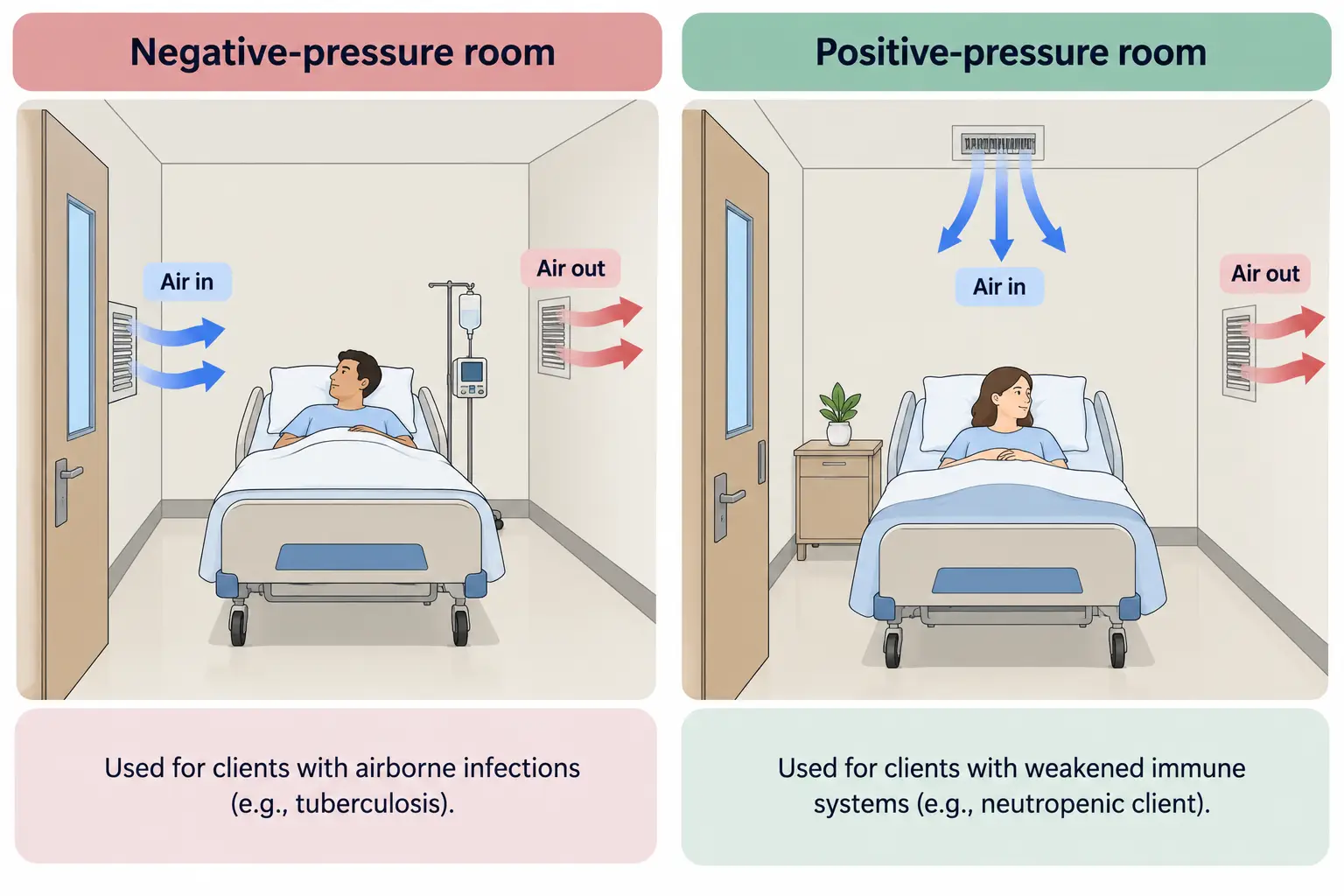
Airborne precautions: Used for infections that spread through fine particles (<5 microns) that remain suspended in the air for long periods. These pathogens can travel across distances, so clients require a negative-pressure room, and staff must wear an N95 respirator or higher-level protection.
Examples: Tuberculosis (TB), measles (rubeola), and varicella (chickenpox).
Note: varicella (and disseminated herpes zoster) requires airborne and contact precautions together, maintained until all lesions are dry and crusted, per CDC.
Droplet precautions: Applied when pathogens are spread through respiratory droplets (>5 microns) expelled during coughing, sneezing, or talking. Because droplets fall within about 3 feet, nurses must wear a surgical mask within close proximity and ensure the client wears a mask when transported.
Examples: Influenza, pertussis, meningococcal meningitis, mumps, and rubella.
Contact precautions: For infections spread by direct touch or contact with contaminated surfaces. Nurses wear gloves and a gown upon room entry and during contact with the client or the client’s environment. Use soap and water hand hygiene, particularly for spore-forming organisms such as C. difficile, because alcohol-based hand sanitizers are less effective against spores.
Examples: MRSA, VRE, RSV, C. difficile, scabies, draining wounds.
Protective (reverse) isolation: Protective precautions safeguard immunocompromised clients from external pathogens. These clients require a positive-pressure room, meticulous hand hygiene, and restrictions on fresh flowers, raw foods, or sick visitors.
Examples: Neutropenia, post-transplant or chemotherapy clients.
Nursing interventions
-
Hand hygiene: Use alcohol-based rubs unless caring for C. difficile (requires soap & water)
-
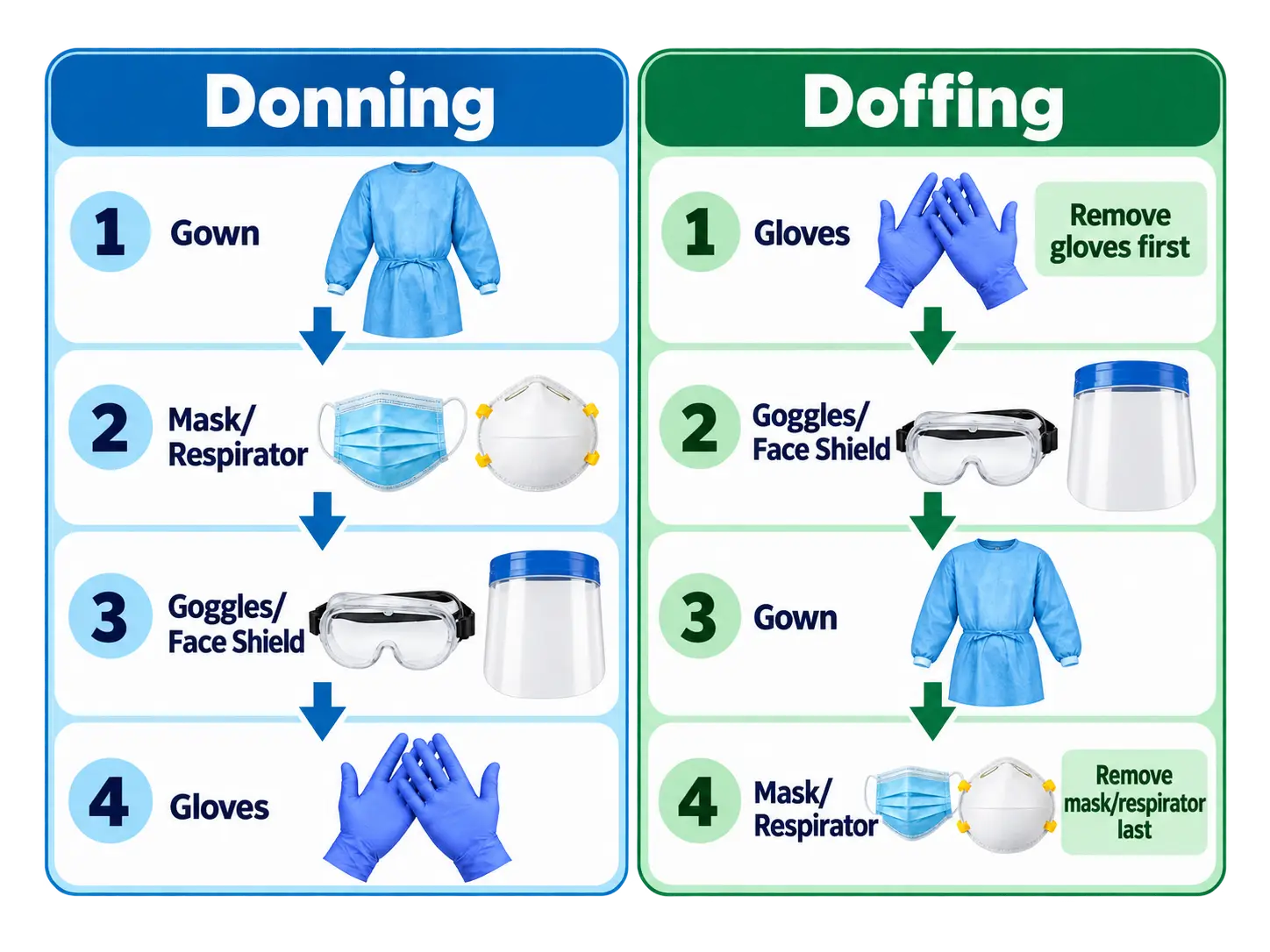
PPE sequence:
- Don: Gown → mask/respirator → goggles/face shield → gloves
- Doff: Gloves → goggles/face shield → gown → mask/respirator
-
Client transport: Limit movement; mask airborne/droplet clients; cover wounds for contact isolation
-
Equipment: Dedicate or disinfect shared items between clients
-
Environmental cleaning: High-touch surfaces and bathrooms need frequent disinfection
-
Specimen handling: Label accurately and place in biohazard bags
Clinical vignette: A client with MRSA is moved to radiology. The nurse covers draining wounds, notifies receiving staff, and ensures surfaces are disinfected afterward.
Client and family education
- Explain the reason for isolation calmly; emphasize protection, not punishment
- Teach proper handwashing and PPE use before entering/leaving the room
- Encourage compliance to reduce cross-contamination anxiety
Standard and transmission-based precautions cover most client contact, but invasive procedures call for an even stricter barrier - sterile technique, covered next in Surgical asepsis and sterile technique.