



Hazardous materials and emergency response
Introduction
Healthcare environments handle everything from corrosive disinfectants to infectious waste. One spill, one spark, or one unreported exposure can spiral into disaster. Nurses are not just caregivers; they are first responders in the chain of prevention. The NCLEX tests whether you can recognize hazards, initiate emergency protocols, and protect yourself, your team, and your clients.
Learning objectives
By the end of this section, you should be able to:
- Identify types of hazardous materials and the nurse’s responsibilities in managing them.
- Implement fire safety and disaster protocols using standard frameworks (e.g., RACE, PASS, emergency triage).
- Describe correct reporting, containment, and decontamination procedures.
Handling hazardous materials
Hazardous materials (HAZMAT) include chemicals, radioactive substances, cytotoxic drugs, sharps, and infectious waste.
- All containers must be clearly labeled with proper hazard symbols and stored according to facility policy
- Use appropriate PPE: gloves, gowns, face shields, or respirators, depending on material type
- Spills require immediate containment, isolation of the area, and activation of the facility’s HAZMAT team
- Never attempt cleanup without appropriate training or equipment
Radiation safety
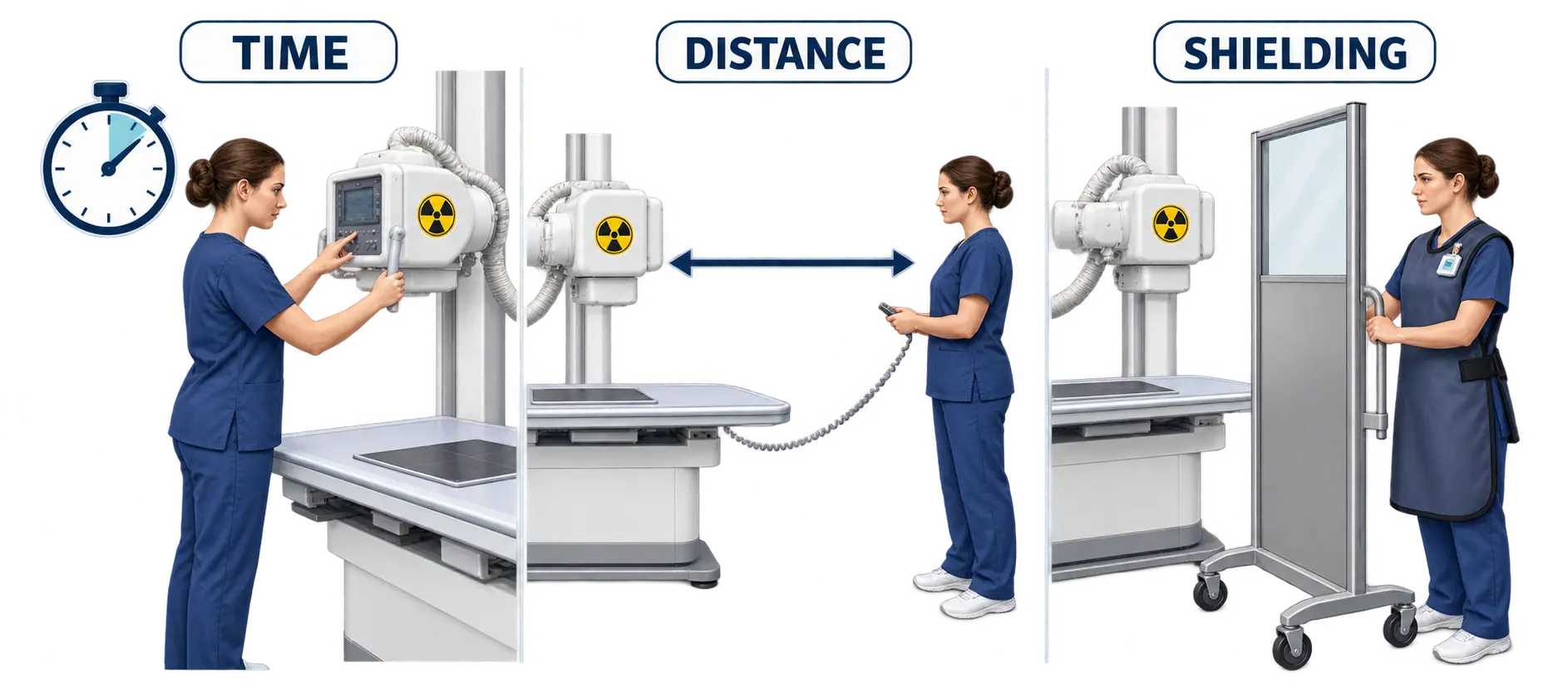
Caring for clients who are receiving radiation therapy or who have been exposed to radioactive materials requires strict adherence to radiation safety protocols. The fundamental principles of radiation protection (Time, Distance, and Shielding) are crucial for minimizing exposure to healthcare personnel and others.
-
Time: The shorter the duration of exposure to a radiation source, the lower the dose received. Healthcare providers should organize care efficiently to minimize the time spent in close proximity to clients undergoing radiation treatment or those with internal radiation sources. This might involve grouping tasks to reduce entries into the client’s room or completing procedures quickly.
-
Distance: The intensity of radiation decreases significantly with increasing distance from the source. This inverse square law means that even a small increase in distance can lead to a substantial reduction in exposure. Staff should maintain the greatest feasible distance from the client or radiation source, utilizing tools with long handles or positioning themselves strategically during care.
-
Shielding: Physical barriers can absorb or block radiation, providing protection. Depending on the type and energy of the radiation, shielding materials can include lead, concrete, or even water. In healthcare settings, this means lead aprons and thyroid shields for the scatter from X-ray and fluoroscopy, and portable lead shields for a client with an internal (sealed-source) implant, whose gamma rays a lead apron does little to stop. Client rooms may also have lead-lined walls or doors.
Monitoring and personal protection
-
Dosimeter badges: All personnel who may be exposed to radiation should wear a dosimeter badge. These devices measure and track an individual’s cumulative radiation exposure over time. It is imperative that these badges are worn correctly (typically at collar or shoulder level, outside of any lead apron) and are never shared with others or taken home, as they are specifically assigned to monitor individual exposure within the workplace. Regular monitoring helps ensure that exposure levels remain within safe limits set by regulatory bodies.
-
Personal protective equipment (PPE): In addition to dosimeters, other PPE may be required, such as lead aprons, lead glasses, and gloves, especially during procedures involving fluoroscopy or other imaging modalities.
Specific considerations for client care
Pregnant staff: Due to the potential risks of radiation exposure to a developing fetus, pregnant staff members should not be assigned to care for clients receiving radiation therapy or those with internal radiation sources if there is any possibility of exposure. Facilities typically have policies in place to reassign such personnel to other duties where radiation exposure is not a concern.
Contamination control: When a client is undergoing internal radiation therapy (e.g., brachytherapy), it is crucial to manage all items within the client’s room as potentially contaminated until the radiation source has been safely removed or adequately contained. This includes linens, gowns, dressing materials, and any other items that have been in direct contact with the client or the immediate vicinity of the radiation source. These items should remain in the client’s room to prevent the spread of radioactive materials and should only be handled according to strict institutional protocols for radioactive waste disposal. Special waste containers and handling procedures are typically implemented.
Fire safety: RACE and PASS
In the event of a fire, it is crucial to follow the established hospital emergency code, which is often Code red. This code triggers a series of standardized procedures designed to ensure the safety of clients, staff, and visitors. Understanding and implementing the RACE and PASS acronyms are fundamental to an effective fire response.
RACE is a simple yet vital mnemonic for the immediate actions to take when a fire is discovered:
- R - rescue/remove: The first priority is to rescue anyone in immediate danger. This means moving clients and personnel who are in the direct vicinity of the fire to a safe area. Always prioritize the safety of individuals over property.
- A - activate alarm: Once individuals are safe, activate the fire alarm system. This alerts the entire facility and initiates the emergency response protocols, including notifying the fire department.
- C - confine fire: Close doors and windows to the fire area. This helps to contain the fire and smoke, preventing its spread to other parts of the building. Fire doors are designed to automatically close, but manual closure of other doors can be critical.
- E - extinguish/evacuate: After confining the fire, assess whether it is safe to attempt to extinguish the fire using a portable fire extinguisher. If the fire is small and you are trained to use an extinguisher, proceed with caution. Otherwise, or if the fire is too large, evacuate the area and await the arrival of the fire department.
PASS is the acronym for the correct operation of a portable fire extinguisher:
- P - pull the pin: Hold the extinguisher with the nozzle pointed away from you, and pull the safety pin. This unlocks the operating lever.
- A - aim at the base of the fire: Direct the nozzle or hose at the base of the flames, not at the top. This is where the fuel source is, and attacking the base is most effective in extinguishing the fire.
- S - squeeze the handle: Squeeze the operating handle to release the extinguishing agent.
- S - sweep side to side: While aiming at the base of the fire, sweep the nozzle from side to side until the fire is extinguished. Watch the area carefully for re-ignition.
Disaster preparedness and response
Hospitals, as critical community infrastructure, are meticulously prepared to handle a wide spectrum of potential emergencies. This preparation involves maintaining comprehensive disaster plans that address various catastrophic scenarios, including natural disasters (such as hurricanes, earthquakes, floods, and wildfires), biological events (like pandemics or bioterrorism attacks), and chemical incidents (such as hazardous material spills or industrial accidents).
Nurses, as frontline healthcare providers, play a pivotal role in the effective execution of these plans. Therefore, it is imperative that all nursing staff possess a thorough understanding of the following.
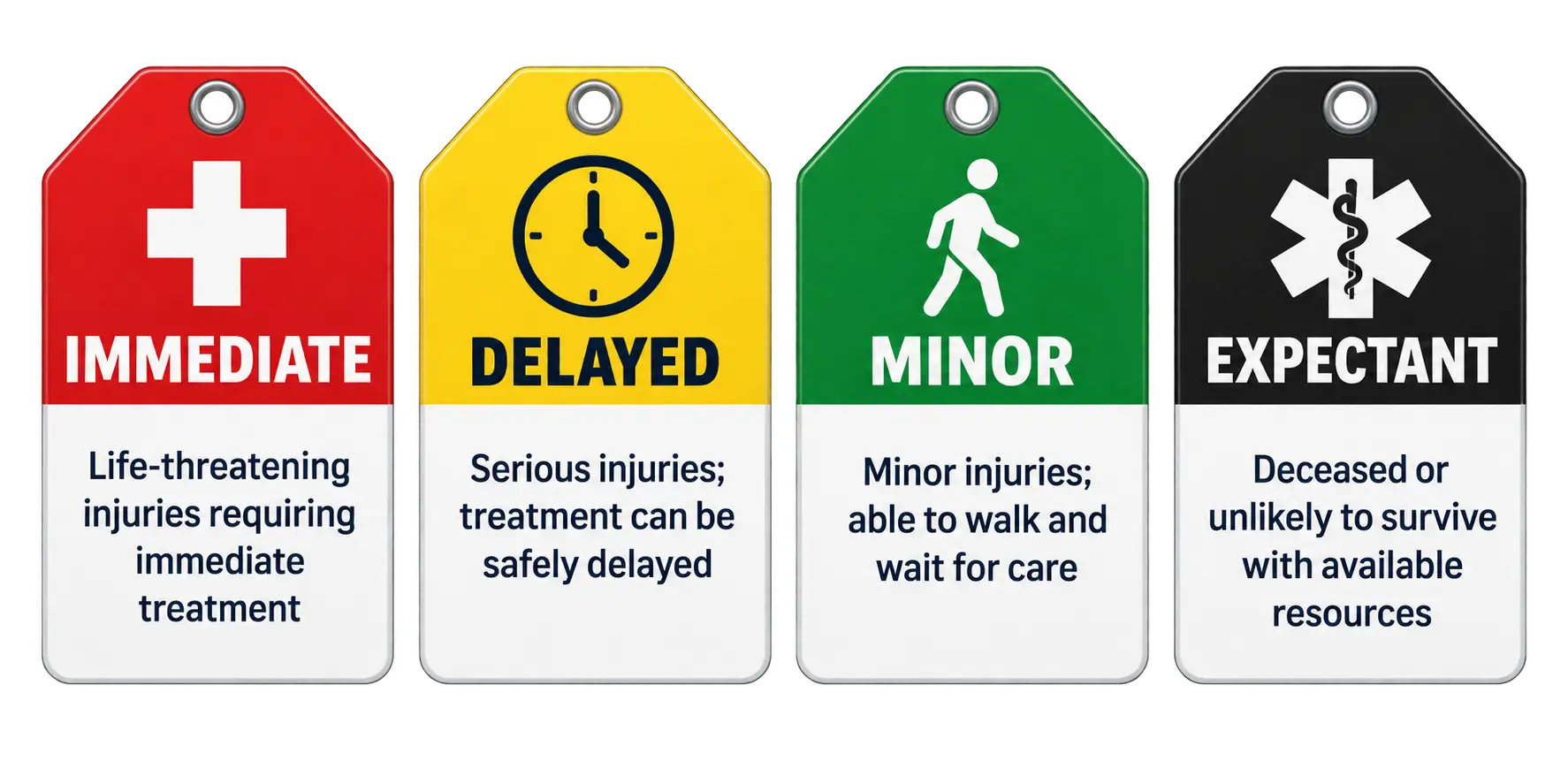
Triage principles:
- Immediate (Red): Life-threatening, survivable with rapid intervention.
- Delayed (Yellow): Serious but stable for a short delay.
- Minor (Green): Walking wounded.
- Expectant (Black): Unlikely to survive even with care.
Roles and reporting chains: Registered nurses (RNs) play a crucial role in hazardous materials and emergency response situations. They are expected to meticulously adhere to the established incident command structure, which provides a standardized framework for managing events. This ensures a coordinated and efficient response, minimizing risks and maximizing the safety of all involved.
Furthermore, accurate and comprehensive documentation is paramount. RNs must meticulously record all relevant details, including observations, interventions, and client status. Formal incident, variance, and event reporting is covered in the later chapter Incident reporting and error prevention.
Biological and chemical exposure
Biological hazards: In the event of exposure to biological materials, immediate and strict adherence to established isolation protocols and the proper use of personal protective equipment (PPE) are paramount. Any incident involving potential biological contamination must be promptly reported to infection control for assessment and guidance. This includes, but is not limited to, accidental contact with bodily fluids, cultures, or contaminated surfaces. Following these procedures helps prevent the spread of infectious agents and ensures appropriate medical evaluation and intervention.
Chemical hazards: For chemical exposures, the primary immediate response involves thoroughly flushing the affected area with copious amounts of water for at least 15 minutes, to dilute and remove the chemical. Simultaneously, all contaminated clothing must be carefully removed to prevent further skin contact and absorption. Following these initial steps, it is crucial to consult the material safety data sheet (MSDS) specific to the chemical involved. The MSDS provides detailed information on the chemical’s properties, hazards, first-aid measures, and appropriate spill cleanup procedures. Depending on the chemical, additional measures such as neutralizing agents or medical attention may be required.
Sharps injuries: Sharps injuries, which include punctures or cuts from needles, scalpels, or other sharp objects, require immediate attention due to the risk of bloodborne pathogen transmission. The injured site must be thoroughly washed with soap and water immediately. Following initial first aid, the incident must be reported to the designated authority (e.g., supervisor, occupational health) without delay. A comprehensive post-exposure protocol must then be initiated, which typically involves medical evaluation, blood tests, and, if indicated, prophylaxis for diseases such as HIV (Human Immunodeficiency Virus) and HBV (Hepatitis B Virus). Prompt action significantly reduces the risk of contracting these chronic infections.
Clinical vignette
A nurse accidentally drops a vial of chemotherapy medication on the floor.
Nursing action: The nurse immediately clears the area, isolates the spill, dons a respirator and protective gown from the HAZMAT spill kit, and alerts environmental services. After containment, the nurse completes incident documentation and reports the exposure.