



Medical emergencies
Introduction
Medical emergencies involve sudden, life-threatening alterations in physiological function requiring immediate recognition and intervention. Nurses play a central role in early detection, stabilization, and escalation of care.
On NCLEX, the emphasis is not just on knowing the condition, it is on recognizing deterioration early, prioritizing correctly, and initiating first-line nursing actions before a provider arrives.
This section focuses on high-yield emergencies commonly tested on NCLEX, including shock, sepsis, anaphylaxis, myocardial infarction, stroke, and wound dehiscence/evisceration.
Learning objectives
By the end of this section, the learner should be able to:
- Identify early and late signs of medical emergencies
- Prioritize care using airway, breathing, and circulation
- Recognize atypical presentations, especially in older adults
- Initiate appropriate first-line nursing actions
- Interpret critical laboratory values
Shock
Shock is a state of inadequate tissue perfusion leading to cellular hypoxia and organ dysfunction.
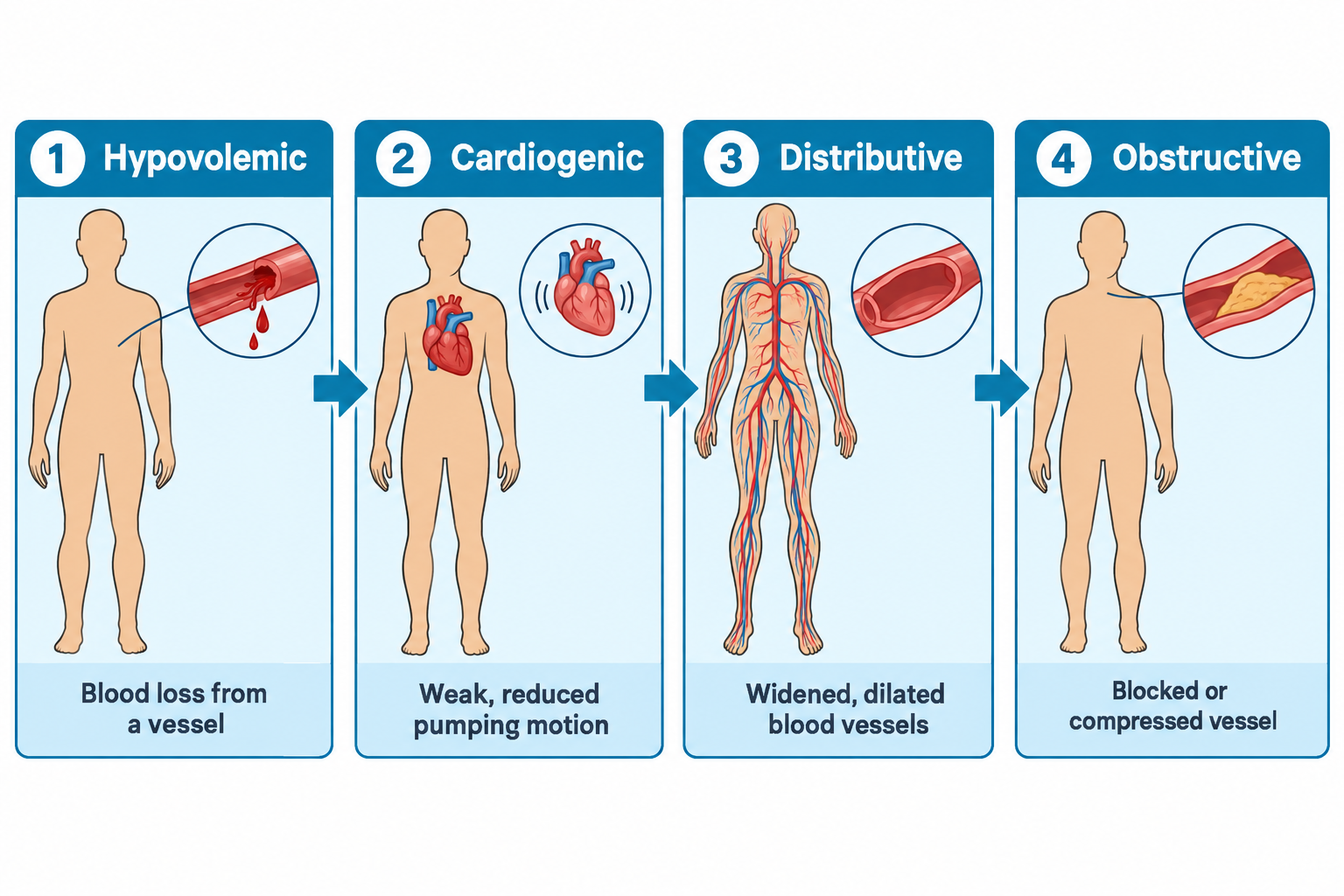
Common types
- Hypovolemic: fluid loss (hemorrhage, dehydration)
- Cardiogenic: pump failure
- Distributive: vasodilation (septic, anaphylactic, neurogenic)
- Obstructive: mechanical blockage (PE, tamponade)
Early signs
The body compensates before blood pressure drops.
- Tachycardia (earliest cardiovascular sign)
- Restlessness or anxiety
- Cool, clammy skin (hypovolemic/cardiogenic)
- Warm, flushed skin (early septic shock)
- Decreased urine output (<30 mL/hr)
- Narrow pulse pressure
Late signs
- Hypotension
- Altered mental status
- Weak or absent peripheral pulses
- Multi-organ dysfunction
- Elevated lactate (>2 mmol/L)
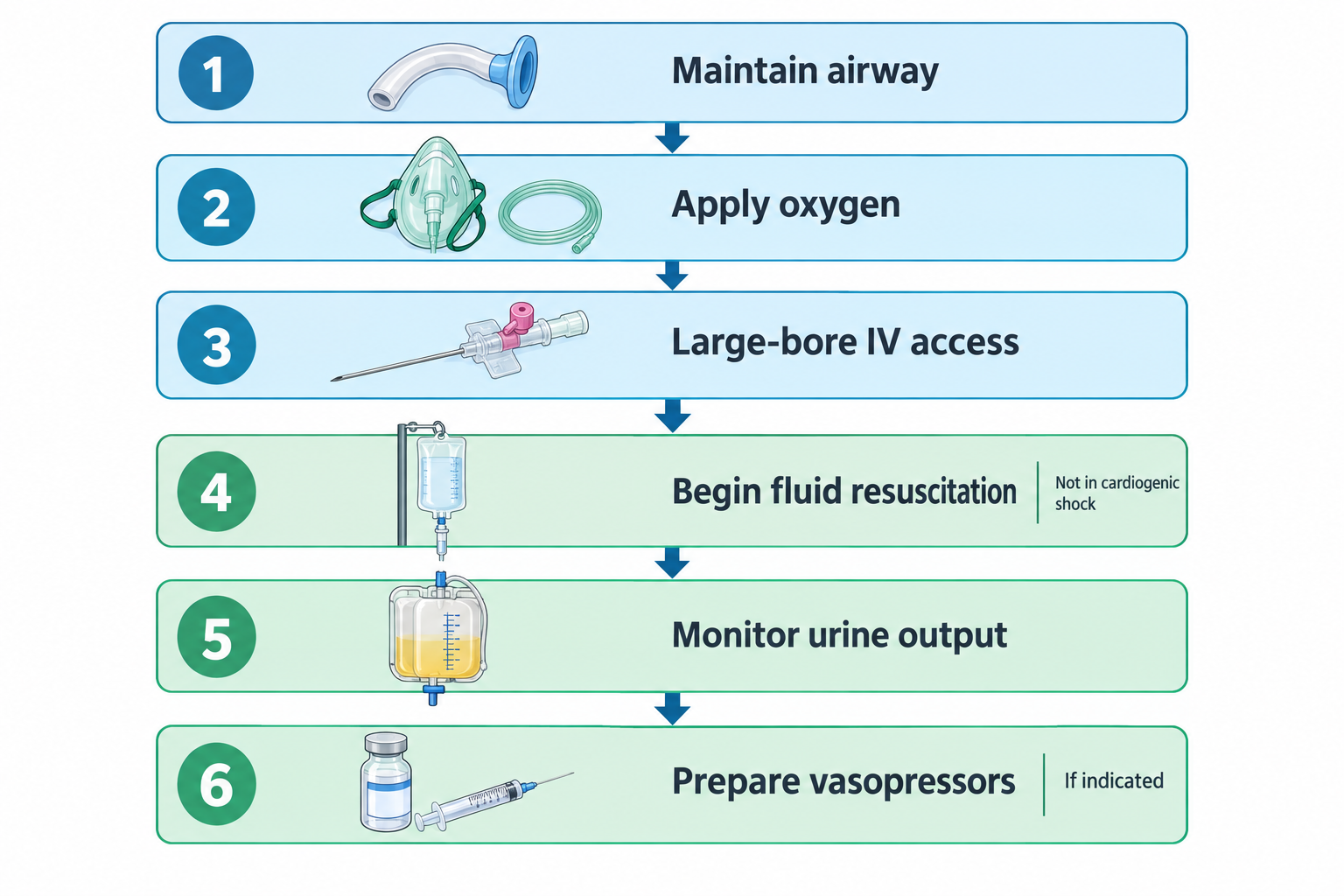
Nursing priorities in shock
- Maintain airway
- Apply oxygen
- Establish large-bore IV access
- Initiate fluid resuscitation (unless cardiogenic)
- Monitor urine output
- Prepare for vasopressors if indicated
Sepsis
Sepsis results from a dysregulated host response to infection, leading to systemic inflammation and organ dysfunction.
Key indicators
- Fever or hypothermia
- Tachycardia
- Tachypnea
- Hypotension
- Altered mental status
- Elevated lactate
- Decreased urine output
Labs
- Lactate > 2 mmol/L → tissue hypoperfusion
- WBC elevated or decreased
- Increased creatinine
- Elevated procalcitonin (sometimes)
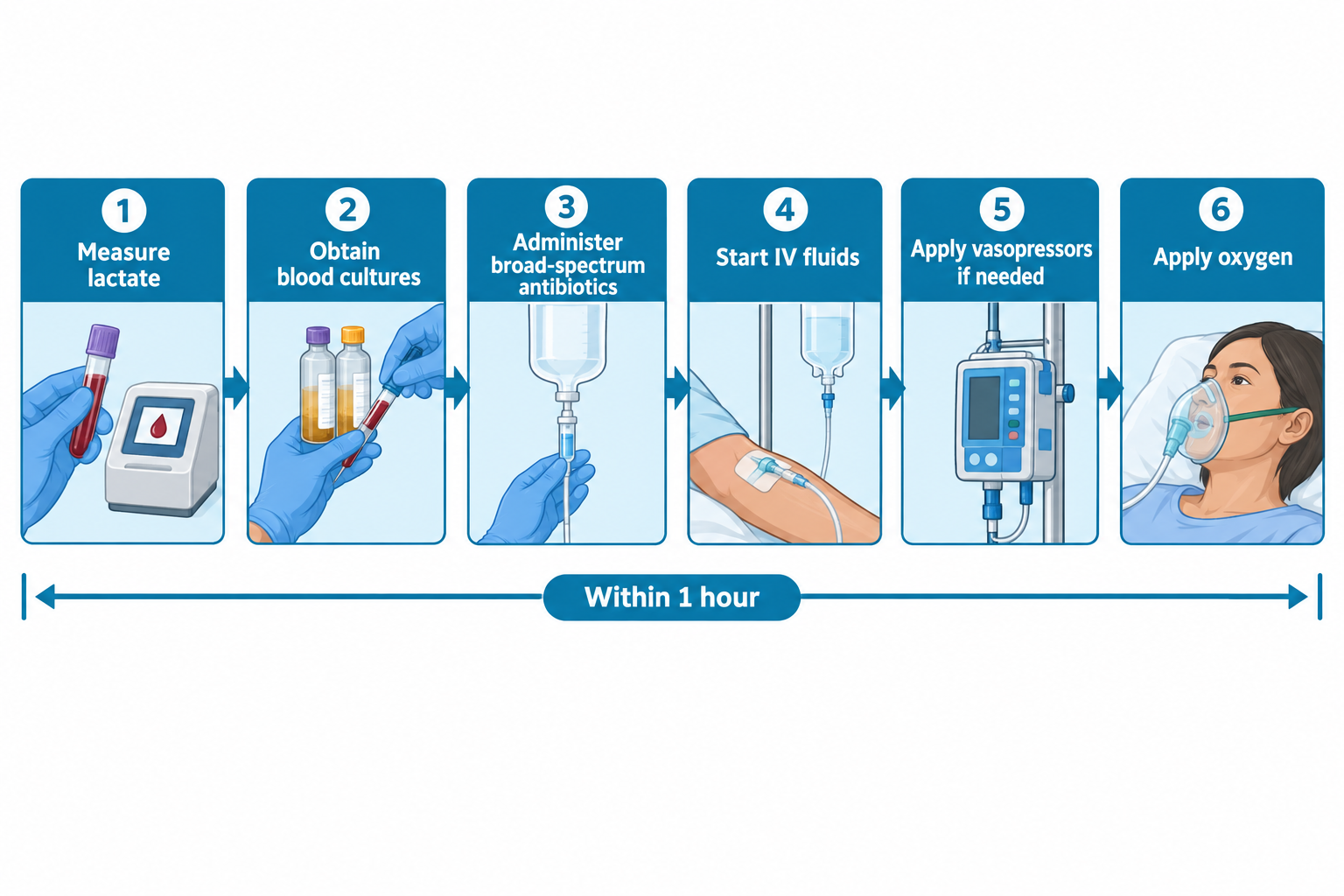
Sepsis bundle (time-sensitive)
Within the first hour:
- Measure lactate
- Obtain blood cultures (before antibiotics)
- Administer broad-spectrum antibiotics per order
- Initiate IV fluids (30 mL/kg for hypotension or lactate ≥4 mmol/L) per order
- Apply vasopressors if hypotensive despite fluid resuscitation, to maintain MAP ≥65 mmHg, per order
- Apply oxygen as needed
When to call rapid response
- RR < 8 or > 28
- HR < 40 or > 130
- O2 sat < 90% despite oxygen
- Sudden mental status change
- Staff concern
Anaphylaxis
Anaphylaxis is a rapid, systemic allergic reaction that can cause airway obstruction and circulatory collapse.
Key features
- Airway swelling
- Wheezing or stridor
- Hypotension
- Urticaria
Priority action: Administer IM epinephrine immediately.
After epinephrine
- Maintain airway
- High-flow oxygen
- IV fluids
- Continuous monitoring
- Prepare for repeat dosing if needed
Myocardial infarction
A myocardial infarction occurs when coronary blood flow is blocked, causing myocardial ischemia and necrosis.
Classic symptoms
- Chest pain or pressure
- Radiation to arm or jaw
- Diaphoresis
- Nausea
Atypical symptoms (older adults, women)
- Fatigue
- Dyspnea
- Epigastric discomfort
- Dizziness
Key diagnostics
- Elevated troponin
- ECG changes (ST elevation or depression)
- New arrhythmias
Immediate nursing actions
- Oxygen if hypoxic
- Cardiac monitor
- IV access
- Administer aspirin per prescription (if not contraindicated)
- Prepare for reperfusion (PCI)
Stroke
Stroke is a neurological emergency caused by interrupted cerebral blood flow.
FAST recognition
- Facial droop
- Arm weakness
- Speech difficulty
- Time to call emergency response
Additional warning signs
- Sudden severe headache
- Vision loss
- Loss of coordination
- Sudden confusion
Wound dehiscence and evisceration
Wound dehiscence is the separation of a surgical incision; evisceration occurs when abdominal organs protrude through the opened wound. Both are surgical emergencies that require immediate action.
Immediate nursing actions
- Position the client in low-Fowler’s position with knees flexed to reduce tension on the abdominal wall
- Cover the wound with a sterile dressing moistened with sterile saline
- Do not attempt to reinsert protruding organs
- Keep the client NPO in case of an emergent return to surgery
- Notify the provider immediately
- Monitor for signs of shock while awaiting the provider
Putting it together: emergency prioritization
ABC prioritization framework
- Airway threats come first
- Breathing and oxygenation second
- Circulation and perfusion third
- Neurological status reflects severity
NGN clinical judgment model
- Recognize cues
- Analyze cues
- Prioritize hypotheses
- Generate solutions
- Take action
- Evaluate outcomes
Evaluating outcomes means documenting the client’s response to the intervention, not just performing the intervention. After resuscitation or emergency treatment, chart findings such as restoration of breathing and pulse, vital sign trends, mental status, and urine output so the care team can judge whether the client is stabilizing.
Delegation in emergencies
Delegation during an emergency is a judgment about task complexity and the assigned staff member’s demonstrated competency, not a fixed job-title list. In general:
Tasks appropriate to delegate to UAP:
- Obtain vital signs
- Report abnormal findings immediately
- Assist with oxygen therapy, as delegated
- Assist with CPR
Tasks that remain with the RN:
- Perform rapid assessment
- Prioritize and interpret clinical findings
- Administer emergency medications per order or prescription
- Activate the Rapid Response Team
- Evaluate the client’s response
Clinical vignette 1
A client with pneumonia becomes tachycardic, confused, and hypotensive with decreasing urine output.
Nursing action: Rapidly escalate care, administer oxygen, establish IV access, obtain blood cultures as ordered, administer prescribed broad-spectrum antibiotics, and begin fluid resuscitation per protocol.
Rationale: Tachycardia, hypotension, confusion, and decreasing urine output are concerning for septic shock, a time-sensitive medical emergency requiring immediate intervention.
Clinical vignette 2
A client receiving IV antibiotics develops wheezing, facial swelling, and hypotension.
Nursing action: Administer IM epinephrine immediately, maintain the airway, provide high-flow oxygen, initiate IV fluids, and notify the provider.
Rationale: Wheezing, facial swelling, and hypotension indicate anaphylaxis, requiring immediate epinephrine to prevent airway obstruction and circulatory collapse.