



Organ transplants and end of life changes
Introduction
Organ transplantation and end-of-life care represent two extremes of physiological adaptation:
- Transplantation, where the body must adapt to a foreign organ while preventing rejection
- End-of-life, where adaptive mechanisms progressively fail despite support
On the Next generation NCLEX (NGN), this section tests recognition of complications, prioritization of care, and ethical, client-centered nursing judgment.
Learning objectives
By the end of this section, the learner should be able to:
- Identify early and late signs of organ transplant complications
- Recognize acute rejection and infection risks
- Understand physiological changes at end of life
- Prioritize comfort, dignity, and symptom management
Core principle: Adaptation versus failure
Transplant clients fight to preserve function.
End-of-life clients transition toward comfort over cure.
NGN questions often hinge on knowing when to intervene aggressively and when to shift goals of care.
Organ transplantation
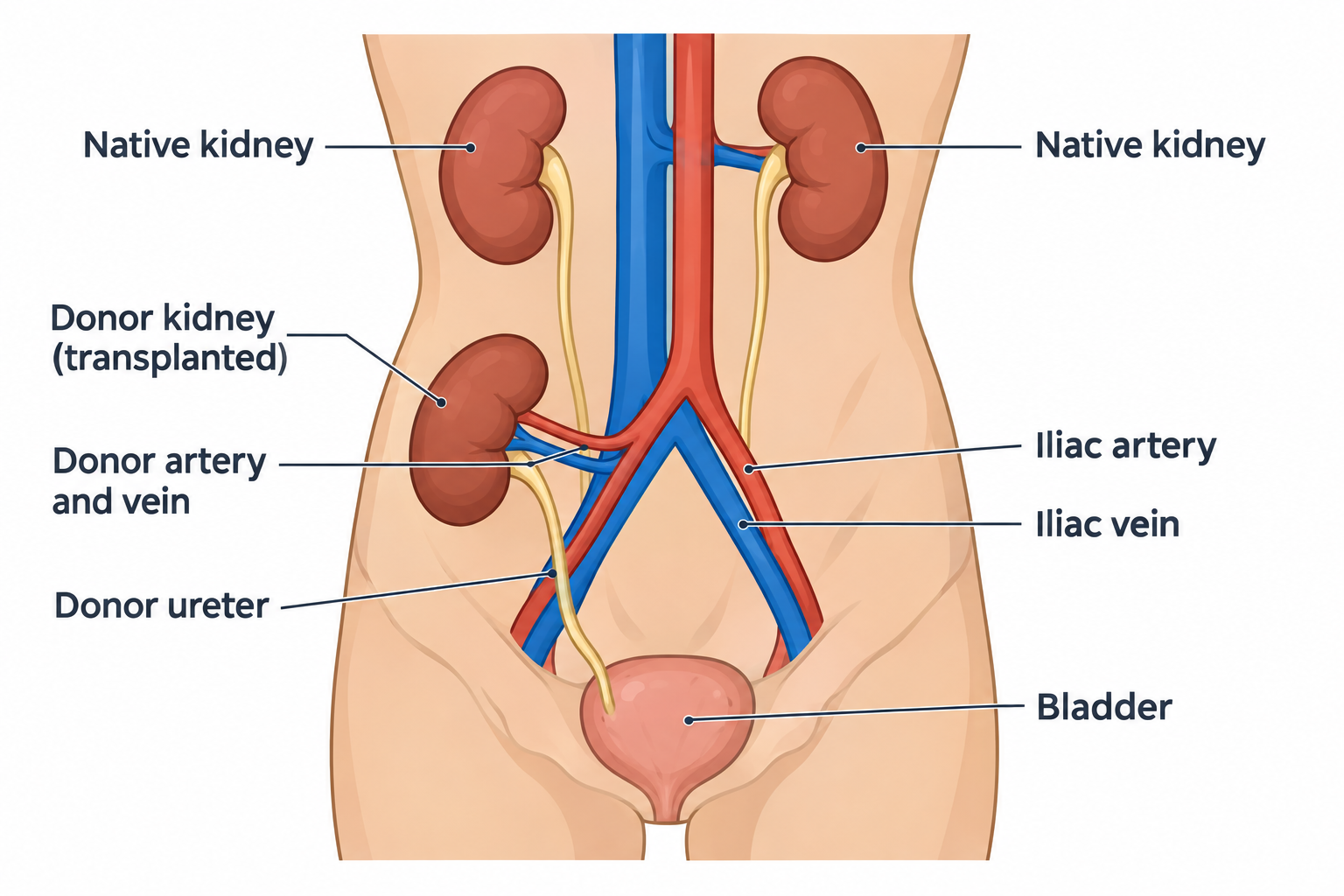
Organ transplantation replaces a failing organ with a donor organ, requiring lifelong immunosuppression and close monitoring.
Immediate post-transplant priorities
- Maintain adequate perfusion to the graft
- Monitor vital signs and urine output
- Assess for bleeding and infection
- Ensure strict medication adherence
Transplant rejection
Pathophysiology of rejection
Transplant rejection occurs when the recipient’s immune system identifies the graft as foreign and activates a T-cell-mediated immune response.
Even with tissue matching, complete immunologic compatibility is impossible. Therefore:
- Immunosuppression is lifelong.
- Missed doses significantly increase rejection risk.
- Infection risk is constant.
Types of rejection
- Hyperacute:
- Occurs minutes to hours after surgery
- Caused by preformed antibodies
- Graft becomes cyanotic and nonfunctional
- Usually irreversible
- Acute:
- Most common type
- Can occur anytime, even years later
- Often reversible with increased immunosuppression
- Chronic:
- Slow, progressive fibrosis of graft
- Gradual decline in organ function
- Often irreversible
Signs of acute rejection (organ-dependent)
- Fever
- Graft tenderness
- Decreased organ function
- Kidney: decreased urine output, rising creatinine
- Liver: jaundice, elevated LFTs
- Heart: dysrhythmias, decreased cardiac output
Immunosuppression and infection risk
Key nursing considerations
- Strict infection prevention
- Monitor temperature and labs
- Educate on medication adherence
- Avoid live vaccines
Immunosuppressive medications
Common medications
- Tacrolimus
- Cyclosporine
- Mycophenolate
- Prednisone
Nursing monitoring
- Drug trough levels
- Renal function (nephrotoxicity risk)
- Blood glucose (steroid-induced hyperglycemia)
- Blood pressure
Client education
- Take medications at the same time daily
- Do not stop abruptly
- Avoid grapefruit juice
- Report fever > 100.4°F (38°C)
Ethical and safety considerations in transplantation
- Medication nonadherence increases rejection risk
- Infection may present without fever
- Client education is a core nursing responsibility
Always protect the transplanted organ by early detection and escalation.
End-of-life physiological changes
End-of-life care focuses on comfort, dignity, and symptom relief as the body’s systems gradually shut down.
Common physiological changes
Cardiovascular
- Decreased blood pressure
- Weak or irregular pulse
- Cool extremities
Respiratory
- Cheyne-Stokes respirations
- Noisy breathing (“terminal secretions”)
- Decreased oxygen demand
Neurological
- Decreased level of consciousness
- Minimal responsiveness
Renal
- Decreased urine output
- Dark, concentrated urine
Nursing priorities at end of life
Priority interventions
- Pain and symptom management
- Morphine is commonly used for pain management
- Opioids do not hasten death when properly dosed
- Treat pain even if respiratory rate is low (comfort priority)
- Use PAINAD scale for nonverbal clients
- Repositioning for comfort
- Oral and skin care
- Family support and education
- Respect for cultural and spiritual preferences. Ask the client about their beliefs and practices and act on what the client reports; never assume them from the client’s background.
What not to prioritize at end of life
- Aggressive diagnostics
- Frequent vital sign checks
- Non-beneficial invasive procedures
Clinical vignette 1
A kidney transplant client has decreasing urine output and rising creatinine.
Nursing action: Notify the provider promptly, continue close monitoring, and anticipate prescribed adjustment of immunosuppressive therapy.
Rationale: Decreasing urine output and rising creatinine suggest acute graft rejection requiring prompt intervention.
Clinical vignette 2
A terminally ill client develops irregular respirations and cool extremities. The family asks if this is normal.
Nursing action: Reassure the family, explain that these are expected end-of-life changes, and continue comfort-focused care.
Rationale: These findings are expected during active dying and indicate the need for comfort-focused care.
Post-mortem care
After death is pronounced:
- Close eyes
- Insert dentures if appropriate
- Remove tubes (unless autopsy or donation planned)
- Cleanse the body
- Apply identification tags
- Allow family private time