


Achievable logoAchievable logo
NCLEX
Sign in
Sign up
Purchase
Textbook
Practice exams
Support
How it works
Exam catalog
Mountain with a flag at the peak
Textbook
Introduction
1. Safe and effective care environment
2. Health promotion and maintenance
3. Psychosocial Integrity
4. Physiological Integrity
4.1 Basic care and comfort
4.2 Pharmacological and parenteral therapies
4.3 Reduction of risk potential
4.4 Physiological adaptation
4.4.1 Medical emergencies
4.4.2 Fluid and electrolyte disorders
4.4.3 Acute and chronic conditions management
4.4.4 Alterations in body systems
4.4.5 Organ transplants and end of life changes
4.4.6 Hemodynamic monitoring and critical care concepts
Wrapping up
Achievable logoAchievable logo
4.4.3 Acute and chronic conditions management
Achievable NCLEX
4. Physiological Integrity
4.4. Physiological adaptation
Our NCLEX course is currently in development and is a work-in-progress.

Acute and chronic conditions management

7 min read
Font
Discuss
Share
Feedback

Introduction

Clients frequently present with acute exacerbations of chronic illnesses or develop new acute conditions while hospitalized. Effective nursing care requires the ability to differentiate acute from chronic changes, recognize loss of compensation, and prioritize interventions that prevent rapid deterioration.

Chronic illness often creates abnormal baselines (e.g., chronic hypoxia in COPD, elevated creatinine in CKD, persistent hyperglycemia in diabetes). The danger lies not in the baseline but in the trend away from it.

On the Next Generation NCLEX (NGN), this subchapter focuses on clinical judgment, pattern recognition, and prioritization, especially when baseline disease states complicate assessment.

Learning objectives

By the end of this section, the learner should be able to:

  • Differentiate acute conditions from chronic disease manifestations
  • Recognize acute-on-chronic deterioration
  • Identify loss of compensation across body systems
  • Prioritize nursing interventions using ABCs and safety principles

Core concept: Chronic clients compensate until they cannot

NGN insight:
Chronic disease masks severity by creating abnormal baselines. Acute changes in chronic clients are more dangerous than abnormal baselines.

Chronic illness forces the body to adapt over time. These adaptations are called compensatory mechanisms.

Examples:

  • COPD → chronic CO₂ retention → kidneys retain bicarbonate to balance pH
  • Heart failure → RAAS activation → fluid retention to maintain perfusion
  • Chronic anemia → increased heart rate to maintain oxygen delivery

These compensations maintain stability, until they fail.

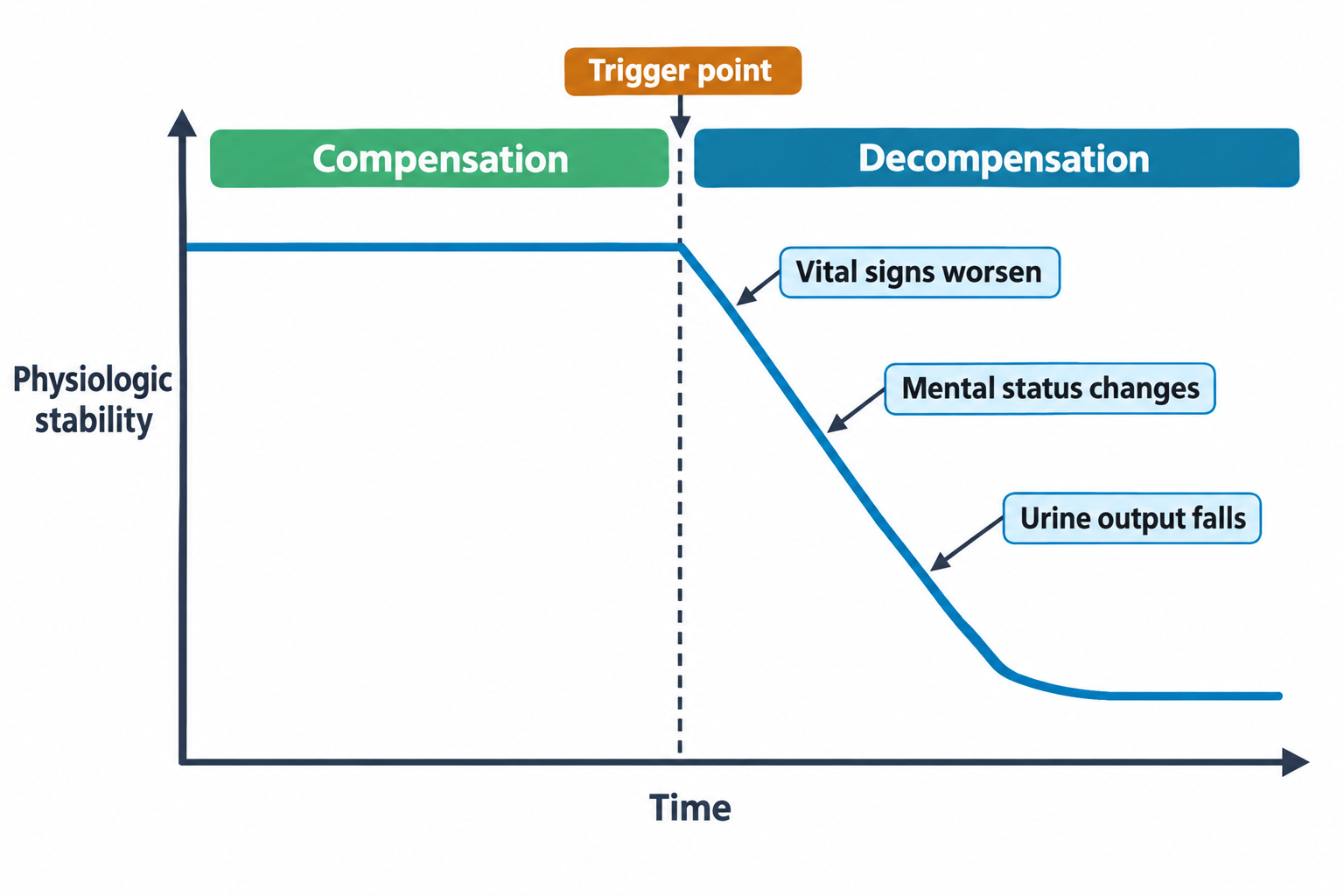
Loss of compensation occurs when:

  • Vital signs trend in the wrong direction
  • Mental status changes
  • Urine output decreases
  • Oxygen requirements increase
  • Lactate rises
  • Work of breathing increases

NGN questions often hinge on recognizing what is new, worsening, or unexpected.

alt_text
//////OPTIONAL IMAGE. Caption: Compensation and Decompensation in Chronic Disease
Illustration type: Flowchart
Illustration note: Illustrate how chronic diseases develop compensatory mechanisms over time to maintain physiological stability, followed by loss of compensation marked by worsening vital signs, mental status changes, increasing oxygen requirements, decreased urine output, and rising lactate.///////

Understanding acute vs chronic conditions

Acute conditions

  • Sudden onset
  • Rapid progression
  • Often reversible with timely intervention
  • Nurses focus on stabilization
  • Requires frequent monitoring

Chronic conditions

  • Long-standing
  • Progressive or stable over time
  • Characterized by periods of compensation and exacerbation
  • Nursing focus is on prevention and maintenance
  • Requires trend monitoring
alt_text
//////Caption: Acute vs. Chronic Conditions
Illustration type: Comparison table
Illustration note: Compare acute and chronic conditions by onset, progression, reversibility, nursing priorities, and monitoring focus.///////
Definitions
Acute-on-chronic condition
Sudden deterioration superimposed on a chronic illness
Decompensated heart failure
Inability of the heart to maintain adequate circulation
Neurological deterioration
Decline in cognitive or motor function indicating CNS compromise

Respiratory conditions

Common scenarios

  • COPD exacerbation
  • Acute asthma attack
  • Pneumonia in chronic lung disease

Red flags

  • Increased work of breathing
  • Change in sputum color or amount
  • Declining oxygen saturation
  • Altered mental status

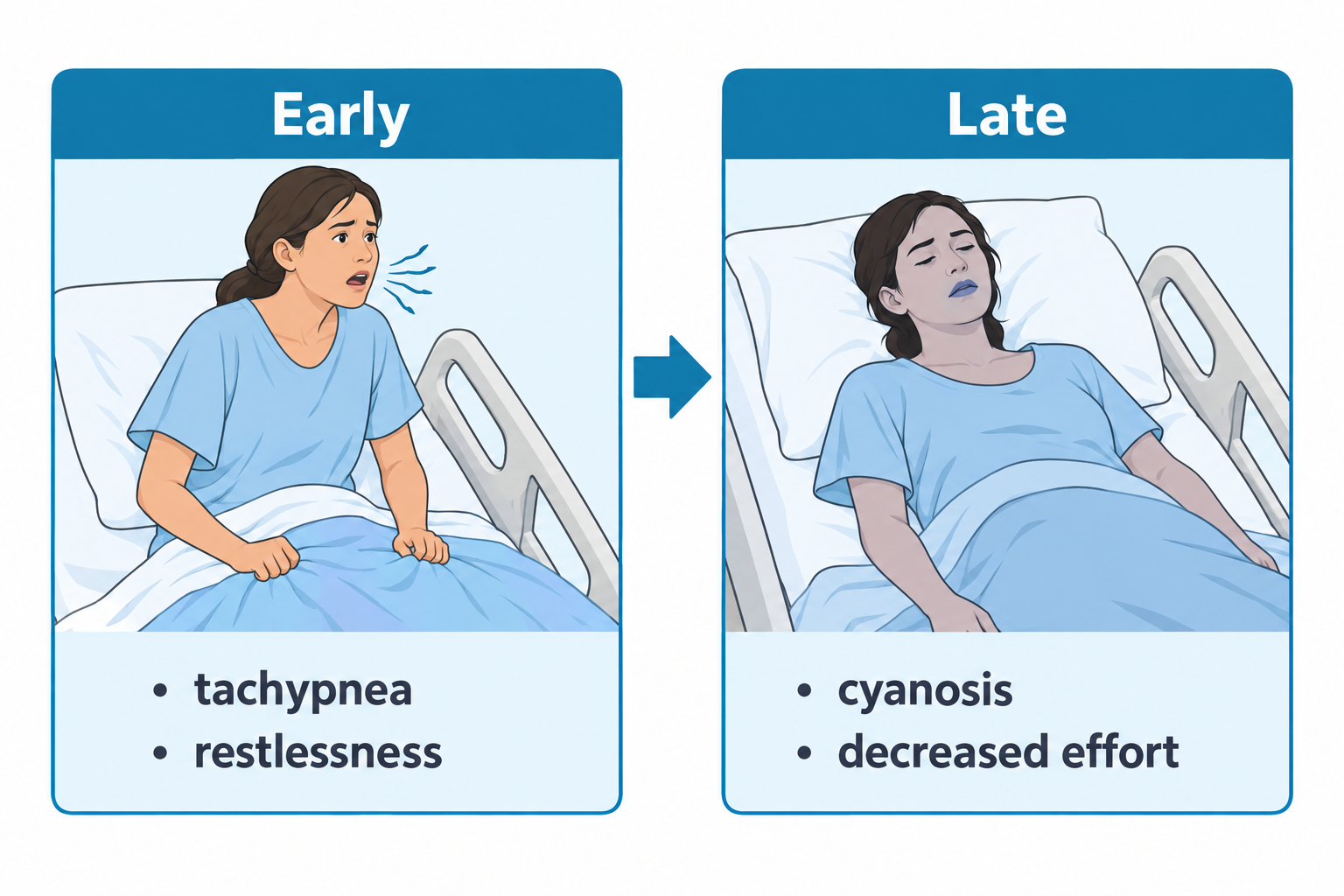
Early vs late signs of respiratory failure

Early:

  • Tachypnea
  • Restlessness
  • Mild desaturation
  • Increased sputum

Late:

  • Confusion
  • Cyanosis
  • Silent chest
  • Decreasing respiratory effort
NCLEX tip:
In clients with COPD, new mental status changes may indicate hypoxia rather than anxiety.

Nursing priorities

  1. Assess airway patency
  2. Apply oxygen (carefully titrated in COPD)
  3. Position upright (High Fowler’s)
  4. Administer bronchodilators
  5. Monitor ABGs if ordered
alt_text
//////Caption: Early vs. Late Signs of Respiratory Failure
Illustration type: Comparison chart
Illustration note: Compare the early and late clinical signs of respiratory failure, emphasizing progression from tachypnea and restlessness to confusion, cyanosis, silent chest, and decreasing respiratory effort.///////

Cardiovascular conditions

Common scenarios

  • Acute heart failure exacerbation
  • Myocardial infarction
  • Hypertensive crisis

Red flags

  • Sudden weight gain
  • Worsening dyspnea
  • Chest pain
  • New arrhythmias

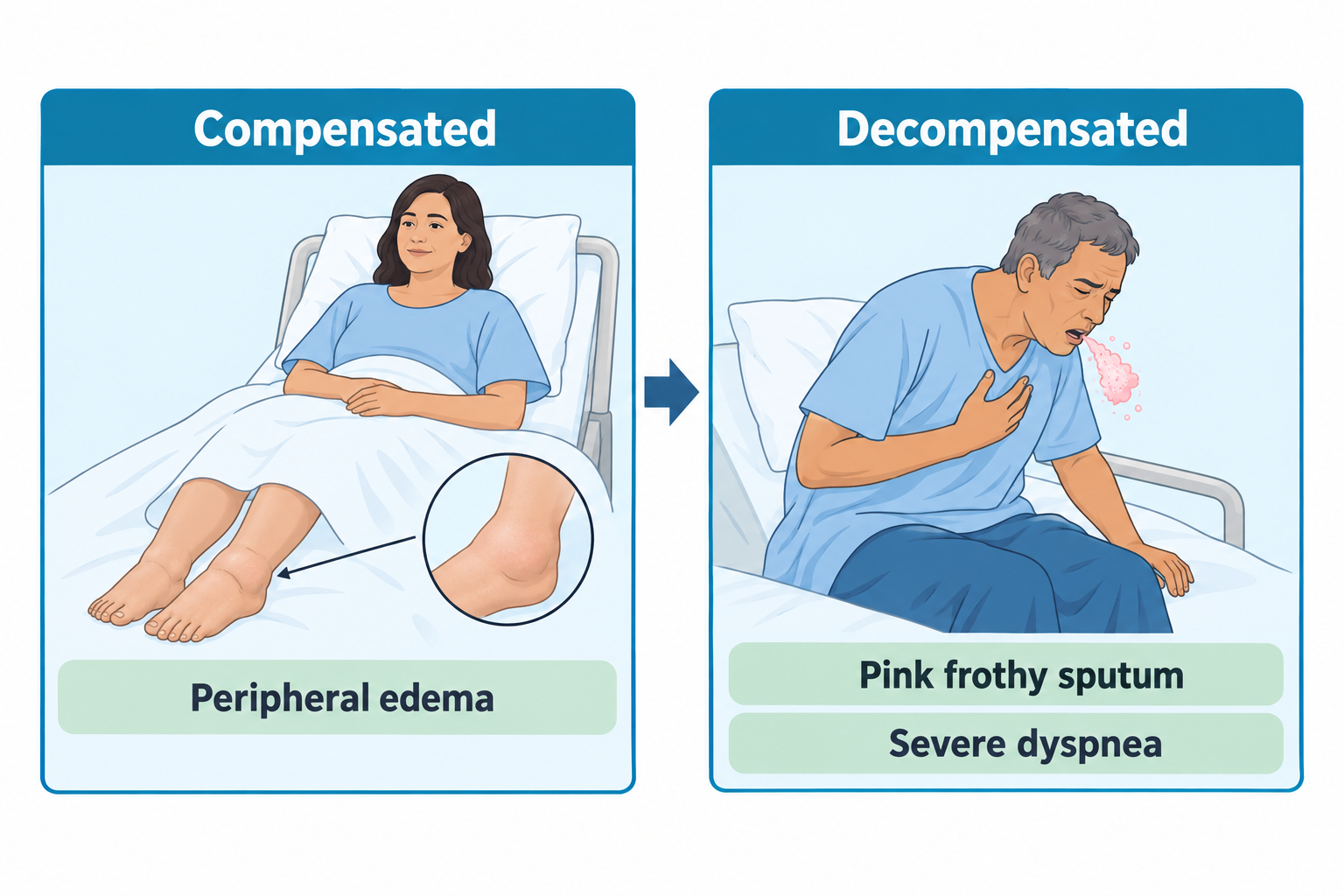
Early signs of decompensated heart failure

  • Weight gain >2 lb (≈1 kg) in 24 hours or >5 lb (≈2.3 kg) in one week
  • Crackles at lung bases
  • Peripheral edema
  • Fatigue

Severe decompensation

  • Pulmonary edema
  • Pink frothy sputum
  • Severe dyspnea at rest

Nursing interventions

  • Elevate head of bed
  • Administer oxygen
  • Prepare for diuretics
  • Monitor potassium levels
  • Continuous cardiac monitoring if unstable
alt_text
//////Caption: Compensated vs. Decompensated Heart Failure
Illustration type: Comparison table
Illustration note: Compare the clinical features of compensated and decompensated heart failure, highlighting worsening dyspnea, pulmonary edema, weight gain, edema, and nursing priorities.///////

OR

alt_text
//////Caption: Decompensated heart failure warning signs
Illustration note: Diagram showing early signs (weight gain, crackles, edema) progressing to severe decompensation (pink frothy sputum, pulmonary edema), paired visual reinforces the escalation pattern.///////

Endocrine conditions

Common scenarios

  • Hypoglycemia
  • Diabetic ketoacidosis (DKA)
  • Hyperosmolar hyperglycemic state (HHS)

Red flags

  • Altered mental status
  • Fruity breath odor
  • Abnormal glucose trends
  • Dehydration
NGN tip:
Hypoglycemia is treated before hyperglycemia and is a more serious medical emergency.

Neurological conditions

Common scenarios

  • Acute stroke
  • Seizure activity
  • Increased intracranial pressure

Red flags

  • Sudden change in level of consciousness
  • New focal deficits
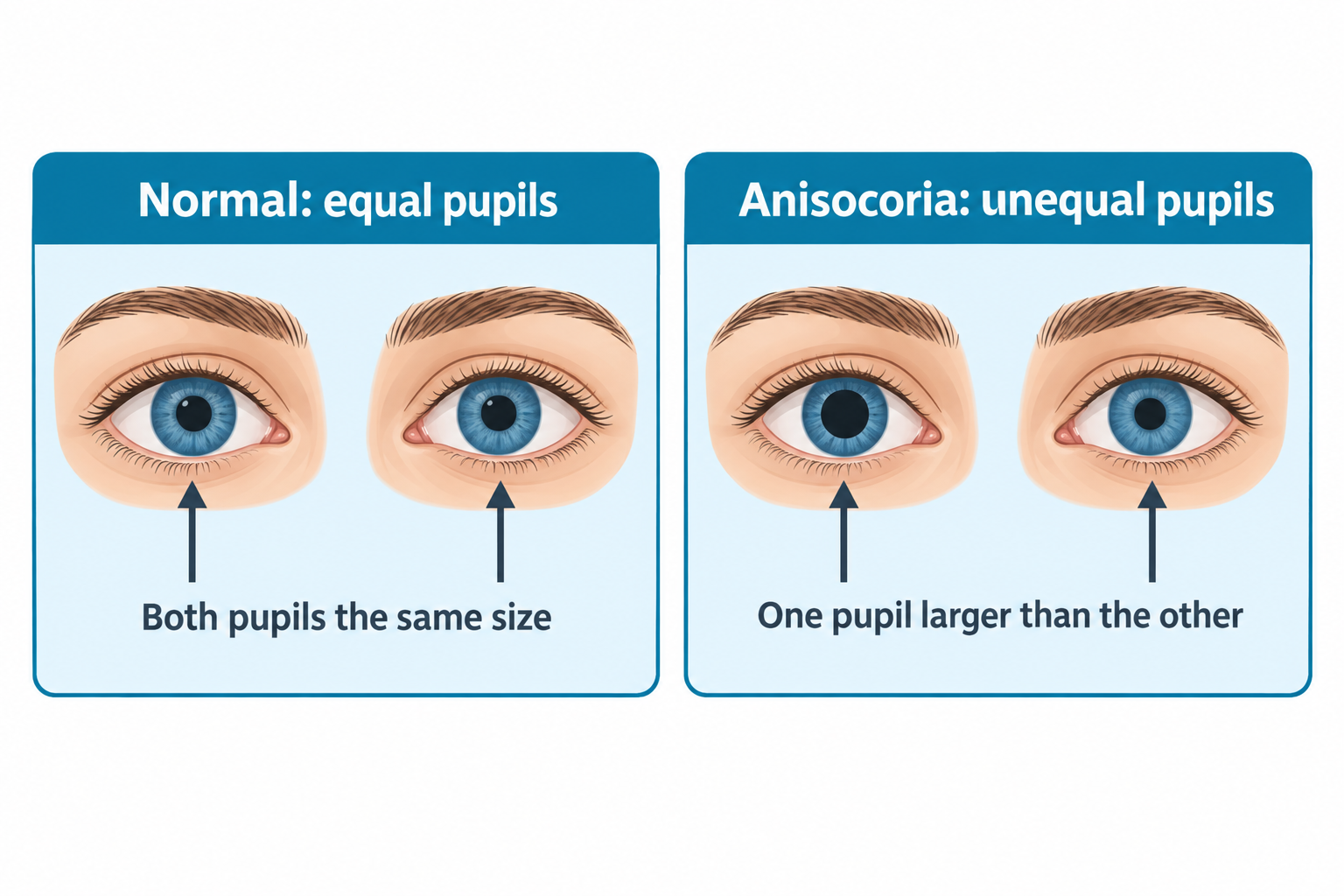
  • Unequal pupils
  • Persistent headache
alt_text
//////Caption: Pupil assessment; unequal pupils (anisocoria)
Illustration note: simple diagram showing normal vs. unequal pupil presentation, since this is a concrete visual finding students benefit from seeing rather than just reading.///////

Renal conditions

Common scenarios

  • Acute kidney injury (AKI)
  • Acute-on-chronic renal failure

Red flags

  • Decreased urine output
  • Rising creatinine
  • Fluid overload
  • Electrolyte disturbances
NGN insight:
Kidney failure often presents first as fluid and electrolyte imbalance.

Nursing Focus

  • Strict intake and output
  • Daily weights
  • Monitor potassium (risk of arrhythmias)
  • Avoid nephrotoxic medications

Infection in chronic disease

Chronic illness blunts typical inflammatory responses.

Atypical signs

  • Confusion
  • Functional decline
  • Poor appetite
  • Afebrile presentation
NGN insight:
Absence of fever does not rule out infection, especially in older adults and clients with chronic illness.

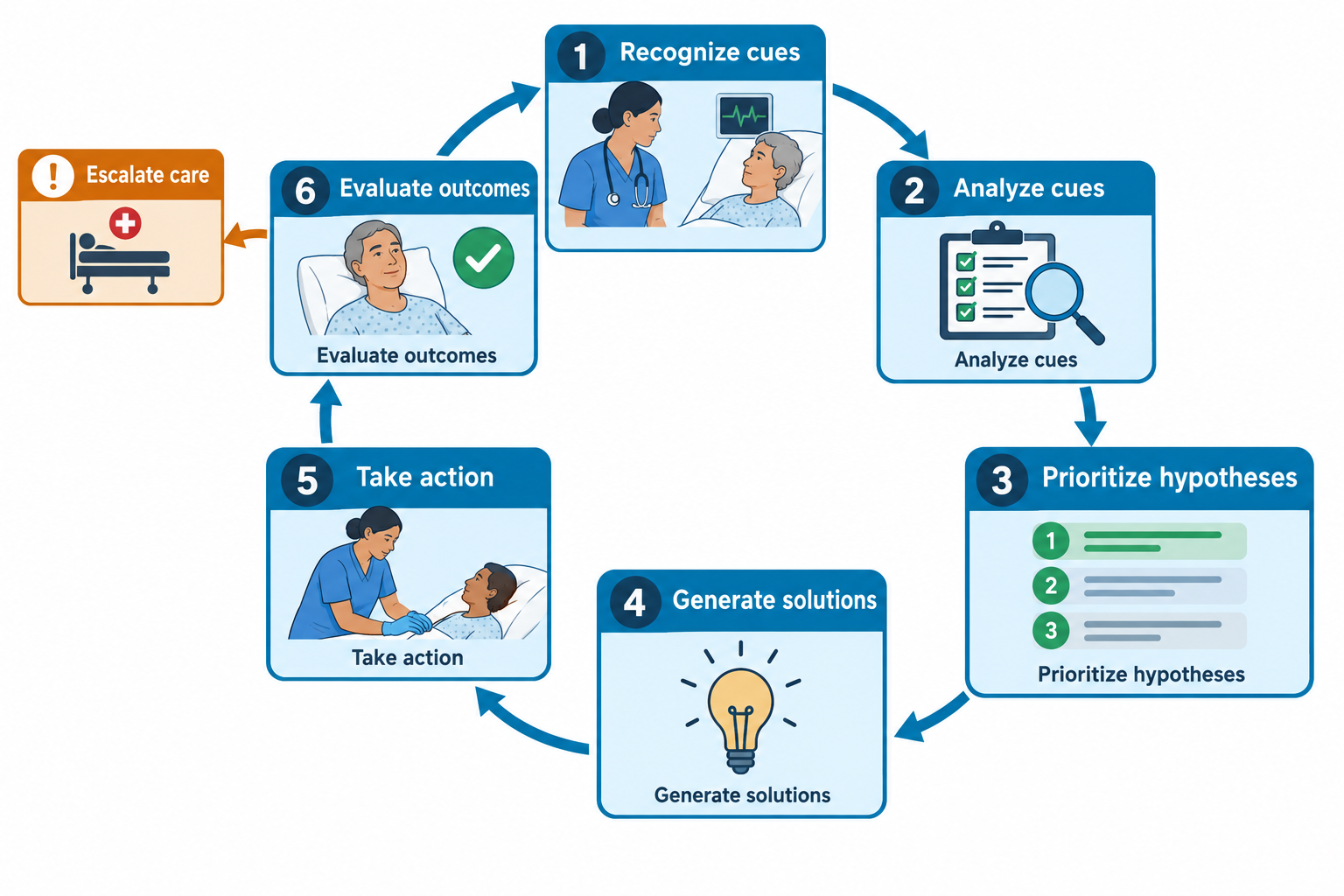
Prioritization framework for NGN

NGN decision pathway

  • Step 1: Identify what is NEW or worsening
  • Step 2: Apply ABCs
  • Step 3: Assess compensation vs failure
  • Step 4: Compare to baseline
  • Step 5: Escalate early

Ask:

  • Is this life-threatening?
  • Is this trending worse?
  • Is this reversible?
  • What happens if I do nothing?
alt_text
//////Caption: Clinical Judgment in Acute-on-Chronic Deterioration
Illustration type: Clinical decision pathway
Illustration note: Illustrate the stepwise approach to recognizing new or worsening findings, applying ABC priorities, comparing findings with baseline, identifying loss of compensation, and escalating care promptly.///////

Client education

Acute stabilization is only half of management. Chronic disease management requires:

  • Medication adherence
  • Weight monitoring (heart failure)
  • Glucose self-monitoring
  • Smoking cessation
  • Vaccinations
  • Diet modification

Effective client education reduces preventable exacerbations and hospital readmissions.

Clinical vignette 1

A client with COPD becomes increasingly confused and restless with declining SpO₂.

(spoiler)

Nursing action: Administer oxygen as indicated, assess respiratory status, monitor oxygen saturation, and notify the provider.

Rationale: Increasing confusion and restlessness with declining oxygen saturation in a client with COPD suggest worsening hypoxia requiring immediate intervention.

Clinical vignette 2

A client with diabetes becomes diaphoretic and shaky. Blood glucose is 52 mg/dL.

(spoiler)

Nursing action: Confirm the blood glucose level if needed, administer fast-acting glucose if the client can swallow safely, and reassess blood glucose according to protocol.

Rationale: A blood glucose level of 52 mg/dL with diaphoresis and tremors indicates symptomatic hypoglycemia, which requires immediate treatment.

Common NCLEX pitfalls

  • Accepting abnormal baselines as “normal”
  • Missing subtle signs of decompensation
  • Treating labs without assessing the client
  • Delaying escalation in chronic disease
  • Acute changes override chronic baselines
  • Chronic disease masks severity
  • Early decompensation signs are subtle
  • NGN rewards trend recognition and prioritization
  • Nursing judgment prevents rapid deterioration

Sign up for free to take 5 quiz questions on this topic

Previous
Next  | 4.4.4 Alterations in body systems
All rights reserved ©2016 - 2026 Achievable, Inc.

Acute and chronic conditions management

Introduction

Clients frequently present with acute exacerbations of chronic illnesses or develop new acute conditions while hospitalized. Effective nursing care requires the ability to differentiate acute from chronic changes, recognize loss of compensation, and prioritize interventions that prevent rapid deterioration.

Chronic illness often creates abnormal baselines (e.g., chronic hypoxia in COPD, elevated creatinine in CKD, persistent hyperglycemia in diabetes). The danger lies not in the baseline but in the trend away from it.

On the Next Generation NCLEX (NGN), this subchapter focuses on clinical judgment, pattern recognition, and prioritization, especially when baseline disease states complicate assessment.

Learning objectives

By the end of this section, the learner should be able to:

  • Differentiate acute conditions from chronic disease manifestations
  • Recognize acute-on-chronic deterioration
  • Identify loss of compensation across body systems
  • Prioritize nursing interventions using ABCs and safety principles

Core concept: Chronic clients compensate until they cannot

NGN insight:
Chronic disease masks severity by creating abnormal baselines. Acute changes in chronic clients are more dangerous than abnormal baselines.

Chronic illness forces the body to adapt over time. These adaptations are called compensatory mechanisms.

Examples:

  • COPD → chronic CO₂ retention → kidneys retain bicarbonate to balance pH
  • Heart failure → RAAS activation → fluid retention to maintain perfusion
  • Chronic anemia → increased heart rate to maintain oxygen delivery

These compensations maintain stability, until they fail.

Loss of compensation occurs when:

  • Vital signs trend in the wrong direction
  • Mental status changes
  • Urine output decreases
  • Oxygen requirements increase
  • Lactate rises
  • Work of breathing increases

NGN questions often hinge on recognizing what is new, worsening, or unexpected.

alt_text
//////OPTIONAL IMAGE. Caption: Compensation and Decompensation in Chronic Disease
Illustration type: Flowchart
Illustration note: Illustrate how chronic diseases develop compensatory mechanisms over time to maintain physiological stability, followed by loss of compensation marked by worsening vital signs, mental status changes, increasing oxygen requirements, decreased urine output, and rising lactate.///////

Understanding acute vs chronic conditions

Acute conditions

  • Sudden onset
  • Rapid progression
  • Often reversible with timely intervention
  • Nurses focus on stabilization
  • Requires frequent monitoring

Chronic conditions

  • Long-standing
  • Progressive or stable over time
  • Characterized by periods of compensation and exacerbation
  • Nursing focus is on prevention and maintenance
  • Requires trend monitoring
alt_text
//////Caption: Acute vs. Chronic Conditions
Illustration type: Comparison table
Illustration note: Compare acute and chronic conditions by onset, progression, reversibility, nursing priorities, and monitoring focus.///////
Definitions
Acute-on-chronic condition
Sudden deterioration superimposed on a chronic illness
Decompensated heart failure
Inability of the heart to maintain adequate circulation
Neurological deterioration
Decline in cognitive or motor function indicating CNS compromise

Respiratory conditions

Common scenarios

  • COPD exacerbation
  • Acute asthma attack
  • Pneumonia in chronic lung disease

Red flags

  • Increased work of breathing
  • Change in sputum color or amount
  • Declining oxygen saturation
  • Altered mental status

Early vs late signs of respiratory failure

Early:

  • Tachypnea
  • Restlessness
  • Mild desaturation
  • Increased sputum

Late:

  • Confusion
  • Cyanosis
  • Silent chest
  • Decreasing respiratory effort
NCLEX tip:
In clients with COPD, new mental status changes may indicate hypoxia rather than anxiety.

Nursing priorities

  1. Assess airway patency
  2. Apply oxygen (carefully titrated in COPD)
  3. Position upright (High Fowler’s)
  4. Administer bronchodilators
  5. Monitor ABGs if ordered
alt_text
//////Caption: Early vs. Late Signs of Respiratory Failure
Illustration type: Comparison chart
Illustration note: Compare the early and late clinical signs of respiratory failure, emphasizing progression from tachypnea and restlessness to confusion, cyanosis, silent chest, and decreasing respiratory effort.///////

Cardiovascular conditions

Common scenarios

  • Acute heart failure exacerbation
  • Myocardial infarction
  • Hypertensive crisis

Red flags

  • Sudden weight gain
  • Worsening dyspnea
  • Chest pain
  • New arrhythmias

Early signs of decompensated heart failure

  • Weight gain >2 lb (≈1 kg) in 24 hours or >5 lb (≈2.3 kg) in one week
  • Crackles at lung bases
  • Peripheral edema
  • Fatigue

Severe decompensation

  • Pulmonary edema
  • Pink frothy sputum
  • Severe dyspnea at rest

Nursing interventions

  • Elevate head of bed
  • Administer oxygen
  • Prepare for diuretics
  • Monitor potassium levels
  • Continuous cardiac monitoring if unstable
alt_text
//////Caption: Compensated vs. Decompensated Heart Failure
Illustration type: Comparison table
Illustration note: Compare the clinical features of compensated and decompensated heart failure, highlighting worsening dyspnea, pulmonary edema, weight gain, edema, and nursing priorities.///////

OR

alt_text
//////Caption: Decompensated heart failure warning signs
Illustration note: Diagram showing early signs (weight gain, crackles, edema) progressing to severe decompensation (pink frothy sputum, pulmonary edema), paired visual reinforces the escalation pattern.///////

Endocrine conditions

Common scenarios

  • Hypoglycemia
  • Diabetic ketoacidosis (DKA)
  • Hyperosmolar hyperglycemic state (HHS)

Red flags

  • Altered mental status
  • Fruity breath odor
  • Abnormal glucose trends
  • Dehydration
NGN tip:
Hypoglycemia is treated before hyperglycemia and is a more serious medical emergency.

Neurological conditions

Common scenarios

  • Acute stroke
  • Seizure activity
  • Increased intracranial pressure

Red flags

  • Sudden change in level of consciousness
  • New focal deficits
  • Unequal pupils
  • Persistent headache
alt_text
//////Caption: Pupil assessment; unequal pupils (anisocoria)
Illustration note: simple diagram showing normal vs. unequal pupil presentation, since this is a concrete visual finding students benefit from seeing rather than just reading.///////

Renal conditions

Common scenarios

  • Acute kidney injury (AKI)
  • Acute-on-chronic renal failure

Red flags

  • Decreased urine output
  • Rising creatinine
  • Fluid overload
  • Electrolyte disturbances
NGN insight:
Kidney failure often presents first as fluid and electrolyte imbalance.

Nursing Focus

  • Strict intake and output
  • Daily weights
  • Monitor potassium (risk of arrhythmias)
  • Avoid nephrotoxic medications

Infection in chronic disease

Chronic illness blunts typical inflammatory responses.

Atypical signs

  • Confusion
  • Functional decline
  • Poor appetite
  • Afebrile presentation
NGN insight:
Absence of fever does not rule out infection, especially in older adults and clients with chronic illness.

Prioritization framework for NGN

NGN decision pathway

  • Step 1: Identify what is NEW or worsening
  • Step 2: Apply ABCs
  • Step 3: Assess compensation vs failure
  • Step 4: Compare to baseline
  • Step 5: Escalate early

Ask:

  • Is this life-threatening?
  • Is this trending worse?
  • Is this reversible?
  • What happens if I do nothing?
alt_text
//////Caption: Clinical Judgment in Acute-on-Chronic Deterioration
Illustration type: Clinical decision pathway
Illustration note: Illustrate the stepwise approach to recognizing new or worsening findings, applying ABC priorities, comparing findings with baseline, identifying loss of compensation, and escalating care promptly.///////

Client education

Acute stabilization is only half of management. Chronic disease management requires:

  • Medication adherence
  • Weight monitoring (heart failure)
  • Glucose self-monitoring
  • Smoking cessation
  • Vaccinations
  • Diet modification

Effective client education reduces preventable exacerbations and hospital readmissions.

Clinical vignette 1

A client with COPD becomes increasingly confused and restless with declining SpO₂.

(spoiler)

Nursing action: Administer oxygen as indicated, assess respiratory status, monitor oxygen saturation, and notify the provider.

Rationale: Increasing confusion and restlessness with declining oxygen saturation in a client with COPD suggest worsening hypoxia requiring immediate intervention.

Clinical vignette 2

A client with diabetes becomes diaphoretic and shaky. Blood glucose is 52 mg/dL.

(spoiler)

Nursing action: Confirm the blood glucose level if needed, administer fast-acting glucose if the client can swallow safely, and reassess blood glucose according to protocol.

Rationale: A blood glucose level of 52 mg/dL with diaphoresis and tremors indicates symptomatic hypoglycemia, which requires immediate treatment.

Common NCLEX pitfalls

  • Accepting abnormal baselines as “normal”
  • Missing subtle signs of decompensation
  • Treating labs without assessing the client
  • Delaying escalation in chronic disease
Key points
  • Acute changes override chronic baselines
  • Chronic disease masks severity
  • Early decompensation signs are subtle
  • NGN rewards trend recognition and prioritization
  • Nursing judgment prevents rapid deterioration

More from Physiological adaptation

  • Medical emergencies
  • Fluid and electrolyte disorders
  • Alterations in body systems
  • Organ transplants and end of life changes
  • Hemodynamic monitoring and critical care concepts