



Non-pharmacological therapies
Introduction
While medications remain central to modern nursing, there’s immense power in non-pharmacological therapies; simple, evidence-informed techniques that enhance comfort, reduce anxiety, and support healing. Whether it’s a warm compress, guided breathing, or distraction during procedures, these interventions allow nurses to restore dignity, reduce distress, and complement medical care. The NCLEX expects you to recognize when and how to apply these strategies effectively and safely.
Learning objectives
By the end of this section, you should be able to:
- Identify common non-drug methods used to relieve pain and promote comfort
- Understand indications and contraindications for thermal therapies
- Implement evidence-based relaxation and distraction techniques
- Educate clients on safe use of these therapies at home
Common non-pharmacological comfort interventions
| Category | Examples |
| Thermal therapy | Heat packs, cold compresses, warm baths |
| Physical comfort | Repositioning, massage, therapeutic touch |
| Sensory distraction | Music, aromatherapy, guided imagery |
| Cognitive techniques | Deep breathing, meditation, mindfulness |
| Environmental adjustments | Dimming lights, white noise, quiet hours |
| Spiritual support | Prayer, chaplain referral, culturally aligned rituals |
Heat and cold therapy
These are among the most widely used and cost-effective nursing interventions.
Heat therapy
- Mechanism: Increases blood flow, relaxes muscles, reduces stiffness
- Examples: Warm compress, sitz bath, heating pad
- Uses: Muscle spasms, arthritis, menstrual cramps, and selected chronic or postoperative pain, as appropriate
- Risks: Burns, increased bleeding, tissue injury, and the rebound phenomenon with prolonged heat application
Cold therapy
- Mechanism: Vasoconstriction reduces swelling, numbs pain, limits inflammation
- Examples: Ice pack, gel pack, cold compress
- Uses: Sprains, strains, acute injuries, post-op swelling
- Risks: Frostbite, tissue injury in clients with impaired sensation or impaired circulation (e.g., peripheral arterial disease or diabetic neuropathy), and the rebound phenomenon with prolonged cold application
Safety considerations
- Apply for 15 to 20 minutes at a time.
- Always place a barrier (cloth/towel) between pack and skin.
- Do not apply thermal therapy to areas with impaired sensation or peripheral circulation. Avoid heat on open or bleeding wounds. Apply cold therapy to wounds or surgical incisions only according to provider orders or facility protocol.
- Monitor for redness, blistering, or numbness.
Guided relaxation and breathing techniques
These help calm the autonomic nervous system, reduce heart rate, lower blood pressure, and ease anxiety.
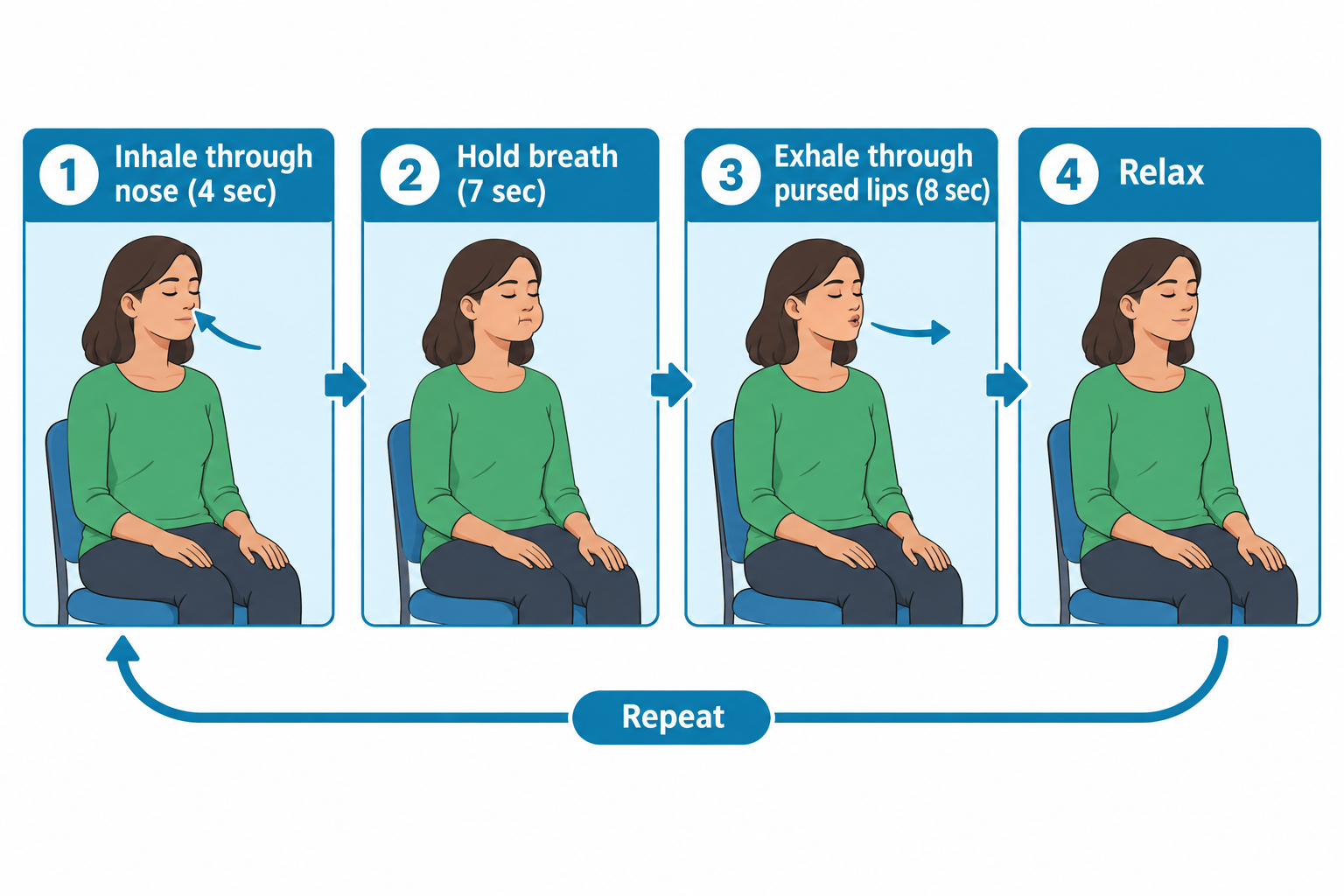
4-7-8 breathing sequence:
- Inhale slowly through the nose for 4 seconds
- Hold the breath for 7 seconds
- Exhale slowly through pursed lips for 8 seconds
- Repeat for 4 cycles, building up as tolerated
Other techniques:
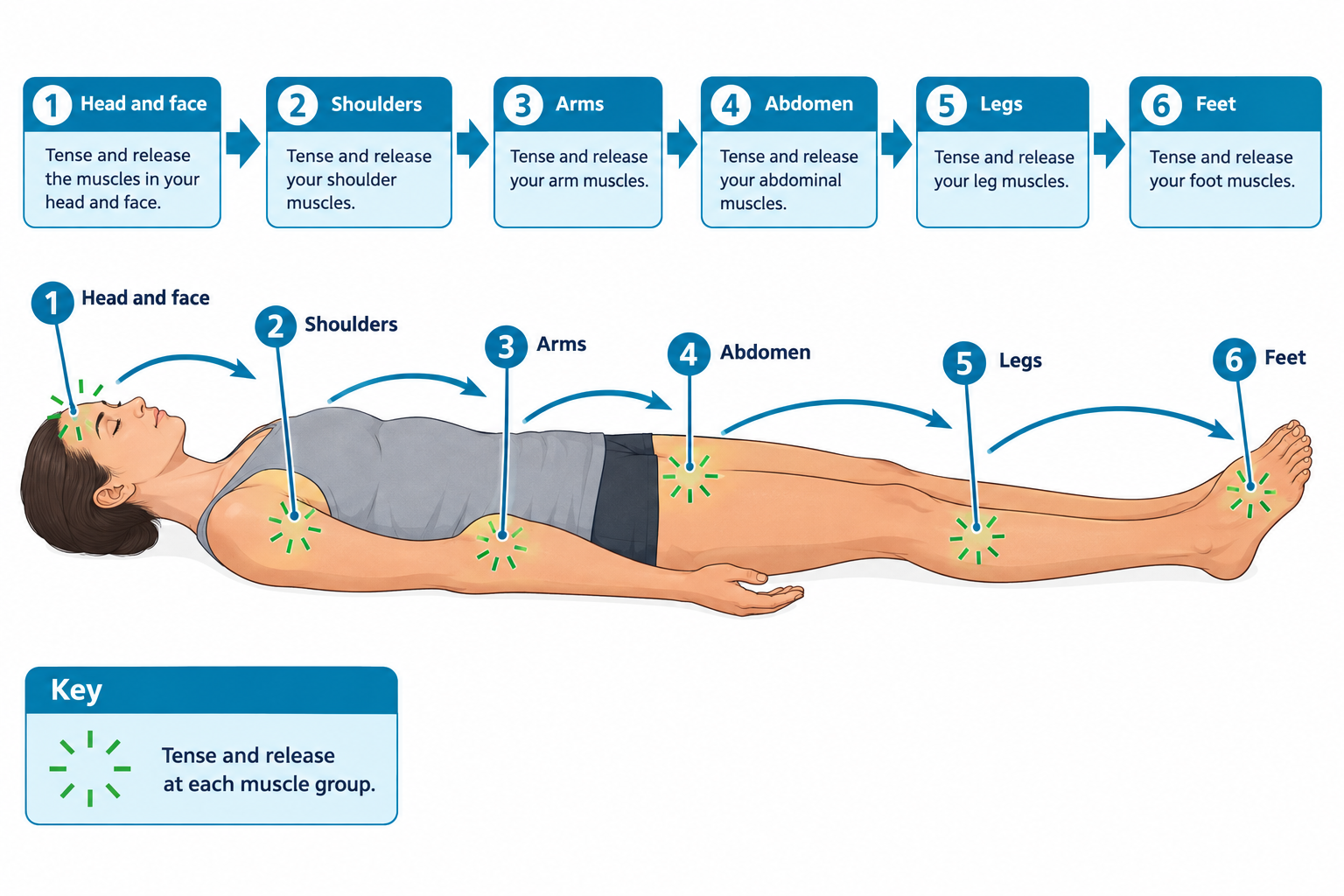
- Progressive muscle relaxation: Tense and release each muscle group.
- Guided imagery: Visualizing a peaceful scene or safe place.
- Mindfulness: Focusing awareness on the present moment without judgment.
Sensory-based comfort care
| Intervention | Indication |
| Music therapy | Pain, anxiety, end-of-life care |
| Aromatherapy | May help relieve nausea (peppermint) or anxiety (lavender) in some clients |
| Massage | Muscle tension, stress, palliative care |
| Therapeutic touch | May promote relaxation in some clients; commonly used in hospice settings |
Note: Use caution with scent-based therapies in respiratory or allergic clients.
Environmental and positional adjustments
- Reposition clients regularly based on their risk assessment and care plan to help prevent pressure ulcers (commonly every 2 hours).
- Elevate the legs, when appropriate, to help reduce dependent edema.
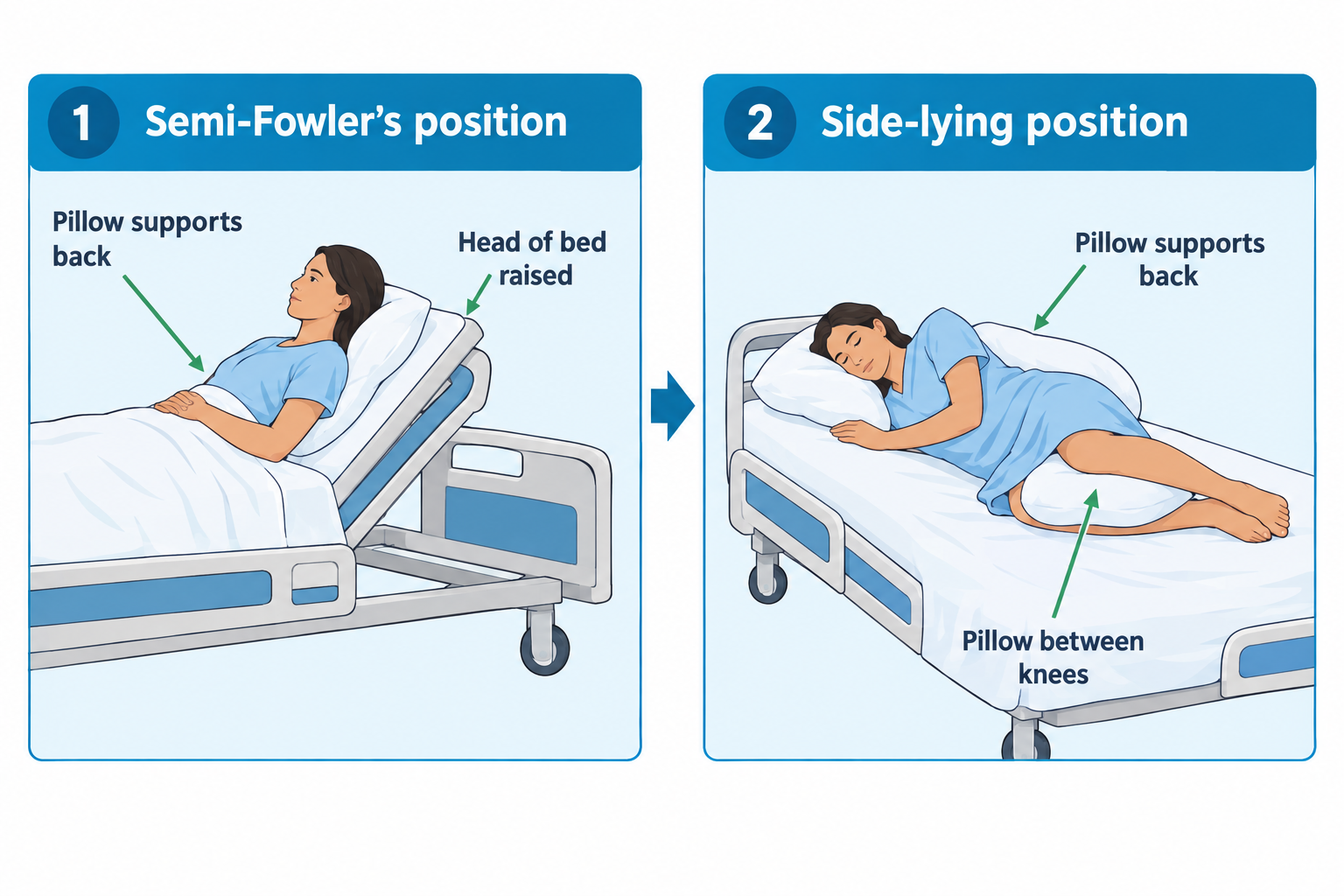
- Position the client comfortably to promote rest. Elevate the head of the bed for clients with orthopnea.
- Dim lights, reduce noise, and minimize interruptions.
- Offer extra pillows or other comfort measures (e.g., weighted blankets or fans) based on client preference and clinical condition.
Spiritual and cultural support
Respect for clients’ beliefs improves comfort and coping. Offer:
- Chaplain visits
- Space for prayer or rituals
- Accommodations for fasting, diet, or cleansing practices
- Nonjudgmental presence and active listening
- Ask the client about their beliefs and practices and act on what the client reports; never assume them from the client’s background.
These same measures - repositioning, a quiet room, warmth, and spiritual support - carry much of the work at the end of life, where comfort replaces cure. Palliative and end-of-life comfort care is covered in the End-of-life care and grief counseling chapter.
Clinical vignette: Ms. Alvarez, a 60-year-old with fibromyalgia, declines pain meds due to GI upset. She complains of soreness and poor sleep.
Nursing action: Assess pain using an appropriate pain assessment tool. Offer a warm compress for the shoulders. Teach deep breathing and progressive relaxation. Dim the lights, provide a quiet environment, and implement relaxation techniques consistent with facility policy and client preference. Reassess pain and document the client’s response.
Client education
- Thermal therapy is short-duration and must be monitored.
- Deep breathing and imagery can be done independently.
- Distraction tools (music, photos, videos) are helpful during procedures.
- Report skin changes after any hot/cold therapy.
- Comfort techniques complement, but do not replace, prescribed medications.