



Comfort measures
Introduction
Comfort is more than just a luxury in nursing; it’s a clinical necessity. Maintaining hygiene, relieving pressure, and positioning clients safely aren’t just acts of kindness; they prevent complications, reduce pain, and speed recovery.
On the NCLEX, these “basic” skills often form the foundation of client safety, particularly for older adults and post-operative clients.
Learning objectives
By the end of this section, you should be able to:
- Identify key nursing interventions to improve client comfort
- Describe safe client positioning and repositioning techniques
- Understand the importance of oral hygiene and skin care in vulnerable populations
- Apply evidence-based hygiene protocols to prevent complications like pressure injuries and infections
- Answer NCLEX-style questions that emphasize comfort and safety
Positioning
Correct positioning relieves pressure, supports healing tissues, and promotes respiratory, circulatory, and musculoskeletal health. Many NCLEX questions focus on preventing complications, especially in immobile or post-surgical clients.
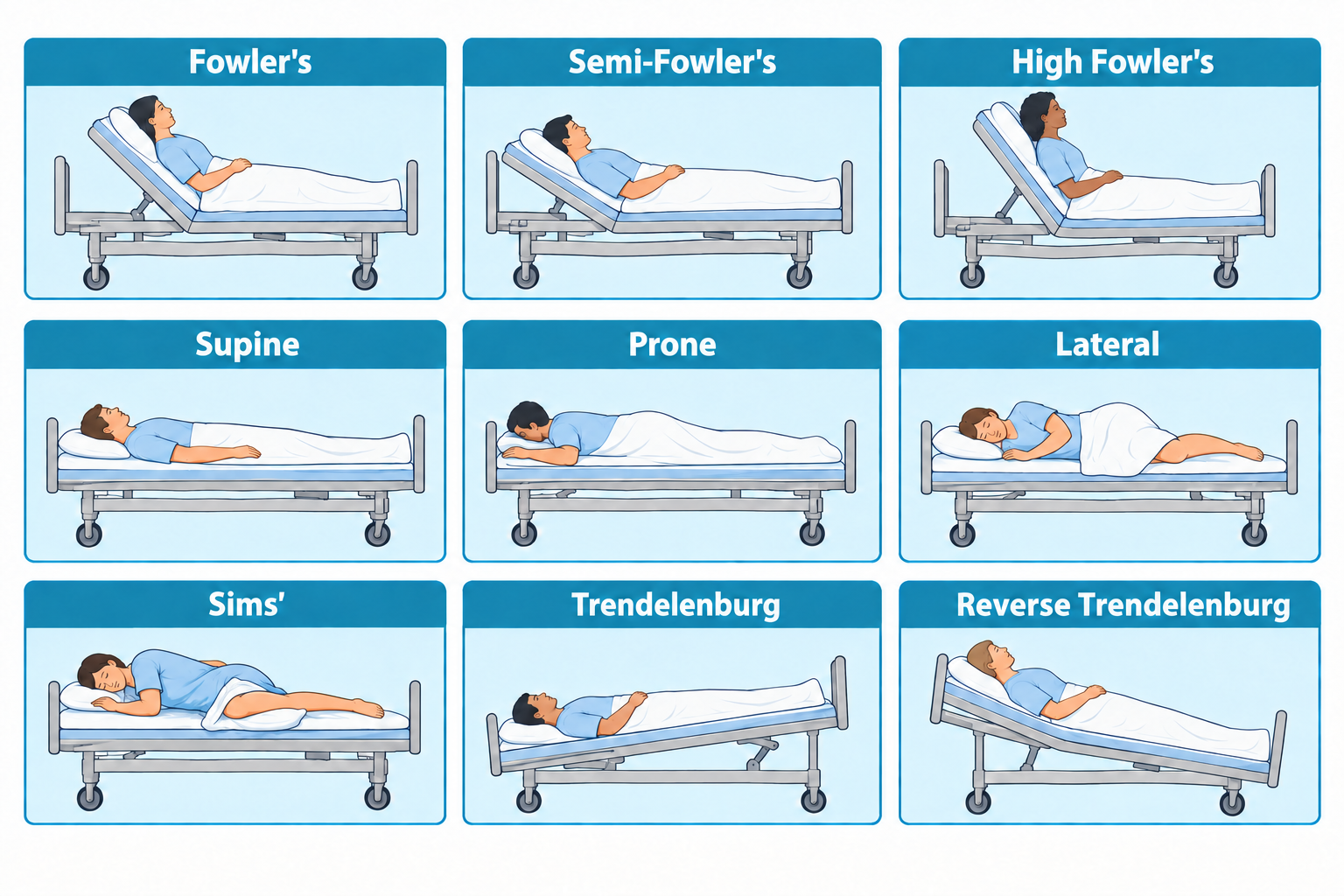
Common client positions
| Position | Use case |
| Fowler’s (45-60°) | Promotes lung expansion; used for eating, NG tube placement |
| Semi-Fowler’s (30-45°) | Common for post-op clients to prevent aspiration |
| High Fowler’s (80-90°) | Used for severe respiratory distress |
| Supine | Lying flat on back; default post-op position unless contraindicated |
| Prone | Lying face down; used for certain spinal procedures and selected surgical or critical care situations |
| Lateral (side) | Reduces risk of aspiration; useful in unconscious clients |
| Sims’ position | Semi-prone; used for enemas or rectal exams |
| Trendelenburg | Head lower than feet; used for selected procedures such as central venous catheter placement when appropriate |
| Reverse trendelenburg | Head higher than feet; may reduce reflux and is used for selected surgical or neurologic conditions |
Nursing interventions
- Reposition immobile clients at least every 2 hours.
- Use pillows and wedges to support joints and reduce pressure points.
- Keep the head of the bed at the lowest elevation compatible with the client’s condition, often ≤30° when feasible, to reduce shear and pressure injury risk.
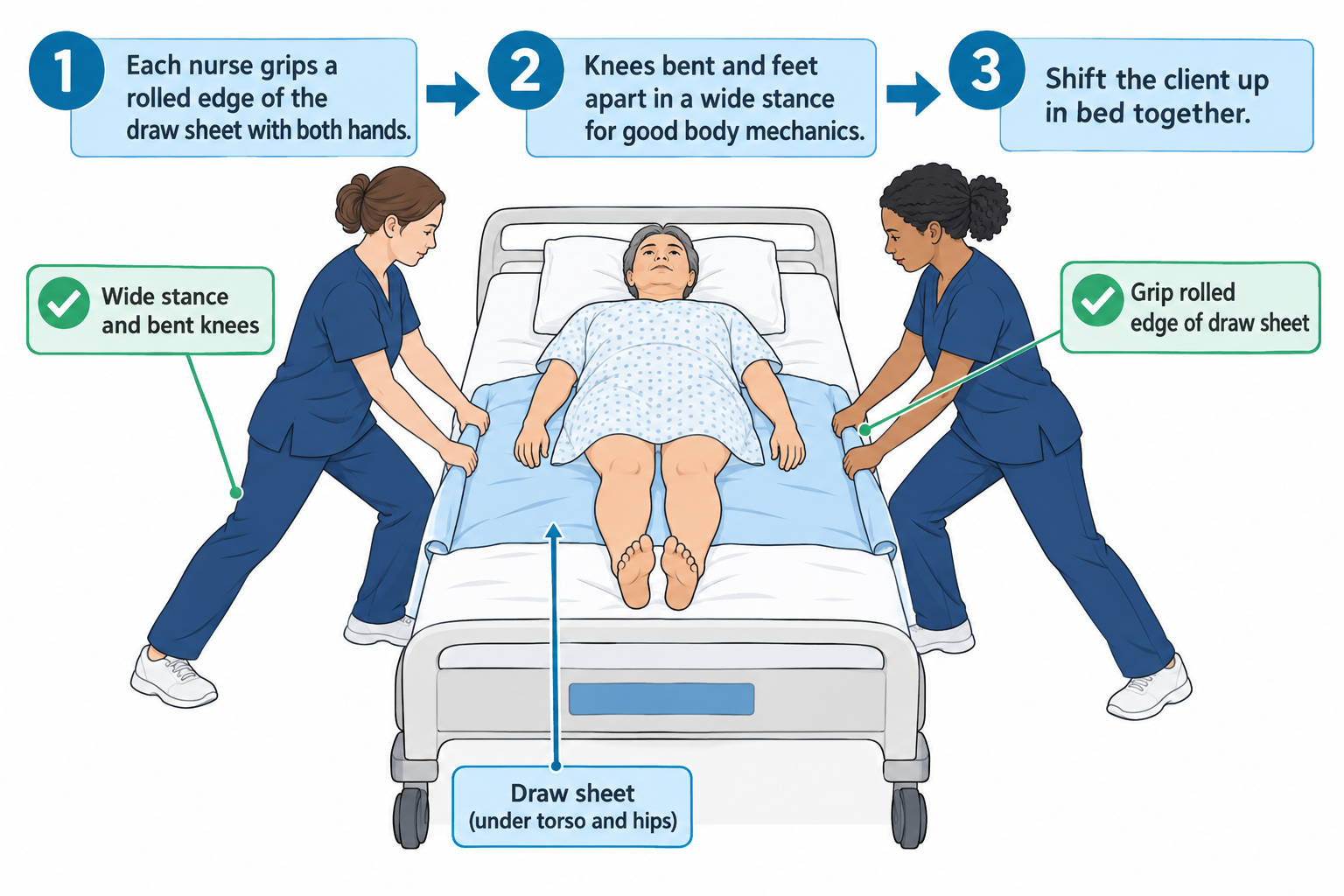
- Use draw sheets to reposition rather than dragging clients (prevents shear injuries).
- Provide active or passive range of motion and keep joints in neutral alignment to prevent contractures in immobile clients.
- For postoperative clients, always check the provider’s orders before changing position.
Clinical vignette: Mr. Arnold, age 72, is post-op day 1 following an abdominal hernia repair. He complains of mild nausea and is drowsy from anesthesia. You notice he’s lying flat in bed.
Nursing action: Raise the head of the bed to semi-Fowler’s and turn him to the side to reduce aspiration risk. Assess nausea, vomiting, abdominal distention, and bowel sounds. Place an emesis basin within reach.
Hygiene
Hygiene preserves skin integrity, reduces infection risk, and enhances client dignity, especially in clients who are dependent or confused.
Key nursing hygiene tasks
- Bed baths (partial or full) for immobile clients
- Perineal care for incontinent or catheterized clients
- Oral care (especially for unconscious or intubated clients)
- Hair, beard, and nail care as needed for comfort and safety
- Foot care: Critical in clients with diabetes. Avoid cutting toenails without a podiatry consult or following facility policy
Special hygiene considerations
- Use chlorhexidine wipes for ICU clients to prevent hospital-acquired infections.
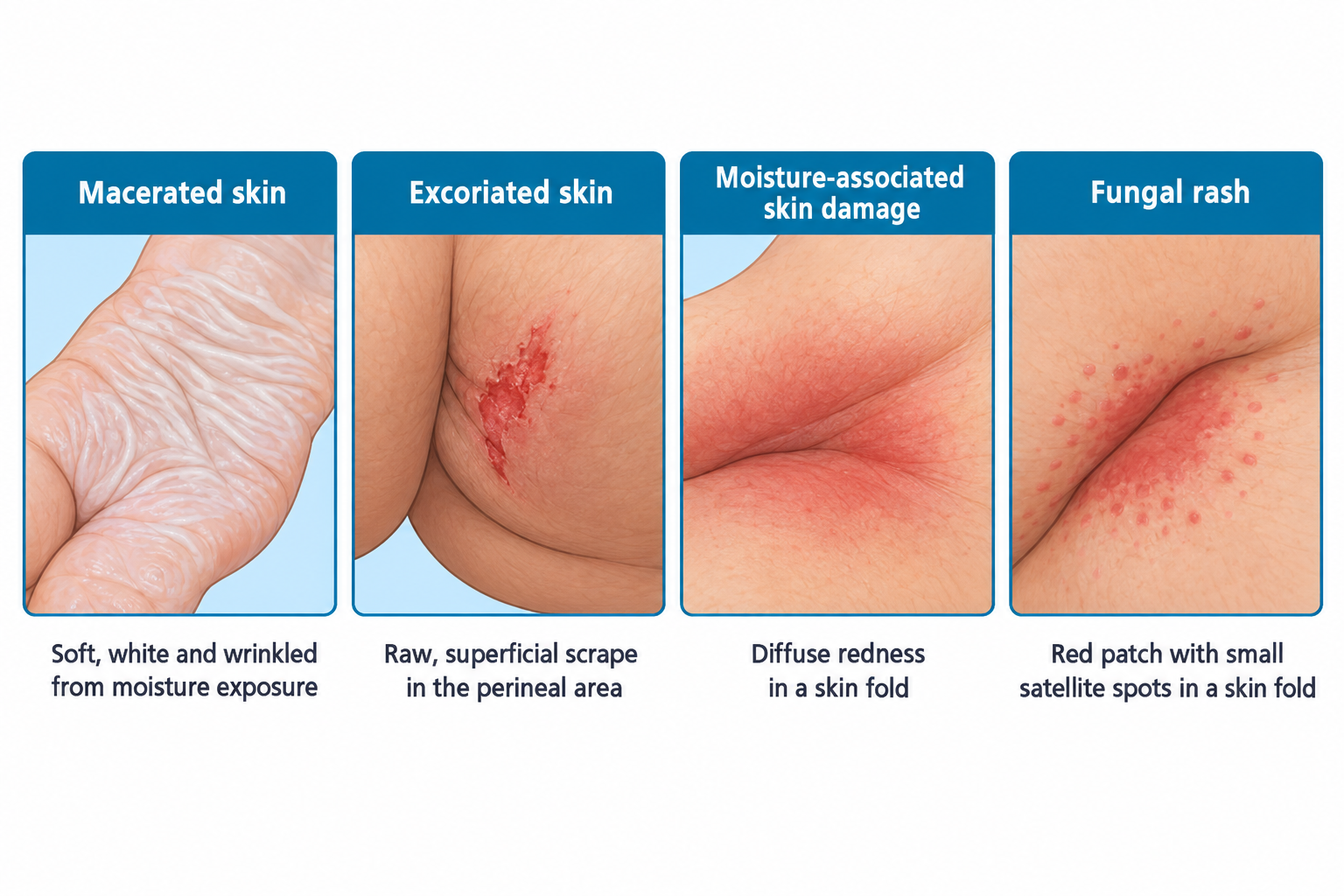
- Dry between skin folds to avoid fungal infections (e.g., in obese clients).
- Monitor for maceration, fungal rashes, or excoriation.
- Always use gloves and standard precautions for hygiene tasks.
Postmortem care
- Maintain the client’s dignity: close the eyes, replace dentures if applicable, and position the body in proper alignment before family viewing.
- Follow facility policy for timing, tagging, labeling belongings, and documentation.
- Accommodate cultural or religious practices the family identifies, rather than assuming a single standard approach.
Oral care
Oral hygiene is frequently overlooked but is essential to prevent:
- Aspiration pneumonia
- Mucositis in chemotherapy clients
- Thrush and bacterial infections
- Halitosis and poor nutrition
Nursing interventions
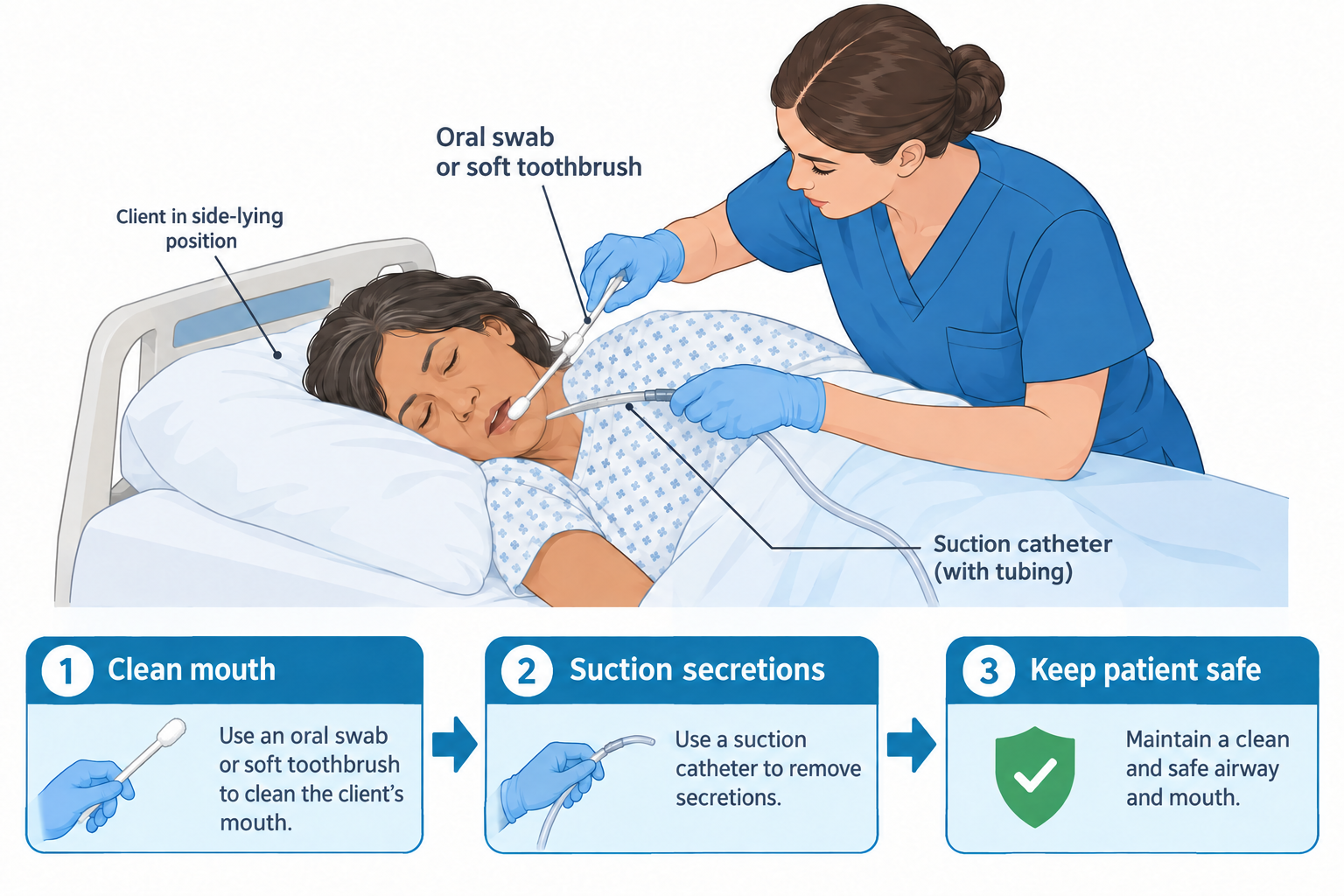
- Use soft toothbrushes or oral swabs.
- Provide oral care regularly according to the client’s needs and facility policy (often every 2-4 hours for unconscious or mechanically ventilated clients).
- Turn the client on their side to prevent aspiration during care.
- Use suction as needed for clients with impaired swallowing or an ineffective cough reflex.
- For denture care, line sink with a towel and label containers clearly.
Clinical vignette: Mrs. Xu is recovering from a stroke and has right-sided weakness. You are assisting her with morning care. Nursing action: Help her hold a toothbrush in her left hand, provide a suction device in case of drooling, and assist with rinsing and drying her mouth.
Rationale: Promoting independence with safety encourages recovery and dignity.
Post-operative considerations
Clients recovering from surgery often need:
- Pain management before repositioning or bathing
- Assistance with hygiene, ambulation, and dressing changes
- Monitoring for signs of infection (redness, drainage, fever)
- Skin assessments for pressure ulcers, especially around surgical sites and devices
Staging pressure injuries
When you assess for pressure injuries, describe what you see using the standard stages. Staging tells the team how deep the damage goes and guides the plan of care.
Client education
- Encourage clients to notify staff if uncomfortable or soiled.
- Teach family/caregivers basic hygiene and turning techniques.
- Emphasize the importance of oral care for those with dry mouth or nausea.
- Reinforce the importance of early mobilization even when uncomfortable.
The chapters ahead build on these fundamentals, covering nutrition and hydration support, elimination support, rest, sleep, and pain management, and non-pharmacological therapies in more depth.