


Achievable logoAchievable logo
NCLEX
Sign in
Sign up
Purchase
Textbook
Practice exams
Support
How it works
Exam catalog
Mountain with a flag at the peak
Textbook
Introduction
1. Safe and effective care environment
2. Health promotion and maintenance
3. Psychosocial Integrity
4. Physiological Integrity
4.1 Basic care and comfort
4.1.1 Assistive devices and mobility aids
4.1.2 Comfort measures
4.1.3 Nutrition and hydration support
4.1.4 Elimination support
4.1.5 Rest, sleep, and pain management
4.1.6 Non-pharmacological therapies
4.2 Pharmacological and parenteral therapies
4.3 Reduction of risk potential
4.4 Physiological adaptation
Wrapping up
Achievable logoAchievable logo
4.1.4 Elimination support
Achievable NCLEX
4. Physiological Integrity
4.1. Basic care and comfort
Our NCLEX course is currently in development and is a work-in-progress.

Elimination support

6 min read
Font
Discuss
Share
Feedback

Introduction

Elimination is a basic human function, but when it’s impaired, dignity, safety, and comfort are all on the line. Nurses provide critical support in managing urinary and bowel elimination through catheter care, ostomy care, and bowel management programs, especially in postoperative and immobile clients.

On the NCLEX, you’ll be expected to know when interventions are needed, how to perform them safely, and how to educate clients with empathy and clarity.

NGN insight:
Elimination care isn’t just physical: it’s emotional. Compassion and privacy matter as much as skill.

Learning objectives

By the end of this section, you should be able to:

  • Identify indications and care principles for urinary catheters
  • Describe nursing care and education for clients with ostomies
  • Implement bowel training and manage constipation or incontinence
  • Recognize risks and complications of elimination devices

Urinary catheterization

Catheterization is a last resort. Indwelling urinary catheters should be used only when clinically indicated because they increase the risk of catheter-associated urinary tract infection (CAUTI). Nurses must understand insertion, care, and timely removal.

Types of catheters

Type Use
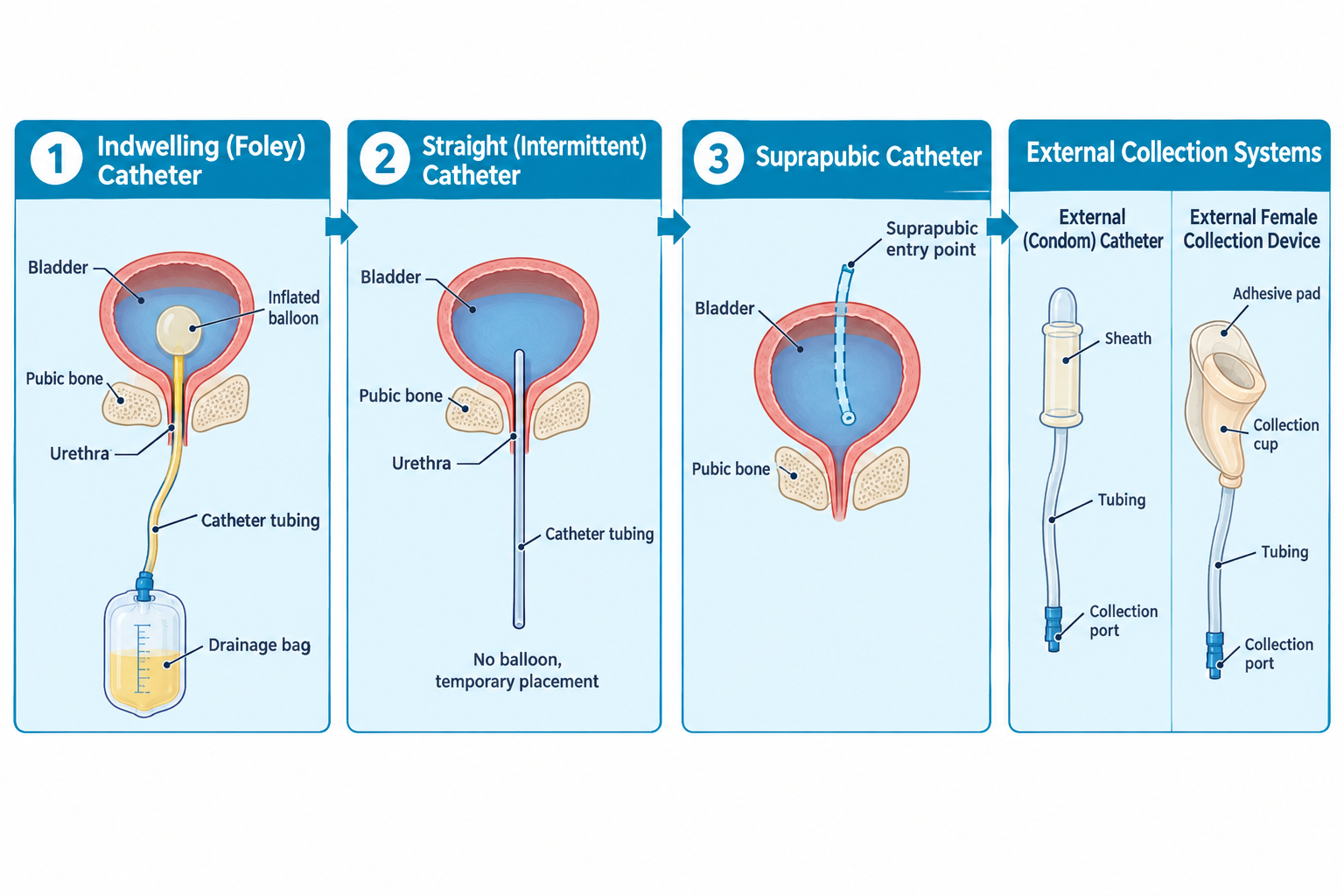
Indwelling (Foley) For prolonged drainage (e.g., post-op, retention)
Straight (intermittent) Temporary drainage, sterile sample collection
Suprapubic Surgically inserted through the abdominal wall
External (condom or female external urinary collection device) Non-invasive options for urinary incontinence
alt_text
//////Caption: Common urinary catheters
Type: Labeled comparison
Illustrator notes: Foley, Straight catheter, Suprapubic catheter, External male catheter, Female external urinary collection device///////

Catheter care

  • Maintain closed drainage system.
  • Keep bag below bladder level to prevent backflow.
  • Perform routine perineal hygiene daily and after bowel movements as needed (PRN).
  • Secure tubing to prevent tension or accidental removal
  • Empty bag when ½ to ⅔ full using clean technique.
  • Remove the catheter as soon as it is no longer clinically indicated.
alt_text
////// OPTIONAL. Caption: Best Practices for Indwelling Urinary Catheter Care
Type: Clinical illustration
Description: Key nursing interventions to reduce the risk of catheter-associated urinary tract infection (CAUTI).
Illustrator notes: Closed drainage system, Bag below bladder, Secured catheter, No dependent loops, Hand hygiene, Perineal care, Timely removal///////
Definitions
CAUTI
Catheter-associated urinary tract infection
Post-void residual (PVR)
Amount of urine left after voiding, measured via bladder scan or catheter

Ostomy care

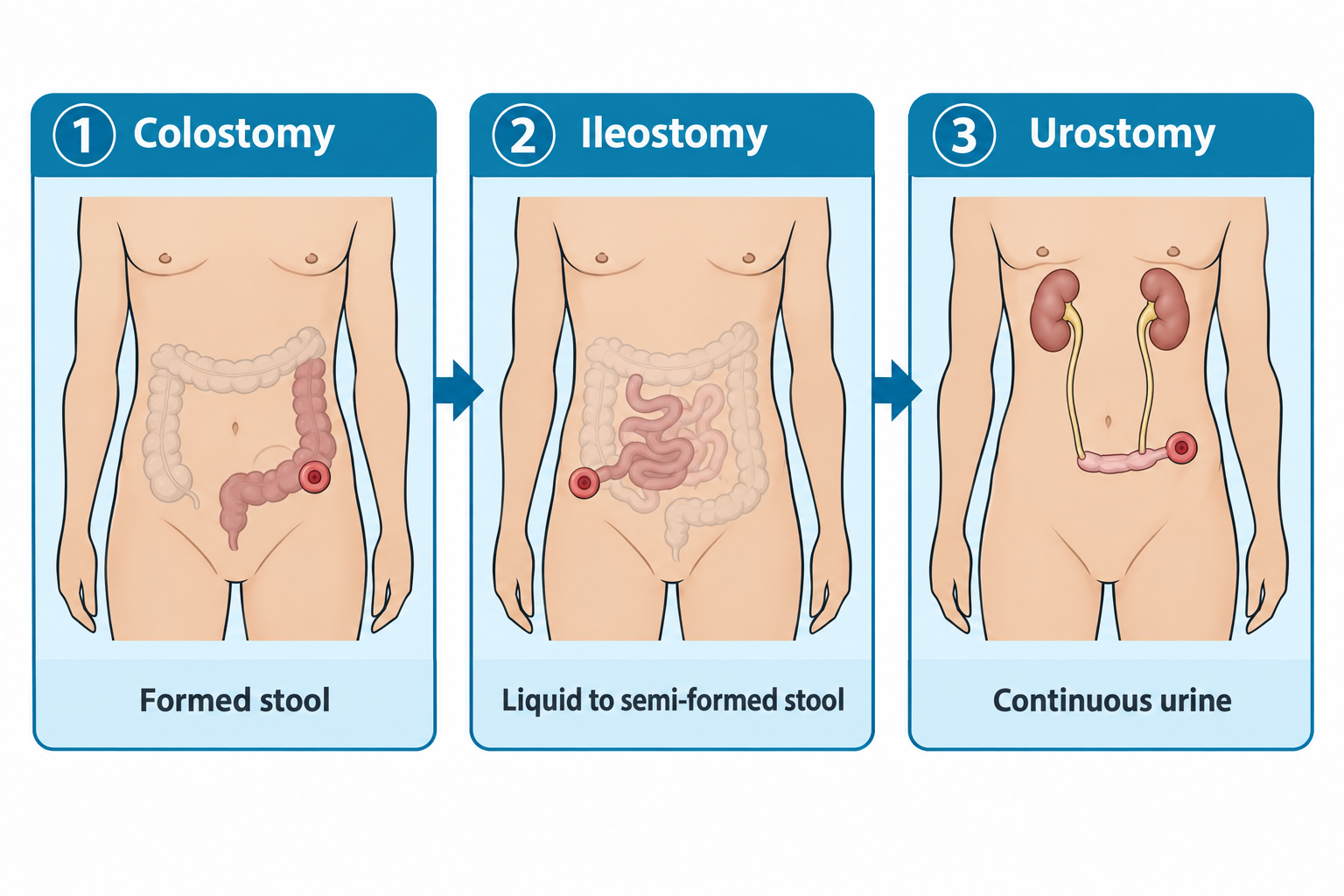
An ostomy is a surgically created opening for stool or urine diversion. Depending on the underlying condition, clients may require a colostomy, ileostomy, or urostomy.

Types of ostomies

Type Output
Colostomy Formed stool (descending or sigmoid colostomy)
Ileostomy Liquid to semi-formed stool
Urostomy Continuous urine output
alt_text
//////Caption: Common ostomy locations OR Common Types of Ostomies
Type: Labeled anatomical (Anterior abdominal) illustration
Description: Typical stoma locations and expected output for colostomies, ileostomies, and urostomies.
Illustrator notes: Anterior abdominal view, Label stoma locations, Include expected output consistency, Color-code each ostomy type
Showing: Colostomy, Ileostomy, Urostomy///////

Stoma care

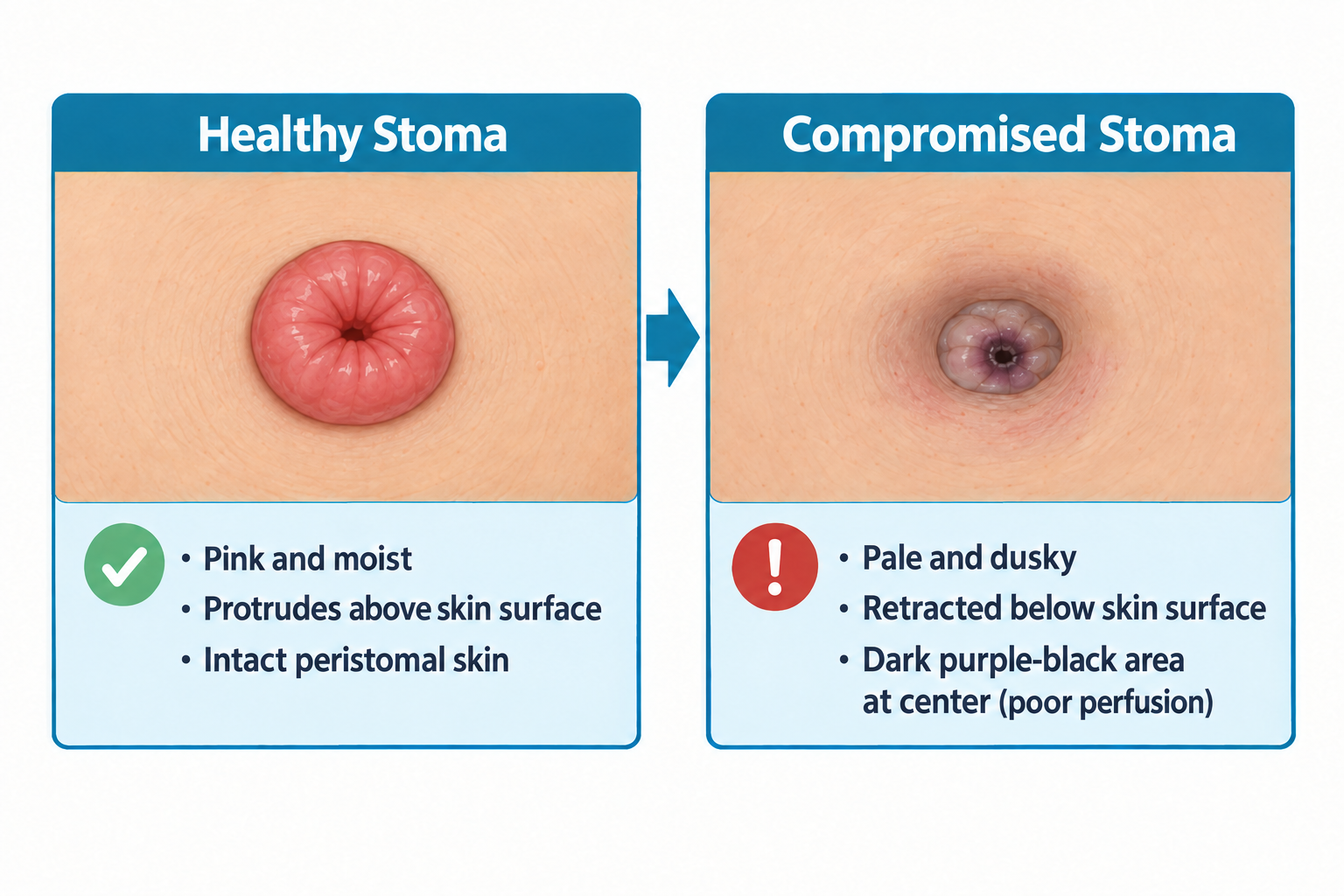
  • Should appear pink, moist, and protruding slightly.
  • Report pale, dusky, purple, or black stomas immediately because these findings may indicate impaired perfusion or ischemia. Report a newly retracted stoma promptly for evaluation and pouching management.
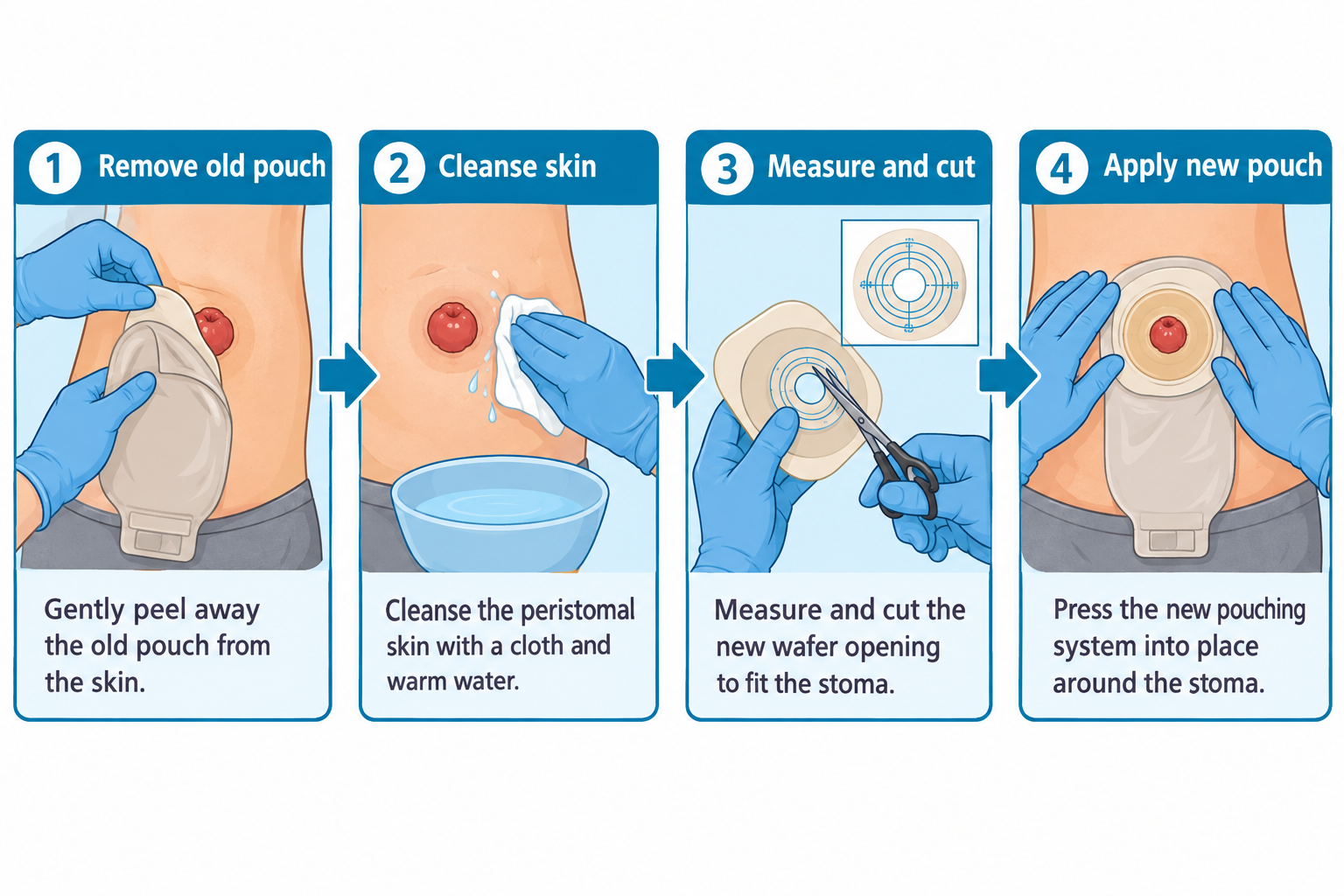
  • Change the pouching system every 3 to 5 days or sooner if leakage occurs.
  • Empty appliance when ⅓ to ½ full to prevent leakage.
  • Clean the peristomal skin with warm water only; avoid soaps containing oils or moisturizers.
alt_text
//////Caption: Healthy versus compromised stoma
Type: Side-by-side comparison
Showing: Healthy vs Pale, Dusky, Black, Retracted///////

Client education

  • Demonstrate how to change an appliance and assess the stoma.
  • Promote individualized dietary adjustments (e.g., chew food thoroughly, introduce high-fiber foods gradually, and limit gas-producing foods if they cause discomfort or excessive gas).
  • Support body image and adaptation.
  • Teach signs of skin breakdown, blockage, or dehydration.
alt_text
//////OPTIONAL Caption: Routine Ostomy Care
Type: Step-by-step illustration
Description: Steps for changing an ostomy pouch while protecting peristomal skin. ///////

Bowel management

Bowel training programs

Used in clients with chronic constipation, neurological conditions (e.g., spinal cord injury), or post-surgical needs.

Key steps:

  • Establish a consistent toileting schedule.
  • Encourage fiber and fluid intake.
  • Use stool softeners, laxatives as prescribed.
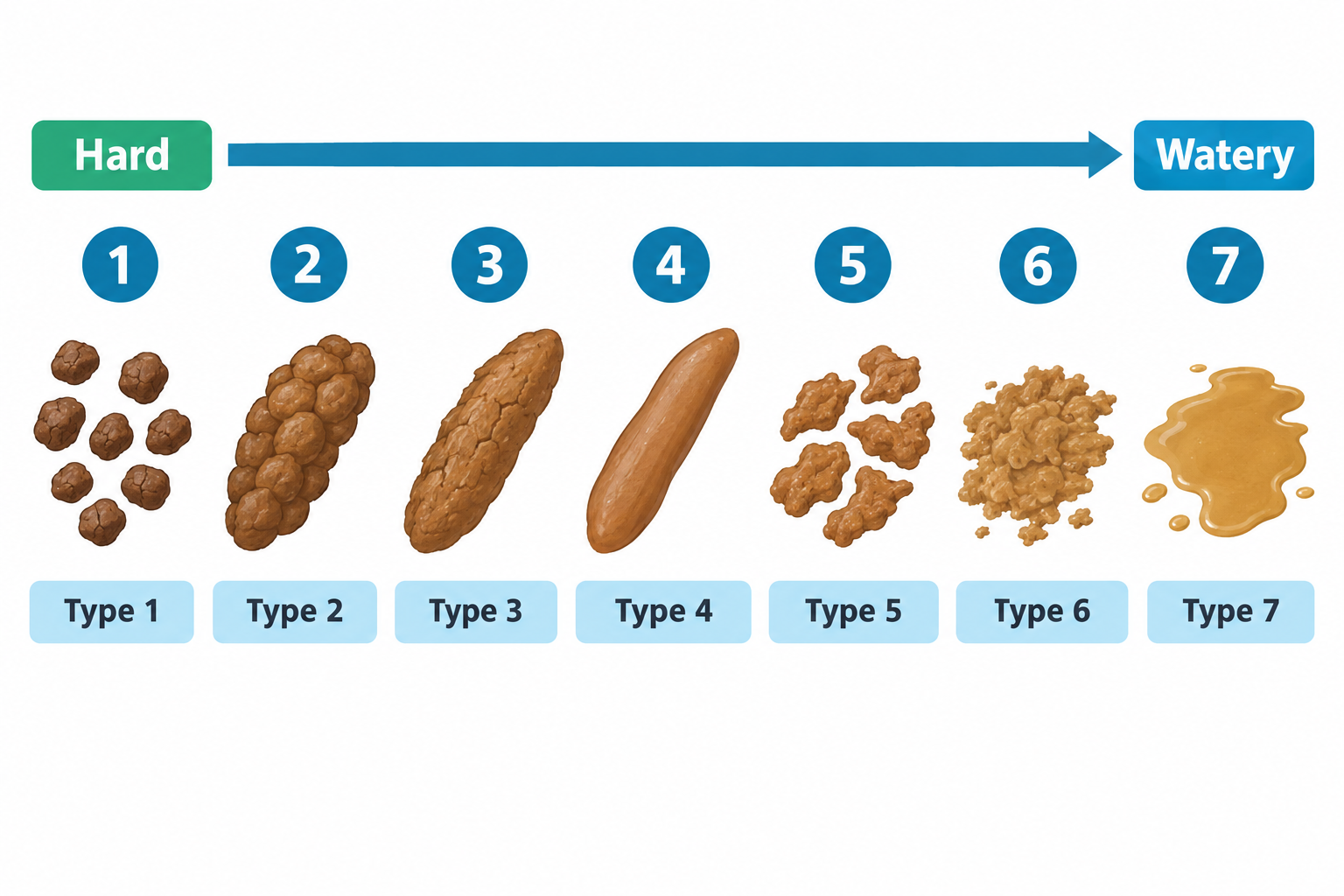
  • Monitor the Bristol Stool Chart to evaluate consistency.
  • Provide privacy and time during toileting.
alt_text
//////Caption: The Bristol Stool Chart
Type: Infographic, Standard Bristol Stool Scale
Description: Stool types and what they may indicate about bowel function.
Illustrator notes: Standard Bristol Stool Scale///////
Definitions
Bristol Stool Chart
A scale that categorizes stool types from hard/lumpy (Type 1) to watery (Type 7). Types 3–4 are generally considered normal
Fecal impaction
Hardened stool in the rectum that cannot be passed naturally
Digital disimpaction
Manual removal of impacted stool from the rectum using a gloved, lubricated finger

Constipation and incontinence

Condition Nursing Actions
Constipation Increase fluids/fiber, ambulate, administer laxatives
Fecal impaction Administer prescribed enemas or perform digital disimpaction if prescribed and appropriate
Incontinence Prompt hygiene, toileting schedule, barrier creams
Diarrhea Monitor for dehydration, impaired skin integrity, and signs of infection
NGN insight:
Incontinence care is dignity care. Avoid shaming language, provide timely hygiene, and use protective barriers.

Clinical vignette: Mrs. Patel, 84, had hip surgery and now has an indwelling Foley catheter. On Day 2 post-op, you note cloudy urine and sediment in the tubing and the client reports lower abdominal discomfort.

Nursing action: Assess urine output and color. Ensure tubing is not kinked. Assess whether the catheter is still clinically indicated. Perform perineal care, notify the provider, and anticipate a urine culture order. Emphasize need for early catheter removal and review signs of CAUTI.

Client education

  • Clean the catheter area daily and always wash hands before handling tubing.
  • Never pull or tug on the catheter or tubing.
  • Recognize signs of UTI: fever, suprapubic pain, cloudy or foul-smelling urine.
  • For ostomy clients: check the stoma daily, drink adequate fluids, and empty the pouch before it becomes too full.
  • Report constipation, bloating, or blood in stool immediately.

Common pitfalls on the NCLEX

  • Leaving catheter tubing unsecured (risk of trauma or dislodgement)
  • Using tape on peristomal skin (irritation, poor adherence)
  • Not emptying the ostomy pouch until full
  • Ignoring cloudy or foul-smelling urine in a catheterized client
  • Performing digital disimpaction without order
  • Always aim to remove indwelling catheters as soon as medically possible
  • Stomas should be pink and moist—any change in color is concerning
  • Ostomy care includes skin care and emotional support
  • Hydration and mobility prevent constipation and promote bowel regularity
  • Toileting schedules and barrier creams reduce incontinence complications

Sign up for free to take 5 quiz questions on this topic

Previous
Next  | 4.1.5 Rest, sleep, and pain management
All rights reserved ©2016 - 2026 Achievable, Inc.

Elimination support

Introduction

Elimination is a basic human function, but when it’s impaired, dignity, safety, and comfort are all on the line. Nurses provide critical support in managing urinary and bowel elimination through catheter care, ostomy care, and bowel management programs, especially in postoperative and immobile clients.

On the NCLEX, you’ll be expected to know when interventions are needed, how to perform them safely, and how to educate clients with empathy and clarity.

NGN insight:
Elimination care isn’t just physical: it’s emotional. Compassion and privacy matter as much as skill.

Learning objectives

By the end of this section, you should be able to:

  • Identify indications and care principles for urinary catheters
  • Describe nursing care and education for clients with ostomies
  • Implement bowel training and manage constipation or incontinence
  • Recognize risks and complications of elimination devices

Urinary catheterization

Catheterization is a last resort. Indwelling urinary catheters should be used only when clinically indicated because they increase the risk of catheter-associated urinary tract infection (CAUTI). Nurses must understand insertion, care, and timely removal.

Types of catheters

Type Use
Indwelling (Foley) For prolonged drainage (e.g., post-op, retention)
Straight (intermittent) Temporary drainage, sterile sample collection
Suprapubic Surgically inserted through the abdominal wall
External (condom or female external urinary collection device) Non-invasive options for urinary incontinence
alt_text
//////Caption: Common urinary catheters
Type: Labeled comparison
Illustrator notes: Foley, Straight catheter, Suprapubic catheter, External male catheter, Female external urinary collection device///////

Catheter care

  • Maintain closed drainage system.
  • Keep bag below bladder level to prevent backflow.
  • Perform routine perineal hygiene daily and after bowel movements as needed (PRN).
  • Secure tubing to prevent tension or accidental removal
  • Empty bag when ½ to ⅔ full using clean technique.
  • Remove the catheter as soon as it is no longer clinically indicated.
alt_text
////// OPTIONAL. Caption: Best Practices for Indwelling Urinary Catheter Care
Type: Clinical illustration
Description: Key nursing interventions to reduce the risk of catheter-associated urinary tract infection (CAUTI).
Illustrator notes: Closed drainage system, Bag below bladder, Secured catheter, No dependent loops, Hand hygiene, Perineal care, Timely removal///////
Definitions
CAUTI
Catheter-associated urinary tract infection
Post-void residual (PVR)
Amount of urine left after voiding, measured via bladder scan or catheter

Ostomy care

An ostomy is a surgically created opening for stool or urine diversion. Depending on the underlying condition, clients may require a colostomy, ileostomy, or urostomy.

Types of ostomies

Type Output
Colostomy Formed stool (descending or sigmoid colostomy)
Ileostomy Liquid to semi-formed stool
Urostomy Continuous urine output
alt_text
//////Caption: Common ostomy locations OR Common Types of Ostomies
Type: Labeled anatomical (Anterior abdominal) illustration
Description: Typical stoma locations and expected output for colostomies, ileostomies, and urostomies.
Illustrator notes: Anterior abdominal view, Label stoma locations, Include expected output consistency, Color-code each ostomy type
Showing: Colostomy, Ileostomy, Urostomy///////

Stoma care

  • Should appear pink, moist, and protruding slightly.
  • Report pale, dusky, purple, or black stomas immediately because these findings may indicate impaired perfusion or ischemia. Report a newly retracted stoma promptly for evaluation and pouching management.
  • Change the pouching system every 3 to 5 days or sooner if leakage occurs.
  • Empty appliance when ⅓ to ½ full to prevent leakage.
  • Clean the peristomal skin with warm water only; avoid soaps containing oils or moisturizers.
alt_text
//////Caption: Healthy versus compromised stoma
Type: Side-by-side comparison
Showing: Healthy vs Pale, Dusky, Black, Retracted///////

Client education

  • Demonstrate how to change an appliance and assess the stoma.
  • Promote individualized dietary adjustments (e.g., chew food thoroughly, introduce high-fiber foods gradually, and limit gas-producing foods if they cause discomfort or excessive gas).
  • Support body image and adaptation.
  • Teach signs of skin breakdown, blockage, or dehydration.
alt_text
//////OPTIONAL Caption: Routine Ostomy Care
Type: Step-by-step illustration
Description: Steps for changing an ostomy pouch while protecting peristomal skin. ///////

Bowel management

Bowel training programs

Used in clients with chronic constipation, neurological conditions (e.g., spinal cord injury), or post-surgical needs.

Key steps:

  • Establish a consistent toileting schedule.
  • Encourage fiber and fluid intake.
  • Use stool softeners, laxatives as prescribed.
  • Monitor the Bristol Stool Chart to evaluate consistency.
  • Provide privacy and time during toileting.
alt_text
//////Caption: The Bristol Stool Chart
Type: Infographic, Standard Bristol Stool Scale
Description: Stool types and what they may indicate about bowel function.
Illustrator notes: Standard Bristol Stool Scale///////
Definitions
Bristol Stool Chart
A scale that categorizes stool types from hard/lumpy (Type 1) to watery (Type 7). Types 3–4 are generally considered normal
Fecal impaction
Hardened stool in the rectum that cannot be passed naturally
Digital disimpaction
Manual removal of impacted stool from the rectum using a gloved, lubricated finger

Constipation and incontinence

Condition Nursing Actions
Constipation Increase fluids/fiber, ambulate, administer laxatives
Fecal impaction Administer prescribed enemas or perform digital disimpaction if prescribed and appropriate
Incontinence Prompt hygiene, toileting schedule, barrier creams
Diarrhea Monitor for dehydration, impaired skin integrity, and signs of infection
NGN insight:
Incontinence care is dignity care. Avoid shaming language, provide timely hygiene, and use protective barriers.

Clinical vignette: Mrs. Patel, 84, had hip surgery and now has an indwelling Foley catheter. On Day 2 post-op, you note cloudy urine and sediment in the tubing and the client reports lower abdominal discomfort.

Nursing action: Assess urine output and color. Ensure tubing is not kinked. Assess whether the catheter is still clinically indicated. Perform perineal care, notify the provider, and anticipate a urine culture order. Emphasize need for early catheter removal and review signs of CAUTI.

Client education

  • Clean the catheter area daily and always wash hands before handling tubing.
  • Never pull or tug on the catheter or tubing.
  • Recognize signs of UTI: fever, suprapubic pain, cloudy or foul-smelling urine.
  • For ostomy clients: check the stoma daily, drink adequate fluids, and empty the pouch before it becomes too full.
  • Report constipation, bloating, or blood in stool immediately.

Common pitfalls on the NCLEX

  • Leaving catheter tubing unsecured (risk of trauma or dislodgement)
  • Using tape on peristomal skin (irritation, poor adherence)
  • Not emptying the ostomy pouch until full
  • Ignoring cloudy or foul-smelling urine in a catheterized client
  • Performing digital disimpaction without order
Key points
  • Always aim to remove indwelling catheters as soon as medically possible
  • Stomas should be pink and moist—any change in color is concerning
  • Ostomy care includes skin care and emotional support
  • Hydration and mobility prevent constipation and promote bowel regularity
  • Toileting schedules and barrier creams reduce incontinence complications

More from Basic care and comfort

  • Assistive devices and mobility aids
  • Comfort measures
  • Nutrition and hydration support
  • Rest, sleep, and pain management
  • Non-pharmacological therapies