



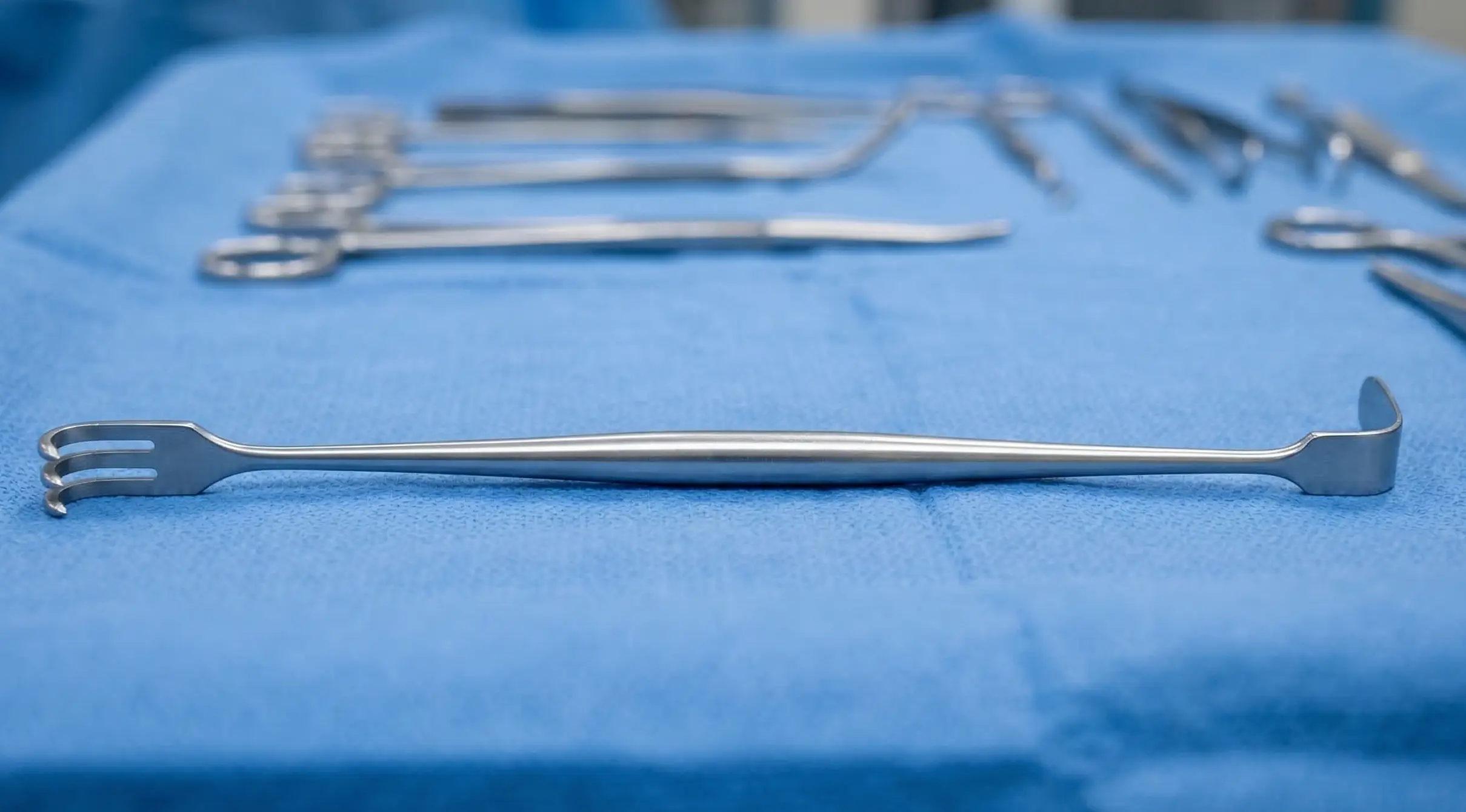
Surgical instruments: retracting, probing, and specialty
Retractors
Retracting instruments hold tissue away from the surgical wound (incision). Depending on the provider’s preference, handheld skin hooks and Senn retractors are used to retract during most minor surgical procedures. They have the following characteristics:
- The flat end is a blunt retractor.
- The three-prong end may be sharp or dull.
- They are used to retract small incisions or secure a skin edge for suturing.
Probes and dilators
Probes and dilators are used both for surgery and for examinations. Probes can be used to search for a foreign body in a wound or to enter a fistula. Dilators are used to stretch a cavity or opening for examination or before inserting another instrument to obtain a tissue specimen.
| Instrument | Description |
| Probes |
|
| Trocars and obturators |
|
| Specula |
|
Specialty instruments
Although all instruments fall into the same four categories as the surgical instruments just discussed, the following instruments are organized into specialty groupings. Presenting the instruments in this manner makes it easy to see how they relate to particular examinations. In addition to recognizing the name and use of each instrument, the medical assistant must organize and set out the instruments needed for each particular examination in what is called a tray setup.
Gynecologic instruments
| Instrument | Description |
| Placenta forceps |
|
| Endocervical curette |
|
| Uterine curette |
|
| Schroeder uterine vulsellum forceps |
|
| Hegar uterine dilators |
|
| Uterine sounds |
|