



Dressings, bandages, and professional conduct
Dressings
A dressing is a sterile covering placed over a wound for the following purposes:
- Protecting the wound from injury and contamination
- Maintaining constant pressure to minimize bleeding and swelling
- Holding the wound edges together
- Absorbing drainage and secretions
A dressing usually consists of a strip of lubricated mesh gauze, a non stick Telfa pad, or a clear dressing placed over a sutured wound. Gauze may be placed over non adhering material, depending on the provider’s preference. Body cavities or wounds that need to remain open for a time are dressed with long, thin packing material that often is impregnated with an antiseptic or a lubricant; this sometimes is called packing. A good dressing must be effective, comfortable, and remain in place. If the dressing covers a hairless area, it may be anchored with tape, but no tape should touch the wound.
When changing a patient’s dressing, the medical assistant should examine it for any drainage (exudate). There are five different types of exudates to look for:
Implications for failure to comply with Center for Disease Control (CDC) regulations in healthcare settings
Standard precautions were developed by the Centers for Disease Control and Prevention (CDC) and are regulated by the Occupational Safety and Health Administration (OSHA). These precautions are used for all patient care. The goal is to protect patients and healthcare workers. Standard precautions include the following practices:
- Perform hand hygiene
- Use personal protective equipment whenever there is an expectation of possible exposure to infectious material
- Follow respiratory hygiene/cough etiquette principles
- Properly handle and properly clean and disinfect patient care equipment and instruments/devices
- Follow safe injection practices
- Ensure healthcare worker safety, including proper handling of needles and other sharps
Failure to comply with this CDC regulation can result in loss of infection control for both the patient and healthcare worker, injury to the patient or healthcare worker, possible litigation from the patient or healthcare worker, and fines from OSHA.
Bandages
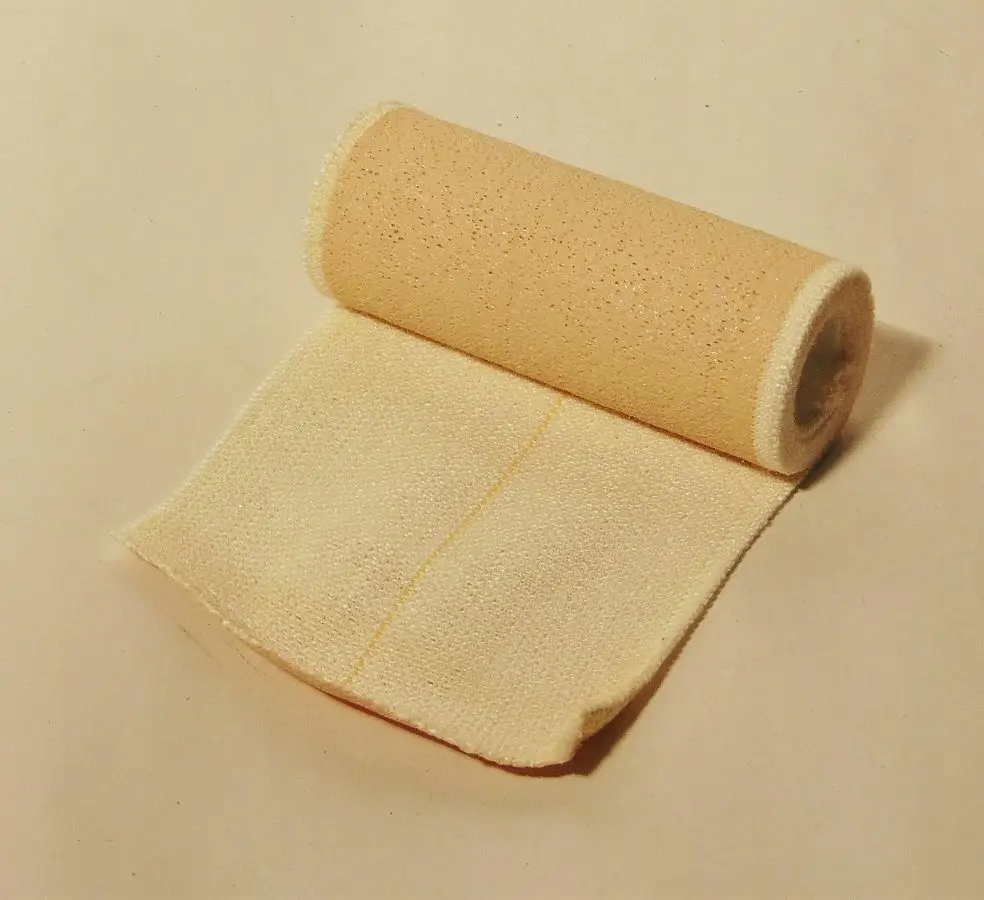
Bandages hold dressings in place and also help maintain even pressure, support the affected part, and help protect the wound from injury and contamination. Bandages can be gauze, cloth, or elastic cloth rolls and are bound by clips, tape, or ties. Dressings and bandages frequently appear easy and simple to apply; however, special skill is required to use different types of bandaging techniques. Bandages that are too loose fall off, whereas those that are too tight may compromise circulation and further harm the patient.
Plain roller gauze is seldom used. It is difficult to handle, has no elasticity, and tends to bind. It also tends to slip because it does not adhere to itself. Wrinkled crepe-type roller bandages (e.g., Kling) are preferred because they easily conform to various shapes of the body and adhere to themselves. If the bandage is to cover a wound, it should always be applied over a sterile dressing.
Plain elastic cloth bandages or elastic roller cloth bandages with adhesive backing (e.g., Ace) make flexible, secure covers. When an elastic roller bandage is applied as a pressure bandage, especially to the lower limbs, it is essential to keep the bandage consistent in spacing and tension to ensure even pressure. Even gentle pressure stimulates circulation and healing.
Uneven pressure causes constriction points that can create pressure sores, ulcers, or edema. Roller bandages are usually applied from the distal to the proximal part of the area because they are more even and snug if wrapped from a smaller to a larger circumference. Elevate the limb while you are bandaging and work with the roller facing upward, close to the patient’s skin. Elastic bandages are excellent for bandaging the hand and wrist and the foot and ankle.
Remember: CMST when bandaging
When applying bandages, you should assess the following:
- C Color: Should be the same as the opposite extremity; report any bluish or white fingers or toes.
- M Movement: Should be able to move fingers/toes.
- S Sensation: Should be able to feel fingers/toes; report any numbness.
- T Temperature: Should be the same as the opposite extremity; report any cool/cold fingers/toes.
A seamless tubular gauze bandage, with or without elastic, is a superior material for covering round, narrow surfaces such as fingers or toes. It can be used as a dressing if the gauze material is sterile; it can also be used as a bandage. A tubular gauze bandage is applied with a cagelike applicator. Work with the open circle of the applicator toward the patient. Hold the applicator in the dominant hand and control the tension flow with your fingers as the applicator is gradually rotated and the material slides off. Tubular dressing may be applied with or without slight pressure. Beyond the tip of the bandaged part, give the applicator a full half-turn, place the applicator again over the part, and repeat the process, being careful not to create a tourniquet effect when you reverse the applicator. When the desired thickness of the bandage is reached, cut the gauze and anchor the final gauze application with tape or by tying it at the wrist.
Assisting with minor surgery can be challenging and rewarding. There are many things to remember, but the key piece is to always maintain sterile technique. Whether it is handling instruments, setting up trays, or assisting the provider, sterile technique must be followed to protect our patients.
Patient coaching
The best time for a medical assistant to instruct the patient in aseptic techniques to be used at home is during an aseptic procedure. Patient education includes the purpose and importance of handwashing; using disposable tissues to cover the nose and mouth when coughing or sneezing and properly disposing of used tissues; the differences between sterile and clean dressings and bandages; and step-by-step instructions on how to change a dressing properly and dispose of contaminated items.
Legal and ethical issues
Many minor surgical procedures previously performed in the hospital are now being done in a medical office, surgery center, or clinic. As insurance companies continue to recognize the cost-effectiveness of performing minor surgical procedures in these settings, the role of the medical assistant continues to expand.
Patients should have absolute assurance that they are being taken care of in an aseptic atmosphere and under the most stringent aseptic conditions. This assurance is just as important for the protection of the office staff as it is for the patient. Allowing the provider to assume the correct aseptic techniques have been used in the preparation of equipment and allowing him or her to use contaminated equipment on a patient can result in claims of malpractice and charges of battery. Absolute, uncompromising honesty on the part of the assistant builds self-respect and contributes to professional achievement and satisfaction.
To have a good understanding of the subject, you must become familiar with the various techniques of sanitization, disinfection, and sterilization. Ignorance or carelessness can be dangerous and is inexcusable before the law.
The medical assistant must know what procedure is scheduled and whether the patient has been informed about the procedure. In the surgical setting, the medical assistant must realize the full extent of his or her role as the patient’s advocate and the physician’s agent. What a medical assistant may do in the surgical setting is delegated by the supervising provider and governed by state statute or medical board rules, not a fixed national standard, so the scope of allowable tasks varies by state.
Confirm that the provider has explained the procedure to the patient and that the patient fully understands all aspects of the procedure to be performed. This means that when patients sign the informed consent for surgery, they are fully informed. Legal action can result if complications arise because of failure to complete consent forms. The surgical procedure is expedited when the patient is given instructions and knows what to expect. Increasing the patient’s understanding ensures greater compliance with presurgical preparations, and the patient is more likely to follow instructions and advice after surgery.
Patient-centered care
A medical assistant’s duty may include calling the patient the day before surgery to confirm the scheduled surgical procedure and appointment time. Explaining the procedure and what to expect during and after surgery prepares the patient and helps calm the person’s fears or concerns. Lying still during surgery is important, and eating a light meal the night before should be encouraged. Bathing before coming to the office reduces the number of bacteria on the skin, and the patient should wear comfortable, loose clothing. Sometimes during general conversation, the medical assistant can pick up hints of concerns the patient may have and direct the conversation into a discussion of these concerns.
Patients should be informed that they may need someone to accompany them home. A bandage is applied after surgery, and it must be kept clean and dry. The patient may have some pain, and the provider will probably prescribe some type of analgesic. After the procedure is complete, make sure the patient makes an appointment for a return visit and examination. Patients should also be encouraged to call the office immediately if they suspect an infection or have a sudden increase in pain at the surgical site.
Professional behaviors
Accountability is a crucial part of the medical assistant’s professional responsibilities. An accountable individual recognizes if an error has been committed and does everything possible to correct his or her mistake. Personal accountability and discipline are the primary concerns in surgical asepsis. Often the assistant is alone when performing a surgical aseptic procedure; if contamination occurs, no one may know except the medical assistant. If there is any doubt about the sterility of the surgical field, instruments, or supplies, or if sterile technique is broken in any way, it is the assistant’s responsibility to begin the procedure again. There is no room for compromise.