


Achievable logoAchievable logo
ASVAB
Sign in
Sign up
Purchase
Textbook
Practice exams
Support
How it works
Exam catalog
Mountain with a flag at the peak
Textbook
Introduction
1. Word Knowledge
2. Math Knowledge
3. Paragraph Comprehension
4. Arithmetic Reasoning
5. Shop Information
5.1 Measuring Tools
5.2 Striking Tools
5.3 Turning Tools
5.4 Cutting Tools
5.5 Finishing Tools
5.6 Other Tools
6. Auto Information
Wrapping up
Achievable logoAchievable logo
5.6 Other Tools
Achievable ASVAB
5. Shop Information
Our ASVAB course is currently in development and is a work-in-progress.

Other Tools

6 min read
Font
Discuss
Share
Feedback

Other Tools

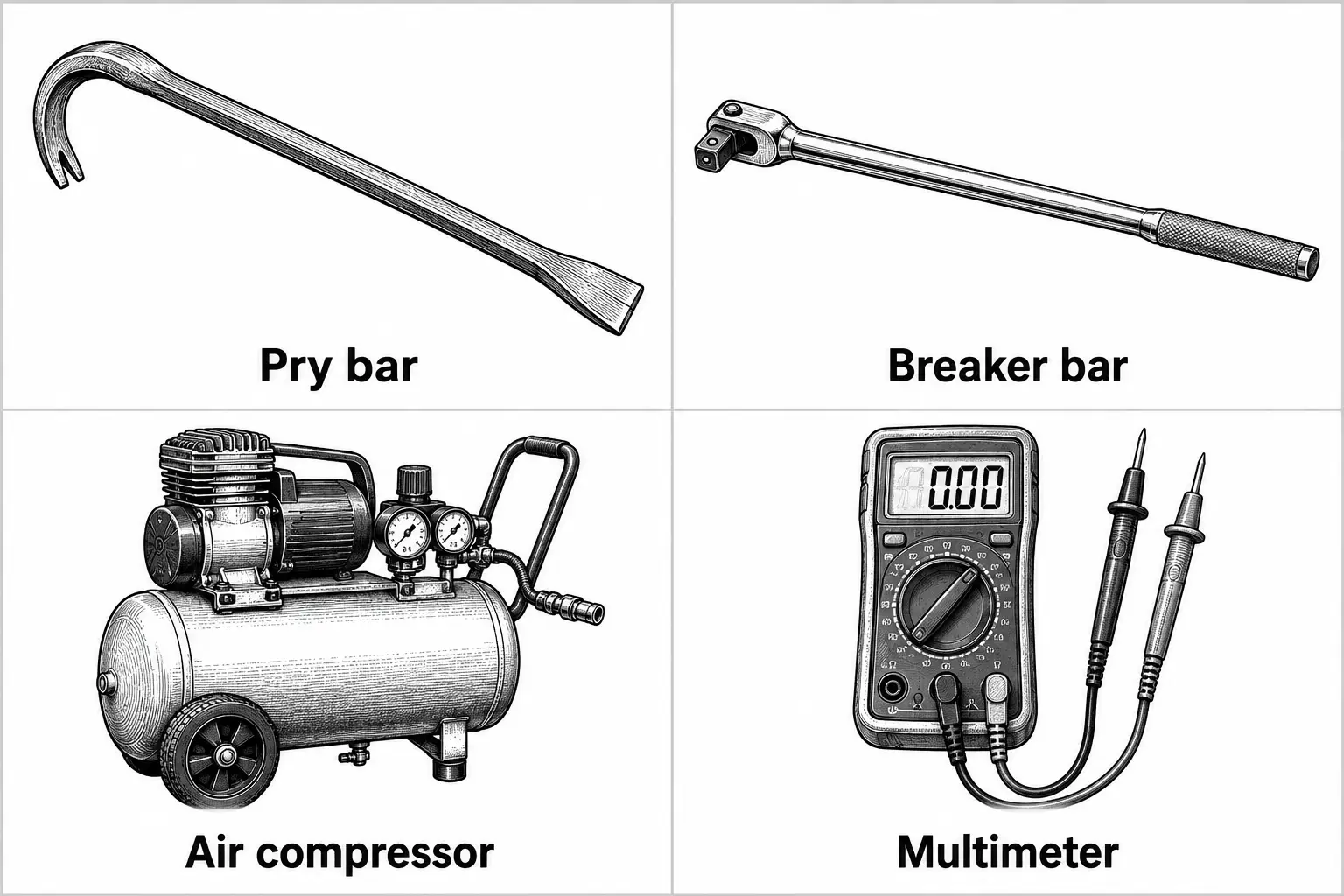
These tools round out a mechanic’s kit for prying, clamping, and electrical testing tasks.

Pry bar

Used for: Removing nails, separating boards, lifting heavy objects, and demolition work. It’s curved end is designed to pry apart or lift materials.

Pry bar used for lifting and separating materials.
Pry bar

Breaker bar

Used for: Loosening stubborn or over-tightened nuts and bolts. The long handle increases leverage and torque.

Breaker bar used to loosen tight fasteners.
Breaker bar

Air compressor

Used for: Powering pneumatic tools, inflating tires, and cleaning surfaces with compressed air. It stores the compressed air under pressure.

Portable air compressor with hose connection.
Air compressor

Multimeter

Used for: Troubleshooting electrical circuits, testing batteries, and diagnosing electrical components. It is an electronic testing device that measures voltage, current, and resistance.

Digital multimeter used for electrical testing.
Multimeter

Clamps

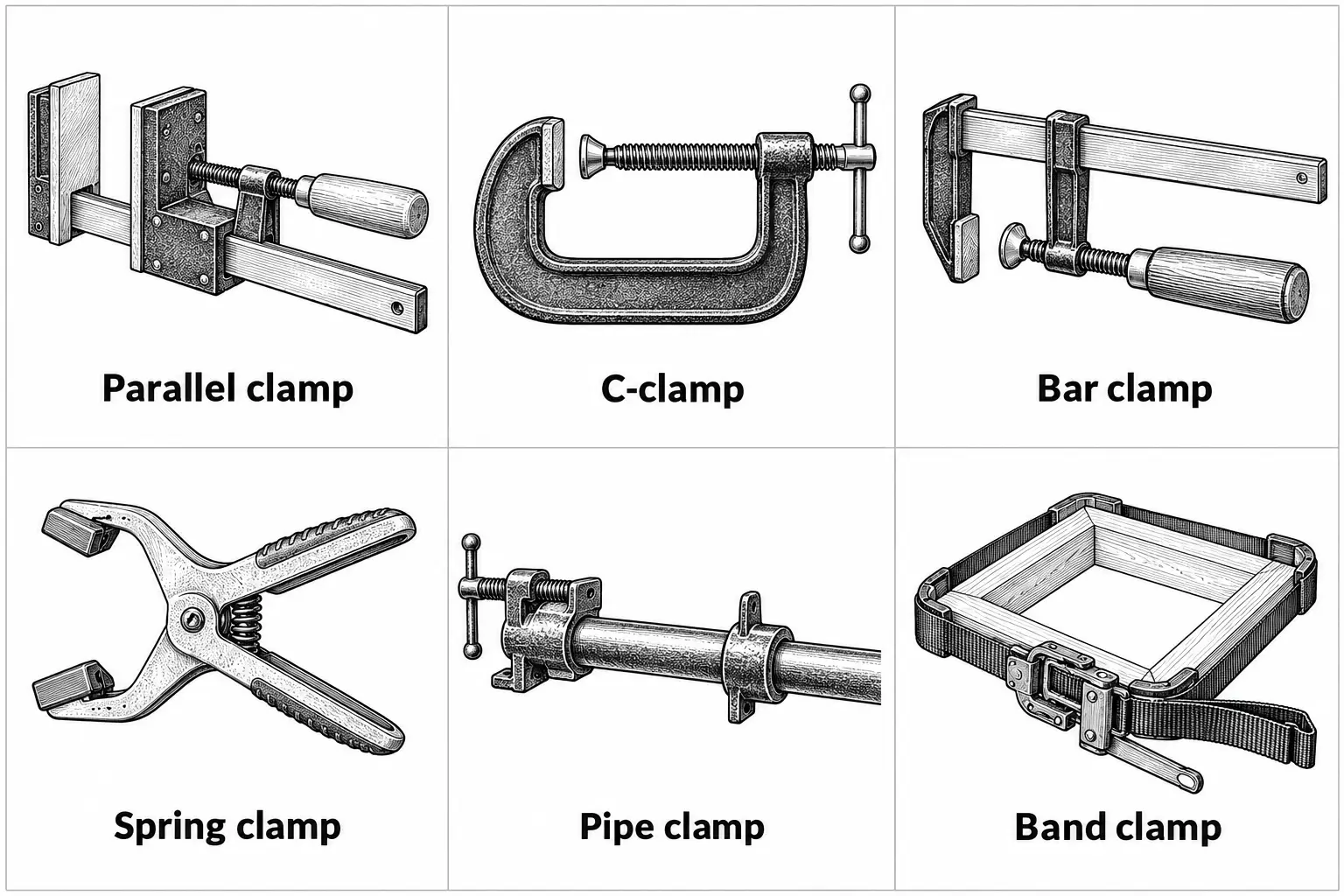
These tools hold parts firmly in place.

Parallel Clamp

Used for: Holding workpieces with even, parallel pressure across both jaws. Common in woodworking for glue-ups and joinery where uneven force could throw off alignment.

Adjustable jaws applying even clamping pressure.
Parallel Clamp

C-Clamp

Used for: General-purpose clamping of wood, metal, or other materials to a workbench or to each other. Used primarily for welding, metalworking, and everyday shop tasks.

C-shaped frame with an adjustable threaded screw.
C-Clamp

Bar Clamp

Used for: Clamping large or wide workpieces, such as panel glue-ups or furniture assembly, where the clamp needs to span a long distance.

Sliding jaw and screw mechanism on a long bar.
Bar Clamp

Spring Clamp

Used for: Quick, light-duty clamping and holding, such as securing thin materials, fabric, or parts temporarily while glue sets or during a quick assembly step.

Spring-loaded jaws used to grip materials.
Spring Clamp

Pipe Clamp

Used for: Clamping wide panels or assemblies using a length of pipe as the bar, allowing the clamp’s reach to be adjusted or extended as needed.

Adjustable clamping jaws mounted on a metal pipe.
Pipe Clamp

Band Clamp

Used for: Applying even pressure around irregular or curved objects, such as chair legs, barrels, or cylindrical assemblies, where standard clamps can’t get a grip.

Circular metal band tightened with a screw.
Band Clamp
Previous
Next  | 6.1 Engine
All rights reserved ©2016 - 2026 Achievable, Inc.

Other Tools

Other Tools

These tools round out a mechanic’s kit for prying, clamping, and electrical testing tasks.

Pry bar

Used for: Removing nails, separating boards, lifting heavy objects, and demolition work. It’s curved end is designed to pry apart or lift materials.

Breaker bar

Used for: Loosening stubborn or over-tightened nuts and bolts. The long handle increases leverage and torque.

Air compressor

Used for: Powering pneumatic tools, inflating tires, and cleaning surfaces with compressed air. It stores the compressed air under pressure.

Multimeter

Used for: Troubleshooting electrical circuits, testing batteries, and diagnosing electrical components. It is an electronic testing device that measures voltage, current, and resistance.

Clamps

These tools hold parts firmly in place.

Parallel Clamp

Used for: Holding workpieces with even, parallel pressure across both jaws. Common in woodworking for glue-ups and joinery where uneven force could throw off alignment.

C-Clamp

Used for: General-purpose clamping of wood, metal, or other materials to a workbench or to each other. Used primarily for welding, metalworking, and everyday shop tasks.

Bar Clamp

Used for: Clamping large or wide workpieces, such as panel glue-ups or furniture assembly, where the clamp needs to span a long distance.

Spring Clamp

Used for: Quick, light-duty clamping and holding, such as securing thin materials, fabric, or parts temporarily while glue sets or during a quick assembly step.

Pipe Clamp

Used for: Clamping wide panels or assemblies using a length of pipe as the bar, allowing the clamp’s reach to be adjusted or extended as needed.

Band Clamp

Used for: Applying even pressure around irregular or curved objects, such as chair legs, barrels, or cylindrical assemblies, where standard clamps can’t get a grip.

More from Shop Information

  • Measuring Tools
  • Striking Tools
  • Turning Tools
  • Cutting Tools
  • Finishing Tools