


Achievable logoAchievable logo
ASVAB
Sign in
Sign up
Purchase
Textbook
Practice exams
Support
How it works
Exam catalog
Mountain with a flag at the peak
Textbook
Introduction
1. Word Knowledge
2. Math Knowledge
3. Paragraph Comprehension
4. Arithmetic Reasoning
5. Shop Information
5.1 Measuring Tools
5.2 Striking Tools
5.3 Turning Tools
5.4 Cutting Tools
5.5 Finishing Tools
5.6 Other Tools
6. Auto Information
Wrapping up
Achievable logoAchievable logo
5.4 Cutting Tools
Achievable ASVAB
5. Shop Information
Our ASVAB course is currently in development and is a work-in-progress.

Cutting Tools

8 min read
Font
Discuss
Share
Feedback

Handsaws

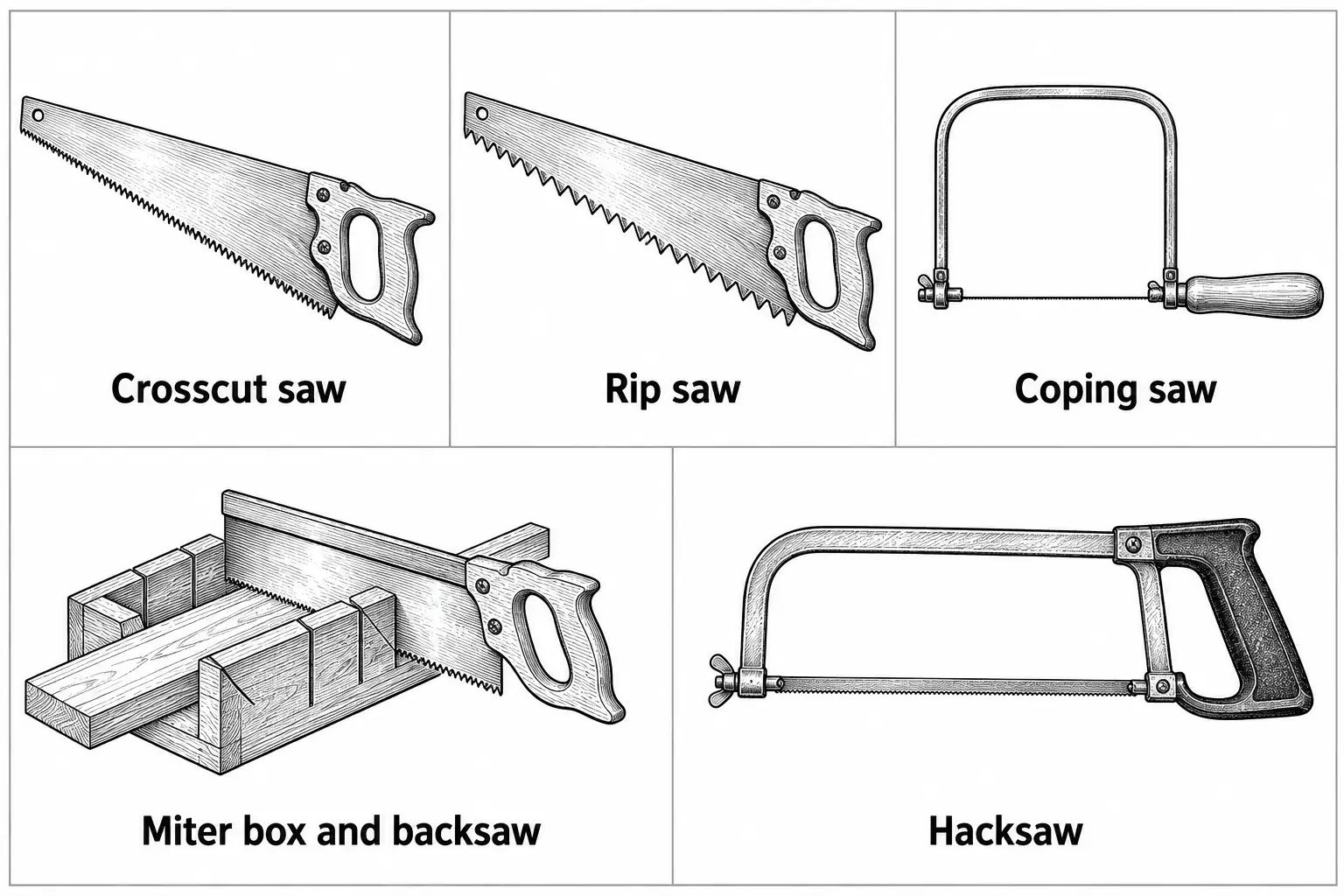
Crosscut saw

Used for: Cutting boards and lumber to length. Designed to cut across the grain of wood with alternating teeth.

Hand saw designed for cutting across wood grain.
Crosscut saw

Rip saw

Used for: Ripping boards into narrower pieces during woodworking. Designed to cut parallel to the wood grain.

Hand saw designed for cutting along wood grain.
Rip saw

Coping saw

Used for: Cutting intricate shapes in wood, plastic, and soft metals. Designed for detailed curved cuts.

Coping saw used for intricate curved cuts.
Coping saw

Miter box and backsaw

Used for: Cutting trim, molding, and other materials at accurate angles. The miter box guides the backsaw to make precise angled cuts.

Miter box and backsaw used for precise angled cuts.
Miter box and backsaw

Hacksaw

Used for: Cutting metal pipes, rods, bolts, and tubing. Designed specifically for cutting metal.

Fine-toothed hand saw for cutting metal.
Hacksaw

Powersaws

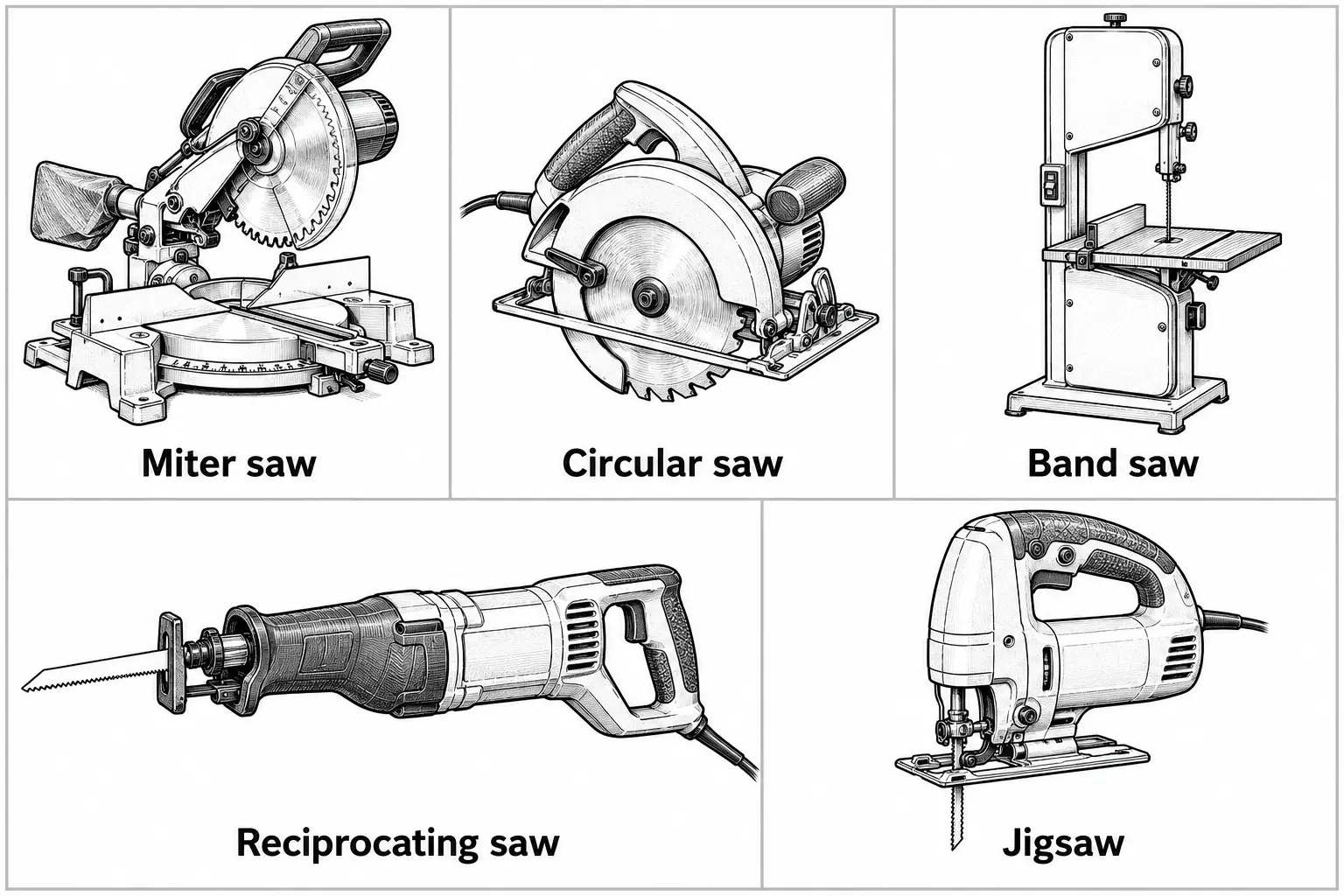
Miter saw

Used for: Cutting trim, framing lumber, and boards to precise lengths and angles. Designed to make fast, accurate crosscuts and angled cuts.

Power miter saw used for angled cuts.
Miter saw

Circular saw

Used for: Cutting plywood, dimensional lumber, and other building materials. Designed to be handheld, with a rotating circular blade for straight cuts.

Circular power saw with rotating blade.
Circular saw

Band saw

Used for: Cutting curves, irregular shapes, and resawing wood or metal. Designed to be stationary, with a continuous loop blade for smooth, controlled cuts.

Band saw with continuous loop blade for curved cuts.
Band saw

Reciprocating saw

Used for: Demolition, remodeling, and cutting through wood, metal, or piping. Designed to be handheld, with a blade that moves back and forth.

Reciprocating saw with back-and-forth cutting action.
Reciprocating saw

Jigsaw

Used for: Cutting curves, circles, and intricate shapes in wood, plastic, and thin metal. Designed to be handheld, with a narrow reciprocating blade for detailed work.

Jigsaw used for curved and detailed cuts.
Jigsaw

Saw accessory

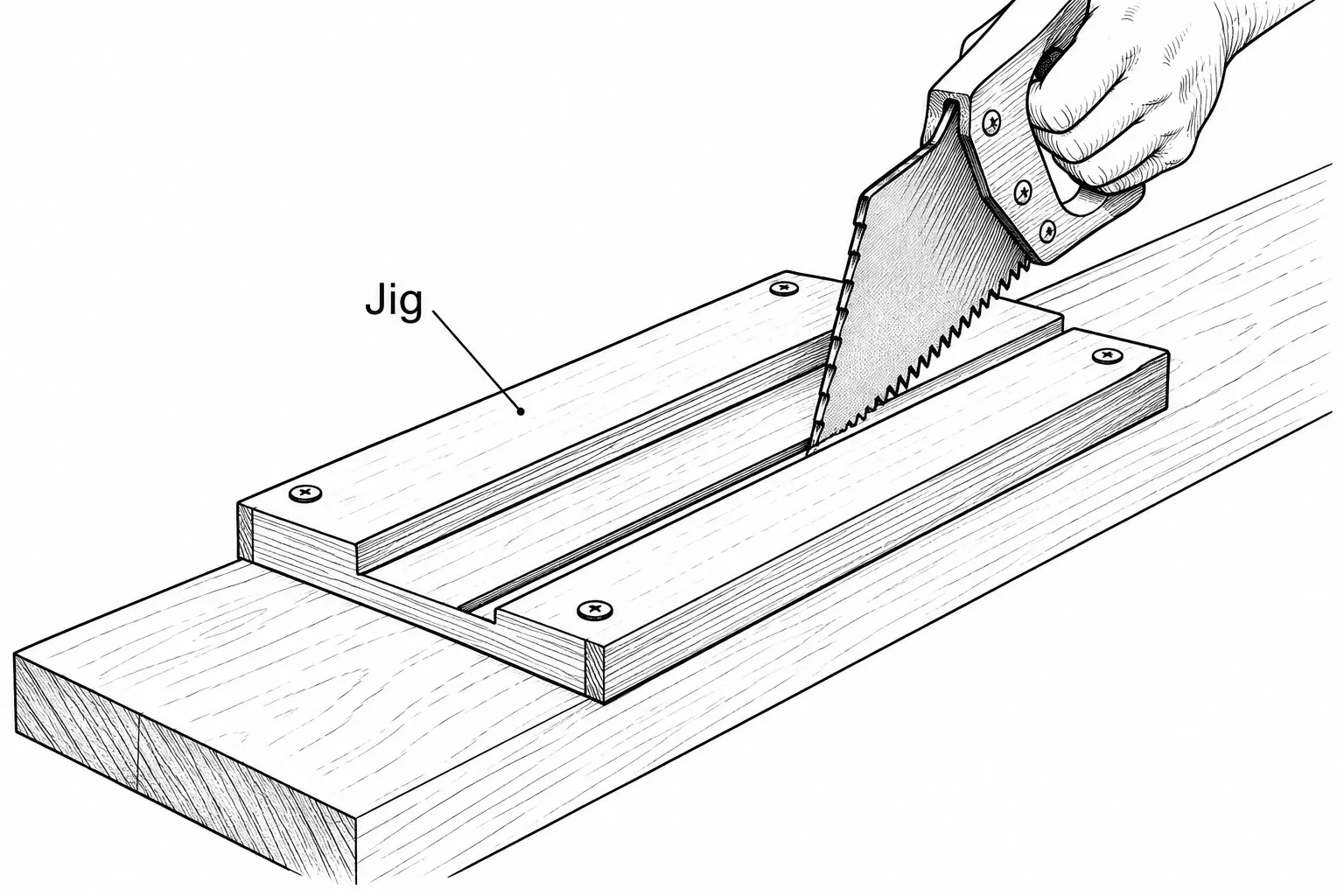
Jigs

Used for: Provides guidance for a blade or tool to follow a specific cutting path.

Jig used to guide tools and improve cutting accuracy.
Jig

Other cutting tools

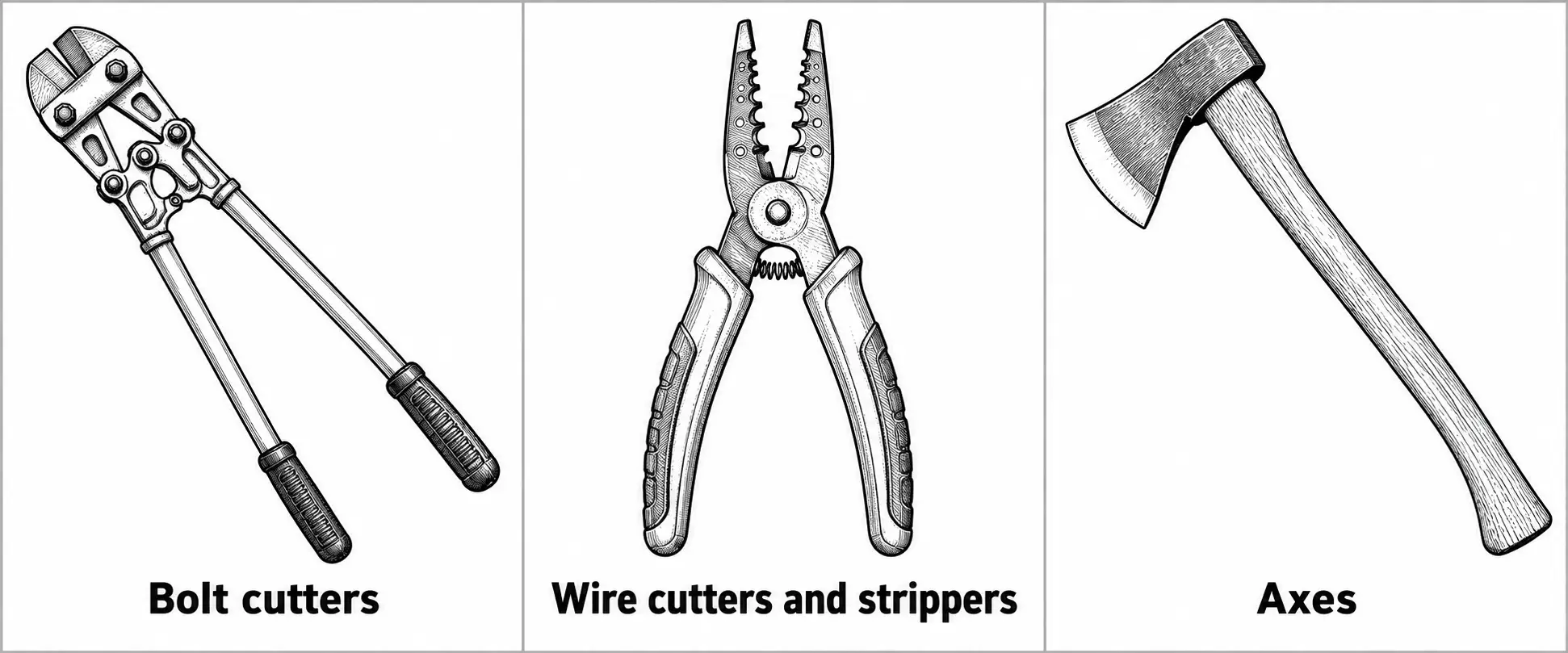
Bolt cutters

Used for: Specialized heavy-duty cutters designed for cutting metal bolts, chains, and rods.

Bolt cutters designed for cutting heavy metal fasteners.
Bolt cutters
Sidenote
Leverage

Longer handles provide greater leverage, making it easier to cut tough materials.

Wire cutters and strippers

Used for: Specialized tools used to cut wire and remove insulation from electrical wires.

Wire cutters and strippers for cutting and removing insulation.
Wire cutters and strippers

Axes

Used for: Chopping, splitting wood, and demolition work.

Axe used for chopping and splitting wood.
Axe
Previous
Next  | 5.5 Finishing Tools
All rights reserved ©2016 - 2026 Achievable, Inc.

Cutting Tools

Handsaws

Crosscut saw

Used for: Cutting boards and lumber to length. Designed to cut across the grain of wood with alternating teeth.

Rip saw

Used for: Ripping boards into narrower pieces during woodworking. Designed to cut parallel to the wood grain.

Coping saw

Used for: Cutting intricate shapes in wood, plastic, and soft metals. Designed for detailed curved cuts.

Miter box and backsaw

Used for: Cutting trim, molding, and other materials at accurate angles. The miter box guides the backsaw to make precise angled cuts.

Hacksaw

Used for: Cutting metal pipes, rods, bolts, and tubing. Designed specifically for cutting metal.

Powersaws

Miter saw

Used for: Cutting trim, framing lumber, and boards to precise lengths and angles. Designed to make fast, accurate crosscuts and angled cuts.

Circular saw

Used for: Cutting plywood, dimensional lumber, and other building materials. Designed to be handheld, with a rotating circular blade for straight cuts.

Band saw

Used for: Cutting curves, irregular shapes, and resawing wood or metal. Designed to be stationary, with a continuous loop blade for smooth, controlled cuts.

Reciprocating saw

Used for: Demolition, remodeling, and cutting through wood, metal, or piping. Designed to be handheld, with a blade that moves back and forth.

Jigsaw

Used for: Cutting curves, circles, and intricate shapes in wood, plastic, and thin metal. Designed to be handheld, with a narrow reciprocating blade for detailed work.

Saw accessory

Jigs

Used for: Provides guidance for a blade or tool to follow a specific cutting path.

Other cutting tools

Bolt cutters

Used for: Specialized heavy-duty cutters designed for cutting metal bolts, chains, and rods.

Sidenote
Leverage

Longer handles provide greater leverage, making it easier to cut tough materials.

Wire cutters and strippers

Used for: Specialized tools used to cut wire and remove insulation from electrical wires.

Axes

Used for: Chopping, splitting wood, and demolition work.

More from Shop Information

  • Measuring Tools
  • Striking Tools
  • Turning Tools
  • Finishing Tools
  • Other Tools