


Achievable logoAchievable logo
ASVAB
Sign in
Sign up
Purchase
Textbook
Practice exams
Support
How it works
Exam catalog
Mountain with a flag at the peak
Textbook
Introduction
1. Word Knowledge
2. Math Knowledge
3. Paragraph Comprehension
4. Arithmetic Reasoning
5. Shop Information
5.1 Measuring Tools
5.2 Striking Tools
5.3 Turning Tools
5.4 Cutting Tools
5.5 Finishing Tools
5.6 Other Tools
6. Auto Information
Wrapping up
Achievable logoAchievable logo
5.2 Striking Tools
Achievable ASVAB
5. Shop Information
Our ASVAB course is currently in development and is a work-in-progress.

Striking Tools

5 min read
Font
Discuss
Share
Feedback

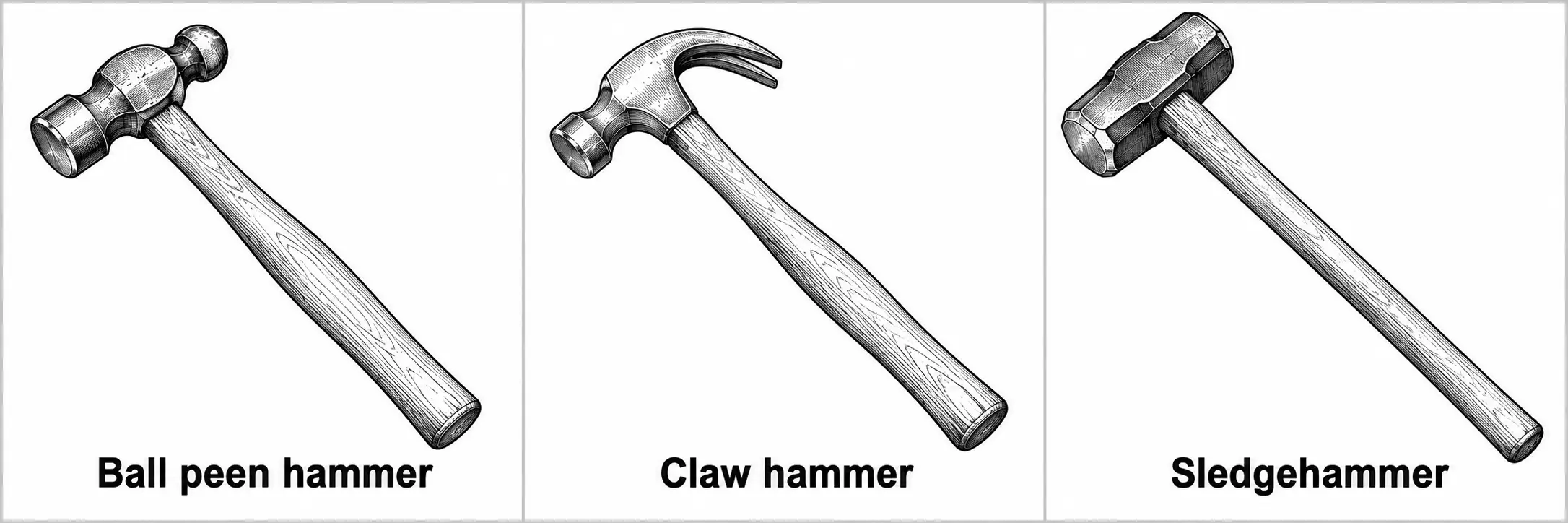
Hammers

Hammers drive force through a hard striking head. They are mostly used for driving nails, breaking material, or shaping metal.

Ball peen hammer

Used for: Forming custom metal parts, flattening rivet heads, and metalworking. The rounded peen allows for shaping and forming metal.

Ball peen hammer with rounded end
Ball peen hammer

Claw hammer

Used for: Building wooden structures, framing, and general carpentry. The clawed end is used to remove nails.

Claw hammer with curved nail puller
Claw hammer

Sledgehammer

Used for: Demolition, driving fence posts, breaking concrete, and knocking down walls. The heft allows for heavy blows.

Heavy sledge hammer with long handle
Sledge hammer

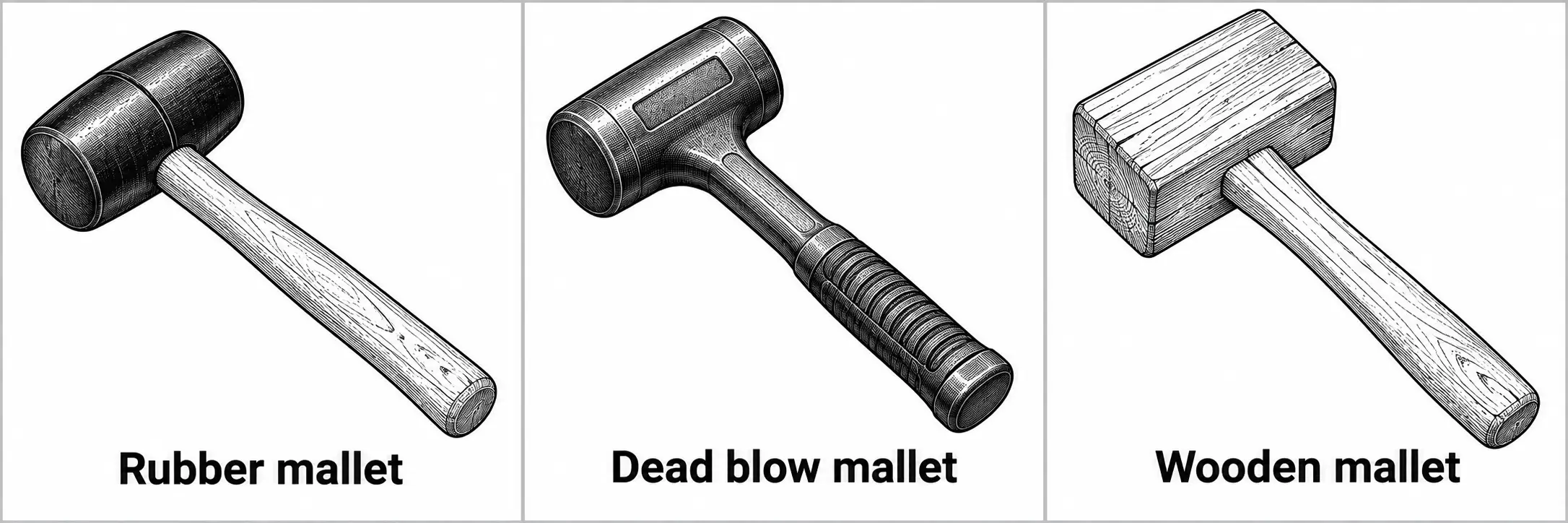
Mallets

Mallets deliver force through a softer head, so they can strike without marring the work surface.

Rubber mallet

Used for: Dent removal, assembling parts, and minor repairs on ships and aircraft. It can strike without damaging surfaces.

Rubber mallet with rounded striking head
Rubber mallet

Dead blow mallet

Used for: Seating parts, fitting pipes, and heavy assembly work. Can deliver force while minimizing bounce back.

Dead blow mallet with thick body
Dead blow mallet

Wooden mallet

Used for: Woodworking, driving chisels, and joinery.

Wooden mallet with rectangular head
Wooden mallet

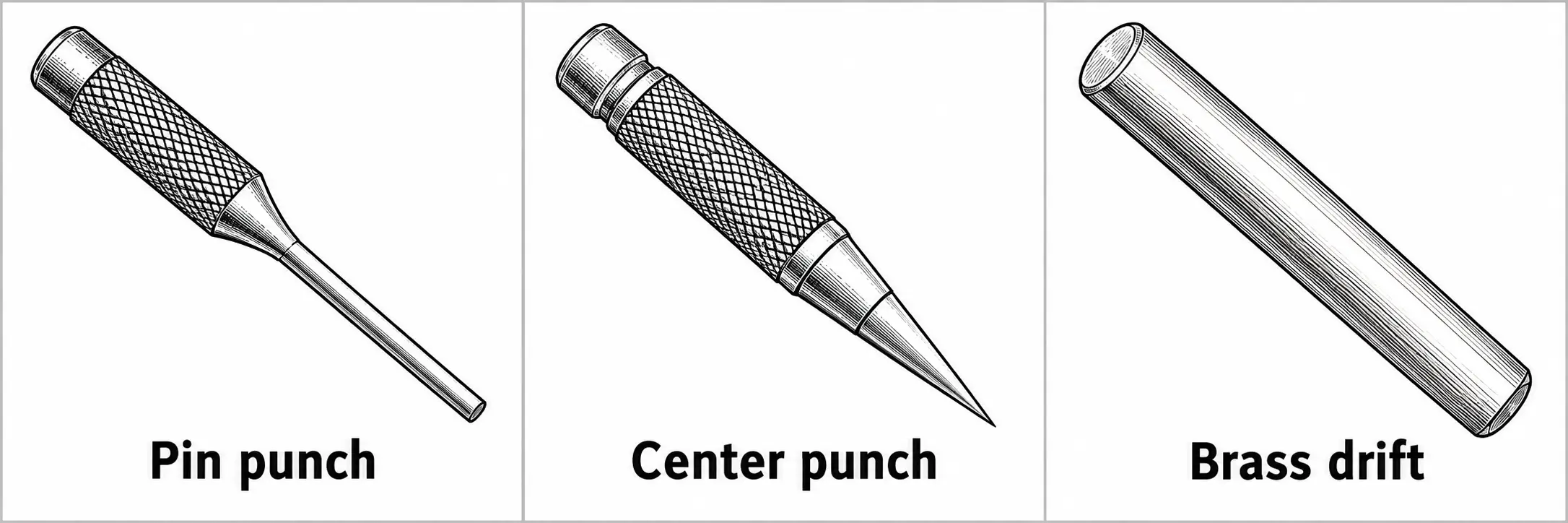
Chisels, punches, & drifts

These tools concentrate force onto a small point for cutting, marking, or driving pins.

Pin punch

Used for: Removing rivets, dowel pins, and roll pins during mechanical repairs. It can drive out or install pins without damaging surrounding material.

Pin punch with narrow pointed tip
Pin punch

Center punch

Used for: Precision drilling, woodworking, and metal fabrication. It creates a starting mark before drilling.

Center punch with tapered point
Center punch

Brass drift

Used for: Aligning holes, positioning engine components, and working where non-sparking tools are required. It can align or move parts without creating sparks or damaging metal surfaces.

Brass drift with cylindrical shape
Brass drift
Previous
Next  | 5.3 Turning Tools
All rights reserved ©2016 - 2026 Achievable, Inc.

Striking Tools

Hammers

Hammers drive force through a hard striking head. They are mostly used for driving nails, breaking material, or shaping metal.

Ball peen hammer

Used for: Forming custom metal parts, flattening rivet heads, and metalworking. The rounded peen allows for shaping and forming metal.

Claw hammer

Used for: Building wooden structures, framing, and general carpentry. The clawed end is used to remove nails.

Sledgehammer

Used for: Demolition, driving fence posts, breaking concrete, and knocking down walls. The heft allows for heavy blows.

Mallets

Mallets deliver force through a softer head, so they can strike without marring the work surface.

Rubber mallet

Used for: Dent removal, assembling parts, and minor repairs on ships and aircraft. It can strike without damaging surfaces.

Dead blow mallet

Used for: Seating parts, fitting pipes, and heavy assembly work. Can deliver force while minimizing bounce back.

Wooden mallet

Used for: Woodworking, driving chisels, and joinery.

Chisels, punches, & drifts

These tools concentrate force onto a small point for cutting, marking, or driving pins.

Pin punch

Used for: Removing rivets, dowel pins, and roll pins during mechanical repairs. It can drive out or install pins without damaging surrounding material.

Center punch

Used for: Precision drilling, woodworking, and metal fabrication. It creates a starting mark before drilling.

Brass drift

Used for: Aligning holes, positioning engine components, and working where non-sparking tools are required. It can align or move parts without creating sparks or damaging metal surfaces.

More from Shop Information

  • Measuring Tools
  • Turning Tools
  • Cutting Tools
  • Finishing Tools
  • Other Tools