


Achievable logoAchievable logo
ASVAB
Sign in
Sign up
Purchase
Textbook
Practice exams
Support
How it works
Exam catalog
Mountain with a flag at the peak
Textbook
Introduction
1. Word Knowledge
2. Math Knowledge
3. Paragraph Comprehension
4. Arithmetic Reasoning
5. Shop Information
6. Auto Information
6.1 Engine
Wrapping up
Achievable logoAchievable logo
6.1 Engine
Achievable ASVAB
6. Auto Information
Our ASVAB course is currently in development and is a work-in-progress.

Engine

10 min read
Font
Discuss
Share
Feedback

Not everyone who takes the ASVAB will specialize in mechanics, but it’s still important to study and understand the Auto Information section. At its core, this section is about systems, which are a collection of parts working together to form a whole.

We’re going to walk you through the four main systems of a vehicle, explaining their components and how they work together. These four systems are Engine, Cooling, Chassis, and Electronic.

Let’s start with the Engine.

Engine

There are many different types of engines, including electric motors and internal combustion engines. For the Auto section, we’ll primarily look at internal combustion engines, as they power most gasoline-using vehicles.

Definitions
Engine
An engine is a machine that converts energy into mechanical force and motion.

In an internal combustion engine, a mixture of fuel and air is ignited to create motion. Let’s break down our component parts to see how each piece contributes to this process.

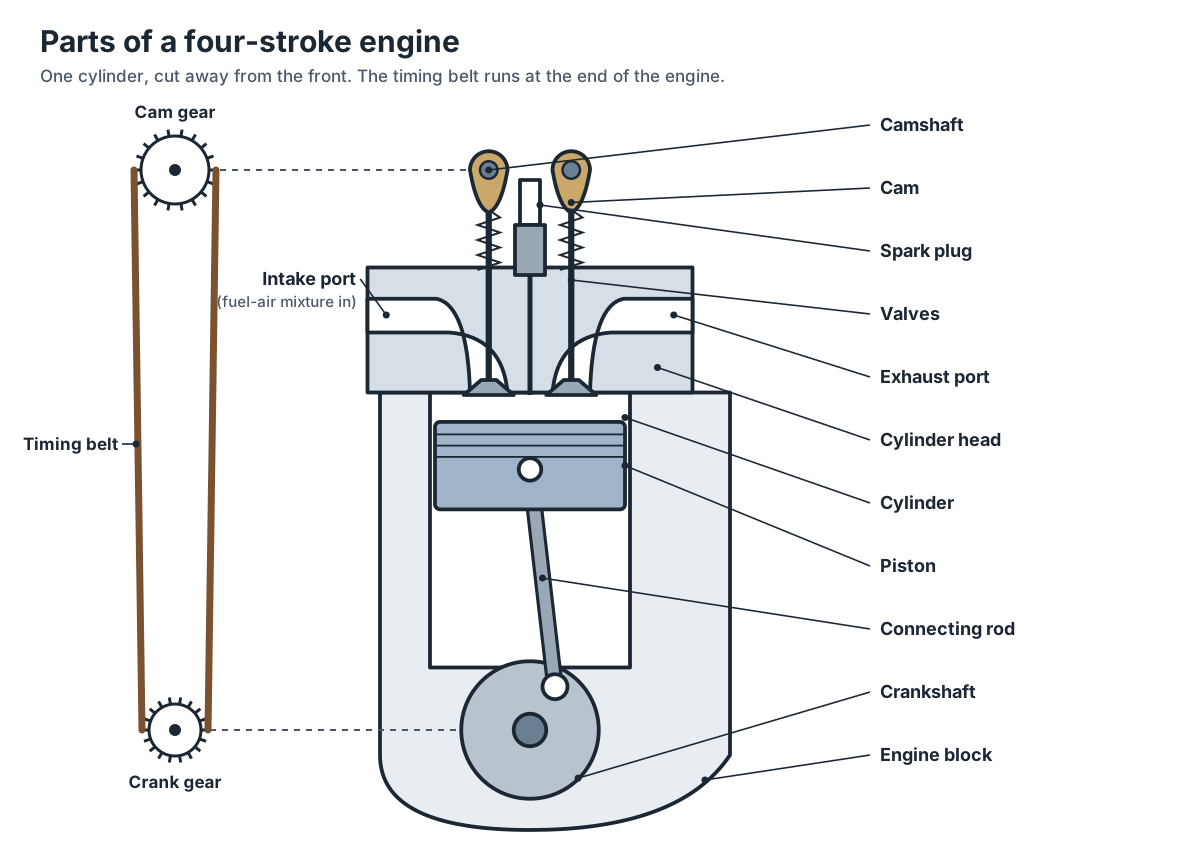
Cross-section diagram of a four-cylinder engine with labeled internal components.
Engine diagram

Components

Engine block- This is the main structure of the engine. It contains the cylinders, pistons, crankshaft, and other necessary components.

Cylinder- A hollow cylindrical space inside the engine block where a piston moves up and down. Combustion occurs here. Different engines have different numbers of cylinders, each containing one piston.

Piston- A piston is a metal plunger inside the cylinder. Expanding gases push it downward during combustion, transferring the force to the connecting rod.

Connecting rod- The piece that connects the piston to the crankshaft.

Crankshaft- The crankshaft converts the up-and-down movement of the pistons into a continuous rotational motion.

Cylinder head- The cylinder head sits on top of the engine block, sealing the cylinders during combustion.

Spark plug- The spark plug creates the spark that ignites the air-fuel mixture inside the cylinder. It sits at the top of the cylinder.

Intake port - The intake port is a passage that allows the fuel-air mixture into the cylinder.

Exhaust port - The exhaust port is a passage that allows spent gases from the combustion reaction to exit the cylinder.

Valves - Metal components that open and close to control airflow. They let the fuel-air mixture into the cylinder and let exhaust gases out. When closed, they seal the cylinder during combustion.

Camshaft- A rotating shaft containing raised sections called cams (or cam lobes). Its rotation causes the intake and exhaust valves to open and close at precise intervals.

Cams- Cams are raised sections of the camshaft that press down on the valves to open them. When the cams rotate away, valve springs close the valves again.

Timing belt- Connects the camshaft to the crankshaft so that the pistons and valves move in sync.

Cam gear- A gear that connects the camshaft to the timing belt and rotates the camshaft.

The flow / Four-stroke engine

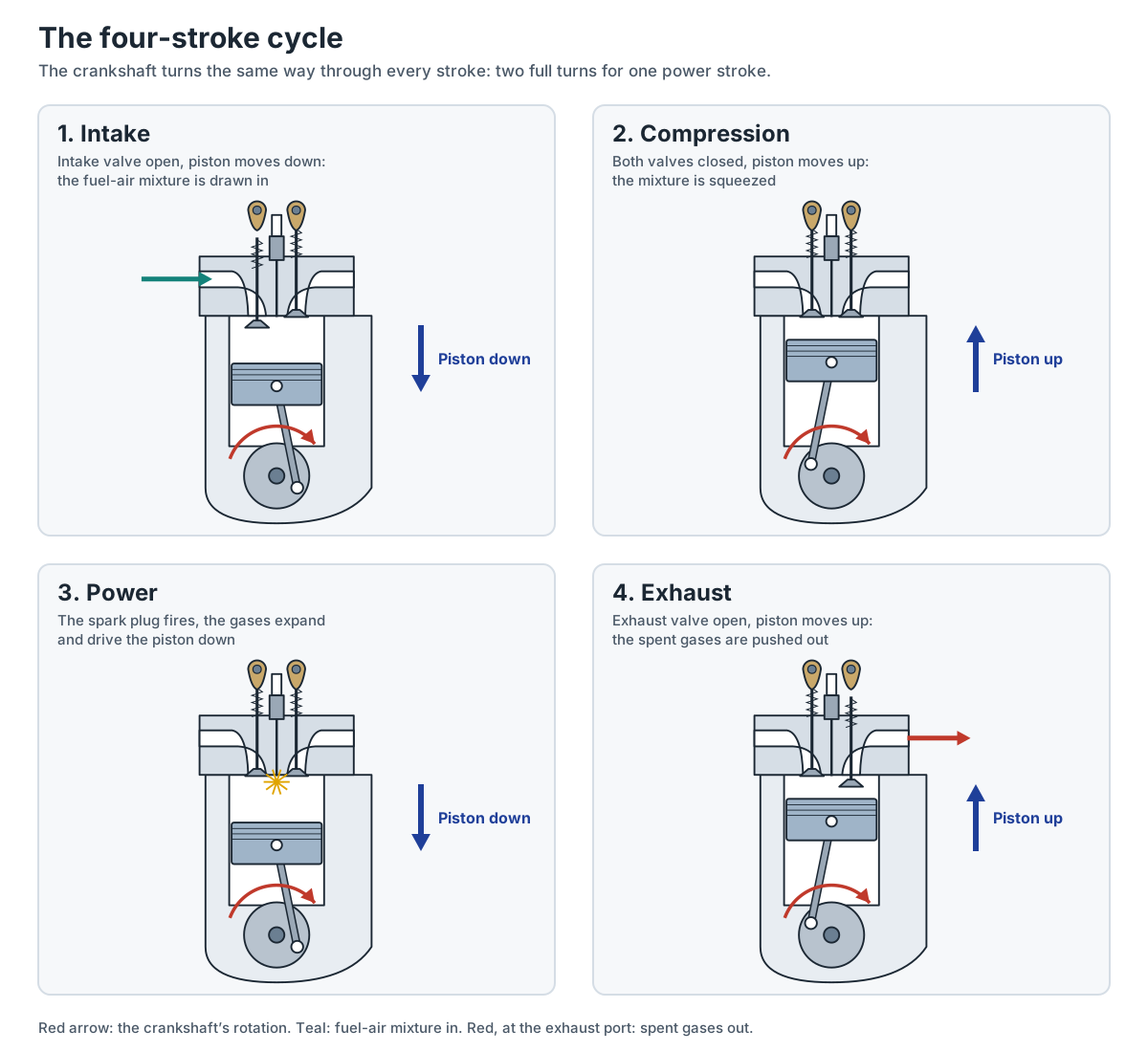
Now, let’s see how these parts work together. A gasoline vehicle uses a four-stroke combustion cycle, in which each stroke is the piston’s movement up or down.

First stroke: Intake stroke

The camshaft rotates, allowing the intake valve to open, and the piston moves down. This pulls in a mixture of fuel and air through the intake port and into the cylinder. Once the mixture is inside the cylinder, all valves shut.

Second stroke: Compression stroke

The piston moves to the top of the chamber, compressing the air-and-fuel mixture against the roof of the cylinder.

Third stroke: Power stroke

The spark plug at the top of the cylinder ignites the compressed air-fuel mixture. The combination of compression and ignition creates a combustion reaction, in which the heated gases expand outwards. The force of this rapid combustion drives the piston back down. That energy transfers from the piston to the connecting rod, then to the crankshaft.

Fourth stroke: Exhaust stroke

The camshaft rotates again, allowing the exhaust valve to open. The piston moves upwards once more to push the spent mixture out of the exhaust port.

Repeat

As the camshaft rotates, the piston moves downwards again, the intake valve opens, and the cycle repeats.

Four panels showing the stages of a four-stroke engine cycle.
Four stroke diagram
Sidenote
Revolutions Per Minute

A car’s revolutions per minute (RPM) is how many turns the crankshaft makes in one minute.

Arrangement of cylinders

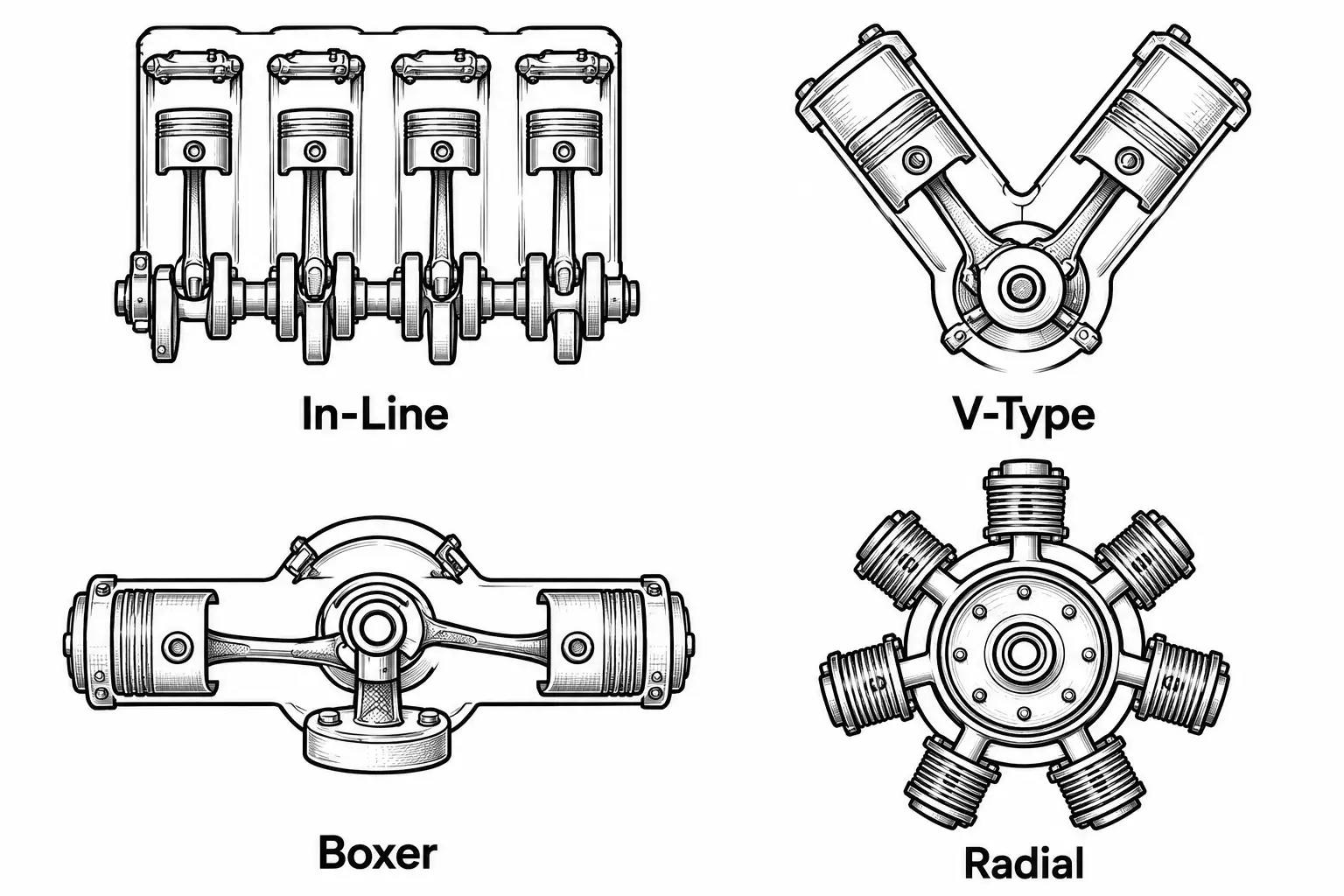
Cylinders can be arranged multiple ways. Four of the most common layouts are in-line, V-type, boxer, and radial.

In-line

An in-line cylinder configuration is just as described: the cylinders sit in a line, and all the pistons are connected to a single crankshaft. This is a popular choice for automobile designs because it is simple, easy to maintain, and inexpensive due to its fewer moving parts.

The in-line cylinder design is common in military patrol vehicles, trucks, and generators.

V-type

If an engine has six or more cylinders, it will often be organized in a V-type configuration. In a V-type engine, two cylinder banks are angled downward from one another, forming a V shape. All the pistons are connected to a single crankshaft.

The V-type design reduces the engine block’s weight, length, and height compared to the in-line arrangement. It can therefore pack more cylinders in the same space and is therefore a common design in high-powered or armored vehicles, such as tanks.

Boxer

Boxer engines are a type of flat engine. The cylinders lie in flat pairs, and the pistons move simultaneously towards and away from each other. When they move inwards together, it looks similar to boxers touching gloves before a fight.

Due to their flat design, boxer engines have low vibration and a low center of gravity. They also allow a lower hood line, making the vehicle smoother and more aerodynamic. They are not especially common in the military, but are sometimes used in unmanned aerial vehicles (UAVs) and light utility vehicles.

Radial

Radial engines have cylinders arranged in a circle around a shared crankshaft. They were commonly used in older aircraft and World War II military tanks, though many modern aircraft now use gas-turbine engines instead.

Common cylinder arrangements used in engines.
Cylinder arrangements

Diesel engines

Diesel engines and gasoline-powered engines operate a little differently. In a gasoline engine, a spark plug ignites the fuel in the combustion chamber. In a diesel engine, air is compressed in the combustion chamber to the point that it becomes extremely hot. Fuel is then injected into this hot air, allowing it to spontaneously ignite without a spark.

Diesel engines can also produce more torque at lower engine speeds (RPMs) than gasoline engines, which makes them ideal for towing and hauling heavy equipment. Diesel fuel also has a higher flash point and is therefore less flammable than gasoline, making it safer to store and handle.

Diesel engines can be either 2-stroke or 4-stroke.

A 2-stroke diesel engine completes a power cycle in just two piston movements instead of four, producing power with every crankshaft revolution. It’s also typically lighter and more compact than a 4-stroke engine. The trade-off is that a 2-stroke engine is typically less fuel-efficient and produces higher emissions than a 4-stroke engine. In the military, the 2-stroke design is primarily used in certain large marine vessels.

A 4-stroke diesel engine completes a power cycle in 4 piston movements, producing power with every second crankshaft revolution. The motions are similar to a gasoline engine, but a diesel engine still does not need a spark to ignite the fuel. Because it undergoes a more complete combustion process, a 4-stroke engine is typically more fuel-efficient and produces fewer emissions than a 2-stroke engine. Most military and commercial diesel-engine vehicles use a 4-stroke design.

Nuclear, electric, and hybrid power

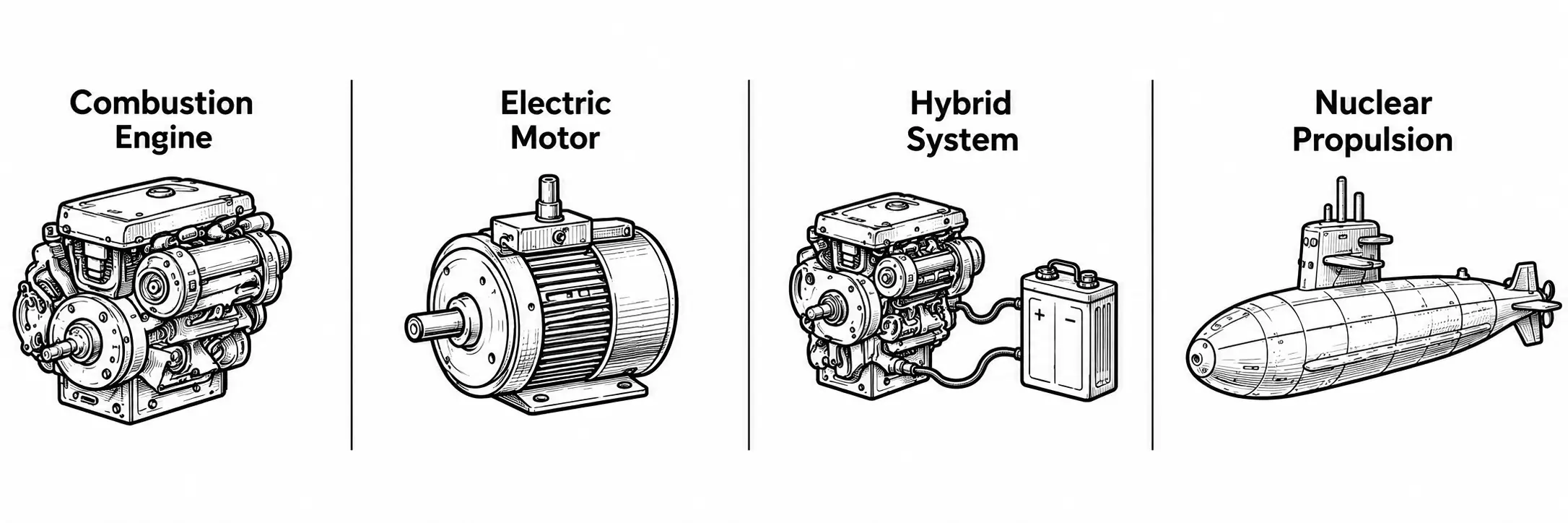
In addition to gasoline and diesel engines, the military also uses nuclear, electric, and hybrid propulsion systems for a variety of applications.

Comparison of common engine configurations.
Engine types

The Navy primarily uses nuclear propulsion to power submarines and aircraft carriers. This power comes from nuclear fission, which is the process of splitting a large atomic nucleus into smaller nuclei. This split generates an enormous amount of heat, creating steam that drives the vehicle’s turbines. The turbines’ rotation then propels the vessel forwards and generates power for onboard systems.

Electric motors use electromagnetic fields to produce rotational motion, converting electrical energy into mechanical energy to propel the vehicle. Because they can convert energy without combustion, electric propulsion systems are extremely quiet and do not emit exhaust fumes. Electric engines can also produce instant torque and acceleration as soon as they’re turned on, without needing to go through a combustion cycle.

There are, however, downsides to electric engines. The lithium-ion batteries that power them need to be charged, which limits a vehicle’s usable range and increases downtime. These batteries are also a safety hazard if damaged or mishandled, as they can overheat, become a fire risk, or even explode.

Hybrid systems combine an internal combustion engine with an electric motor and battery. They can therefore switch between using one propulsion system or another, or use a combination of both. This combination gives these systems flexibility, extends their operating range, and improves fuel efficiency.

Previous
Next  | Wrapping up
All rights reserved ©2016 - 2026 Achievable, Inc.

Engine

Not everyone who takes the ASVAB will specialize in mechanics, but it’s still important to study and understand the Auto Information section. At its core, this section is about systems, which are a collection of parts working together to form a whole.

We’re going to walk you through the four main systems of a vehicle, explaining their components and how they work together. These four systems are Engine, Cooling, Chassis, and Electronic.

Let’s start with the Engine.

Engine

There are many different types of engines, including electric motors and internal combustion engines. For the Auto section, we’ll primarily look at internal combustion engines, as they power most gasoline-using vehicles.

Definitions
Engine
An engine is a machine that converts energy into mechanical force and motion.

In an internal combustion engine, a mixture of fuel and air is ignited to create motion. Let’s break down our component parts to see how each piece contributes to this process.

Components

Engine block- This is the main structure of the engine. It contains the cylinders, pistons, crankshaft, and other necessary components.

Cylinder- A hollow cylindrical space inside the engine block where a piston moves up and down. Combustion occurs here. Different engines have different numbers of cylinders, each containing one piston.

Piston- A piston is a metal plunger inside the cylinder. Expanding gases push it downward during combustion, transferring the force to the connecting rod.

Connecting rod- The piece that connects the piston to the crankshaft.

Crankshaft- The crankshaft converts the up-and-down movement of the pistons into a continuous rotational motion.

Cylinder head- The cylinder head sits on top of the engine block, sealing the cylinders during combustion.

Spark plug- The spark plug creates the spark that ignites the air-fuel mixture inside the cylinder. It sits at the top of the cylinder.

Intake port - The intake port is a passage that allows the fuel-air mixture into the cylinder.

Exhaust port - The exhaust port is a passage that allows spent gases from the combustion reaction to exit the cylinder.

Valves - Metal components that open and close to control airflow. They let the fuel-air mixture into the cylinder and let exhaust gases out. When closed, they seal the cylinder during combustion.

Camshaft- A rotating shaft containing raised sections called cams (or cam lobes). Its rotation causes the intake and exhaust valves to open and close at precise intervals.

Cams- Cams are raised sections of the camshaft that press down on the valves to open them. When the cams rotate away, valve springs close the valves again.

Timing belt- Connects the camshaft to the crankshaft so that the pistons and valves move in sync.

Cam gear- A gear that connects the camshaft to the timing belt and rotates the camshaft.

The flow / Four-stroke engine

Now, let’s see how these parts work together. A gasoline vehicle uses a four-stroke combustion cycle, in which each stroke is the piston’s movement up or down.

First stroke: Intake stroke

The camshaft rotates, allowing the intake valve to open, and the piston moves down. This pulls in a mixture of fuel and air through the intake port and into the cylinder. Once the mixture is inside the cylinder, all valves shut.

Second stroke: Compression stroke

The piston moves to the top of the chamber, compressing the air-and-fuel mixture against the roof of the cylinder.

Third stroke: Power stroke

The spark plug at the top of the cylinder ignites the compressed air-fuel mixture. The combination of compression and ignition creates a combustion reaction, in which the heated gases expand outwards. The force of this rapid combustion drives the piston back down. That energy transfers from the piston to the connecting rod, then to the crankshaft.

Fourth stroke: Exhaust stroke

The camshaft rotates again, allowing the exhaust valve to open. The piston moves upwards once more to push the spent mixture out of the exhaust port.

Repeat

As the camshaft rotates, the piston moves downwards again, the intake valve opens, and the cycle repeats.

Sidenote
Revolutions Per Minute

A car’s revolutions per minute (RPM) is how many turns the crankshaft makes in one minute.

Arrangement of cylinders

Cylinders can be arranged multiple ways. Four of the most common layouts are in-line, V-type, boxer, and radial.

In-line

An in-line cylinder configuration is just as described: the cylinders sit in a line, and all the pistons are connected to a single crankshaft. This is a popular choice for automobile designs because it is simple, easy to maintain, and inexpensive due to its fewer moving parts.

The in-line cylinder design is common in military patrol vehicles, trucks, and generators.

V-type

If an engine has six or more cylinders, it will often be organized in a V-type configuration. In a V-type engine, two cylinder banks are angled downward from one another, forming a V shape. All the pistons are connected to a single crankshaft.

The V-type design reduces the engine block’s weight, length, and height compared to the in-line arrangement. It can therefore pack more cylinders in the same space and is therefore a common design in high-powered or armored vehicles, such as tanks.

Boxer

Boxer engines are a type of flat engine. The cylinders lie in flat pairs, and the pistons move simultaneously towards and away from each other. When they move inwards together, it looks similar to boxers touching gloves before a fight.

Due to their flat design, boxer engines have low vibration and a low center of gravity. They also allow a lower hood line, making the vehicle smoother and more aerodynamic. They are not especially common in the military, but are sometimes used in unmanned aerial vehicles (UAVs) and light utility vehicles.

Radial

Radial engines have cylinders arranged in a circle around a shared crankshaft. They were commonly used in older aircraft and World War II military tanks, though many modern aircraft now use gas-turbine engines instead.

Diesel engines

Diesel engines and gasoline-powered engines operate a little differently. In a gasoline engine, a spark plug ignites the fuel in the combustion chamber. In a diesel engine, air is compressed in the combustion chamber to the point that it becomes extremely hot. Fuel is then injected into this hot air, allowing it to spontaneously ignite without a spark.

Diesel engines can also produce more torque at lower engine speeds (RPMs) than gasoline engines, which makes them ideal for towing and hauling heavy equipment. Diesel fuel also has a higher flash point and is therefore less flammable than gasoline, making it safer to store and handle.

Diesel engines can be either 2-stroke or 4-stroke.

A 2-stroke diesel engine completes a power cycle in just two piston movements instead of four, producing power with every crankshaft revolution. It’s also typically lighter and more compact than a 4-stroke engine. The trade-off is that a 2-stroke engine is typically less fuel-efficient and produces higher emissions than a 4-stroke engine. In the military, the 2-stroke design is primarily used in certain large marine vessels.

A 4-stroke diesel engine completes a power cycle in 4 piston movements, producing power with every second crankshaft revolution. The motions are similar to a gasoline engine, but a diesel engine still does not need a spark to ignite the fuel. Because it undergoes a more complete combustion process, a 4-stroke engine is typically more fuel-efficient and produces fewer emissions than a 2-stroke engine. Most military and commercial diesel-engine vehicles use a 4-stroke design.

Nuclear, electric, and hybrid power

In addition to gasoline and diesel engines, the military also uses nuclear, electric, and hybrid propulsion systems for a variety of applications.

The Navy primarily uses nuclear propulsion to power submarines and aircraft carriers. This power comes from nuclear fission, which is the process of splitting a large atomic nucleus into smaller nuclei. This split generates an enormous amount of heat, creating steam that drives the vehicle’s turbines. The turbines’ rotation then propels the vessel forwards and generates power for onboard systems.

Electric motors use electromagnetic fields to produce rotational motion, converting electrical energy into mechanical energy to propel the vehicle. Because they can convert energy without combustion, electric propulsion systems are extremely quiet and do not emit exhaust fumes. Electric engines can also produce instant torque and acceleration as soon as they’re turned on, without needing to go through a combustion cycle.

There are, however, downsides to electric engines. The lithium-ion batteries that power them need to be charged, which limits a vehicle’s usable range and increases downtime. These batteries are also a safety hazard if damaged or mishandled, as they can overheat, become a fire risk, or even explode.

Hybrid systems combine an internal combustion engine with an electric motor and battery. They can therefore switch between using one propulsion system or another, or use a combination of both. This combination gives these systems flexibility, extends their operating range, and improves fuel efficiency.