



Electronic
Components
These are the core electrical components that work together to start the engine and power the vehicle’s systems.
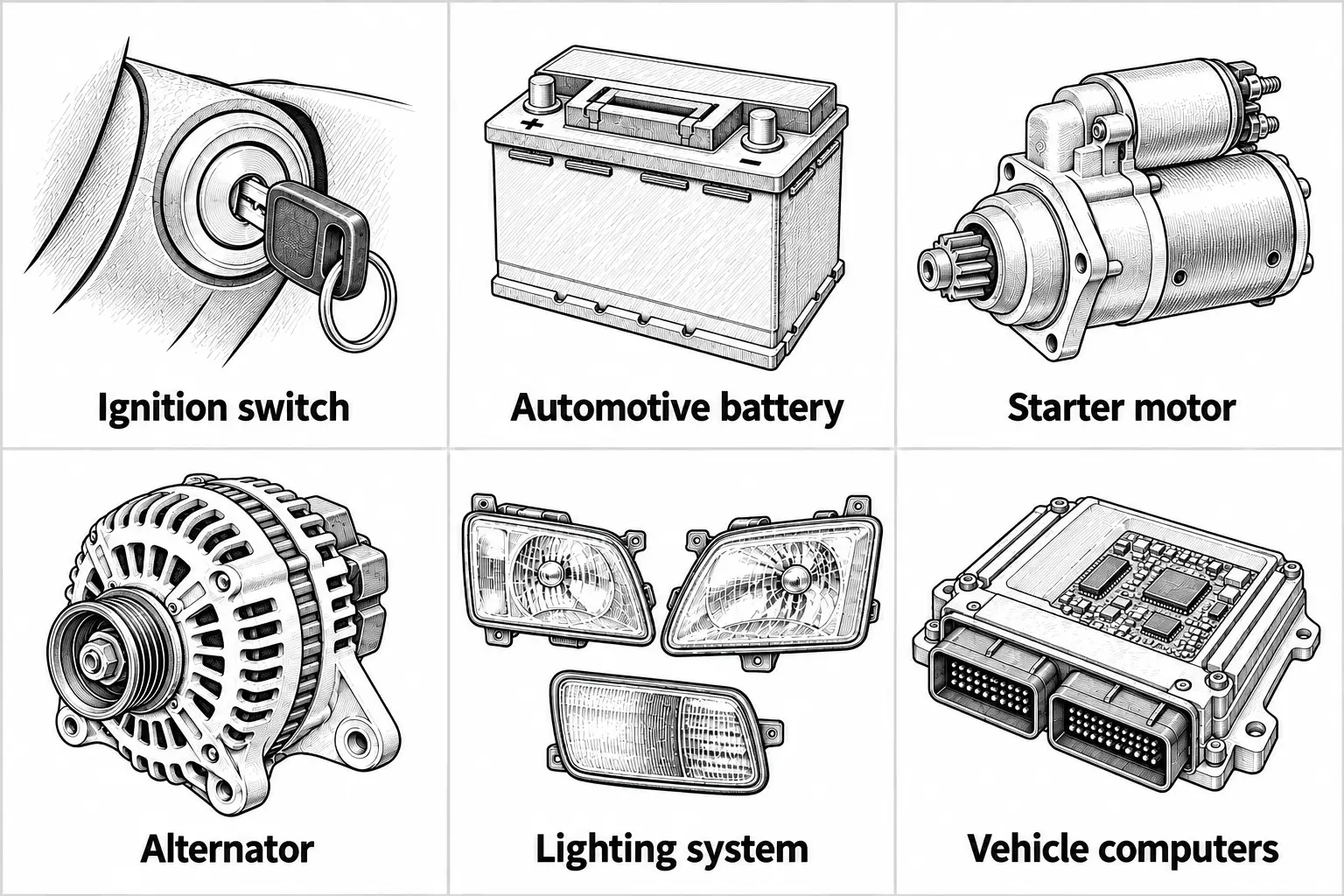
| Component | Description |
|---|---|
| Ignition switch | A switch that completes the circuit between the battery and starter motor to begin the starting sequence. |
| Automotive battery | A device that converts stored chemical energy to electrical energy to start a vehicle’s engine and provide power to its electrical systems. |
| Starter motor | An electric motor that draws power from the battery to start a vehicle’s engine. |
| Alternator | A device that converts mechanical energy from the engine into electrical energy to recharge a vehicle’s battery and provide power to onboard systems. |
| Lighting | The system that provides all illumination for the car, including headlights, turn signals, and interior lights. |
| Vehicle computers | A vehicle’s computer-controlled systems, such as the dashboard, alarm systems, and safety systems. |
Flow
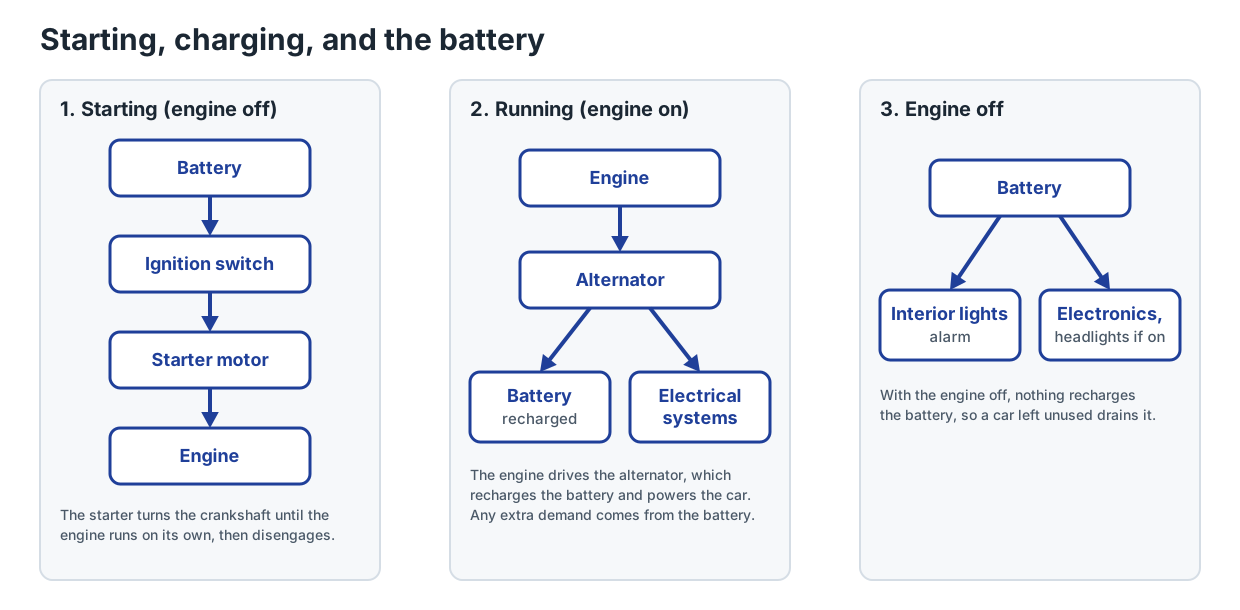
While the vehicle is running, the alternator converts mechanical energy from the engine into electrical energy. This generated power recharges the battery and supplies electricity to the vehicle’s electrical systems. If the vehicle’s electrical demand exceeds what the alternator can provide, the battery will temporarily supply the additional energy needed.
When the engine is not running, the battery supplies power to the systems that remain active, such as a vehicle’s interior lights and alarm systems. It can also provide power to onboard electronics and headlights, if turned on. If the vehicle sits unused for too long, the battery can lose its charge, since the alternator has no opportunity to recharge it. This is why a car that hasn’t been driven in a while may need its battery jump-started or even replaced. Batteries will also naturally lose charge over time and typically need to be replaced every three to five years, depending on the vehicle.