



Gastrointestinal and reproductive systems
Common gastrointestinal conditions
Gastroesophageal reflux disease (GERD)
- Description: Backflow of stomach acid into the esophagus due to a weakened lower esophageal sphincter
- Symptoms: Heartburn, regurgitation, chest pain, difficulty swallowing
- Heartburn from GERD tends to feel like a burning sensation that may travel to the throat, whereas a heart attack usually feels like pressure, tightness or squeezing that may radiate toward the left shoulder, arm and neck
- PT implications: avoid exercises that increase intra-abdominal pressure; encourage upright positions after eating
- Fatty foods, caffeinated drinks, chocolate, alcohol, mint, spicy dishes and acidic foods such as tomatoes and oranges can trigger or worsen symptoms in some people with GERD
Peptic ulcer disease (PUD)
- Description: Open sores in the stomach or duodenal lining, often caused by H. pylori infection or NSAIDs
- Symptoms: Epigastric pain, nausea, bloating, bloody stool (if severe)
- PT implications: monitor for signs of GI bleeding (dark stool, fatigue, pallor)
Irritable bowel syndrome (IBS)
- Description: Functional GI disorder with chronic abdominal pain and altered bowel habits (diarrhea, constipation, or both)
- Symptoms: Cramping, bloating, diarrhea, constipation, mucus in stool
- PT implications: stress management, exercise to regulate bowel motility
- Weight loss, rectal bleeding, nocturnal diarrhea, and iron deficiency anemia are red flags that call for more intensive testing in a patient with suspected IBS, and inflammatory bowel disease has to be excluded.
Crohn’s disease
- Description: Chronic inflammation of any part of the GI tract, often the small intestine
- Symptoms: Abdominal pain, diarrhea, weight loss, fatigue, malnutrition
- PT implications: address fatigue, joint pain, and osteoporosis risks due to long-term steroid usage for disease management.
Ulcerative colitis
- Description: Chronic inflammation and ulcers in the colon and rectum
- Symptoms: Bloody diarrhea, urgency, abdominal cramping, weight loss
- PT implications: monitor for dehydration, anemia, and musculoskeletal complications
- Ulcerative colitis increases the chance of getting colorectal cancer, and so does Crohn’s disease in the large intestine.
The following table compares Crohn’s disease and ulcerative colitis by location, lesion pattern, and hallmark presentation.
| Feature | Crohn’s disease | Ulcerative colitis |
|---|---|---|
| Location | Any part of the GI tract, often the terminal ileum | Colon and rectum only |
| Lesion pattern | Transmural, skip lesions | Continuous mucosal inflammation |
| Hallmark presentation | Weight loss, malabsorption | Bloody diarrhea, urgency |
Diverticulitis
- Description: Infection or inflammation of diverticula (pouches in the colon wall)
- Symptoms: Lower left quadrant pain, fever, nausea, bowel habit changes
- PT implications: avoid increased intra-abdominal pressure (e.g., Valsalva maneuver)
Celiac disease
- Description: Autoimmune disorder triggered by gluten, leading to villous atrophy in the small intestine
- Symptoms: Malabsorption, diarrhea, bloating, fatigue, weight loss
- PT implications: monitor for signs of malnutrition, osteoporosis, and neurological symptoms (tingling, numbness)
Hepatitis (A, B, C, D, E)
- Description: Inflammation of the liver, often viral
- Symptoms: Jaundice, fatigue, dark urine, nausea, right upper quadrant pain
- PT implications: energy conservation techniques, avoid strenuous exercise during active infection
Cirrhosis
- Description: Chronic liver disease with fibrosis and impaired liver function
- Symptoms: Jaundice, ascites, hepatomegaly, fatigue, confusion (hepatic encephalopathy)
- PT implications: watch for bruising, bleeding, and fall risk due to balance deficits
Pancreatitis
- Description: Inflammation of the pancreas, often due to gallstones or alcohol abuse
- Symptoms: Severe epigastric pain radiating to the back, nausea, vomiting
- PT implications: monitor for signs of multi-organ failure, avoid activities that increase abdominal pressure
GI medical management and PT interventions
- Ostomy precautions: protect the stoma and surrounding skin, support the pouching system before coughing or transferring, and avoid heavy lifting and Valsalva maneuvers in the early postoperative period.
- Bowel program: schedule toileting at a consistent time each day, often after a meal to take advantage of the gastrocolic reflex; use upright or seated positioning; and ensure adequate fluid, fiber, and activity to support motility.
- Low-fiber diet: may be recommended temporarily during a flare-up of irritable bowel syndrome, diverticulitis, Crohn disease or ulcerative colitis, and sometimes after intestinal surgery; a person with a narrowed intestine (stricture) or obstruction may need to limit fiber long-term.
- Reflux positioning: elevate the head of the bed and avoid head-down (Trendelenburg) positions after meals, in addition to staying upright after eating.
Adverse GI effects of PT interventions
Interventions aimed at other systems can provoke GI problems:
- Head-down postural drainage: head-down tilt can increase reflux episodes and is considered inappropriate with reflux. The patient shouldn’t eat in the hour before airway clearance, and the PT may switch to modified positions without head-down tilt.
- Exercise soon after meals: strenuous exercise such as running provokes reflux, and it is worse after eating; most reflux occurs within 3 hours of a meal, so schedule vigorous exercise away from meals.
- Abdominal strain: heavy lifting, crunches, and Valsalva raise intra-abdominal pressure. After abdominal surgery or hernia repair they’re avoided until the surgeon clears them (commonly about 4 weeks), while daily walking is encouraged.
- Immobility: bed rest slows peristalsis and leads to constipation, and moving after surgery helps prevent ileus, so getting the patient up and walking supports bowel function.
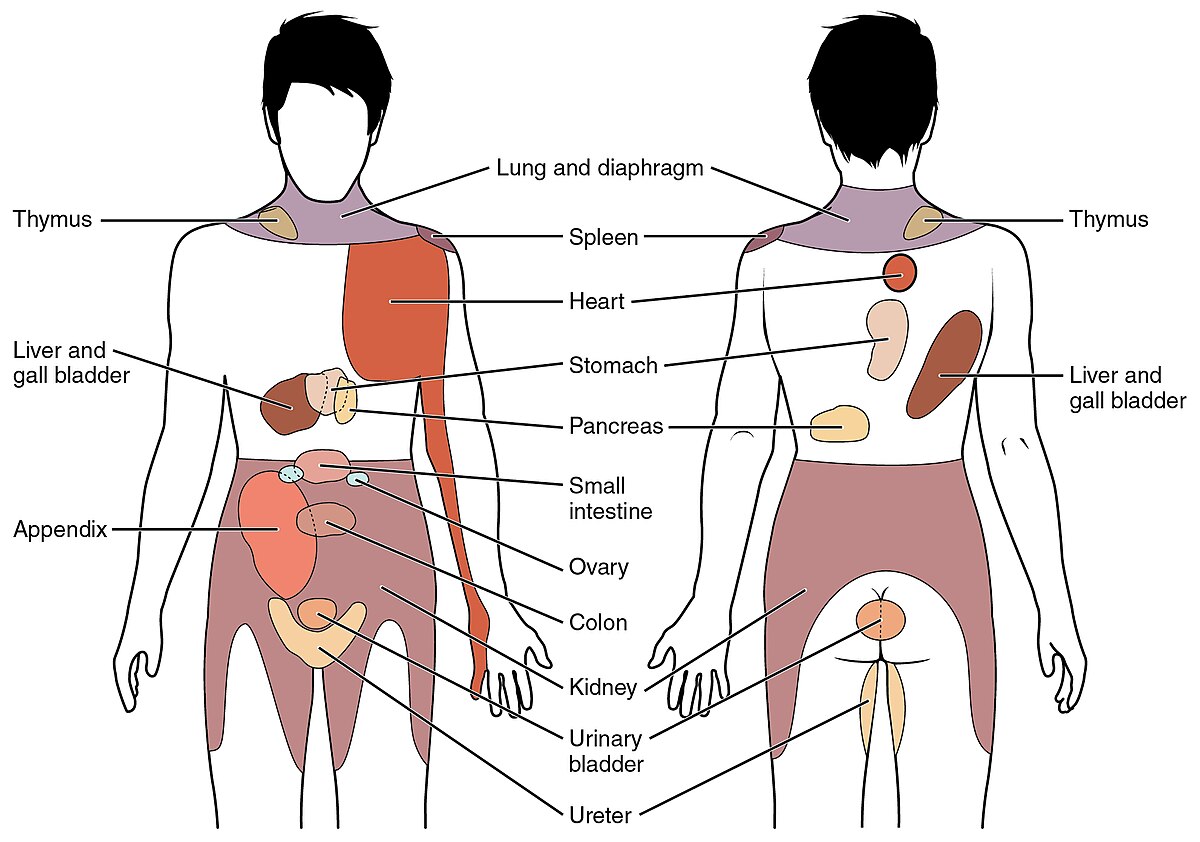
Key referred pain sites
Key clinical patterns
- Peptic ulcers → Epigastric pain that may radiate to the back
- Pancreatitis → Pain in the mid-back and left shoulder
- Gallbladder issues (cholecystitis, gallstones) → Right shoulder, right upper quadrant pain, worsens after fatty meals
- Appendicitis → Periumbilical pain progressing to the right lower quadrant (McBurney’s point)
- Hepatic (liver) issues → Right upper quadrant pain, right shoulder pain, jaundice may be present
- Esophagus → mid chest, mid-back
- Stomach → epigastric region, left upper quadrant, mid-back
- Small intestine → periumbilical region
- Large intestine → lower abdomen, sacral region
- Rectum → sacral region, perineum
Reproductive system
Male reproductive system
Anatomy and physiology
- Primary structures: Testes, epididymis, vas deferens, seminal vesicles, prostate gland, urethra, and penis
- Function: Produces sperm and male sex hormones (testosterone)
Common male reproductive disorders
Benign prostatic hyperplasia (BPH)
- Non-cancerous enlargement of the prostate
- Becomes more common with age, affecting about half of men in their 50s and 80 to 90% of men in their 70s and 80s
- Symptoms: Urinary frequency, nocturia, weak stream, incomplete bladder emptying
- Treatment: Medications (alpha-blockers), surgery if severe
Prostatitis
- Inflammation of the prostate, often bacterial
- Symptoms: Painful urination, pelvic pain, flu-like symptoms
- Treatment: Antibiotics, anti-inflammatories
Prostate cancer
- Most common cancer in men, excluding skin cancer
- Symptoms: Often asymptomatic early, later include urinary dysfunction and bone pain (metastasis)
- Treatment: Surgery, radiation, hormone therapy
- PT implications: new or worsening low back or bone pain may indicate metastasis - report it to the PT.
Erectile dysfunction
- Inability to achieve/maintain an erection
- Causes: Vascular disease, diabetes, psychological factors
- Treatment: Medications, lifestyle modifications
Testicular cancer
- Most common in men 15-35 years
- Symptoms: Painless testicular lump, swelling
- Treatment: Surgery (orchiectomy), chemotherapy, radiation
Female reproductive system
Anatomy and physiology
- Primary structures: Ovaries, fallopian tubes, uterus, cervix, vagina, external genitalia
- Function: Produces eggs, sex hormones (estrogen, progesterone), and supports fetal development during pregnancy
Common female reproductive disorders
Polycystic ovarian syndrome (PCOS)
- Hormonal disorder causing irregular ovulation, excess androgens, and ovarian cysts
- Symptoms: Irregular periods, infertility, insulin resistance, and hirsutism, a condition characterized by excessive hair growth in women in a male-pattern distribution.
- Treatment: Hormonal therapy, weight management, insulin sensitizers
Endometriosis
- Growth of endometrial tissue outside the uterus
- Symptoms: Pelvic pain, dysmenorrhea, infertility
- Treatment: Pain management, hormonal therapy, surgery
- PT implications: pelvic or low back pain can mimic musculoskeletal pain - report new, cyclical, or unexplained pelvic or low back pain to the supervising PT.
Uterine fibroids
- Non-cancerous tumors of the uterus
- Symptoms: Heavy menstrual bleeding, pelvic pain, infertility
- Treatment: Hormonal therapy, surgery (hysterectomy, myomectomy)
Pelvic inflammatory disease (PID)
- Infection of the female reproductive organs (often due to sexually transmitted diseases)
- Symptoms: Pelvic pain, fever, abnormal vaginal discharge
- Treatment: Antibiotics, hospitalization if severe
- PT implications: pelvic or low back pain can mimic musculoskeletal pain - report new, cyclical, or unexplained pelvic or low back pain (or fever with pelvic pain) to the supervising PT.
Ovarian cancer
- Often detected late because early symptoms are vague and nonspecific
- Symptoms: Abdominal bloating, pelvic pain, urinary urgency
- Treatment: Surgery, chemotherapy
Breast cancer
- Most common cancer in women, excluding skin cancer
- Risk factors: Family history, hormone exposure
- Symptoms: Lump, nipple changes, skin dimpling
- Treatment: Surgery, chemotherapy, radiation, hormone therapy
Pregnancy considerations for physical therapy
Physiological changes during pregnancy
Musculoskeletal changes
- Increased lumbar lordosis and anterior pelvic tilt → low back pain
- Increased ligamentous laxity due to Relaxin hormone → joint instability, risk of injury
- Widening of the pelvis → sacroiliac (SI) joint pain, pubic symphysis dysfunction
- Diastasis recti (separation of the rectus abdominis)
Cardiovascular changes
- Increased blood volume (40-50%) and heart rate
- Decreased blood pressure in the first and second trimesters (due to vasodilation)
- Risk of supine hypotensive syndrome (compression of the inferior vena cava)
Respiratory changes
- Increased oxygen consumption
- Decreased lung expansion due to elevated diaphragm → shortness of breath
Metabolic changes
- Increased caloric demands.
- Gestational diabetes risk due to insulin resistance.
Other changes
- Increased urinary frequency due to bladder compression
- Weight gain (25-35 lbs is the normal range)
- Hormonal changes (progesterone, estrogen, relaxin) affect mood, joints, and metabolism
- De Quervain’s and carpal tunnel syndrome can both occur during pregnancy due to hormonal changes and fluid retention, which increase pressure on the nerves and tendons in the wrist.
Safe exercise guidelines for pregnancy
- Mode: Walking, swimming, cycling, low-impact aerobics.
- Intensity: Moderate (should be able to talk while exercising)
- Duration: 150 minutes per week (30 min/day, most days)
- Avoid:
- Supine exercises after 20 weeks (risk of supine hypotensive syndrome)
- Overheating (hot yoga, saunas).
- Valsalva maneuver (holding breath during exertion)
- High-impact or contact sports
Contraindications to exercise during pregnancy
- Absolute:
- Incompetent cervix
- Placenta previa (after 26 weeks)
- Preeclampsia
- Multiple gestation with risk of preterm labor
- Ruptured membranes
- Persistent vaginal bleeding
- Preterm labor
- Hemodynamically significant heart disease
- Restrictive lung disease
- Relative:
- Anemia (severe anemia is an absolute contraindication)
- Unevaluated maternal cardiac arrhythmia
- Chronic bronchitis
- Poorly controlled diabetes or hypertension
Postpartum considerations
- Pelvic floor dysfunction
- Interventions: Kegels, biofeedback, bladder retraining
- Postural syndromes
- Due to breastfeeding, baby-carrying
- Interventions: Strengthening of the upper back, postural correction, stretching
- Return to exercise
- Clearance from physician (typically 6 weeks post-vaginal, 8+ weeks post-C-section)
- Progressive return to impact activities