



Introduction to spreads
Investors use spreads for many reasons. Often, the type of spread reflects a bullish or bearish market view. You’ll see the intent behind these strategies more clearly in the next few chapters.
There are two broad categories of spreads:
- Call spreads
- Put spreads
Let’s look at an example of each.
An example of a call spread:
Long 1 ABC Jan 60 call
Short 1 ABC Jan 70 call
When an investor is long one call and short another call at the same time, they’ve created a call spread. The two options can have different strike prices, different expirations, or both. As long as you’re long a call and short a call simultaneously, it’s a call spread.
Next, an example of a put spread:
Long 1 ABC Mar 40 put
Short 1 ABC Jun 40 put
When an investor is long one put and short another put at the same time, they’ve created a put spread. Again, the two options can have different strike prices, different expirations, or both. As long as you’re long a put and short a put simultaneously, it’s a put spread.
The differences in strike prices and/or expirations across the two legs determine how a spread is classified. There are three spread classifications:
- Vertical (price) spreads
- Horizontal (calendar/time spreads)
- Diagonal spreads
First, let’s start with a vertical (price) spread:
Long 1 ABC Jan 60 call
Short 1 ABC Jan 70 call
A vertical spread exists when the two contracts have different strike prices but the same expiration. Here, the strike prices differ ($60 and $70), but both options expire in January.
Vertical spreads are also called price spreads. That name fits because the “spread” (difference) is in the strike prices.
Next, let’s look at a horizontal (calendar/time) spread:
Long 1 ABC Mar 40 put
Short 1 ABC Jun 40 put
A horizontal spread exists when the two contracts have different expirations but the same strike price. Here, the expirations differ (March and June), but both options have the $40 strike.
Horizontal spreads are also known as time spreads or calendar spreads. Again, the “spread” (difference) is in the expirations.
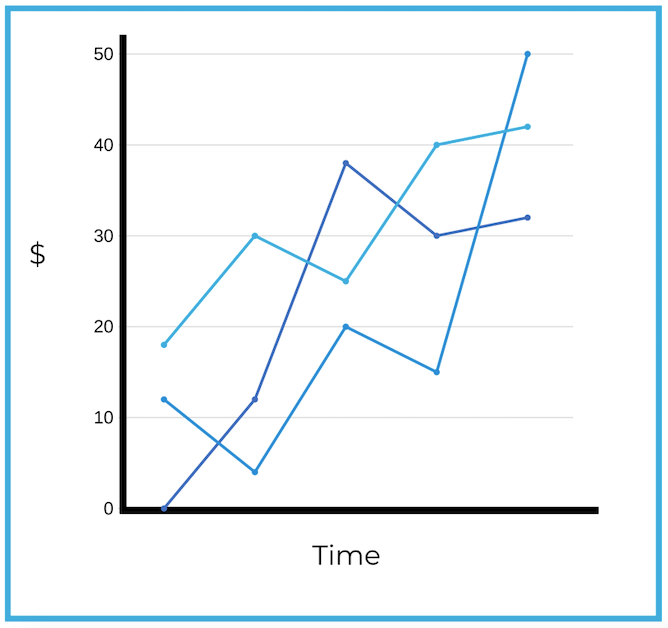
If you’re wondering where the terms come from, vertical (up and down) and horizontal (side to side) relate to a standard price chart:
- The vertical axis shows price
- The horizontal axis shows time
Last, let’s look at a diagonal spread:
Long 1 ABC Sep 45 call
Short 1 ABC Nov 55 call
A diagonal spread exists when the two contracts have different expirations and different strike prices. Here, the expirations differ (September and November) and the strike prices differ ($45 and $55).
It is unlikely you’ll encounter any math-related test questions on diagonal spreads, but you may be asked to identify them.