


Achievable logoAchievable logo
AP Macroeconomics
Sign in
Sign up
Purchase
Textbook
Practice exams
Support
How it works
Exam catalog
Mountain with a flag at the peak
Textbook
Example
1. Core economic concepts
2. Measurement of economic performance
3. Modeling of income and prices
4. Financial sector
4.1 Closed economy loanable funds market
4.2 Macroeconomic finance
4.3 Financial assets and markets
4.4 Introduction to money
4.5 Simple money market
4.6 Banking and money supply expansion
4.7 Monetary policy
4.8 Reserves market
4.9 Implementation of monetary policy
5. Long-run consequences of stabilization policy
6. Open economy
Achievable logoAchievable logo
4.2 Macroeconomic finance
Achievable AP Macroeconomics
4. Financial sector
Our AP Macroeconomics course is currently in development and is a work-in-progress.

Macroeconomic finance

9 min read
Font
Discuss
Share
Feedback

Finance is the management of money, banking, credit and investments. In this subchapter we present finance terminology before moving on to outline key financial markets. This is the start of developing a slightly deeper understanding of the loanable funds market.

Savings today, wealth tomorrow

Savings and investment each represent the outcome of a single period and can be positive or negative in most individual contexts. Negative savings is just another way of representing borrowing, while negative investment could be achieved by canceling projects to reduce spending or selling physical capital or financial instruments.

In contrast, we are sometimes concerned with the accumulated value of savings and that is wealth. In a world without interest, wealth would be found by adding up all past values of savings. More realistically wealth can be built and in some cases debt can be accumulated through the use of assets.

An asset can refer to either a resource that provides some sort of economic benefit or to a legal claim to future income. Physical assets are the prime example of the first definition, such as physical capital (K) being used for production. Financial assets are the main example of the second and represent another party having an obligation to you, most commonly ownership or future payments.

A liability represents the reverse, when you have an obligation to someone else, such as a schedule of payments or delivery of goods. Wealth is usually calculated as the value of assets minus the value of any liabilities. So what is owed to you minus what you owe.

The best examples of macroeconomic wealth are sovereign wealth funds. These are state-run investment funds that are invested for various long term objectives. Some of them are used to support current spending and built long-term wealth, some serve as government pension funds to provide universal retirement and some are used only to fight recessions. The largest of these, Norway and Saudi Arabia, mainly raise funds from sales of oil. In some countries money comes from sales of minerals or other natural resources.

The US federal government has aggregate debt rather than wealth, that is called the national debt. It is the equal to adding up of past government budget deficits and surpluses with adjustments for interest payments. This will be discussed more later on.

Some US states have sovereign wealth funds. The clearest example of this is the Alaska Permanent Fund, which invests revenues from oil and mining and makes yearly dividend payments to Alaska residents.

Interest and Returns

The original amount invested or borrowed is called principal. With simple interest, interest is calculated every period on the principal only. Put another way, simple interest does not have compounding. In real life simple interest is most commonly used for car loans and short term lending, items such as certificates of deposit (CDs), consumer financing with terms of less than a year, and contracts offering discounts for early payment.

With compound interest, each time interest is calculated based on all previous interest as well as the original principal. If interest is compounded more frequently, say monthly instead of quarterly, that will lead to a higher amount of money at the end of the year. Compound interest is used for many interest earning bank accounts, as well as mortgages and long-term loans.

Time value of money

The interest rate is directly connected to the opportunity cost of spending money today versus saving. When we evaluate trade-offs comparing money in different time periods, we need to adjust payments in different periods so that they are comparable. In essence we can focus on comparing values today or values in some future period.

For a given value today (time 0), we calculate the value next year (time 1) by projecting the return forwards as if we had invested that money in a bank account earning interest at the end of the period.

So,

FVtomorrow​=PVtoday​×(1+r),$​

which is an example of a simple interest calculation.

If we switch how we view this equation, we divide by $(1+r)$ to get the present value of a future payment.

PVtoday​=(1+r)FVtomorrow​​.$​

If we want to consider any further period, we follow the same logic and the term in the denominator becomes raised to the $t$ power. You are NOT responsible for using this in any calculations, it just may be a helpful way to keep the concept in mind.

PV0​=(1+r)tFVt​​​

From this we get two key concepts.

  1. Increasing the interest rate reduces today’s value of a future payment.
  2. Looking at equal sized payments, for any positive interest rate a payment sooner has a higher value than a payment later. If the interest rate is negative, then future payments are worth more.

Also recall the Fisher equation,

real interest ratenominal interest rate​=nominal interest rate−inflation rateor=real interest rate+inflation rate.​

Combining this with our understanding of the relationship between interest rates and future payments, we have two additional results.

  1. Higher inflation reduces real returns and the value of future payments
  2. If higher inflation is expected, markets will require higher nominal interest rates

Other determinants of asset quality

In our loanable funds market we have a single interest rate for all saving and borrowing, but in practice savers earn lower rates and borrowers pay higher rates, with financial intermediaries making normal profits due to the difference.

Other than the return of an asset, there are two more main determinants of asset quality.

Definitions
Liquidity
The ease of turning an asset into usable cash. This includes speed, as well as any transaction costs or losses incurred.
Term (duration)
The length of time funds are committed to an investment. This connects to liquidity and returns.
Risk
The possibility that an outcome will be different than the expected outcome.

Liquidity

Liquidity is the simplest of these. Investments that are easier to turn into cash, either in terms of speed or discount taken on face value are more liquid. To simplify, let us avoid thinking about discounts and just think about speed of sale. All else equal, an investment that is more liquid is more desirable.

The duration of term of an asset is a special case of liquidity. Assets with a longer term are less liquid, and either cannot be solid before maturity or may need to be sold at a loss. Because of this, assets that have a longer time to maturity will generally need to offer higher rates than assets that are otherwise equal. This is simply due to increased restrictions incurring a higher opportunity cost versus alternatives.

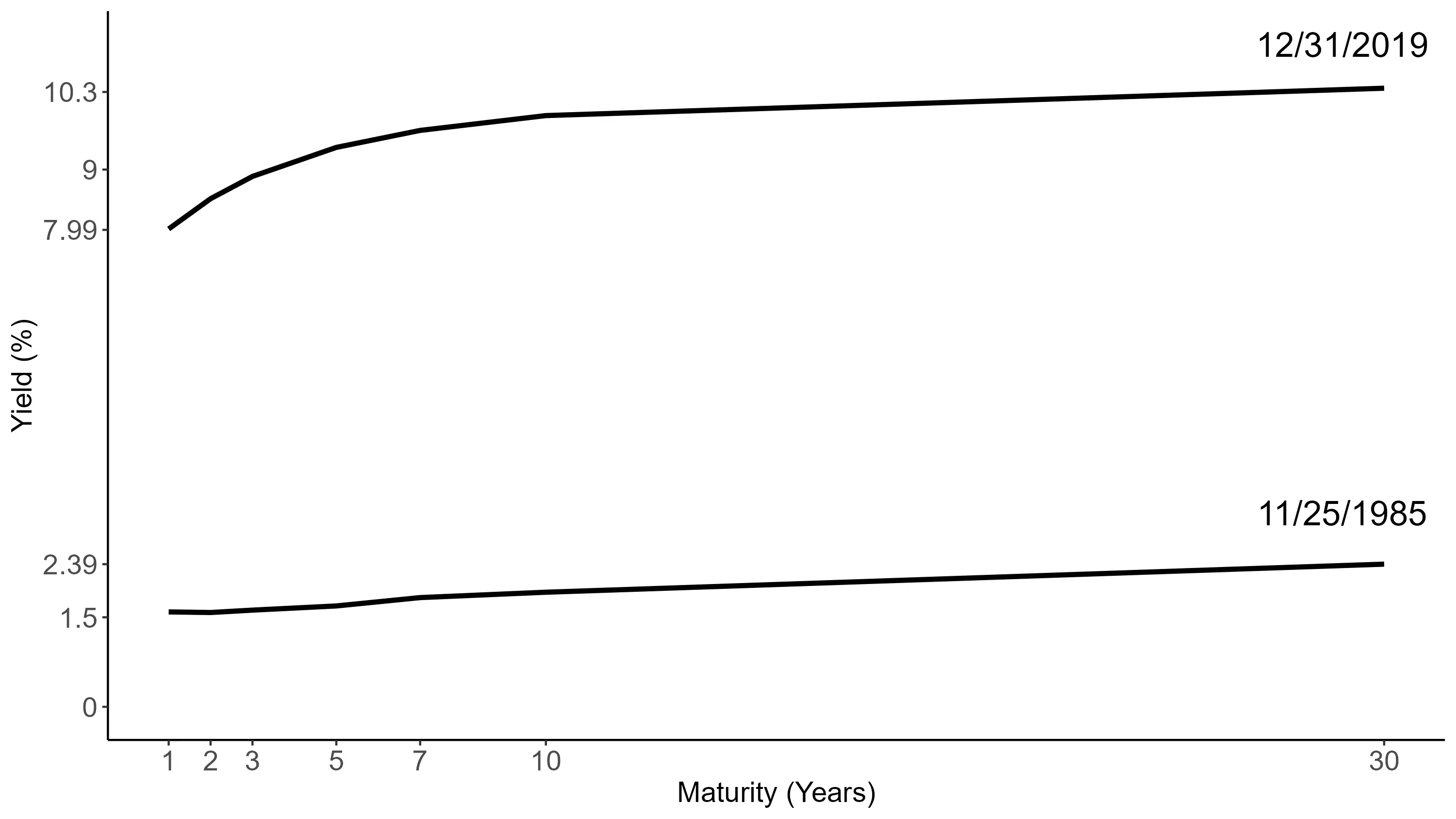
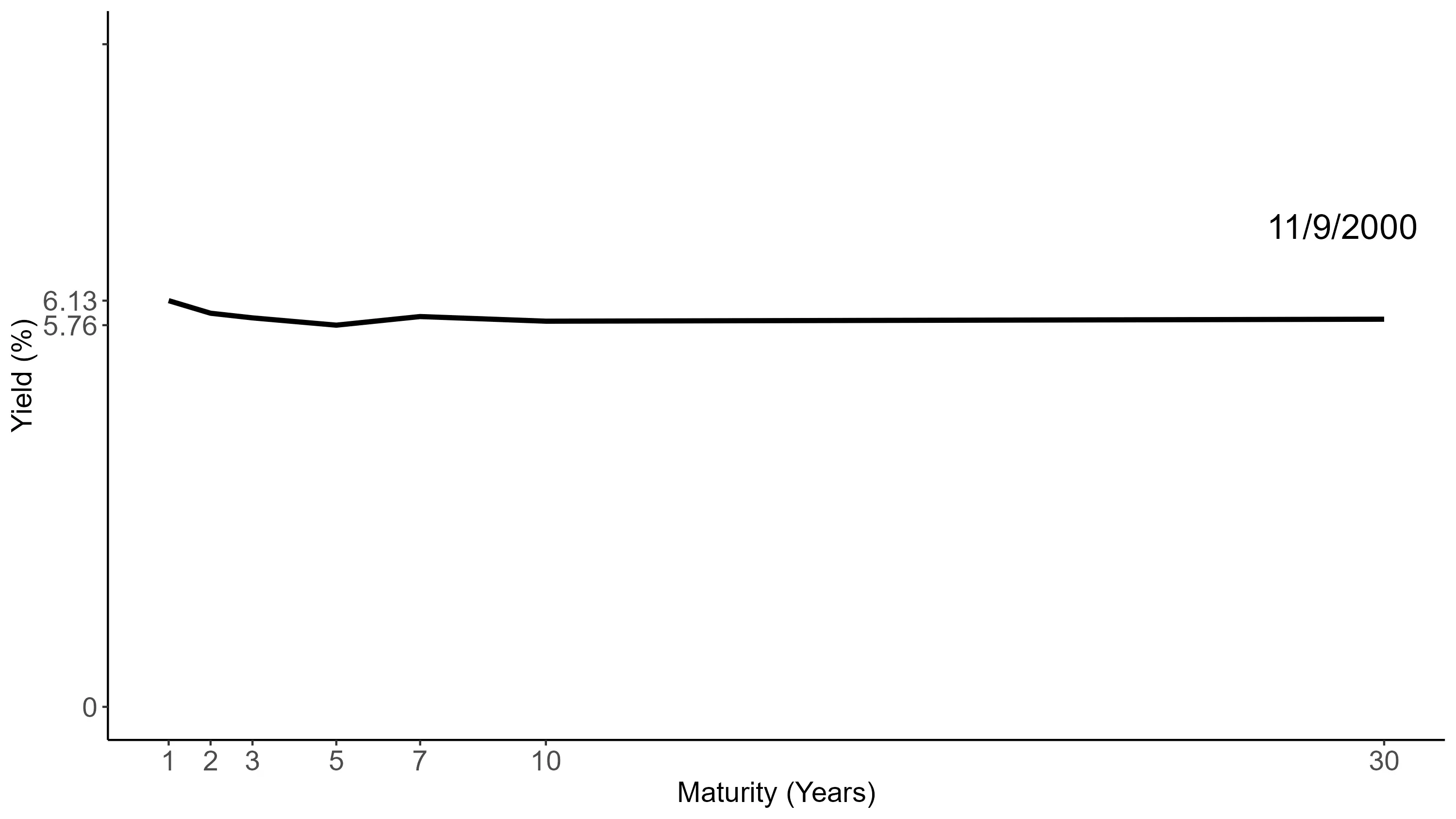
Any increase in interest rates due to the term is referred to as the term premium. Deviations from this are connected to expectations about interest rates, and are not of major concern for the AP exam. This concept can be seen in the yield curve, a chart which shows interest rates for federal government bonds of different duration in a single day.

[make yield curve chart]

Risk

Risk for investments is primarily about how certain a return is, and is relative to whatever is considered the risk-free investment. In the US this is short term government debt. For the same duration, safer assets will usually offer lower interest rates and riskier assets will usually offer higher rates. The increase in the interest rate of an asset over the risk-free rate due to higher risk is the risk premium.

Also within risk the the probability of default. Default is the failure to make a payment or otherwise meet a contractual obligation of an asset. Default can be thought of as bankruptcy for an asset. Sometimes it leads to a total loss, other times there is a renegotiation for a lower payment.

Risk can be broadly categorized as systemic risk or idiosyncratic risk. Systemic risks are risks that affect an entire economy, a region or even the entire world. Examples of systemic risk are financial crises, severe recessions, natural disasters or war. This is opposed to idiosyncratic risk, risk that only impacts a piece of the economy. Examples include anything that affects individual investments, companies, industries or any other piece of a country’s economic activity.

System risks are important for macroeconomics, while idiosyncratic risks are mostly important for microeconomics. Because of this, we want to focus on examples that affect the financial system, such as the Global Financial Crisis that occurred in 2008 following the bankruptcy of the investment firm Lehman Brothers. This led to a deepening and spread of the Great Recession, contributing to it being a global recession.

Idiosyncratic risk can be managed through diversification, investing in assets that have different risk profiles, or through the purchase of insurance. Insurance is the paying of a fee to receive payments in the case of financial losses due to specified reasons.

Risk for consumers is reflected through credit scores, such as FICO which ranges from 300-850. Risk for bonds is determined by credit ratings, determined by agencies such as Moody’s, with AAA often representing the lowest chance of default.

The prime rate refers to the interest rate that banks charge their most creditworthy customers, for example large corporations. In real life, customers with lower credit scores will usually be charged a higher rate, to reflect increased risk of a lack of repayment.

We can think of the prime rate as being equivalent to the real interest rate in our loanable funds market. The prime rate is usually directly linked to the Fed Funds Rate, the rate set by the Federal Reserve as the main tool of monetary policy.

Savings, Wealth, and Assets

  • Wealth = accumulated savings; calculated as assets minus liabilities
  • Asset: resource providing economic benefit or legal claim to future income
  • Liability: obligation owed to someone else (e.g., scheduled payments)

Sovereign Wealth Funds

  • State-run investment funds for long-term objectives (pensions, recession buffers, etc.)
  • Examples: Norway, Saudi Arabia (oil-funded); Alaska Permanent Fund (US example)
  • US federal government carries aggregate debt (national debt) rather than wealth

Simple vs. Compound Interest

  • Simple interest: calculated on principal only, no compounding
  • Compound interest: calculated on principal plus all previously accrued interest
  • More frequent compounding → higher ending balance

Time Value of Money

  • Future value: FV=PV×(1+r)
  • Present value: PV=(1+r)tFV​
  • Higher interest rate → lower present value of future payment; sooner payments worth more at positive rates

Fisher Equation

  • nominal rate=real rate+inflation rate
  • Higher expected inflation → higher required nominal rates; reduces real returns

Financial Intermediaries

  • Bridge gap between savers (earn lower rates) and borrowers (pay higher rates)
  • Profit from the rate difference (spread)

Liquidity and Term

  • Liquidity: ease/speed of converting asset to cash
  • Longer-term assets are less liquid → require higher rates (term premium)
  • Yield curve: chart of government bond rates across different maturities

Risk and Risk Premium

  • Risk-free rate: US short-term government debt benchmark
  • Risk premium: extra interest rate above risk-free rate for riskier assets
  • Default: failure to meet a contractual payment obligation

Systemic vs. Idiosyncratic Risk

  • Systemic risk: affects entire economy (e.g., 2008 Global Financial Crisis)
  • Idiosyncratic risk: affects individual firms or industries; manageable via diversification or insurance

Credit and Prime Rate

  • Credit scores (e.g., FICO 300–850) reflect consumer risk; bond risk measured by credit ratings (e.g., Moody’s AAA)
  • Prime rate: rate charged to most creditworthy borrowers; tied to the Fed Funds Rate
Previous
Next  | 4.3 Financial assets and markets
All rights reserved ©2016 - 2026 Achievable, Inc.

Macroeconomic finance

Finance is the management of money, banking, credit and investments. In this subchapter we present finance terminology before moving on to outline key financial markets. This is the start of developing a slightly deeper understanding of the loanable funds market.

Savings today, wealth tomorrow

Savings and investment each represent the outcome of a single period and can be positive or negative in most individual contexts. Negative savings is just another way of representing borrowing, while negative investment could be achieved by canceling projects to reduce spending or selling physical capital or financial instruments.

In contrast, we are sometimes concerned with the accumulated value of savings and that is wealth. In a world without interest, wealth would be found by adding up all past values of savings. More realistically wealth can be built and in some cases debt can be accumulated through the use of assets.

An asset can refer to either a resource that provides some sort of economic benefit or to a legal claim to future income. Physical assets are the prime example of the first definition, such as physical capital (K) being used for production. Financial assets are the main example of the second and represent another party having an obligation to you, most commonly ownership or future payments.

A liability represents the reverse, when you have an obligation to someone else, such as a schedule of payments or delivery of goods. Wealth is usually calculated as the value of assets minus the value of any liabilities. So what is owed to you minus what you owe.

The best examples of macroeconomic wealth are sovereign wealth funds. These are state-run investment funds that are invested for various long term objectives. Some of them are used to support current spending and built long-term wealth, some serve as government pension funds to provide universal retirement and some are used only to fight recessions. The largest of these, Norway and Saudi Arabia, mainly raise funds from sales of oil. In some countries money comes from sales of minerals or other natural resources.

The US federal government has aggregate debt rather than wealth, that is called the national debt. It is the equal to adding up of past government budget deficits and surpluses with adjustments for interest payments. This will be discussed more later on.

Some US states have sovereign wealth funds. The clearest example of this is the Alaska Permanent Fund, which invests revenues from oil and mining and makes yearly dividend payments to Alaska residents.

Interest and Returns

The original amount invested or borrowed is called principal. With simple interest, interest is calculated every period on the principal only. Put another way, simple interest does not have compounding. In real life simple interest is most commonly used for car loans and short term lending, items such as certificates of deposit (CDs), consumer financing with terms of less than a year, and contracts offering discounts for early payment.

With compound interest, each time interest is calculated based on all previous interest as well as the original principal. If interest is compounded more frequently, say monthly instead of quarterly, that will lead to a higher amount of money at the end of the year. Compound interest is used for many interest earning bank accounts, as well as mortgages and long-term loans.

Time value of money

The interest rate is directly connected to the opportunity cost of spending money today versus saving. When we evaluate trade-offs comparing money in different time periods, we need to adjust payments in different periods so that they are comparable. In essence we can focus on comparing values today or values in some future period.

For a given value today (time 0), we calculate the value next year (time 1) by projecting the return forwards as if we had invested that money in a bank account earning interest at the end of the period.

So,

FVtomorrow​=PVtoday​×(1+r),$​

which is an example of a simple interest calculation.

If we switch how we view this equation, we divide by $(1+r)$ to get the present value of a future payment.

PVtoday​=(1+r)FVtomorrow​​.$​

If we want to consider any further period, we follow the same logic and the term in the denominator becomes raised to the $t$ power. You are NOT responsible for using this in any calculations, it just may be a helpful way to keep the concept in mind.

PV0​=(1+r)tFVt​​​

From this we get two key concepts.

  1. Increasing the interest rate reduces today’s value of a future payment.
  2. Looking at equal sized payments, for any positive interest rate a payment sooner has a higher value than a payment later. If the interest rate is negative, then future payments are worth more.

Also recall the Fisher equation,

real interest ratenominal interest rate​=nominal interest rate−inflation rateor=real interest rate+inflation rate.​

Combining this with our understanding of the relationship between interest rates and future payments, we have two additional results.

  1. Higher inflation reduces real returns and the value of future payments
  2. If higher inflation is expected, markets will require higher nominal interest rates

Other determinants of asset quality

In our loanable funds market we have a single interest rate for all saving and borrowing, but in practice savers earn lower rates and borrowers pay higher rates, with financial intermediaries making normal profits due to the difference.

Other than the return of an asset, there are two more main determinants of asset quality.

Definitions
Liquidity
The ease of turning an asset into usable cash. This includes speed, as well as any transaction costs or losses incurred.
Term (duration)
The length of time funds are committed to an investment. This connects to liquidity and returns.
Risk
The possibility that an outcome will be different than the expected outcome.

Liquidity

Liquidity is the simplest of these. Investments that are easier to turn into cash, either in terms of speed or discount taken on face value are more liquid. To simplify, let us avoid thinking about discounts and just think about speed of sale. All else equal, an investment that is more liquid is more desirable.

The duration of term of an asset is a special case of liquidity. Assets with a longer term are less liquid, and either cannot be solid before maturity or may need to be sold at a loss. Because of this, assets that have a longer time to maturity will generally need to offer higher rates than assets that are otherwise equal. This is simply due to increased restrictions incurring a higher opportunity cost versus alternatives.

Any increase in interest rates due to the term is referred to as the term premium. Deviations from this are connected to expectations about interest rates, and are not of major concern for the AP exam. This concept can be seen in the yield curve, a chart which shows interest rates for federal government bonds of different duration in a single day.

[make yield curve chart]

Risk

Risk for investments is primarily about how certain a return is, and is relative to whatever is considered the risk-free investment. In the US this is short term government debt. For the same duration, safer assets will usually offer lower interest rates and riskier assets will usually offer higher rates. The increase in the interest rate of an asset over the risk-free rate due to higher risk is the risk premium.

Also within risk the the probability of default. Default is the failure to make a payment or otherwise meet a contractual obligation of an asset. Default can be thought of as bankruptcy for an asset. Sometimes it leads to a total loss, other times there is a renegotiation for a lower payment.

Risk can be broadly categorized as systemic risk or idiosyncratic risk. Systemic risks are risks that affect an entire economy, a region or even the entire world. Examples of systemic risk are financial crises, severe recessions, natural disasters or war. This is opposed to idiosyncratic risk, risk that only impacts a piece of the economy. Examples include anything that affects individual investments, companies, industries or any other piece of a country’s economic activity.

System risks are important for macroeconomics, while idiosyncratic risks are mostly important for microeconomics. Because of this, we want to focus on examples that affect the financial system, such as the Global Financial Crisis that occurred in 2008 following the bankruptcy of the investment firm Lehman Brothers. This led to a deepening and spread of the Great Recession, contributing to it being a global recession.

Idiosyncratic risk can be managed through diversification, investing in assets that have different risk profiles, or through the purchase of insurance. Insurance is the paying of a fee to receive payments in the case of financial losses due to specified reasons.

Risk for consumers is reflected through credit scores, such as FICO which ranges from 300-850. Risk for bonds is determined by credit ratings, determined by agencies such as Moody’s, with AAA often representing the lowest chance of default.

The prime rate refers to the interest rate that banks charge their most creditworthy customers, for example large corporations. In real life, customers with lower credit scores will usually be charged a higher rate, to reflect increased risk of a lack of repayment.

We can think of the prime rate as being equivalent to the real interest rate in our loanable funds market. The prime rate is usually directly linked to the Fed Funds Rate, the rate set by the Federal Reserve as the main tool of monetary policy.

Key points

Savings, Wealth, and Assets

  • Wealth = accumulated savings; calculated as assets minus liabilities
  • Asset: resource providing economic benefit or legal claim to future income
  • Liability: obligation owed to someone else (e.g., scheduled payments)

Sovereign Wealth Funds

  • State-run investment funds for long-term objectives (pensions, recession buffers, etc.)
  • Examples: Norway, Saudi Arabia (oil-funded); Alaska Permanent Fund (US example)
  • US federal government carries aggregate debt (national debt) rather than wealth

Simple vs. Compound Interest

  • Simple interest: calculated on principal only, no compounding
  • Compound interest: calculated on principal plus all previously accrued interest
  • More frequent compounding → higher ending balance

Time Value of Money

  • Future value: FV=PV×(1+r)
  • Present value: PV=(1+r)tFV​
  • Higher interest rate → lower present value of future payment; sooner payments worth more at positive rates

Fisher Equation

  • nominal rate=real rate+inflation rate
  • Higher expected inflation → higher required nominal rates; reduces real returns

Financial Intermediaries

  • Bridge gap between savers (earn lower rates) and borrowers (pay higher rates)
  • Profit from the rate difference (spread)

Liquidity and Term

  • Liquidity: ease/speed of converting asset to cash
  • Longer-term assets are less liquid → require higher rates (term premium)
  • Yield curve: chart of government bond rates across different maturities

Risk and Risk Premium

  • Risk-free rate: US short-term government debt benchmark
  • Risk premium: extra interest rate above risk-free rate for riskier assets
  • Default: failure to meet a contractual payment obligation

Systemic vs. Idiosyncratic Risk

  • Systemic risk: affects entire economy (e.g., 2008 Global Financial Crisis)
  • Idiosyncratic risk: affects individual firms or industries; manageable via diversification or insurance

Credit and Prime Rate

  • Credit scores (e.g., FICO 300–850) reflect consumer risk; bond risk measured by credit ratings (e.g., Moody’s AAA)
  • Prime rate: rate charged to most creditworthy borrowers; tied to the Fed Funds Rate

More from Financial sector

  • Closed economy loanable funds market
  • Financial assets and markets
  • Introduction to money
  • Simple money market
  • Banking and money supply expansion