




Introduction
This group includes a wide variety of clinically important bacteria. They can cause infections ranging from gastroenteritis and pneumonia to hospital-acquired infections. Here, you’ll focus on USMLE-relevant features that help you make the correct diagnosis from a clinical vignette and confidently rule out close differentials.
Table 5.1 showing differentiating features of Gram negative bacilli
| Bacteria | Lactose Fermenter * | Motility | Oxidase Test | Capsule | Special Morphological Characters |
| E.coli | Yes | Motile | Negative | Some strains, capsulated will be more virulent. | |
| Klebsiella pneumoniae | Yes | Non-motile | Negative | Yes | Large, mucoid colonies |
| Proteus | No | Swarming motility | Negative | No | Pleomorphic, coccobacilli, fishy or seminal smell, urease positive |
| Enterobacter | Motile | Negative | Yes | Mucoid colonies | |
| Serratia | Yes, slowly | Motile | Negative | Yes | Red pigment |
| Citrobacter | Yes, slowly | Motile | Negative | Maybe present | |
| Vibrio cholerae | Yes, slowly | Darting motility | Positive | No | Curved, S shaped ## |
| Vibrio parahaemolyticus | No | Motile | Positive | Yes | Straight or curved, need high salt conc. |
| Vibrio vulnificus | Yes | Motile | Positive | Yes | Straight or curved, need high salt conc. |
| Vibrio alginolyticus | No | Motile | Positive | Yes | Straight or curved, need high salt conc. |
| Shigella | No *** | Non-motile | Negative | No | |
| Salmonella | No | Motile | Negative | No | Black colonies on some media** |
| Pseudomonas | No | Motile | Positive | No, but produce slime layer and biofilms | Produce bluish green pigment, fruity odor |
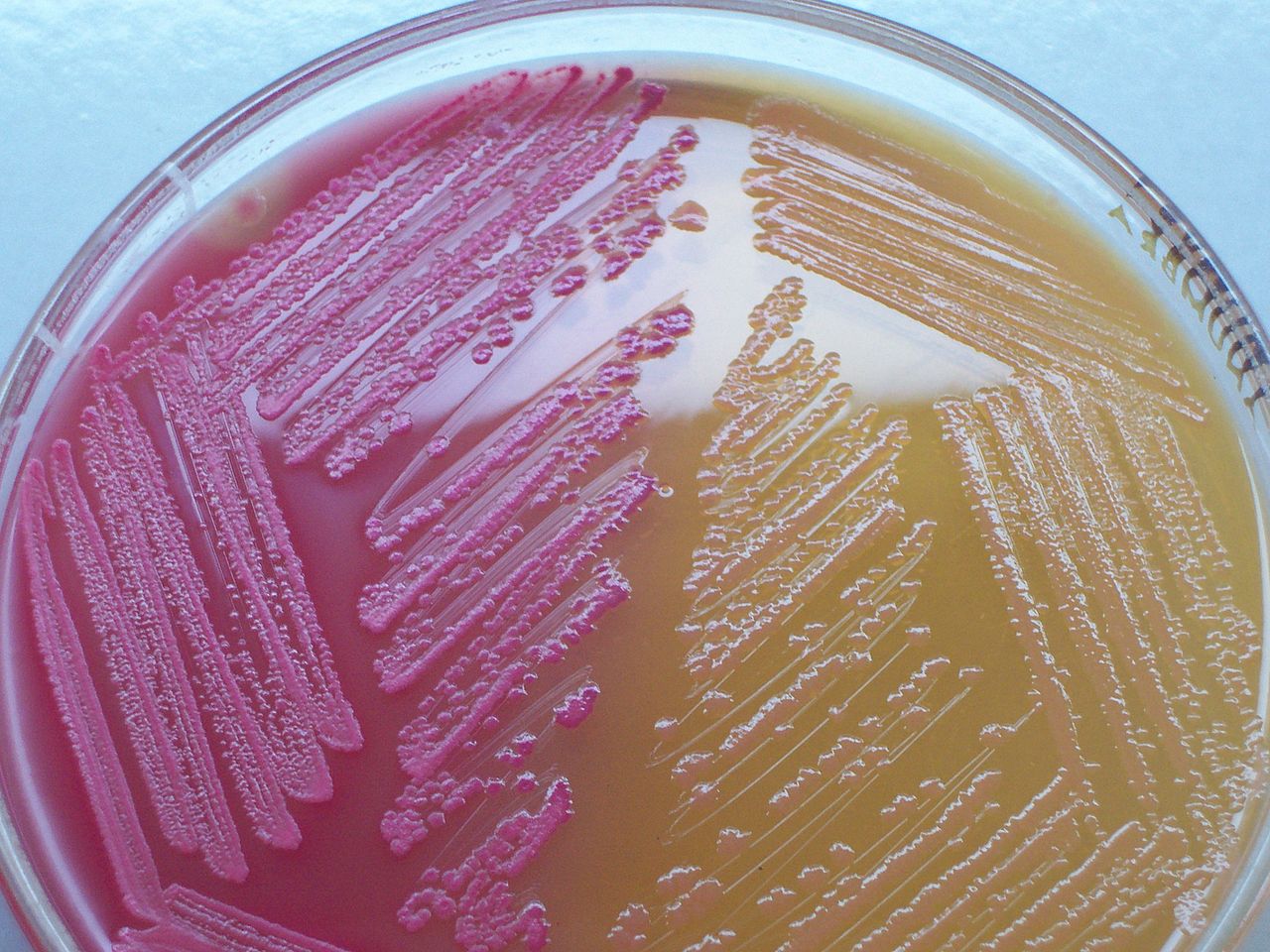
*Lactose fermenters will produce pink colonies on Mac Conkey’s agar. Slow lactose fermenters may initially appear colorless or faint pink on Mac Conkey’s agar, then become more pink over time due to late fermentation of lactose.
**Salmonella produce black colonies on H2S producing media such as TSI and Wilson and Blair media.
***All strains of Shigella are non-lactose fermenters except for Shigella sonnei, which is a late lactose fermenter.
Trick question: which is the other Gram negative, comma or S shaped bacillus? Hint: it is associated with Guillain Barre Syndrome!