



Pharmacodynamics and side effects
Introduction
Medications are powerful tools, but their effects aren’t limited to what’s written on the prescription label. Pharmacodynamics, the science of how drugs work in the body, explains how drugs produce their therapeutic and unwanted effects and why some people respond differently. From receptor binding to side effect profiles, understanding these mechanisms is crucial for NCLEX success and safe clinical practice.
This section focuses on real-world principles commonly tested on the NCLEX: how drugs act, what side effects to expect, and what nurses need to watch for when the line between therapy and toxicity begins to blur.
Learning objectives
By the end of this section, you should be able to:
- Define pharmacodynamics and explain how drugs interact with target sites
- Differentiate between desired effects, side effects, adverse effects, and toxicity
- Recognize drug classes associated with high-risk or common side effects
- Understand factors influencing client drug response (e.g., age, genetics, organ function)
Pharmacodynamics: how drugs work
Pharmacodynamics refers to the effect a drug has on the body. It’s concerned with the drug’s mechanism of action at cellular targets, such as receptors, enzymes, or ion channels. This determines both therapeutic effects and potential harm.
Types of drug effects
| Type | Description | Example |
| Therapeutic effect | Desired effect of a drug | Lowering blood pressure with lisinopril |
| Side effect | Predictable secondary effect, often mild | Drowsiness with antihistamines |
| Adverse effect | Harmful or unintended effect requiring intervention | GI bleeding with NSAIDs |
| Toxic effect | Harmful effects on organs or body systems caused by excessive drug exposure | Liver toxicity with acetaminophen overdose |
| Allergic reaction | Immune system response to drug (rash, hives, anaphylaxis) | Anaphylaxis to penicillin |
| Idiosyncratic effect | A rare, unpredictable, and abnormal drug reaction that is unrelated to dosage or the drug’s known pharmacological mechanisms | Hemolysis with primaquine in G6PD deficiency |
Key concepts in drug action
-
Dose-response relationship
- Higher doses produce greater effects, up to a point.
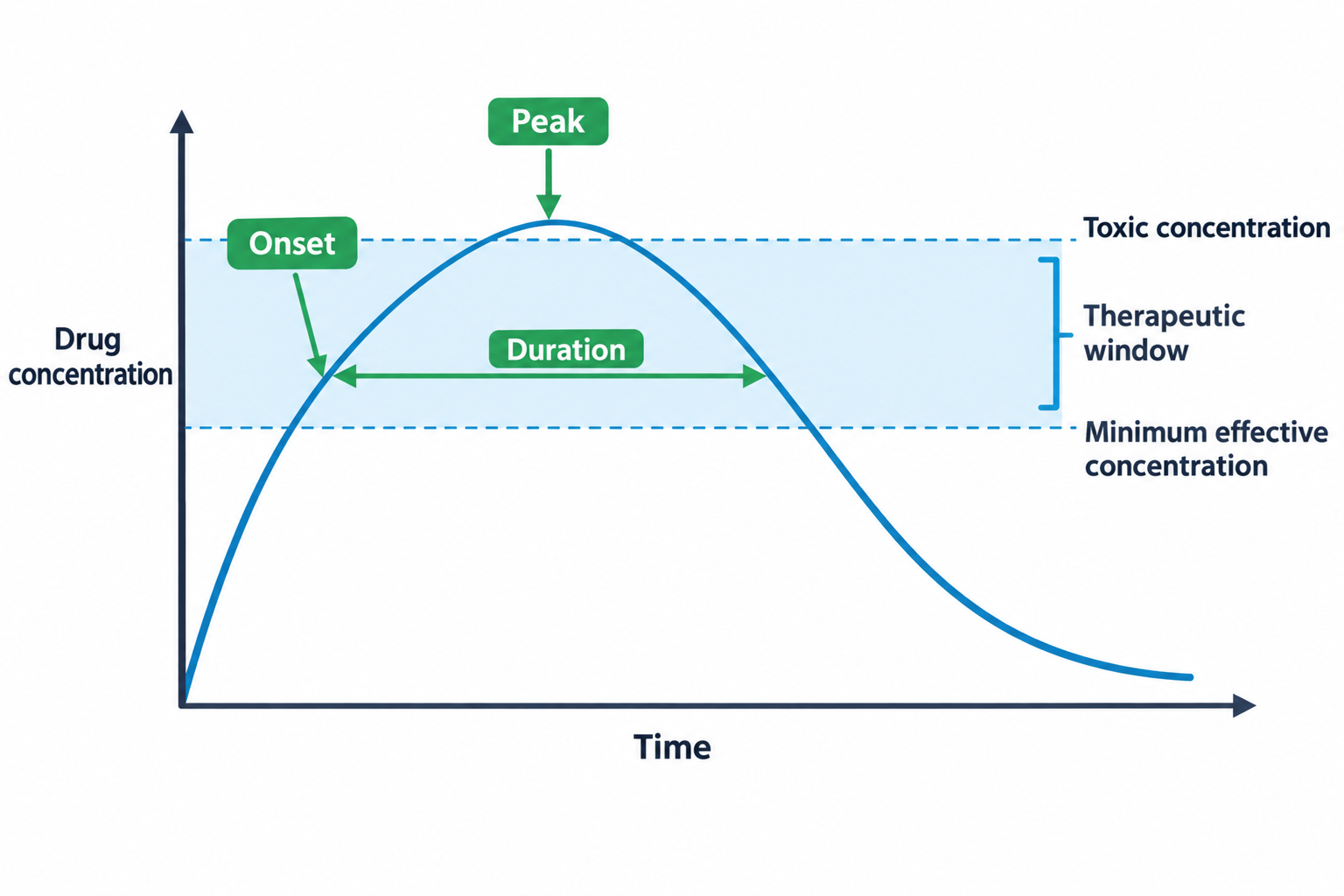
- Therapeutic window: the range of drug concentrations where a medication produces the desired therapeutic effect with minimal toxicity.
-
Potency and efficacy
- Potency: the amount of drug needed to produce an effect.
- Efficacy: the maximum effect a drug can produce.
-
Half-life (t½)
- Time required for the amount of drug in the body to decrease by half.
- Affects dosing frequency.
-
Onset, peak, duration
- Onset: When drug starts working.
- Peak: Time of maximum drug effect (or concentration, depending on the medication).
- Duration: How long the drug works.
-
Therapeutic index (TI)
- A quantitative measure of drug safety expressed as the ratio of the toxic dose to the effective dose.
- Low TI: high risk (e.g., warfarin, digoxin, lithium).
Factors that influence drug response
| Factor | Effect on pharmacodynamics |
| Age | Infants and older adult clients often have altered drug metabolism and elimination |
| Body size | Dosing may need weight-based calculation |
| Organ function | Liver or kidney impairment slows drug clearance |
| Genetics | Enzyme differences affect metabolism (e.g., CYP450 variations) |
| Sex | Hormonal and physiologic differences may affect drug distribution or metabolism |
| Comorbidities | May alter drug absorption or increase sensitivity |
| Polypharmacy | Risk of interactions, additive or antagonistic effects |
Drug classes with notable side effects
| Class | Notable side effects |
| Opioids | Respiratory depression, constipation, sedation |
| ACE inhibitors | Cough, hyperkalemia, angioedema |
| Beta blockers | Bradycardia, fatigue, bronchospasm |
| Anticholinergics | Dry mouth, constipation, urinary retention, blurred vision |
| Antipsychotics (typical) | Extrapyramidal symptoms (EPS), sedation, increased risk of tardive dyskinesia |
| Loop diuretics | Hypokalemia, ototoxicity, dehydration |
| Aminoglycosides | Nephrotoxicity, ototoxicity |
| NSAIDs | GI bleeding, renal impairment, hypertension |
| SSRIs | Sexual dysfunction, insomnia, GI upset, and serotonin syndrome |
Clinical vignette
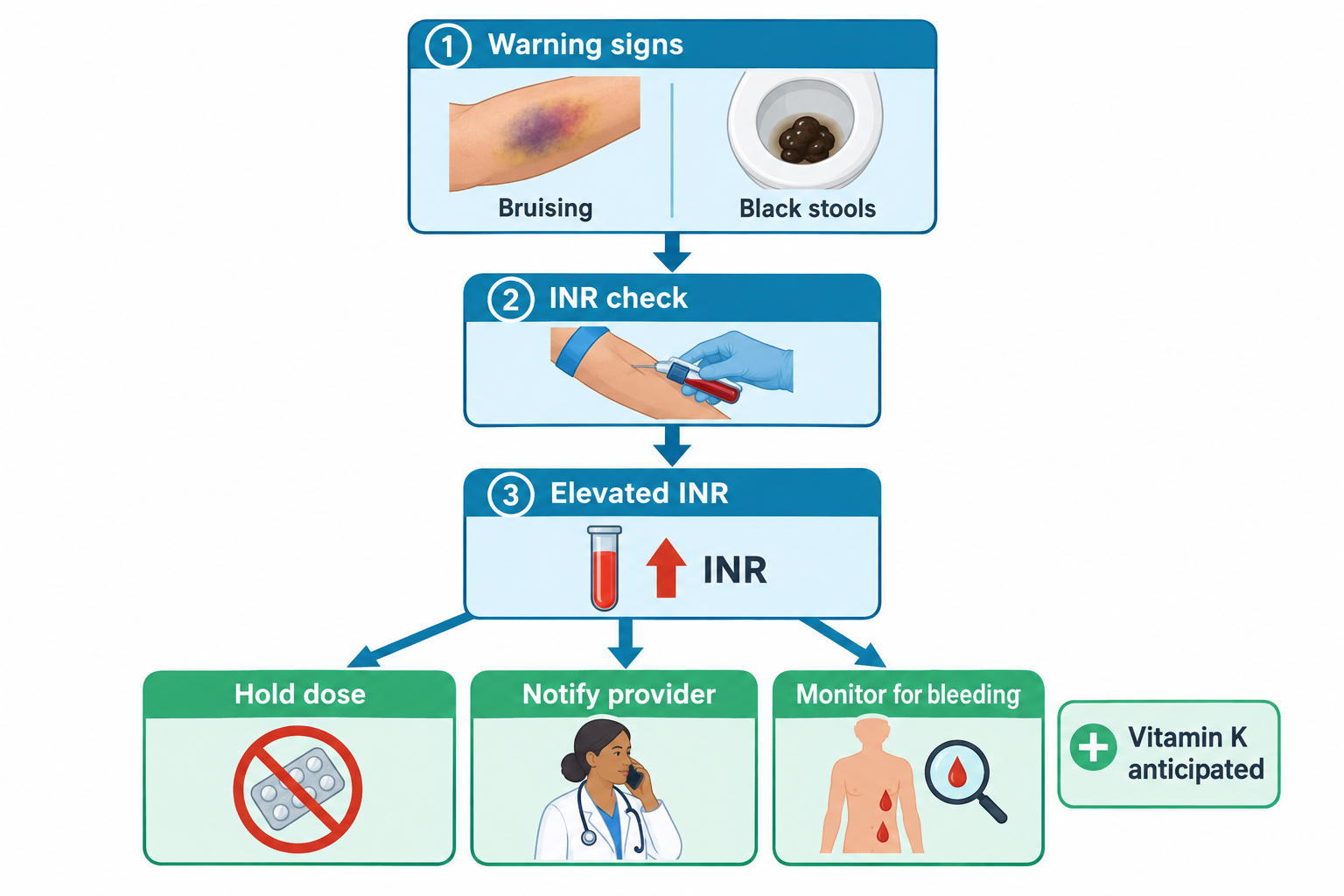
A 75-year-old male client with atrial fibrillation is taking warfarin. He reports new bruising and black stools. His INR is elevated.
Nursing action: Notify the provider, hold the next dose as ordered, assess for additional signs of bleeding, and anticipate orders for vitamin K based on the client’s INR and bleeding severity.
Rationale: Warfarin has a narrow therapeutic index. An elevated INR with signs of bleeding suggests excessive anticoagulation and increases the risk of serious hemorrhage. This case highlights the importance of closely monitoring medications with a narrow therapeutic index.