


Achievable logoAchievable logo
MCAT
Sign in
Sign up
Purchase
Textbook
Practice exams
Support
How it works
Exam catalog
Mountain with a flag at the peak
Textbook
Introduction
1. CARS
2. Psych/soc
3. Bio/biochem
3.1 Structure and function of proteins and their constituent amino acids
3.2 Transmission of genetic information from the gene to the protein
3.2.1 Eukaryote and prokaryote chromosomes and gene expression
3.2.2 Genetic code
3.2.3 Nucleic acid structure, replication and repair
3.2.4 Transcription and translation
3.2.5 Recombinant DNA and biotechnology
3.3 Heredity and genetic diversity
3.4 Principles of bioenergetics and fuel molecule metabolism
3.5 Assemblies of molecules, cells, groups of cells
3.6 Structure and physiology of prokaryotes and viruses
3.7 Processes of cell division, differentiation, and specialization
3.8 Structure and functions of nervous and endocrine systems
3.9 Structure and functions of main organ systems
4. Chem/phys
Wrapping up
Achievable logoAchievable logo
3.2.1 Eukaryote and prokaryote chromosomes and gene expression
Achievable MCAT
3. Bio/biochem
3.2. Transmission of genetic information from the gene to the protein

Eukaryote and prokaryote chromosomes and gene expression

9 min read
Font
Discuss
Share
Feedback

Eukaryotic chromosome organization

Chromosomal proteins

  • Histones: Form octamers that DNA wraps around, creating the repeating “beads on a string” pattern. This wrapping is a major contributor to chromatin compaction.
  • Nonhistone chromosomal proteins: Include all other chromosome-associated proteins. They serve many functions, including regulation, enzymatic activity, and structural support.

Single-copy versus repetitive DNA

  • Some DNA sequences appear only once (single-copy), while others occur in many copies (repetitive DNA).
  • Tandem repeats are repeated sequences placed back-to-back (e.g., CAGCAGCAG).
  • Excessive trinucleotide repeats can cause disorders such as Huntington disease or fragile X syndrome.
  • Satellites, minisatellites, microsatellites: Clusters of repeated sequences. Their characteristic patterns can be used for paternity testing, forensic analysis, or confirming bone marrow engraftment by matching donor and recipient DNA.
  • Interspersed repeats: Produced by mobile genetic elements (such as transposons). These elements often contain repetitive DNA at both ends and can move to new locations within the genome.

Supercoiling

Supercoiling is an extra twist added on top of DNA’s normal double helix. This higher-order coiling helps pack a very long DNA molecule into a chromosome, allowing it to fit inside the nucleus.

Telomeres and centromeres

  • Telomeres: Protective DNA segments at the ends of linear chromosomes. They help prevent chromosome-end degradation and reduce the loss of important coding sequences.
  • Centromere: A constricted chromosome region that may be near the middle or closer to one end. After replication, sister chromatids remain connected at their centromeres. During mitosis, spindle fibers attach here to separate sister chromatids.

Chromatin vs. chromosome

Chromatin is DNA plus its associated proteins (histones and other chromosomal proteins). When this material becomes highly condensed and visible under a microscope (such as during mitosis), it’s called a chromosome.
During interphase, eukaryotic chromosomes contain two regions that differ in packing density and typical activity:

  1. The densely packed heterochromatin - often found at centromeres and telomeres - generally contains inactive genes.
  2. The more open euchromatin contains actively transcribed genes. Here, DNA is wrapped around nucleosomes but is not as tightly compacted.

Control of gene expression in prokaryotes

  • Prokaryotic gene expression is regulated through both negative and positive mechanisms:
  • Negative control, exerted by repressors and co-repressors, reduces transcription.
  • Positive control, driven by inducers and enhancers, increases transcription.

This regulation allows prokaryotes to respond quickly to environmental changes by adjusting gene expression precisely.

Transcription factors

  • Transcription factors in prokaryotes bind regulatory DNA elements such as enhancers and silencers, typically located near the core promoter within an extended promoter region.
  • When activator proteins bind enhancers, they increase transcription. When repressor proteins bind silencers, they decrease transcription.

Operon concept and Jacob-Monod model

  • A common prokaryotic regulatory strategy uses operons, which are groups of genes controlled by a single promoter.
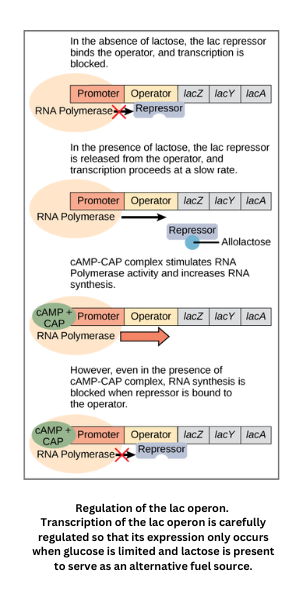
  • Within an operon, the operator is the binding site for regulatory proteins. For example, in the lac operon (the Jacob-Monod model), a repressor binds the operator near the promoter and blocks transcription when the appropriate inducer is absent.
Regulation of the lac operon in E. coli

Additional regulation involves co-repressors and co-inducers:

  • A co-repressor binds its target and converts an otherwise inactive transcription factor into an active repressor.
  • A co-inducer can either activate an inducer or inactivate a repressor, further fine-tuning transcription.

Gene repression in bacteria

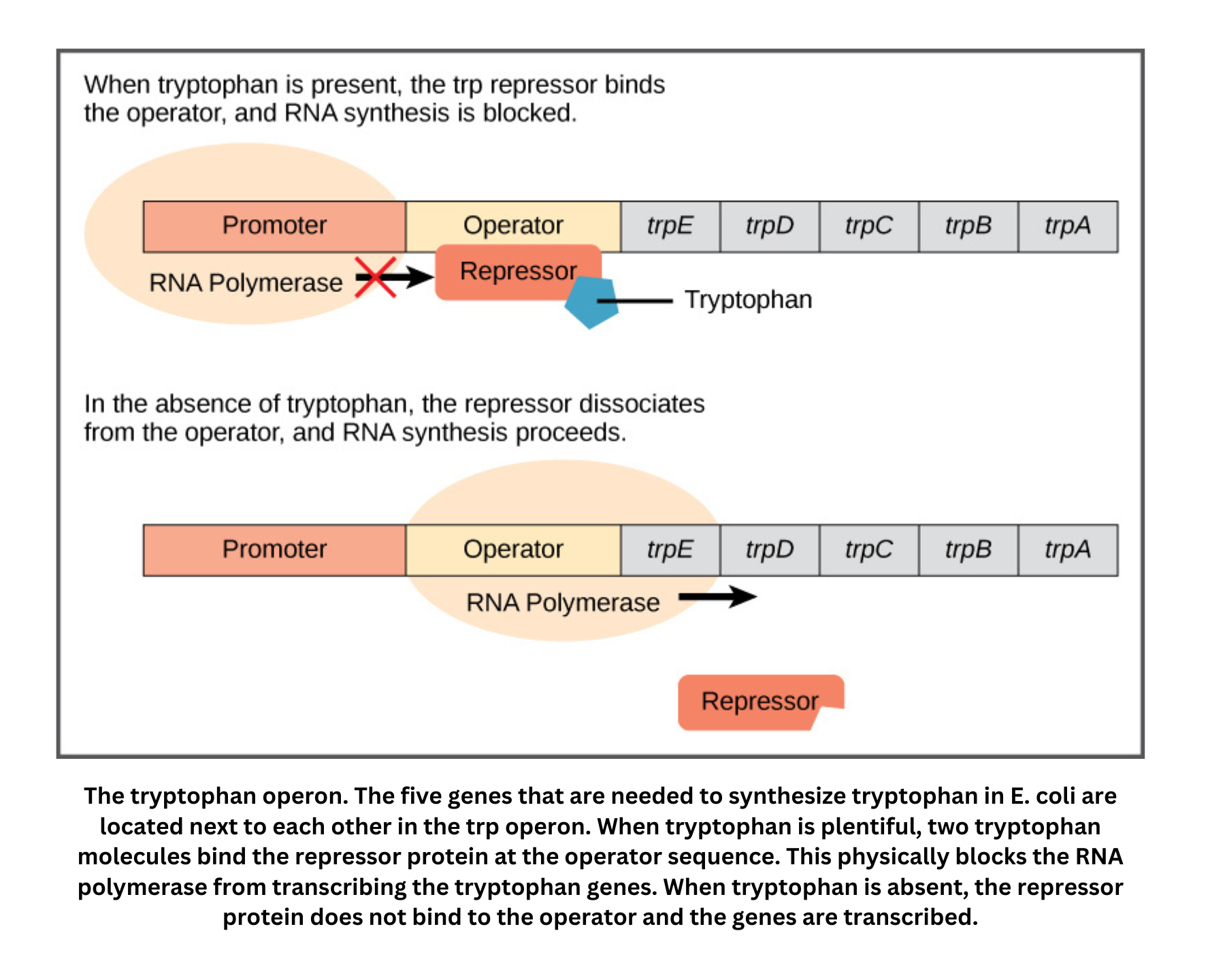
  • Transcription attenuation is another regulatory strategy. In the trp operon, a particular stem-loop structure in the mRNA forms when tryptophan levels are high, causing premature termination of transcription. When tryptophan levels are low, transcription continues to produce a full-length transcript.
Diagram of the trp operon regulation in E. coli

Positive control in bacteria

  • Bacteriophages can redirect the host’s transcription machinery by producing specialized α factors. These factors are made at different stages of infection, ensuring that early, middle, and late phage genes are transcribed in the correct order.

Control of gene expression in eukaryotes

In eukaryotic cells, gene expression is regulated mainly at the transcriptional and post-transcriptional levels. Unlike prokaryotes - which often use operons and attenuation - eukaryotes rely on mechanisms such as transcription factors, DNA looping, chromatin modifications, and mRNA processing to control when and how strongly genes are expressed.

Transcription regulation

Transcription factors are DNA-binding proteins that change transcription rates by binding to enhancers (activating sequences) or silencers (repressive sequences). These regulatory regions may be far from the promoter (upstream or downstream), so the DNA often must loop to bring the bound transcription factor into contact with the promoter complex. Intermediary proteins (co-activators or co-repressors) help stabilize these interactions and influence RNA polymerase activity.

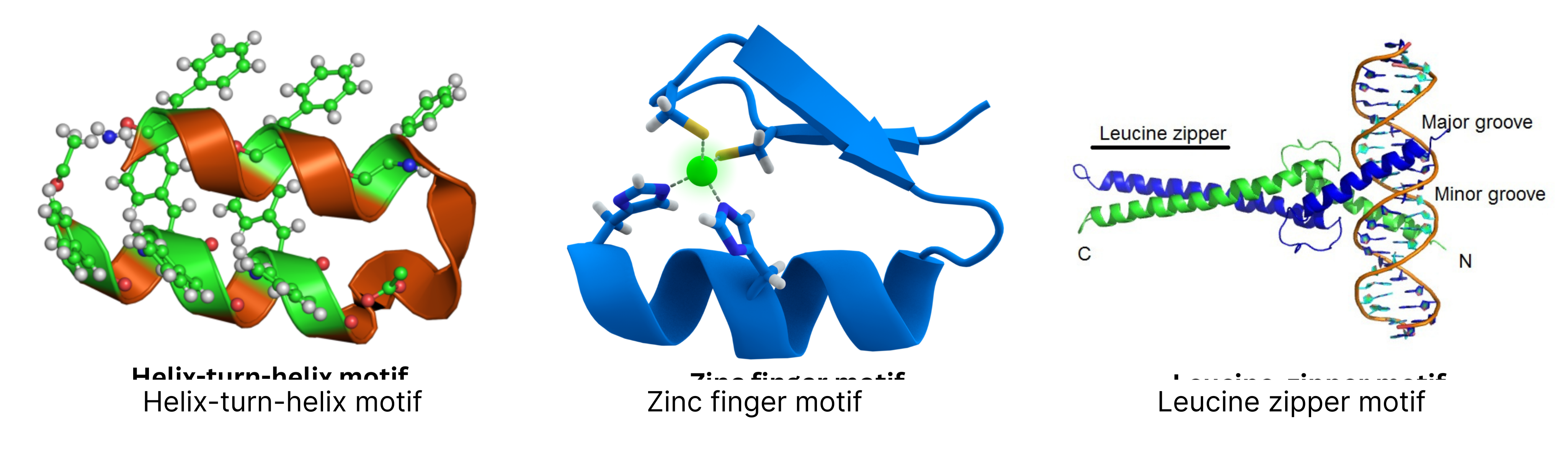
DNA-binding domains in transcription factors typically interact with the major and minor grooves of the DNA double helix. Common binding motifs include the helix-turn-helix, zinc finger, and basic-region leucine zipper.

Helix-turn-helix, zinc finger, and leucine zipper DNA-binding motifs

Gene amplification and duplication

Eukaryotes can also change expression levels through gene amplification or gene duplication, which increases the number of copies of a gene. This may happen through duplication of chromosomal segments or extra replication of entire chromosomes. Amplified genes such as MYC or RAS in cancer can drive excessive protein production and affect disease outcomes. Some duplications, such as Her2 in breast cancer cells, are clinically important because they can be targeted by specific therapies (e.g., Herceptin). In other cases, duplicated genes have little functional effect beyond increasing genome size.

Post-transcriptional controls

After transcription, several post-transcriptional processes influence how much protein is produced from an mRNA:

  • Splicing: Eukaryotic pre-mRNA contains introns (non-coding segments) and exons (coding segments). Introns are removed and exons are joined to form mature mRNA. Alternative splicing allows one gene to produce multiple mRNA variants (and therefore different proteins).
  • 5′ cap and 3′ poly-A tail: A 5′ cap (modified guanine) and a poly-A tail at the 3′ end protect mRNA from degradation and promote export from the nucleus.
  • RNA modifications: Some RNAs, especially tRNA and rRNA, contain modified nucleotides that support proper structure and function.
  • RNA degradation: Cells also regulate how quickly specific mRNAs are broken down. Changing transcript stability is another way to fine-tune protein production over time.

Cancer as a failure of normal cellular controls

In cancer, cells ignore the regulatory signals that normally limit growth. Normal cells typically stop dividing or initiate apoptosis (programmed cell death) when they detect substantial DNA damage. Cancer cells continue dividing under conditions that would usually halt proliferation. They can also promote angiogenesis (new blood vessel growth to supply nutrients), become “immortal” by bypassing normal division limits, and spread through metastasis, forming secondary tumors in other tissues.

Oncogenes and tumor suppressors

  • Oncogenes are genes that, when activated or mutated, drive continuous cell division. Their normal versions, proto-oncogenes, usually help regulate growth and division. When converted into oncogenes (for example, src), they can trigger uncontrolled proliferation.
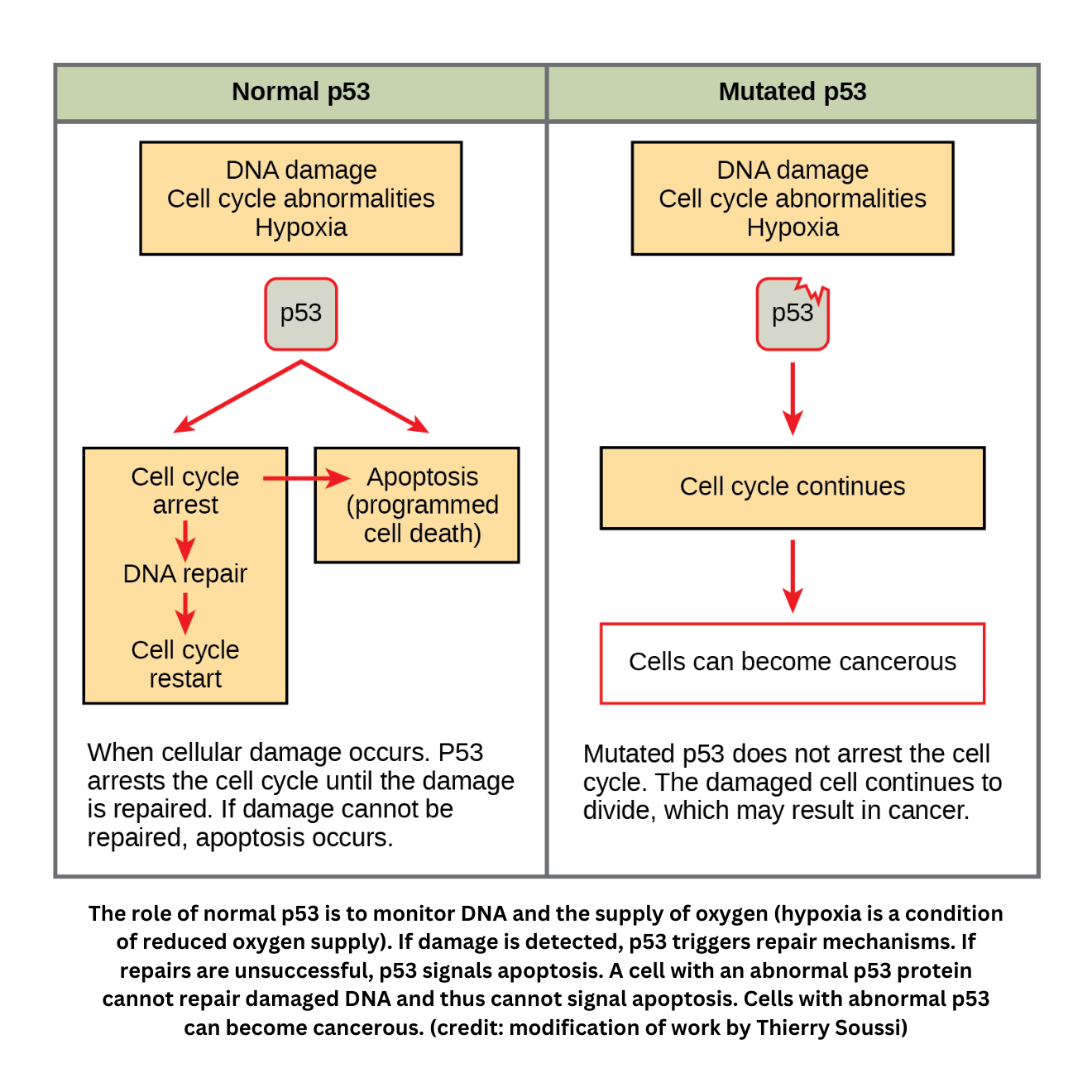
  • Tumor suppressor genes counterbalance growth signals by limiting or monitoring cell division. If these genes (such as p53) lose function, abnormal proliferation becomes more likely.
Role of p53 in cell cycle regulation and apoptosis

Regulation of chromatin structure

Chromatin is DNA wrapped around histone proteins. How tightly chromatin is packed affects gene expression:
Euchromatin: Loosely packed, which supports active transcription.
Heterochromatin: Tightly packed, which reduces access to DNA.

Cells modulate chromatin by modifying DNA or histones:

  • DNA methylation: In eukaryotes, CpG islands (regions rich in cytosine and guanine) near promoters are common methylation targets for DNA methyltransferase (DNMT). Adding methyl groups (for example, forming 5-methylcytosine) typically silences the associated genes.
  • Histone modifications: Histone methylation and acetylation can shift chromatin between active (euchromatin) and inactive (heterochromatin) states.

Clinical example:
MGMT, also known as O6-methylguanine-DNA methyltransferase, is a DNA repair enzyme that contributes to chemoresistance against alkylating agents, making it a potential target in tumor treatment.
In glioblastoma, an alkylating chemotherapy drug is often used. If the MGMT promoter is methylated, MGMT is inactivated, which can improve treatment effectiveness. If the MGMT promoter is unmethylated, MGMT remains active and can reverse the chemotherapy’s effect.

Non-coding RNAs

Non-coding RNAs include all RNA types other than mRNA. They have structural and regulatory roles:

  • rRNA (ribosomal RNA): Forms core structural and functional components of ribosomes.
  • tRNA (transfer RNA): Delivers amino acids during translation.
  • snRNA (small nuclear RNA): Functions in RNA splicing (as part of spliceosomes).
  • snoRNA (small nucleolar RNA): Guides chemical modifications of RNA.
  • miRNA (microRNA): Participates in RNA silencing by inhibiting translation or promoting mRNA degradation.

Modifications such as 2′-O methylation and conversion of uracil to pseudouracil can stabilize these RNAs, support their structure, and improve their function.

Eukaryotic chromosome organization

  • DNA wraps around histone octamers → “beads on a string” chromatin structure
  • Nonhistone chromosomal proteins: regulatory, enzymatic, structural roles

Single-copy versus repetitive DNA

  • Single-copy DNA: unique sequences; repetitive DNA: multiple copies
  • Tandem repeats (satellites, minisatellites, microsatellites): used in forensics, paternity, bone marrow engraftment
  • Interspersed repeats: mobile genetic elements (transposons)

Supercoiling

  • Extra twisting of DNA aids chromosome compaction
  • Enables long DNA molecules to fit in the nucleus

Telomeres and centromeres

  • Telomeres: protect chromosome ends, prevent degradation
  • Centromeres: constricted region, spindle attachment, sister chromatid cohesion

Chromatin vs. chromosome

  • Chromatin: DNA + proteins (histones, nonhistones)
  • Chromosome: highly condensed chromatin (visible in mitosis)
  • Heterochromatin: dense, inactive genes; Euchromatin: open, active genes

Control of gene expression in prokaryotes

  • Negative control: repressors/co-repressors reduce transcription
  • Positive control: inducers/enhancers increase transcription
  • Allows rapid response to environmental changes

Transcription factors (prokaryotes)

  • Bind enhancers (activate) or silencers (repress) near core promoter
  • Activators increase, repressors decrease transcription

Operon concept and Jacob-Monod model

  • Operon: gene cluster under single promoter, operator is regulatory site
  • Lac operon: repressor binds operator, blocks transcription without inducer
  • Co-repressors/co-inducers modulate transcription factor activity

Gene repression in bacteria

  • Transcription attenuation: stem-loop in mRNA causes early termination (e.g., trp operon)
  • Attenuation responds to metabolite (tryptophan) levels

Positive control in bacteria

  • Bacteriophage α factors redirect host transcription
  • Ensure stage-specific phage gene expression

Control of gene expression in eukaryotes

  • Regulation mainly at transcriptional and post-transcriptional levels
  • Mechanisms: transcription factors, DNA looping, chromatin modifications, mRNA processing

Transcription regulation (eukaryotes)

  • Transcription factors bind enhancers/silencers (can be distant from promoter)
  • DNA looping brings factors to promoter; co-activators/co-repressors stabilize complex
  • DNA-binding motifs: helix-turn-helix, zinc finger, leucine zipper

Gene amplification and duplication

  • Increases gene copy number (amplification/duplication)
  • Drives overexpression (e.g., MYC, RAS, Her2 in cancer)
  • Can affect disease progression and therapy response

Post-transcriptional controls

  • Splicing: removes introns, joins exons; alternative splicing → protein diversity
  • 5′ cap and 3′ poly-A tail: mRNA stability, export
  • RNA modifications: tRNA/rRNA chemical changes for function
  • RNA degradation: controls mRNA lifespan, protein output

Cancer as a failure of normal cellular controls

  • Cancer cells ignore growth/apoptosis signals, continue dividing
  • Promote angiogenesis, immortality, metastasis

Oncogenes and tumor suppressors

  • Oncogenes: mutated/activated proto-oncogenes drive proliferation (e.g., src)
  • Tumor suppressors: limit cell division (e.g., p53); loss leads to unchecked growth

Regulation of chromatin structure

  • Euchromatin: loose, transcriptionally active; Heterochromatin: tight, inactive

  • DNA methylation (CpG islands): gene silencing

  • Histone modifications (methylation, acetylation): alter chromatin state

    • Clinical example: MGMT methylation status affects glioblastoma chemotherapy response

Non-coding RNAs

  • rRNA: ribosome structure/function
  • tRNA: amino acid delivery in translation
  • snRNA: splicing (spliceosome component)
  • snoRNA: RNA modification guidance
  • miRNA: RNA silencing, translation inhibition, mRNA degradation
  • RNA modifications (e.g., 2′-O methylation, pseudouracil): stabilize and support function

Sign up for free to take 8 quiz questions on this topic

All rights reserved ©2016 - 2026 Achievable, Inc.

Eukaryote and prokaryote chromosomes and gene expression

Eukaryotic chromosome organization

Chromosomal proteins

  • Histones: Form octamers that DNA wraps around, creating the repeating “beads on a string” pattern. This wrapping is a major contributor to chromatin compaction.
  • Nonhistone chromosomal proteins: Include all other chromosome-associated proteins. They serve many functions, including regulation, enzymatic activity, and structural support.

Single-copy versus repetitive DNA

  • Some DNA sequences appear only once (single-copy), while others occur in many copies (repetitive DNA).
  • Tandem repeats are repeated sequences placed back-to-back (e.g., CAGCAGCAG).
  • Excessive trinucleotide repeats can cause disorders such as Huntington disease or fragile X syndrome.
  • Satellites, minisatellites, microsatellites: Clusters of repeated sequences. Their characteristic patterns can be used for paternity testing, forensic analysis, or confirming bone marrow engraftment by matching donor and recipient DNA.
  • Interspersed repeats: Produced by mobile genetic elements (such as transposons). These elements often contain repetitive DNA at both ends and can move to new locations within the genome.

Supercoiling

Supercoiling is an extra twist added on top of DNA’s normal double helix. This higher-order coiling helps pack a very long DNA molecule into a chromosome, allowing it to fit inside the nucleus.

Telomeres and centromeres

  • Telomeres: Protective DNA segments at the ends of linear chromosomes. They help prevent chromosome-end degradation and reduce the loss of important coding sequences.
  • Centromere: A constricted chromosome region that may be near the middle or closer to one end. After replication, sister chromatids remain connected at their centromeres. During mitosis, spindle fibers attach here to separate sister chromatids.

Chromatin vs. chromosome

Chromatin is DNA plus its associated proteins (histones and other chromosomal proteins). When this material becomes highly condensed and visible under a microscope (such as during mitosis), it’s called a chromosome.
During interphase, eukaryotic chromosomes contain two regions that differ in packing density and typical activity:

  1. The densely packed heterochromatin - often found at centromeres and telomeres - generally contains inactive genes.
  2. The more open euchromatin contains actively transcribed genes. Here, DNA is wrapped around nucleosomes but is not as tightly compacted.

Control of gene expression in prokaryotes

  • Prokaryotic gene expression is regulated through both negative and positive mechanisms:
  • Negative control, exerted by repressors and co-repressors, reduces transcription.
  • Positive control, driven by inducers and enhancers, increases transcription.

This regulation allows prokaryotes to respond quickly to environmental changes by adjusting gene expression precisely.

Transcription factors

  • Transcription factors in prokaryotes bind regulatory DNA elements such as enhancers and silencers, typically located near the core promoter within an extended promoter region.
  • When activator proteins bind enhancers, they increase transcription. When repressor proteins bind silencers, they decrease transcription.

Operon concept and Jacob-Monod model

  • A common prokaryotic regulatory strategy uses operons, which are groups of genes controlled by a single promoter.
  • Within an operon, the operator is the binding site for regulatory proteins. For example, in the lac operon (the Jacob-Monod model), a repressor binds the operator near the promoter and blocks transcription when the appropriate inducer is absent.

Additional regulation involves co-repressors and co-inducers:

  • A co-repressor binds its target and converts an otherwise inactive transcription factor into an active repressor.
  • A co-inducer can either activate an inducer or inactivate a repressor, further fine-tuning transcription.

Gene repression in bacteria

  • Transcription attenuation is another regulatory strategy. In the trp operon, a particular stem-loop structure in the mRNA forms when tryptophan levels are high, causing premature termination of transcription. When tryptophan levels are low, transcription continues to produce a full-length transcript.

Positive control in bacteria

  • Bacteriophages can redirect the host’s transcription machinery by producing specialized α factors. These factors are made at different stages of infection, ensuring that early, middle, and late phage genes are transcribed in the correct order.

Control of gene expression in eukaryotes

In eukaryotic cells, gene expression is regulated mainly at the transcriptional and post-transcriptional levels. Unlike prokaryotes - which often use operons and attenuation - eukaryotes rely on mechanisms such as transcription factors, DNA looping, chromatin modifications, and mRNA processing to control when and how strongly genes are expressed.

Transcription regulation

Transcription factors are DNA-binding proteins that change transcription rates by binding to enhancers (activating sequences) or silencers (repressive sequences). These regulatory regions may be far from the promoter (upstream or downstream), so the DNA often must loop to bring the bound transcription factor into contact with the promoter complex. Intermediary proteins (co-activators or co-repressors) help stabilize these interactions and influence RNA polymerase activity.

DNA-binding domains in transcription factors typically interact with the major and minor grooves of the DNA double helix. Common binding motifs include the helix-turn-helix, zinc finger, and basic-region leucine zipper.

Gene amplification and duplication

Eukaryotes can also change expression levels through gene amplification or gene duplication, which increases the number of copies of a gene. This may happen through duplication of chromosomal segments or extra replication of entire chromosomes. Amplified genes such as MYC or RAS in cancer can drive excessive protein production and affect disease outcomes. Some duplications, such as Her2 in breast cancer cells, are clinically important because they can be targeted by specific therapies (e.g., Herceptin). In other cases, duplicated genes have little functional effect beyond increasing genome size.

Post-transcriptional controls

After transcription, several post-transcriptional processes influence how much protein is produced from an mRNA:

  • Splicing: Eukaryotic pre-mRNA contains introns (non-coding segments) and exons (coding segments). Introns are removed and exons are joined to form mature mRNA. Alternative splicing allows one gene to produce multiple mRNA variants (and therefore different proteins).
  • 5′ cap and 3′ poly-A tail: A 5′ cap (modified guanine) and a poly-A tail at the 3′ end protect mRNA from degradation and promote export from the nucleus.
  • RNA modifications: Some RNAs, especially tRNA and rRNA, contain modified nucleotides that support proper structure and function.
  • RNA degradation: Cells also regulate how quickly specific mRNAs are broken down. Changing transcript stability is another way to fine-tune protein production over time.

Cancer as a failure of normal cellular controls

In cancer, cells ignore the regulatory signals that normally limit growth. Normal cells typically stop dividing or initiate apoptosis (programmed cell death) when they detect substantial DNA damage. Cancer cells continue dividing under conditions that would usually halt proliferation. They can also promote angiogenesis (new blood vessel growth to supply nutrients), become “immortal” by bypassing normal division limits, and spread through metastasis, forming secondary tumors in other tissues.

Oncogenes and tumor suppressors

  • Oncogenes are genes that, when activated or mutated, drive continuous cell division. Their normal versions, proto-oncogenes, usually help regulate growth and division. When converted into oncogenes (for example, src), they can trigger uncontrolled proliferation.
  • Tumor suppressor genes counterbalance growth signals by limiting or monitoring cell division. If these genes (such as p53) lose function, abnormal proliferation becomes more likely.

Regulation of chromatin structure

Chromatin is DNA wrapped around histone proteins. How tightly chromatin is packed affects gene expression:
Euchromatin: Loosely packed, which supports active transcription.
Heterochromatin: Tightly packed, which reduces access to DNA.

Cells modulate chromatin by modifying DNA or histones:

  • DNA methylation: In eukaryotes, CpG islands (regions rich in cytosine and guanine) near promoters are common methylation targets for DNA methyltransferase (DNMT). Adding methyl groups (for example, forming 5-methylcytosine) typically silences the associated genes.
  • Histone modifications: Histone methylation and acetylation can shift chromatin between active (euchromatin) and inactive (heterochromatin) states.

Clinical example:
MGMT, also known as O6-methylguanine-DNA methyltransferase, is a DNA repair enzyme that contributes to chemoresistance against alkylating agents, making it a potential target in tumor treatment.
In glioblastoma, an alkylating chemotherapy drug is often used. If the MGMT promoter is methylated, MGMT is inactivated, which can improve treatment effectiveness. If the MGMT promoter is unmethylated, MGMT remains active and can reverse the chemotherapy’s effect.

Non-coding RNAs

Non-coding RNAs include all RNA types other than mRNA. They have structural and regulatory roles:

  • rRNA (ribosomal RNA): Forms core structural and functional components of ribosomes.
  • tRNA (transfer RNA): Delivers amino acids during translation.
  • snRNA (small nuclear RNA): Functions in RNA splicing (as part of spliceosomes).
  • snoRNA (small nucleolar RNA): Guides chemical modifications of RNA.
  • miRNA (microRNA): Participates in RNA silencing by inhibiting translation or promoting mRNA degradation.

Modifications such as 2′-O methylation and conversion of uracil to pseudouracil can stabilize these RNAs, support their structure, and improve their function.

Key points

Eukaryotic chromosome organization

  • DNA wraps around histone octamers → “beads on a string” chromatin structure
  • Nonhistone chromosomal proteins: regulatory, enzymatic, structural roles

Single-copy versus repetitive DNA

  • Single-copy DNA: unique sequences; repetitive DNA: multiple copies
  • Tandem repeats (satellites, minisatellites, microsatellites): used in forensics, paternity, bone marrow engraftment
  • Interspersed repeats: mobile genetic elements (transposons)

Supercoiling

  • Extra twisting of DNA aids chromosome compaction
  • Enables long DNA molecules to fit in the nucleus

Telomeres and centromeres

  • Telomeres: protect chromosome ends, prevent degradation
  • Centromeres: constricted region, spindle attachment, sister chromatid cohesion

Chromatin vs. chromosome

  • Chromatin: DNA + proteins (histones, nonhistones)
  • Chromosome: highly condensed chromatin (visible in mitosis)
  • Heterochromatin: dense, inactive genes; Euchromatin: open, active genes

Control of gene expression in prokaryotes

  • Negative control: repressors/co-repressors reduce transcription
  • Positive control: inducers/enhancers increase transcription
  • Allows rapid response to environmental changes

Transcription factors (prokaryotes)

  • Bind enhancers (activate) or silencers (repress) near core promoter
  • Activators increase, repressors decrease transcription

Operon concept and Jacob-Monod model

  • Operon: gene cluster under single promoter, operator is regulatory site
  • Lac operon: repressor binds operator, blocks transcription without inducer
  • Co-repressors/co-inducers modulate transcription factor activity

Gene repression in bacteria

  • Transcription attenuation: stem-loop in mRNA causes early termination (e.g., trp operon)
  • Attenuation responds to metabolite (tryptophan) levels

Positive control in bacteria

  • Bacteriophage α factors redirect host transcription
  • Ensure stage-specific phage gene expression

Control of gene expression in eukaryotes

  • Regulation mainly at transcriptional and post-transcriptional levels
  • Mechanisms: transcription factors, DNA looping, chromatin modifications, mRNA processing

Transcription regulation (eukaryotes)

  • Transcription factors bind enhancers/silencers (can be distant from promoter)
  • DNA looping brings factors to promoter; co-activators/co-repressors stabilize complex
  • DNA-binding motifs: helix-turn-helix, zinc finger, leucine zipper

Gene amplification and duplication

  • Increases gene copy number (amplification/duplication)
  • Drives overexpression (e.g., MYC, RAS, Her2 in cancer)
  • Can affect disease progression and therapy response

Post-transcriptional controls

  • Splicing: removes introns, joins exons; alternative splicing → protein diversity
  • 5′ cap and 3′ poly-A tail: mRNA stability, export
  • RNA modifications: tRNA/rRNA chemical changes for function
  • RNA degradation: controls mRNA lifespan, protein output

Cancer as a failure of normal cellular controls

  • Cancer cells ignore growth/apoptosis signals, continue dividing
  • Promote angiogenesis, immortality, metastasis

Oncogenes and tumor suppressors

  • Oncogenes: mutated/activated proto-oncogenes drive proliferation (e.g., src)
  • Tumor suppressors: limit cell division (e.g., p53); loss leads to unchecked growth

Regulation of chromatin structure

  • Euchromatin: loose, transcriptionally active; Heterochromatin: tight, inactive

  • DNA methylation (CpG islands): gene silencing

  • Histone modifications (methylation, acetylation): alter chromatin state

    • Clinical example: MGMT methylation status affects glioblastoma chemotherapy response

Non-coding RNAs

  • rRNA: ribosome structure/function
  • tRNA: amino acid delivery in translation
  • snRNA: splicing (spliceosome component)
  • snoRNA: RNA modification guidance
  • miRNA: RNA silencing, translation inhibition, mRNA degradation
  • RNA modifications (e.g., 2′-O methylation, pseudouracil): stabilize and support function