


Achievable logoAchievable logo
CMA Part 1
Sign in
Sign up
Purchase
Textbook
Practice exams
Support
How it works
Exam catalog
Mountain with a flag at the peak
Textbook
1. External financial reporting decisions
2. Planning, budgeting, and forecasting
3. Performance management
4. Cost management
5. Internal control
6. Technology and analytics
Achievable logoAchievable logo
2.5.1.2 Sales budget
Achievable CMA Part 1
2. Planning, budgeting, and forecasting
2.5. Annual profit plan and supporting schedules
2.5.1. Operational budgets
Our CMA Part 1 course is currently in development and is a work-in-progress.

Sales budget

5 min read
Font
Discuss
Share
Feedback

Learning outcome statements

The learning outcome statements relevant for this section are:

  1. explain the role of the sales budget in the development of an annual profit plan
  2. identify the factors that should be considered when preparing a sales forecast
  3. identify the components of a sales budget and prepare a sales budget

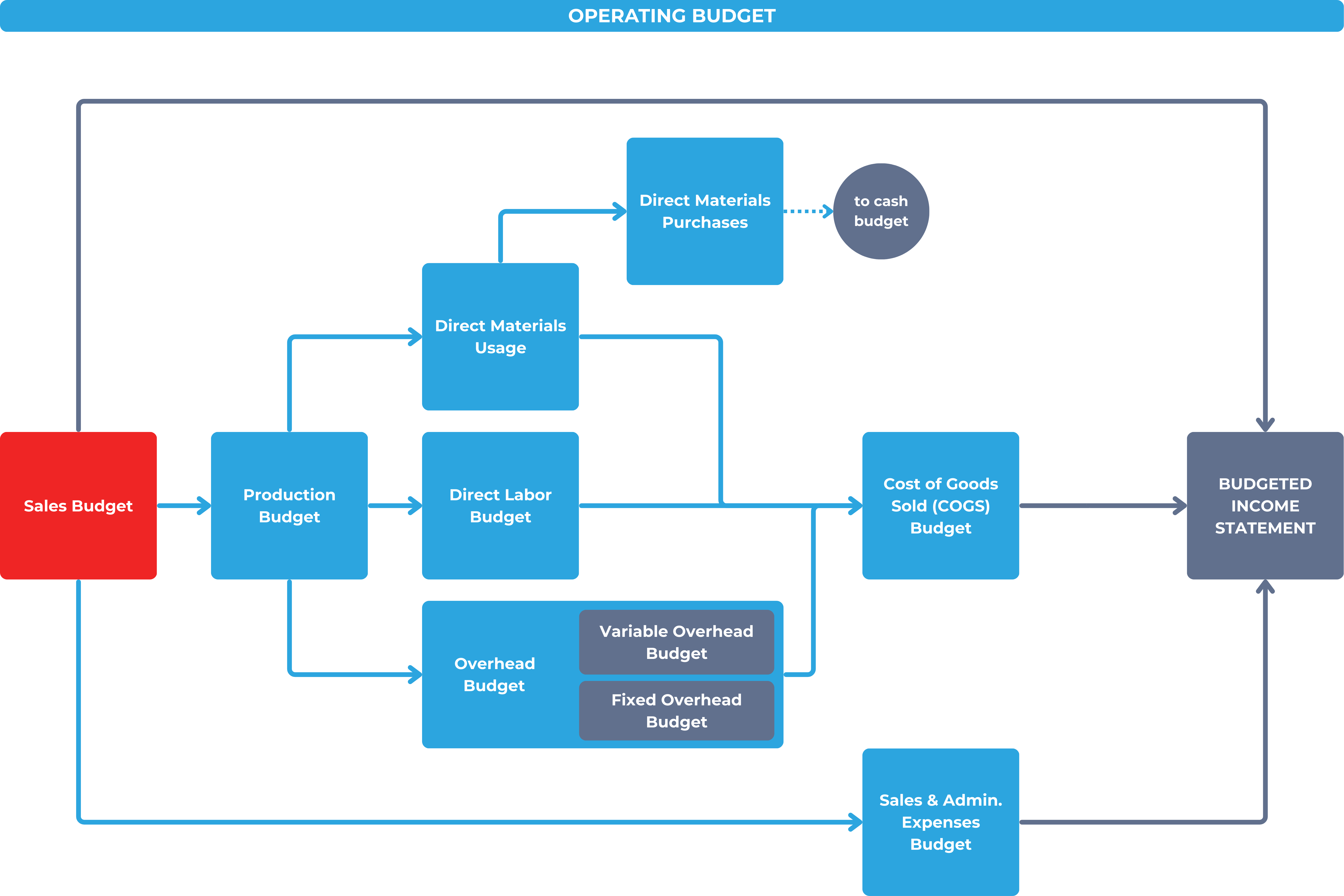
The sales budget serves as the starting point in the development of an operational budget and lays the foundation for other related budgets in the annual profit plan. It estimates the total sales revenue for a specific period based on expected sales volumes and prices, setting the stage for production planning, material needs, and labor requirements.

Operating budget - sales budget component

Role of the sales budget in profit planning

A well-prepared sales budget provides management with a clear picture of the expected revenue, which is critical for setting achievable financial goals. By projecting sales revenue accurately, the sales budget helps guide the production budget and related costs, ensuring that all operational activities align with revenue expectations. This budget also enables management to anticipate cash inflows, crucial for planning expenditures, investments, and operational sustainability.

Developing the sales forecast

Key factors in forecasting sales

Forecasting sales accurately is essential to creating a realistic sales budget. Key factors that influence sales forecasts include:

  • Market trends: Changes in industry demand, consumer preferences, and competitor strategies.
  • Historical sales data: Analysis of past sales performance as a foundation for future projections.
  • Economic conditions: Macroeconomic factors such as inflation, employment rates, and GDP growth.
  • Promotional activities: Anticipated impact of advertising campaigns, sales promotions, and new product launches.

Preparing an accurate sales budget is often challenging for companies, as it requires a careful balance of market trends, customer demand, and internal capabilities. Factors like changing consumer preferences, economic fluctuations, competitive actions, and seasonality can create uncertainty, making it difficult to project sales with high accuracy. Additionally, companies must consider their own production constraints and capacity limits when setting sales targets to avoid over-commitment. These factors make sales budgeting a complex process that often involves cross-departmental collaboration and frequent adjustments to stay aligned with real-time market conditions.

Components of the sales budget

The sales budget typically includes three key components:

  • Projected units sold: This is the forecasted quantity of each product that the company expects to sell over the budget period. The estimate is based on sales forecasts, taking into account historical trends, market conditions, and promotional activities.
  • Selling price per unit: This represents the anticipated selling price of each unit, which may vary depending on seasonal demand, market trends, or product pricing strategies. Setting an accurate selling price per unit helps in calculating realistic revenue projections.
  • Total sales revenue: Calculated by multiplying the projected units sold by the selling price per unit, this is the total revenue expected from sales over the budget period. It serves as the basis for subsequent budgets, such as the production and expense budgets.

Credit sales and the cash budget

When planning the sales budget, companies must also anticipate the proportion of sales expected to be made on credit. Since credit sales do not result in immediate cash inflows, they directly impact the cash budget, which requires projecting cash collections based on customer payment patterns. Planning for credit sales enables companies to manage cash flow more effectively, ensuring they have adequate cash to cover operational expenses and investments. This will be discussed and incorporated later in the section about financial budgets.

Preparation of the sales budget

Let’s consider GreenLine Furniture, a fictional company that manufactures eco-friendly home furniture who is preparing the operational budget for the fourth quarter of the following year. For purposes of the example, we will not present the budget preparation of the first three quarters.

In order to properly explain the interconnectedness of all the sub-schedules in the operating budget, we will use the sales budget of GreenLine Furniture as a basis of the other subsequent discussions in this chapter.

Based on historical data and anticipated seasonal fluctuations, management projects varied monthly sales for the fourth quarter at an average price of $200 per unit. The breakdown is shown below:

Month Projected units sold Selling price per unit Total sales revenue
October 1,200 $200 $240,000
November 1,500 $200 $300,000
December 2,300 $200 $460,000
Total (Q4) 5,000 $1,000,000

This projected $1,000,000 in sales revenue for the fourth quarter will guide GreenLine’s production budget, ensuring they produce enough units to meet expected demand while establishing benchmarks for cost management.

The determination of the sales budget could come in many forms in the examination, candidates need to use some judgment depending on how information is presented considering the use of market trends, historical sales data, economic conditions and promotional activities in developing the appropriate sales budget for the period required. In this discussion, we will follow the preparation of the various forms of budget for the GreenLine company starting from the sales budget developed above for Q4.

Role of the sales budget in profit planning

  • Foundation for operational and annual profit plans
  • Guides production, material, and labor budgets
  • Enables cash inflow projections for expenditure planning

Key factors in forecasting sales

  • Market trends, consumer preferences, competitor actions
  • Historical sales data analysis
  • Economic conditions (inflation, employment, GDP)
  • Impact of promotional activities and new products
  • Consideration of production constraints and capacity

Components of the sales budget

  • Projected units sold (forecasted sales volume)
  • Selling price per unit (anticipated price)
  • Total sales revenue (units sold × price per unit)

Credit sales and the cash budget

  • Portion of sales expected on credit
  • Affects timing of cash inflows and cash budget planning
  • Requires projection of customer payment patterns

Preparation of the sales budget

  • Use historical data and seasonality for projections
  • Example: GreenLine Furniture Q4 sales budget
    • October: 1,200 units × $200 = $240,000
    • November: 1,500 units × $200 = $300,000
    • December: 2,300 units × $200 = $460,000
    • Total Q4: 5,000 units, $1,000,000 revenue
  • Sales budget forms basis for subsequent budgets and cost benchmarks

Sign up for free to take 8 quiz questions on this topic

Previous
Next  | 2.5.1.3 Production budget
All rights reserved ©2016 - 2026 Achievable, Inc.

Sales budget

Learning outcome statements

The learning outcome statements relevant for this section are:

  1. explain the role of the sales budget in the development of an annual profit plan
  2. identify the factors that should be considered when preparing a sales forecast
  3. identify the components of a sales budget and prepare a sales budget

The sales budget serves as the starting point in the development of an operational budget and lays the foundation for other related budgets in the annual profit plan. It estimates the total sales revenue for a specific period based on expected sales volumes and prices, setting the stage for production planning, material needs, and labor requirements.

Role of the sales budget in profit planning

A well-prepared sales budget provides management with a clear picture of the expected revenue, which is critical for setting achievable financial goals. By projecting sales revenue accurately, the sales budget helps guide the production budget and related costs, ensuring that all operational activities align with revenue expectations. This budget also enables management to anticipate cash inflows, crucial for planning expenditures, investments, and operational sustainability.

Developing the sales forecast

Key factors in forecasting sales

Forecasting sales accurately is essential to creating a realistic sales budget. Key factors that influence sales forecasts include:

  • Market trends: Changes in industry demand, consumer preferences, and competitor strategies.
  • Historical sales data: Analysis of past sales performance as a foundation for future projections.
  • Economic conditions: Macroeconomic factors such as inflation, employment rates, and GDP growth.
  • Promotional activities: Anticipated impact of advertising campaigns, sales promotions, and new product launches.

Preparing an accurate sales budget is often challenging for companies, as it requires a careful balance of market trends, customer demand, and internal capabilities. Factors like changing consumer preferences, economic fluctuations, competitive actions, and seasonality can create uncertainty, making it difficult to project sales with high accuracy. Additionally, companies must consider their own production constraints and capacity limits when setting sales targets to avoid over-commitment. These factors make sales budgeting a complex process that often involves cross-departmental collaboration and frequent adjustments to stay aligned with real-time market conditions.

Components of the sales budget

The sales budget typically includes three key components:

  • Projected units sold: This is the forecasted quantity of each product that the company expects to sell over the budget period. The estimate is based on sales forecasts, taking into account historical trends, market conditions, and promotional activities.
  • Selling price per unit: This represents the anticipated selling price of each unit, which may vary depending on seasonal demand, market trends, or product pricing strategies. Setting an accurate selling price per unit helps in calculating realistic revenue projections.
  • Total sales revenue: Calculated by multiplying the projected units sold by the selling price per unit, this is the total revenue expected from sales over the budget period. It serves as the basis for subsequent budgets, such as the production and expense budgets.

Credit sales and the cash budget

When planning the sales budget, companies must also anticipate the proportion of sales expected to be made on credit. Since credit sales do not result in immediate cash inflows, they directly impact the cash budget, which requires projecting cash collections based on customer payment patterns. Planning for credit sales enables companies to manage cash flow more effectively, ensuring they have adequate cash to cover operational expenses and investments. This will be discussed and incorporated later in the section about financial budgets.

Preparation of the sales budget

Let’s consider GreenLine Furniture, a fictional company that manufactures eco-friendly home furniture who is preparing the operational budget for the fourth quarter of the following year. For purposes of the example, we will not present the budget preparation of the first three quarters.

In order to properly explain the interconnectedness of all the sub-schedules in the operating budget, we will use the sales budget of GreenLine Furniture as a basis of the other subsequent discussions in this chapter.

Based on historical data and anticipated seasonal fluctuations, management projects varied monthly sales for the fourth quarter at an average price of $200 per unit. The breakdown is shown below:

Month Projected units sold Selling price per unit Total sales revenue
October 1,200 $200 $240,000
November 1,500 $200 $300,000
December 2,300 $200 $460,000
Total (Q4) 5,000 $1,000,000

This projected $1,000,000 in sales revenue for the fourth quarter will guide GreenLine’s production budget, ensuring they produce enough units to meet expected demand while establishing benchmarks for cost management.

The determination of the sales budget could come in many forms in the examination, candidates need to use some judgment depending on how information is presented considering the use of market trends, historical sales data, economic conditions and promotional activities in developing the appropriate sales budget for the period required. In this discussion, we will follow the preparation of the various forms of budget for the GreenLine company starting from the sales budget developed above for Q4.

Key points

Role of the sales budget in profit planning

  • Foundation for operational and annual profit plans
  • Guides production, material, and labor budgets
  • Enables cash inflow projections for expenditure planning

Key factors in forecasting sales

  • Market trends, consumer preferences, competitor actions
  • Historical sales data analysis
  • Economic conditions (inflation, employment, GDP)
  • Impact of promotional activities and new products
  • Consideration of production constraints and capacity

Components of the sales budget

  • Projected units sold (forecasted sales volume)
  • Selling price per unit (anticipated price)
  • Total sales revenue (units sold × price per unit)

Credit sales and the cash budget

  • Portion of sales expected on credit
  • Affects timing of cash inflows and cash budget planning
  • Requires projection of customer payment patterns

Preparation of the sales budget

  • Use historical data and seasonality for projections
  • Example: GreenLine Furniture Q4 sales budget
    • October: 1,200 units × $200 = $240,000
    • November: 1,500 units × $200 = $300,000
    • December: 2,300 units × $200 = $460,000
    • Total Q4: 5,000 units, $1,000,000 revenue
  • Sales budget forms basis for subsequent budgets and cost benchmarks

More from Operational budgets

  • Introduction
  • Production budget
  • Direct materials budget
  • Direct labor budget
  • Overhead budget