



Introduction
The operating budget
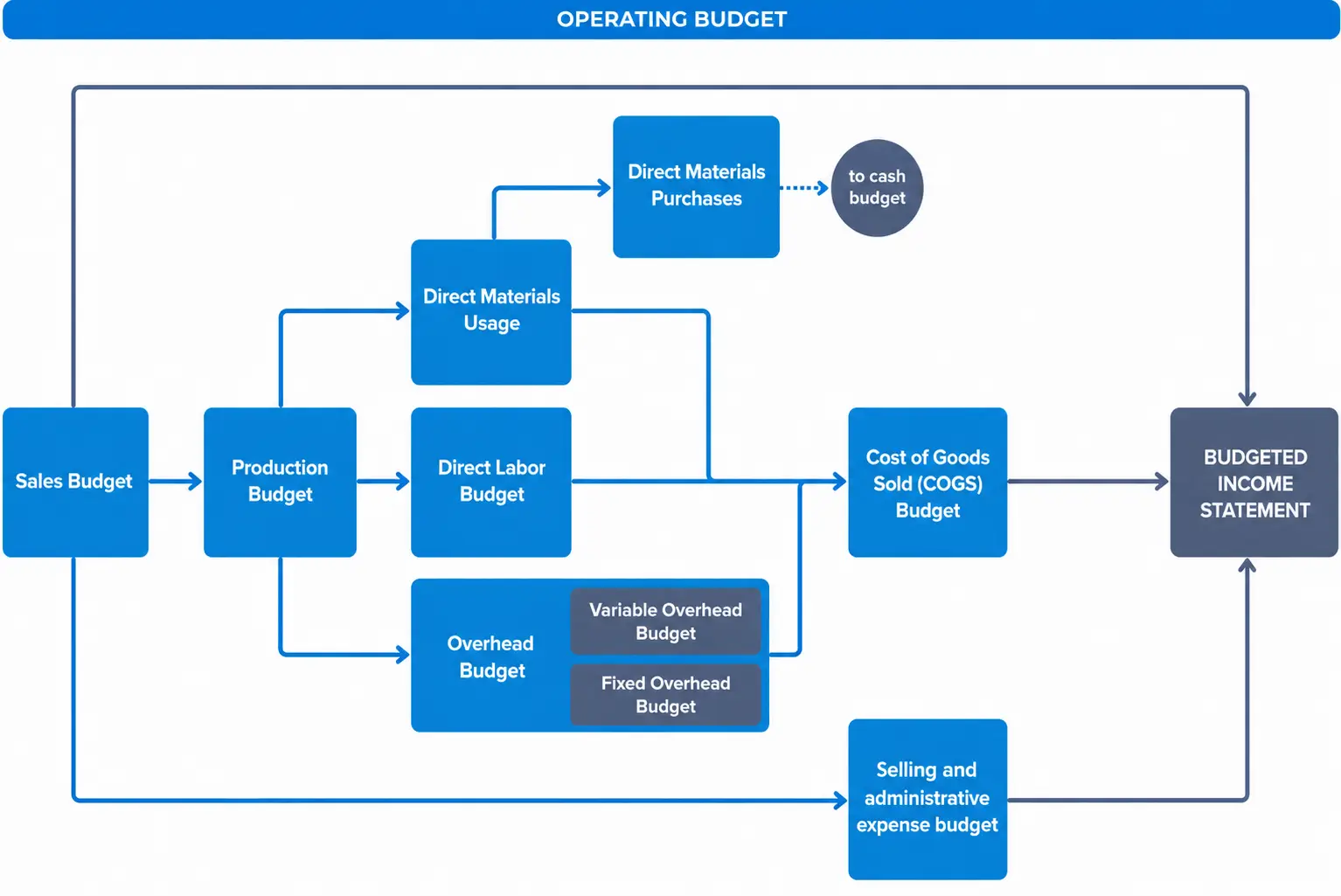
As a critical component of the annual profit plan, the operating budget aligns production, labor, and resource allocations with expected sales, ensuring each department contributes effectively to overall profitability.
The learning outcomes can be grouped under sub-categories that each represent a step in the process of developing the operating budget:
Each component in the operating budget plays a crucial role in aligning resources, controlling costs, and supporting the company’s strategic goals. Notice how the pieces connect: the sales budget’s forecasted unit sales drive the production budget, the production budget’s required units drive the direct materials and direct labor budgets, and those costs flow forward through overhead and cost of goods sold until everything rolls up into the contribution margin and operational budget. In the following sections, each budget type will be explored in detail, starting with the sales budget and building toward the comprehensive operational budget.
1. Sales budget
The foundation of the operating budget, the sales budget forecasts expected sales volume and revenue, setting the target for subsequent production and cost-related budgets.
2. Production budget
Following the sales budget, the production budget determines the units required to meet sales targets, taking into account beginning inventory and desired ending inventory levels.
3. Direct materials budget
This budget outlines the materials needed for production, linking production needs to material costs and inventory policies.
4. Direct labor budget
Estimating labor hours and costs required to meet production targets, this budget ensures the right workforce allocation to achieve production goals.
5. Overhead budget
The overhead budget captures all indirect costs associated with production, divided into variable and fixed components for better control and analysis.
6. Cost of goods sold (COGS) budget
Combining direct materials, direct labor, overhead and changes in finished goods inventory levels, this budget calculates the total cost of producing goods sold during the period.
7. Selling and administrative expense budget
This budget projects costs for non-production activities, including marketing, administrative salaries, and other operating expenses.
8. Contribution margin and operational budget
These final sections consolidate the budgets above into an overall operational plan, highlighting anticipated profitability and guiding managers in assessing the feasibility of meeting profit goals.