


Achievable logoAchievable logo
CMA Part 1
Sign in
Sign up
Purchase
Textbook
Practice exams
Support
How it works
Exam catalog
Mountain with a flag at the peak
Textbook
1. External financial reporting decisions
2. Planning, budgeting, and forecasting
3. Performance management
4. Cost management
5. Internal control
6. Technology and analytics
Achievable logoAchievable logo
2.5.1.4 Direct materials budget
Achievable CMA Part 1
2. Planning, budgeting, and forecasting
2.5. Annual profit plan and supporting schedules
2.5.1. Operational budgets
Our CMA Part 1 course is currently in development and is a work-in-progress.

Direct materials budget

9 min read
Font
Discuss
Share
Feedback

Learning outcome statements

The learning outcome statements relevant for this section are:

  1. demonstrate an understanding of the relationship between the direct materials budget and the production budget
  2. explain how inventory levels and procurement policies affect the direct materials budget
  3. prepare a direct materials budget based on relevant information and evaluate the feasibility of achieving production goals on the basis of these budgets

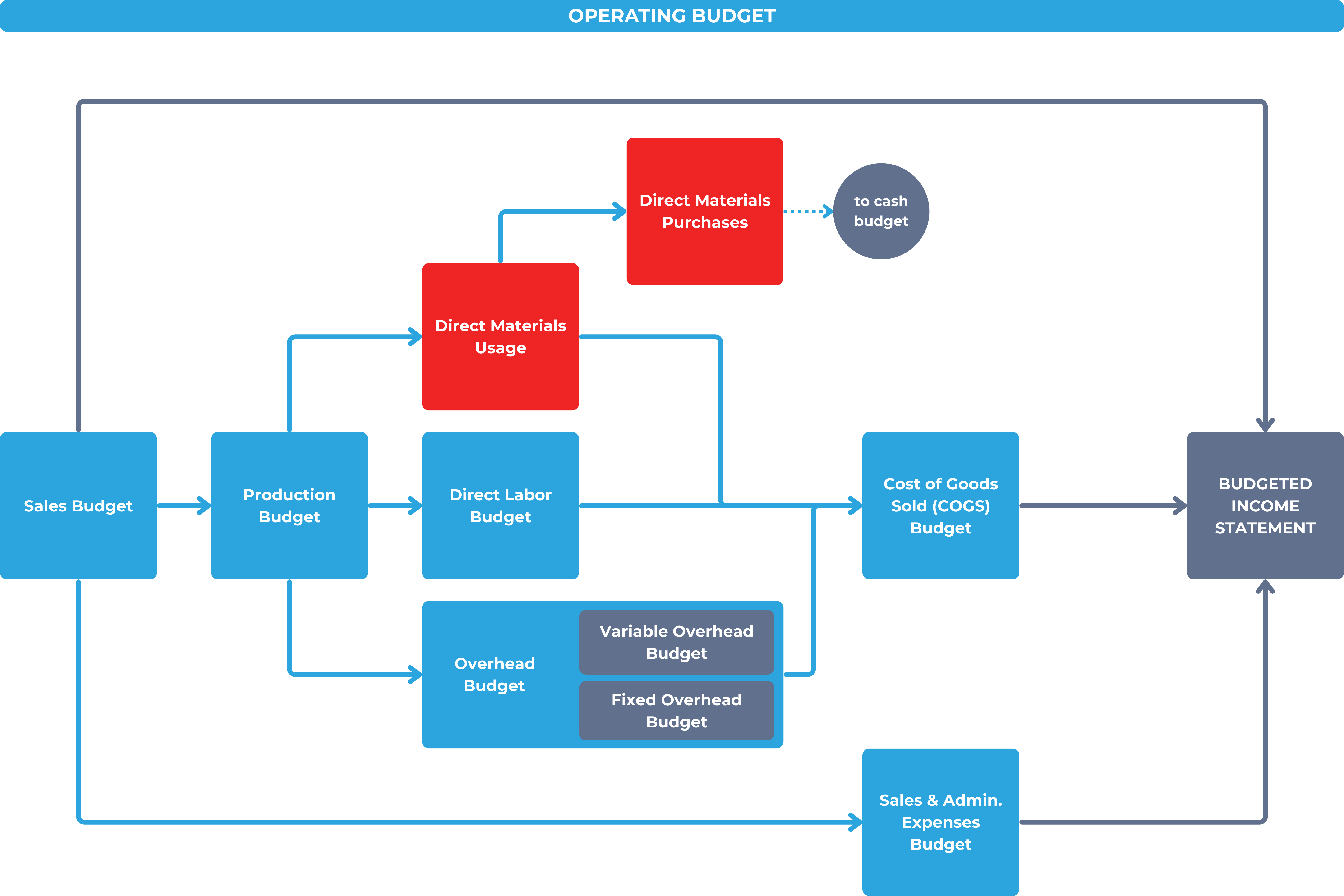
The direct materials budget outlines the quantity and cost of raw materials required for production.

Operating budget - DM budget component

Connection between the production budget and direct materials budget

The direct materials budget is based directly on the production budget. As the production budget defines the units of finished goods to be produced, the direct materials budget calculates the raw materials required to meet production goals at the specified cost per unit.

In preparing the direct materials purchases budget, it’s also essential to consider the company’s payment policies with suppliers, as this directly impacts the cash budget. While the direct materials budget outlines the quantity and cost of materials needed for production, payment terms determine when these costs will actually be paid. If purchases are made on credit, the cash outflows for direct materials may occur in a different period than the purchases themselves. This distinction is crucial for accurately projecting cash flow in the cash budget, allowing the company to anticipate and allocate funds for supplier payments based on agreed-upon credit terms, ensuring smooth operations without unexpected cash shortfalls.

For GreenLine Furniture, the production budget for Q4 shows a need to produce 5,500 units. The direct materials budget will estimate the amount and cost of raw materials needed to support this production level.

Impact of inventory levels and procurement policies in the DM budget

Inventory management and procurement policies play a significant role in the direct materials budget. Companies aim to balance enough inventory to avoid production delays with efficient procurement practices to minimize carrying costs.

  • Beginning inventory and desired ending inventory: These figures help in calculating the direct materials needed for production while keeping buffer stocks. Maintaining appropriate inventory levels ensures there is enough material on hand to meet production goals.
  • Procurement policies: Bulk purchasing, just-in-time procurement, and supplier lead times impact the budget. For instance, bulk buying may result in larger purchases less frequently, while just-in-time policies require smaller, frequent purchases.

Preparing the direct materials budget

The direct materials budget is divided into two parts:

  1. direct materials usage budget; and
  2. direct materials purchases budget

For GreenLine Furniture, let’s assume:

  • Each unit produced requires 4 units of raw material.
  • Beginning raw materials inventory for October is 1,000 units.
  • Desired ending raw materials inventory each month is 2,000 units.
  • Cost per unit of raw material is $3.

Direct materials usage budget

This budget calculates the total quantity and cost of raw materials needed for production. This is directly linked to the amount of units required to be produced determined by the production budget.

Input data from the production budget

Data from the production budget are used as a starting point for the DM usage budget:

Month Production (units) Material per unit Total material required Cost per unit of material Total material cost
October 1,700 - - - -
November 2,033 - - - -
December 1,767 - - - -
Total 5,500 - -

Calculate the total materials required and total materials cost

Using the following formula, we can fill-in the other details of the budget:

Total materials required=Units to produce×Materials per unit

Total materials cost=Total materials required×Cost per unit

Month Production (units) Material per unit Total material required Cost per unit of material Total material cost
October 1,700 4 6,800 $3 $20,400
November 2,033 4 8,132 $3 $24,396
December 1,767 4 7,068 $3 $21,204
Total 5,500 22,000 $66,000

Direct materials purchases budget

This budget determines the quantity and cost of materials to be required purchased, incorporating beginning and desired ending inventory of raw materials. This is directly linked to the direct materials usage budget. Also the logic of the formula to determine the required raw materials to purchase is the same as the purchases budget:

Material to purchase=Total material required+Desired ending inventory−Beginning inventory

Total purchase cost=Material to purchase×Cost per unit

Input the information from the DM usage budget

Based on the information we have so far, you can fill in the following schedule. Note that according to the requirements of GreenLine Furniture, the desired ending inventory every month for Q4 is 2,000 units.

Month Total material required Desired ending inventory Beginning inventory Material to purchase Cost per unit Total purchase cost
October 6,800 2,000 1,000 - $3 -
November 8,132 2,000 - - $3 -
December 7,068 2,000 - - $3 -
Total -

Determine the beginning inventory

Using the assumption that the ending inventory of the previous month is the projected beginning inventory of the next month, we should be able to fill-in additional details.

Month Total material required Desired ending inventory Beginning inventory Material to purchase Cost per unit Total purchase cost
October 6,800 2,000 1,000 - $3 -
November 8,132 2,000 2,000 - $3 -
December 7,068 2,000 2,000 - $3 -
Total -

Calculate the materials to purchase using formula

In addition, we can use the “Material to Purchase” formula presented above to determine the required direct materials to be purchased. After these, we are left with the following direct materials purchases budget for GreenLine Furniture for Q4:

Month Total material required Desired ending inventory Beginning inventory Material to purchase Cost per unit Total purchase cost
October 6,800 2,000 1,000 7,800 $3 $23,400
November 8,132 2,000 2,000 8,132 $3 $24,396
December 7,068 2,000 2,000 7,068 $3 $21,204
Total 23,000 $69,000

The materials to purchase for each month of Q4 are calculated as follows:

October materials to purchase

Material to purchase​=Total material required+Desired ending inventory−Beginning inventory=6,800 units+2,000 units−1,000 units=7,800 units​

November materials to purchase

Material to purchase​=Total material required+Desired ending inventory−Beginning inventory=8,132 units+2,000 units−2,000 units=8,132 units​

December materials to purchase

Material to purchase​=Total material required+Desired ending inventory−Beginning inventory=7,068 units+2,000 units−2,000 units=7,068 units​

The direct materials usage budget provides GreenLine with a breakdown of the total materials required for production, while the direct materials purchases budget estimates the cost of new material purchases required to meet production and inventory goals. These figures will directly feed into the cost of goods sold budget and cash budget, ensuring that materials costs are accurately represented in overall production costs.

Relationship between production budget and direct materials budget

  • Direct materials budget is derived from the production budget
  • Production budget sets units to produce; DM budget calculates raw materials needed and cost per unit
  • Supplier payment terms affect cash flow timing in the cash budget

Impact of inventory levels and procurement policies

  • Beginning and desired ending inventory levels determine materials needed for production and buffer stock
  • Procurement policies (bulk buying, just-in-time, supplier lead times) influence purchase timing and quantities

Preparing the direct materials budget

  • Two components: direct materials usage budget and direct materials purchases budget
  • Usage budget: calculates total raw materials needed and cost for production
  • Purchases budget: determines materials to buy, factoring in inventory levels

Direct materials usage budget

  • Formula: Total Materials Required = Units to Produce × Materials per Unit
  • Formula: Total Materials Cost = Total Materials Required × Cost per Unit
  • Data sourced from production budget (units to produce, material per unit, cost per unit)

Direct materials purchases budget

  • Formula: Material to Purchase = Total Material Required + Desired Ending Inventory − Beginning Inventory
  • Formula: Total Purchase Cost = Material to Purchase × Cost per Unit
  • Beginning inventory for each month = previous month’s ending inventory
  • Purchases budget ensures enough materials for production and inventory targets

Budget integration and feasibility

  • Direct materials budgets feed into cost of goods sold and cash budgets
  • Accurate budgeting ensures production goals are achievable and cash needs are anticipated

Sign up for free to take 12 quiz questions on this topic

Previous
Next  | 2.5.1.5 Direct labor budget
All rights reserved ©2016 - 2026 Achievable, Inc.

Direct materials budget

Learning outcome statements

The learning outcome statements relevant for this section are:

  1. demonstrate an understanding of the relationship between the direct materials budget and the production budget
  2. explain how inventory levels and procurement policies affect the direct materials budget
  3. prepare a direct materials budget based on relevant information and evaluate the feasibility of achieving production goals on the basis of these budgets

The direct materials budget outlines the quantity and cost of raw materials required for production.

Connection between the production budget and direct materials budget

The direct materials budget is based directly on the production budget. As the production budget defines the units of finished goods to be produced, the direct materials budget calculates the raw materials required to meet production goals at the specified cost per unit.

In preparing the direct materials purchases budget, it’s also essential to consider the company’s payment policies with suppliers, as this directly impacts the cash budget. While the direct materials budget outlines the quantity and cost of materials needed for production, payment terms determine when these costs will actually be paid. If purchases are made on credit, the cash outflows for direct materials may occur in a different period than the purchases themselves. This distinction is crucial for accurately projecting cash flow in the cash budget, allowing the company to anticipate and allocate funds for supplier payments based on agreed-upon credit terms, ensuring smooth operations without unexpected cash shortfalls.

For GreenLine Furniture, the production budget for Q4 shows a need to produce 5,500 units. The direct materials budget will estimate the amount and cost of raw materials needed to support this production level.

Impact of inventory levels and procurement policies in the DM budget

Inventory management and procurement policies play a significant role in the direct materials budget. Companies aim to balance enough inventory to avoid production delays with efficient procurement practices to minimize carrying costs.

  • Beginning inventory and desired ending inventory: These figures help in calculating the direct materials needed for production while keeping buffer stocks. Maintaining appropriate inventory levels ensures there is enough material on hand to meet production goals.
  • Procurement policies: Bulk purchasing, just-in-time procurement, and supplier lead times impact the budget. For instance, bulk buying may result in larger purchases less frequently, while just-in-time policies require smaller, frequent purchases.

Preparing the direct materials budget

The direct materials budget is divided into two parts:

  1. direct materials usage budget; and
  2. direct materials purchases budget

For GreenLine Furniture, let’s assume:

  • Each unit produced requires 4 units of raw material.
  • Beginning raw materials inventory for October is 1,000 units.
  • Desired ending raw materials inventory each month is 2,000 units.
  • Cost per unit of raw material is $3.

Direct materials usage budget

This budget calculates the total quantity and cost of raw materials needed for production. This is directly linked to the amount of units required to be produced determined by the production budget.

Input data from the production budget

Data from the production budget are used as a starting point for the DM usage budget:

Month Production (units) Material per unit Total material required Cost per unit of material Total material cost
October 1,700 - - - -
November 2,033 - - - -
December 1,767 - - - -
Total 5,500 - -

Calculate the total materials required and total materials cost

Using the following formula, we can fill-in the other details of the budget:

Total materials required=Units to produce×Materials per unit

Total materials cost=Total materials required×Cost per unit

Month Production (units) Material per unit Total material required Cost per unit of material Total material cost
October 1,700 4 6,800 $3 $20,400
November 2,033 4 8,132 $3 $24,396
December 1,767 4 7,068 $3 $21,204
Total 5,500 22,000 $66,000

Direct materials purchases budget

This budget determines the quantity and cost of materials to be required purchased, incorporating beginning and desired ending inventory of raw materials. This is directly linked to the direct materials usage budget. Also the logic of the formula to determine the required raw materials to purchase is the same as the purchases budget:

Material to purchase=Total material required+Desired ending inventory−Beginning inventory

Total purchase cost=Material to purchase×Cost per unit

Input the information from the DM usage budget

Based on the information we have so far, you can fill in the following schedule. Note that according to the requirements of GreenLine Furniture, the desired ending inventory every month for Q4 is 2,000 units.

Month Total material required Desired ending inventory Beginning inventory Material to purchase Cost per unit Total purchase cost
October 6,800 2,000 1,000 - $3 -
November 8,132 2,000 - - $3 -
December 7,068 2,000 - - $3 -
Total -

Determine the beginning inventory

Using the assumption that the ending inventory of the previous month is the projected beginning inventory of the next month, we should be able to fill-in additional details.

Month Total material required Desired ending inventory Beginning inventory Material to purchase Cost per unit Total purchase cost
October 6,800 2,000 1,000 - $3 -
November 8,132 2,000 2,000 - $3 -
December 7,068 2,000 2,000 - $3 -
Total -

Calculate the materials to purchase using formula

In addition, we can use the “Material to Purchase” formula presented above to determine the required direct materials to be purchased. After these, we are left with the following direct materials purchases budget for GreenLine Furniture for Q4:

Month Total material required Desired ending inventory Beginning inventory Material to purchase Cost per unit Total purchase cost
October 6,800 2,000 1,000 7,800 $3 $23,400
November 8,132 2,000 2,000 8,132 $3 $24,396
December 7,068 2,000 2,000 7,068 $3 $21,204
Total 23,000 $69,000

The materials to purchase for each month of Q4 are calculated as follows:

October materials to purchase

Material to purchase​=Total material required+Desired ending inventory−Beginning inventory=6,800 units+2,000 units−1,000 units=7,800 units​

November materials to purchase

Material to purchase​=Total material required+Desired ending inventory−Beginning inventory=8,132 units+2,000 units−2,000 units=8,132 units​

December materials to purchase

Material to purchase​=Total material required+Desired ending inventory−Beginning inventory=7,068 units+2,000 units−2,000 units=7,068 units​

The direct materials usage budget provides GreenLine with a breakdown of the total materials required for production, while the direct materials purchases budget estimates the cost of new material purchases required to meet production and inventory goals. These figures will directly feed into the cost of goods sold budget and cash budget, ensuring that materials costs are accurately represented in overall production costs.

Key points

Relationship between production budget and direct materials budget

  • Direct materials budget is derived from the production budget
  • Production budget sets units to produce; DM budget calculates raw materials needed and cost per unit
  • Supplier payment terms affect cash flow timing in the cash budget

Impact of inventory levels and procurement policies

  • Beginning and desired ending inventory levels determine materials needed for production and buffer stock
  • Procurement policies (bulk buying, just-in-time, supplier lead times) influence purchase timing and quantities

Preparing the direct materials budget

  • Two components: direct materials usage budget and direct materials purchases budget
  • Usage budget: calculates total raw materials needed and cost for production
  • Purchases budget: determines materials to buy, factoring in inventory levels

Direct materials usage budget

  • Formula: Total Materials Required = Units to Produce × Materials per Unit
  • Formula: Total Materials Cost = Total Materials Required × Cost per Unit
  • Data sourced from production budget (units to produce, material per unit, cost per unit)

Direct materials purchases budget

  • Formula: Material to Purchase = Total Material Required + Desired Ending Inventory − Beginning Inventory
  • Formula: Total Purchase Cost = Material to Purchase × Cost per Unit
  • Beginning inventory for each month = previous month’s ending inventory
  • Purchases budget ensures enough materials for production and inventory targets

Budget integration and feasibility

  • Direct materials budgets feed into cost of goods sold and cash budgets
  • Accurate budgeting ensures production goals are achievable and cash needs are anticipated

More from Operational budgets

  • Introduction
  • Sales budget
  • Production budget
  • Direct labor budget
  • Overhead budget