



Overhead classification and cost behavior
Learning outcome statements
The learning outcome statements relevant for this section are:
- distinguish between fixed and variable overhead expenses
- determine the appropriate time frame for classifying both variable and fixed overhead expenses
- identify the components of variable overhead expense
- identify the components of fixed overhead expense
Introduction
In cost accounting, overhead refers to indirect costs that cannot be directly traced to a specific product, job, or service but are essential to the overall production and operational process. These include expenses such as rent, utilities, factory maintenance, supervisory salaries, and depreciation of manufacturing equipment. Unlike direct materials and direct labor, which are easily attributable to specific units, overhead must be allocated using systematic approaches.
This page covers how overhead behaves as activity changes: the distinction between variable, fixed, and mixed costs, and the time frame over which that behavior holds. The next two pages, overhead allocation methods and overapplied and underapplied overhead, cover how overhead rates are built and reconciled.
Classification of overhead costs
Overhead costs can be classified in several ways, but one of the most important distinctions is based on cost behavior, how costs respond to changes in production or activity levels. This classification divides overhead into variable, fixed, and mixed overhead, each with distinct characteristics and implications for budgeting, costing, and performance evaluation.
Variable overhead
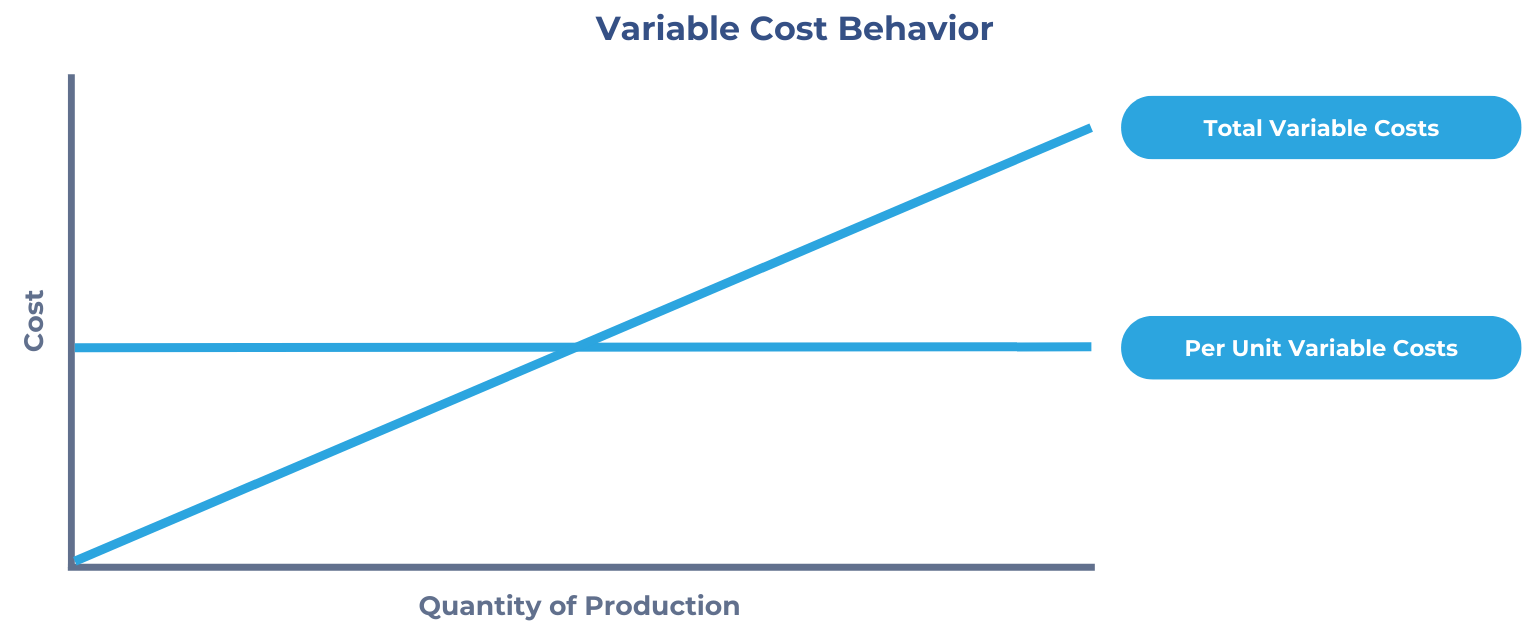
Variable overhead consists of indirect costs that change in direct proportion to activity levels such as units produced, machine hours, or labor hours. These costs fluctuate with production volume and are typically easier to predict in the short term.
Examples include:
- Indirect materials (e.g., lubricants, cleaning supplies used per unit)
- Indirect labor whose hours scale with production volume (e.g., material handlers paid per hour worked on production runs)
- Utility costs that vary with machine usage (e.g., electricity for running production lines)
These costs are important when calculating per-unit costs, evaluating contribution margins, and making short-term pricing or production decisions.
Fixed overhead
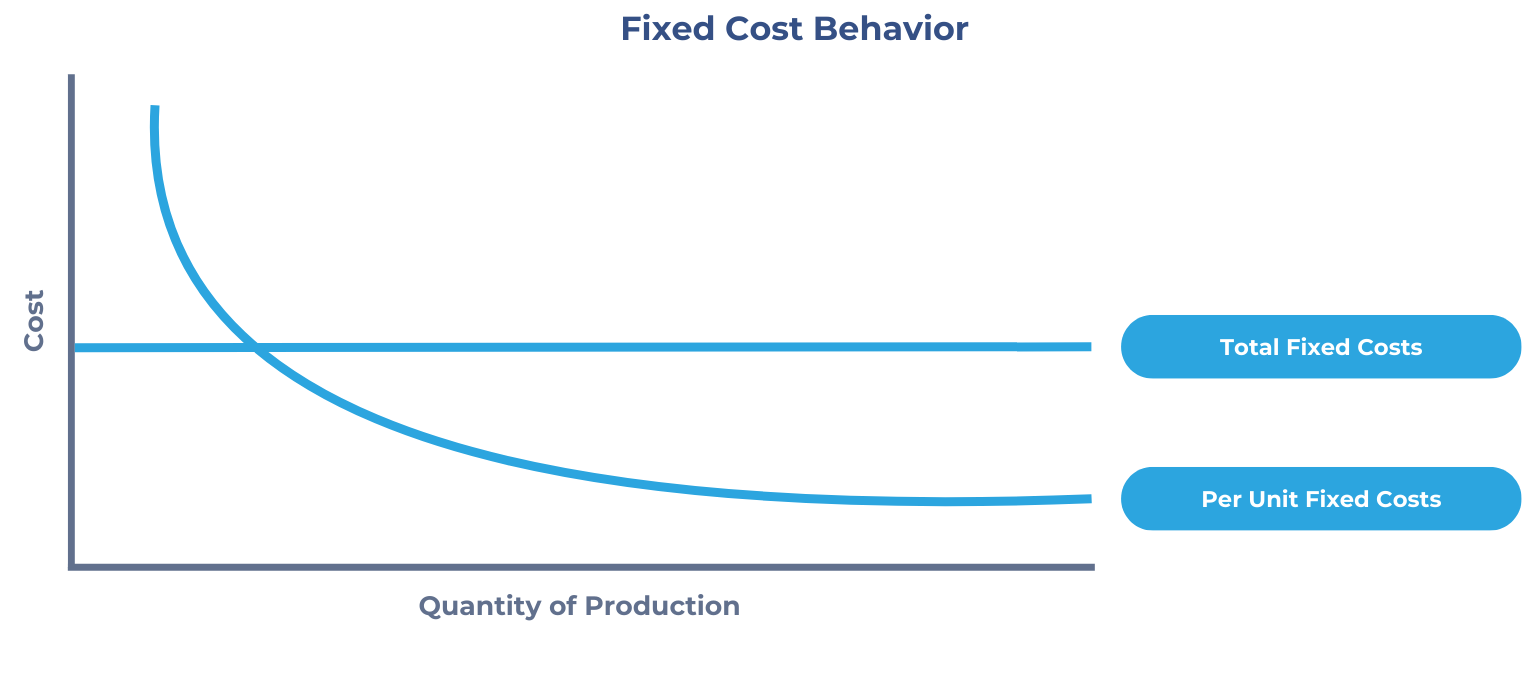
Fixed overhead refers to indirect costs that remain constant in total within a relevant range, regardless of changes in activity or production volume. These costs do not vary with short-term output levels but may change over the long term as capacity or operations evolve. The relevant range is the band of activity, for example, 0 to 15,000 machine hours, over which this assumption holds; outside it, fixed costs can step up (hiring a second shift supervisor or leasing additional floor space) and variable rates can shift too, so a budget built on the wrong relevant range will misstate expected costs.
Although fixed in total, these costs behave inversely on a per-unit basis, as production increases, the fixed overhead per unit declines, and vice versa. This dynamic significantly impacts product costing and profitability assessments.
Example: Per-unit overhead at different volumes
Achievable Co. budgets of fixed overhead per month and of variable overhead per machine hour. Compute the total and per-unit overhead at 10,000 machine hours and at 20,000 machine hours.
At 10,000 machine hours:
- Variable overhead: , or per hour
- Fixed overhead: total, or per hour
At 20,000 machine hours:
- Variable overhead: , or per hour
- Fixed overhead: total, or per hour
Answer: Variable overhead per unit stays constant at no matter the volume, while fixed overhead per unit falls from to as volume doubles. Treating a unitized fixed cost as if it were a variable rate misstates total cost whenever volume changes.
Mixed overhead
Some overhead costs combine both behaviors. A mixed cost (also called a semi-variable cost) has a fixed base amount plus a variable component that changes with activity:
A factory utility bill is a common example: a flat monthly service charge (the fixed component) plus a per-kilowatt-hour usage charge (the variable component). Later cost accounting topics, including regression analysis, give you formal methods for splitting a mixed cost into its fixed and variable pieces.
Time horizon and behavior
Cost behavior may also differ depending on the time frame:
- In the short term, many overhead costs are fixed because capacity and resources are set (e.g., leased equipment or salaried staff).
- In the long term, even fixed overhead becomes more flexible. For example, new facilities can be acquired, leases renegotiated, or staff levels adjusted, making these costs more variable over time.
Understanding the time-sensitive nature of cost behavior is critical when planning, forecasting, or assessing capacity decisions.
Note on direct costs: direct materials and direct labor
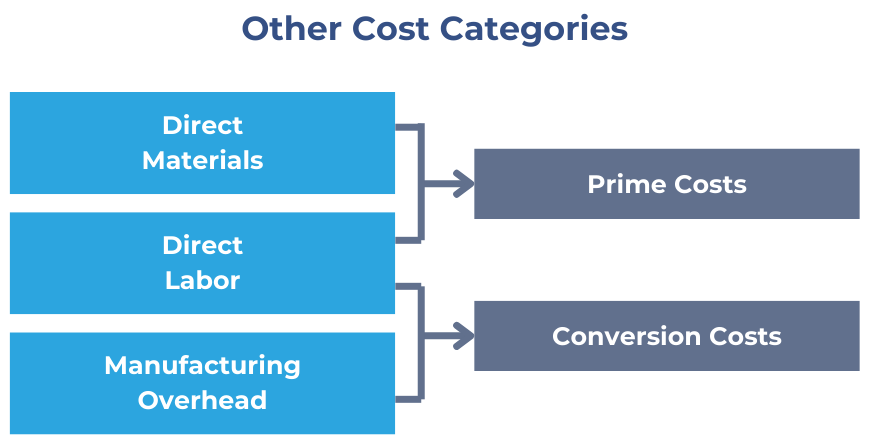
It is important to distinguish overhead costs from direct costs, particularly direct materials (DM) and direct labor (DL). These are the two primary components of direct manufacturing costs and are traced directly to individual products, jobs, or batches.
-
Direct materials include all raw inputs that become a tangible part of the finished product (e.g., wood in furniture, fabric in clothing).
-
Direct labor refers to the wages and related costs of personnel who directly manufacture the product (e.g., machine operators, assembly line workers).
Because DM and DL can be traced directly to cost objects with high accuracy, they do not require allocation. In contrast, overhead expenses (both variable and fixed) must be systematically assigned to cost objects using allocation methods, which is the focus of the upcoming sections.
In addition to classifying manufacturing costs as direct or indirect, it is useful to group them based on function and purpose into two key cost categories: prime costs and conversion costs.
This dual classification helps management analyze production efficiency and identify areas for improvement. For example, high conversion costs may indicate inefficiencies in labor utilization or overhead spending.