



Inventory cost flow: trading vs. manufacturing
Flow of inventory
There are two types of companies typically presented in the CMA examinations, trading and manufacturing, although in practice there are now different types of organizations and even hybrid ones.
Trading companies
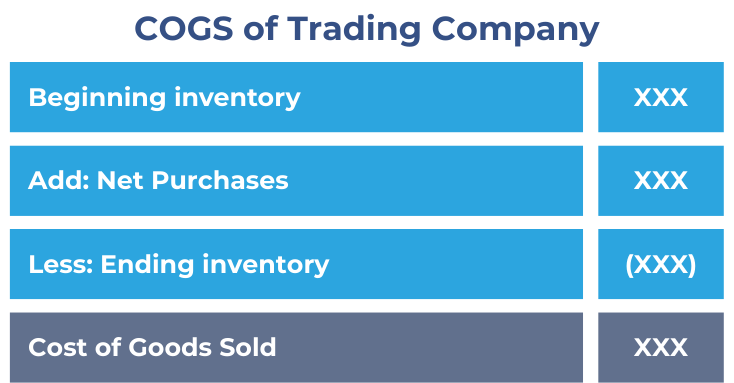
For trading companies, the focus of cost accumulation is simpler than in manufacturing because there is no production process involved. Instead, inventory typically consists of purchased finished goods that are held for resale without any additional processing.
Inventory consists of merchandise held for resale, and cost flow is primarily affected by the inventory system used: either perpetual or periodic. As discussed in previous chapters, these systems determine when and how inventory and COGS are recorded.
While cost accumulation systems like job order or process costing are not applicable, trading companies still use inventory valuation methods such as FIFO, LIFO, or Weighted Average to determine the cost assigned to COGS.
The main objective is to track the cost of inventory purchases and determine the cost of goods sold (COGS) when sales occur. The inventory flow for trading businesses usually involves just two key accounts:
Manufacturing companies
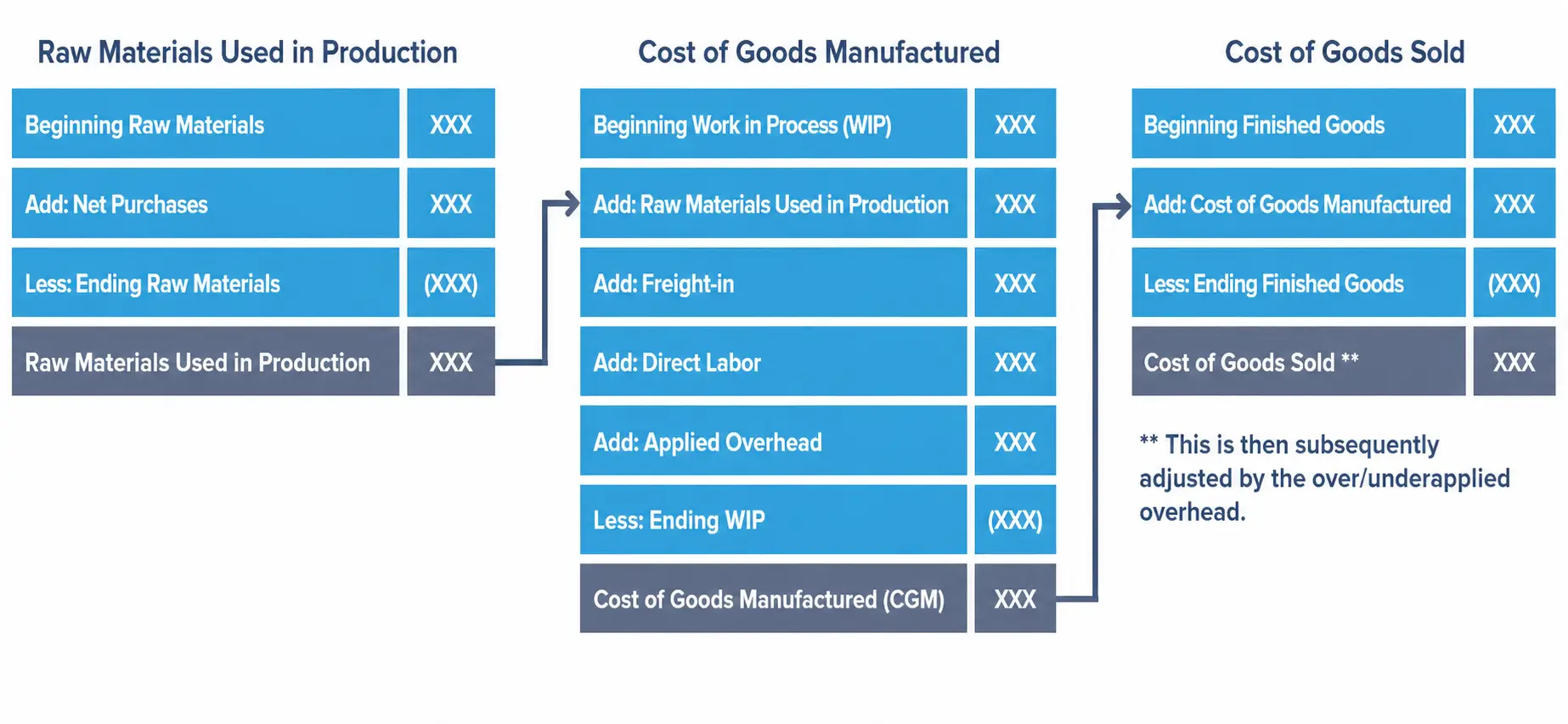
For manufacturing companies, we focus on the systematic accumulation of costs to accurately value inventory and determine the cost of goods sold (COGS) and the various inventory items.
Manufacturing operations typically result in two additional types of inventory: Work-in-Process (WIP) and Finished Goods. Methods of cost accumulation into these inventories depend on the costing system in use, such as job order costing, process costing or activity-based costing, which determine how costs flow through inventory accounts. These will be discussed in later sections.
Example: A manufacturing company purchases raw materials worth $10,000 (uses all of them in production), incurs $5,000 in direct labor, and applies $3,000 in overhead. These costs are first accumulated in WIP. When the production is completed, the total of $18,000 is transferred to Finished Goods. Upon sale, the $18,000 is recognized as COGS.