



Accounting information systems
Learning outcome statements
The learning outcome statements relevant for this section are:
- identify the role of the accounting information system (AIS) in the value chain
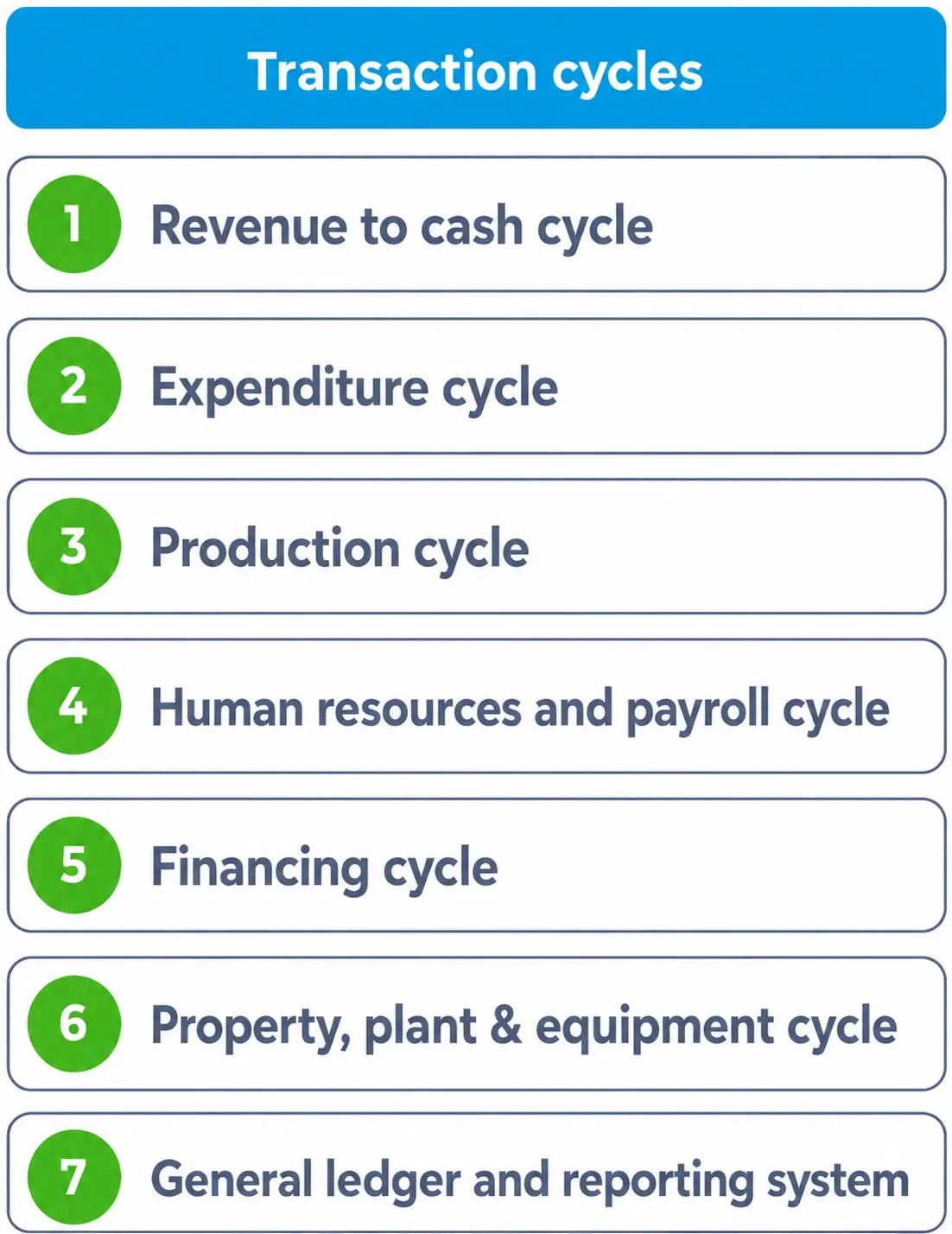
- demonstrate an understanding of the accounting information system cycles, including revenue to cash; expenditures; production; human resources and payroll; financing; and property, plant, and equipment, as well as the general ledger and reporting system
- identify and explain the challenges of having separate financial and nonfinancial systems
Information systems
The advent of information technology (IT) has revolutionized how organizations manage and process information, replacing traditional paper-based systems with electronic systems that integrate automation and digital processing.
The main types of information systems used in businesses include:
- accounting information systems (AIS)
- enterprise resource planning (ERP) systems, and
- enterprise performance management (EPM) systems
Accounting information system (AIS)
It is important to distinguish between data and information in the context of an AIS:
- Data refers to raw, unprocessed facts that have no inherent meaning until they are organized and interpreted.
- Information, on the other hand, is processed data that has been structured and contextualized to provide meaningful insights for decision-making.
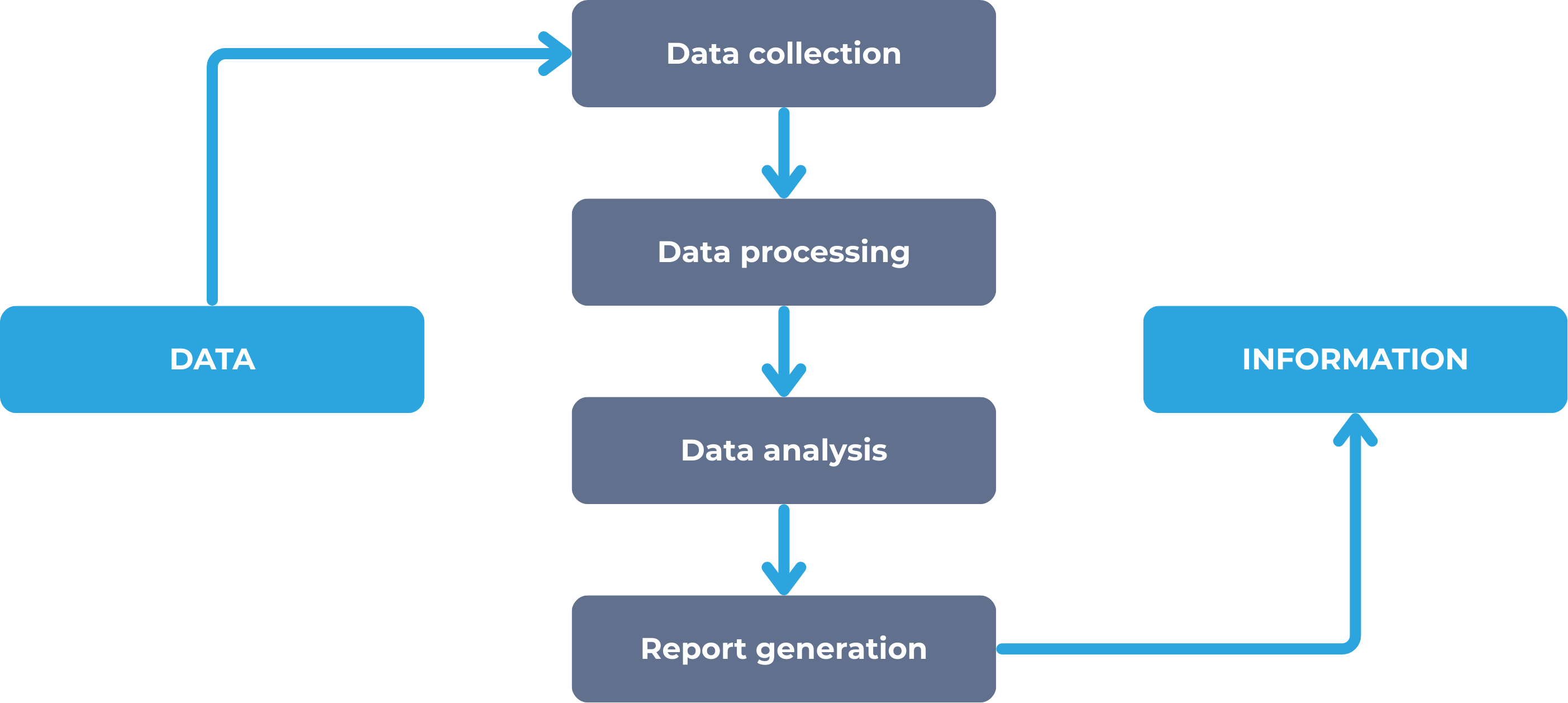
AIS plays a critical role in transforming raw financial and operational data into useful information for various departments within an organization. The process typically follows these steps:
- Data collection: Raw data is gathered from different sources, such as transactions, invoices, and receipts.
- Data processing: The system organizes, categorizes, and stores the data using predefined rules and accounting principles.
- Data analysis: AIS applies computations, classifications, and summarizations to convert data into structured financial information.
- Report generation: The processed information is compiled into reports, such as financial statements, sales analyses, and performance dashboards, which are then used by decision-makers.
AIS and the value chain
The value chain consists of the series of activities that create value for a company’s products and services. AIS plays a crucial role in this chain by providing relevant financial and operational information that aids in decision-making.
Key areas where AIS contributes in the value chain are as follows:
- Research and development (R&D): AIS tracks and reports costs related to product development, including material, labor, and overhead costs.
- Procurement/purchasing: The system ensures proper tracking of supplier transactions, purchase orders, inventory levels, and cost management.
- Production: AIS helps in cost allocation, production planning, and process efficiency by tracking work-in-progress, labor costs, and overhead expenses.
- Marketing and sales: Sales tracking, customer relationship management, and revenue analysis are supported by AIS to inform marketing strategies.
- Distribution and logistics: The AIS monitors inventory levels, order fulfillment, and shipping costs to optimize supply chain management.
- Customer service: AIS tracks customer complaints, warranty claims, and return processing to enhance service quality and customer satisfaction.
AIS not only facilitates these activities but also integrates financial and operational processes to enhance business efficiency and effectiveness.
Accounting information system transaction cycles
These cycles group similar types of transactions to ensure efficient data processing and reporting. AIS encompasses various transaction cycles, each representing a different segment of financial operations. These cycles ensure that financial data is accurately recorded, processed, and reported.
1. Revenue to cash cycle
The goal of the revenue to cash cycle is to ensure the efficient and accurate recording of sales transactions and the collection of payments from customers. This cycle is essential for maintaining a steady cash flow and ensuring that revenue is recognized promptly. Key activities include managing sales orders, verifying credit authorization, processing shipments, generating invoices, and handling cash receipts.
2. Expenditure cycle
The expenditure cycle aims to control purchasing activities and ensure that payments for goods and services are properly authorized and recorded. It supports cost management by preventing unauthorized purchases and maintaining accurate records of accounts payable. Activities in this cycle include processing purchase requisitions, issuing purchase orders, receiving goods and services, and making payments to suppliers.
3. Production cycle
The production cycle is designed to oversee the manufacturing process efficiently by tracking raw material usage, labor costs, and work-in-progress. It ensures that production runs smoothly while minimizing costs and maximizing efficiency. Activities within this cycle include production planning, materials management, work order processing, and cost accounting.
4. Human resources and payroll cycle
The primary goal of the human resources and payroll cycle is to manage employee-related processes, including hiring, payroll processing, benefits administration, and compliance with labor laws. This cycle ensures that employees are compensated accurately and on time while maintaining proper records for financial reporting and tax compliance.
5. Financing cycle
The financing cycle manages the company’s funding activities, ensuring that capital is acquired efficiently and financial obligations are met. It helps maintain liquidity, optimize capital structure, and support long-term financial planning. Activities in this cycle include issuing stocks or bonds, obtaining loans, managing interest payments, and repaying principal amounts.
6. Property, plant, and equipment (PP&E) cycle
The goal of this cycle is to manage the acquisition, utilization, and disposal of fixed assets, ensuring proper tracking and depreciation. This cycle supports capital investment decisions and asset maintenance. Key activities include capital budgeting, acquiring fixed assets, calculating depreciation, and managing asset disposal.
7. General ledger (GL) and reporting system
The GL and reporting system serves as the central hub for recording and summarizing financial transactions. Its goal is to ensure accurate financial reporting and compliance with accounting standards. Activities in this system include recording journal entries, reconciling accounts, preparing financial statements, and generating financial reports.
Each cycle is interconnected, and effective management of AIS ensures seamless financial operations and strategic decision-making.
Non-financial data in AIS
While an Accounting Information System (AIS) primarily focuses on financial data, it also incorporates non-financial data that provides valuable insights for interpreting financial performance. Non-financial data includes information that influences financial metrics, helping organizations make more informed decisions and improve overall business efficiency.
Non-financial data can provide context to financial transactions, allowing companies to analyze trends, assess risks, and enhance forecasting accuracy. Examples of non-financial data that can be stored in AIS are:
- employee productivity rates
- customer service response times
- machine downtime in production
- social media engagement statistics.
Integrating non-financial data within an AIS enhances decision-making by providing a holistic view of an organization’s performance. By analyzing both financial and non-financial information together, businesses can identify inefficiencies, improve resource allocation, and align operational strategies with financial objectives.
When financial and non-financial systems operate independently, organizations face several challenges that can impact decision-making and operational efficiency:
Data inconsistency
One major issue is data inconsistency, where financial and non-financial data may not align due to discrepancies in data sources and formats. This can result in inaccurate reporting and ineffective performance evaluation.
Lack of integration
Another challenge is the lack of integration, which can lead to manual processes for transferring data between systems. This inefficiency increases the risk of errors, delays, and duplicated efforts, which can affect overall productivity.
Limited organizational visibility
Additionally, limited organizational visibility is a consequence of segregated systems, making it difficult for decision-makers to obtain a comprehensive view of business performance.
Risk exposure
The separation of financial and non-financial systems also increases risk exposure, as fragmented data management can lead to compliance issues, fraud, and inaccuracies in forecasting. Organizations that fail to integrate these systems may struggle with strategic planning and resource allocation.