




Achievable logoAchievable logo
CMA Part 1
Sign in
Sign up
Purchase
Textbook
Practice exams
Support
How it works
Exam catalog
Mountain with a flag at the peak
Textbook
1. External financial reporting decisions
2. Planning, budgeting, and forecasting
2.1 Strategic planning
2.1.1 Analysis of external and internal factors affecting strategy
2.1.2 Long-term mission and goals
2.1.3 Alignment of tactics with long-term strategic goals
2.1.4 Strategic planning models and analytical techniques
2.1.5 Characteristics of successful strategic planning process
2.2 Budgeting concepts
2.3 Forecasting techniques
2.4 Budgeting methodologies
2.5 Annual profit plan and supporting schedules
2.6 Top-level planning and analysis
3. Performance management
4. Cost management
5. Internal control
6. Technology and analytics
Achievable logoAchievable logo
2.1.4 Strategic planning models and analytical techniques
Achievable CMA Part 1
2. Planning, budgeting, and forecasting
2.1. Strategic planning
Our CMA Part 1 course is currently in development and is a work-in-progress.

Strategic planning models and analytical techniques

8 min read
Font
Discuss
Share
Feedback

Learning outcome statements

The learning outcome statements relevant for this section are:

  1. describe Porter’s generic strategies, including cost leadership, differentiation, and focus
  2. demonstrate an understanding of the following planning tools and techniques: SWOT analysis, Porter’s Five forces, situational analysis, PEST analysis, scenario planning, competitive analysis, contingency planning, and the BCG Growth-Share Matrix.

Effective strategic planning requires organizations to use various models and analytical techniques to assess their competitive environment and make informed decisions about the direction of the business.

Porter’s generic strategies

Michael Porter’s generic strategies provide a framework for understanding how businesses can achieve a competitive advantage in their industry. The three primary strategies are:

Porter's generic strategies to achieve competitive advantage

Cost leadership

In this strategy, a company aims to become the lowest-cost producer in the industry. This can be achieved through economies of scale, efficient operations, or leveraging cost-saving technologies. The goal is to offer products or services at a lower price than competitors while maintaining profitability.

Differentiation

The differentiation strategy focuses on offering unique products or services that stand out from competitors. Companies may differentiate based on product features, customer service, brand image, or innovation. By providing distinctive value, the company can charge a premium price.

Focus

This strategy involves targeting a specific niche or segment of the market. The company can either focus on cost leadership or differentiation within this narrow segment, catering to the unique needs of a defined customer group. The focus strategy enables businesses to specialize and build loyalty among a smaller, more defined customer base.

Planning tools and techniques

To develop effective strategies, organizations use several analytical tools to assess their internal strengths and weaknesses as well as external opportunities and threats. Some of the most commonly used techniques include:

SWOT analysis

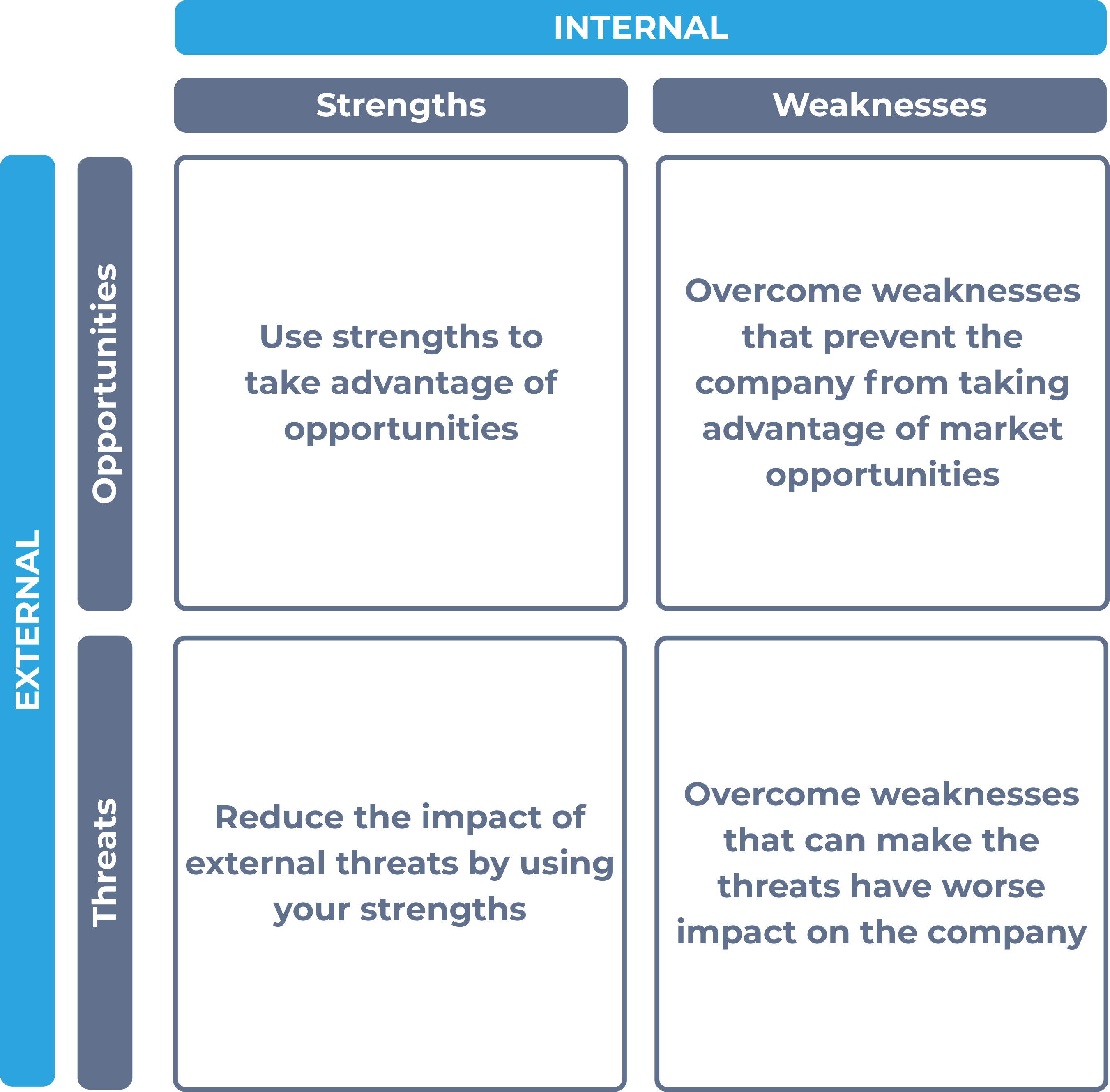
SWOT Analysis is a versatile tool used to identify an organization’s Strengths, Weaknesses, Opportunities, and Threats.

SWOT analysis intersection of quadrants

This framework allows organizations to take a holistic view of both their internal capabilities (strengths and weaknesses) and external environment (opportunities and threats). Its key benefit lies in offering a clear, structured framework for understanding the organization’s current situation and guiding strategic decision-making through this understanding. By leveraging strengths, addressing weaknesses, exploiting opportunities, and mitigating threats, businesses can better align their strategies with market realities.

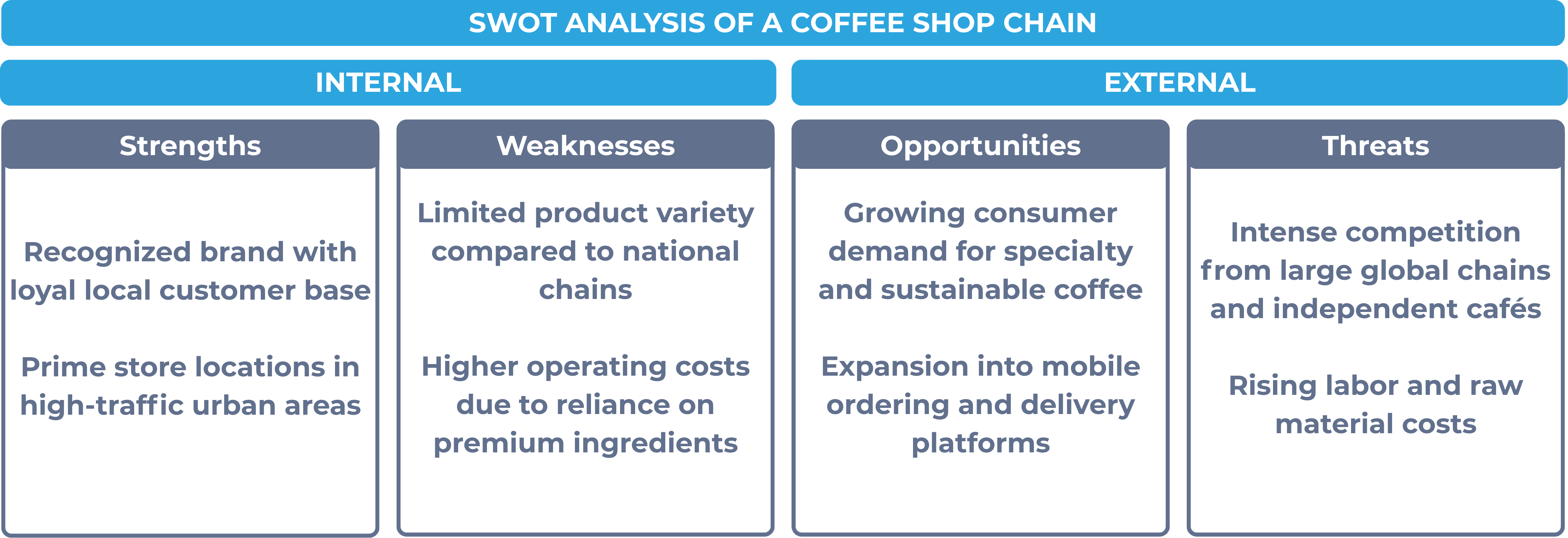
Below is a sample SWOT analysis of a coffee shop chain:

SWOT analysis of a coffee shop chain

Porter’s five forces

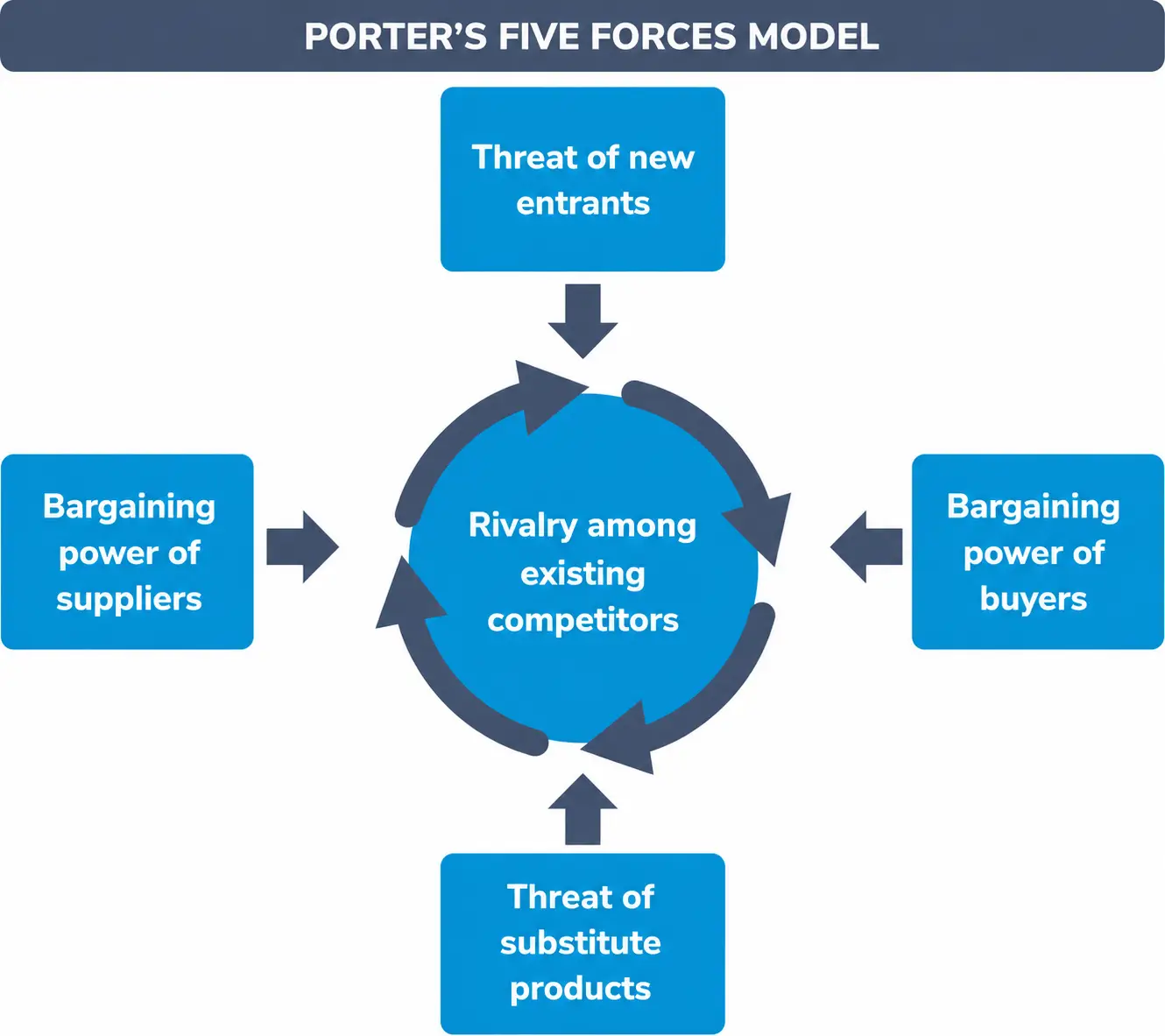
This model assesses the competitive forces within an industry.

Porter's Five Forces model surrounding rivalry among existing competitors in the center.
Porter's Five Forces Model

The five forces include:

  • Threat of new entrants: The ease with which new competitors can enter the market.
  • Bargaining power of suppliers: The influence suppliers have over pricing and supply availability.
  • Bargaining power of buyers: The power customers have to influence prices and demand.
  • Threat of substitute products or services: The risk of customers switching to alternative solutions.
  • Industry rivalry: The level of competition among existing firms in the market.

This model’s usefulness lies in helping businesses understand the dynamics that influence profitability in the market the business is operating in. By recognizing which forces are most powerful, companies can develop strategies to mitigate risks.

PEST analysis

PEST stands for Political, Economic, Social, and Technological factors. This external analysis helps businesses understand the macro-environment in which they operate, enabling them to adapt to changes in legislation, economic conditions, social trends, and technological advancements.

The PESTEL framework of analysis

This tool is valuable for anticipating external changes that might affect business performance, such as regulatory shifts or emerging technologies. By identifying external risks and opportunities early, PEST helps businesses adapt their strategies to remain competitive in a dynamic environment. It also enhances long-term planning by ensuring that external trends and market conditions are taken into account in strategic decisions. PEST Analysis can also be extended to PESTEL, adding Environmental and Legal factors, giving a more comprehensive view of the macro-environment.

BCG growth-share matrix

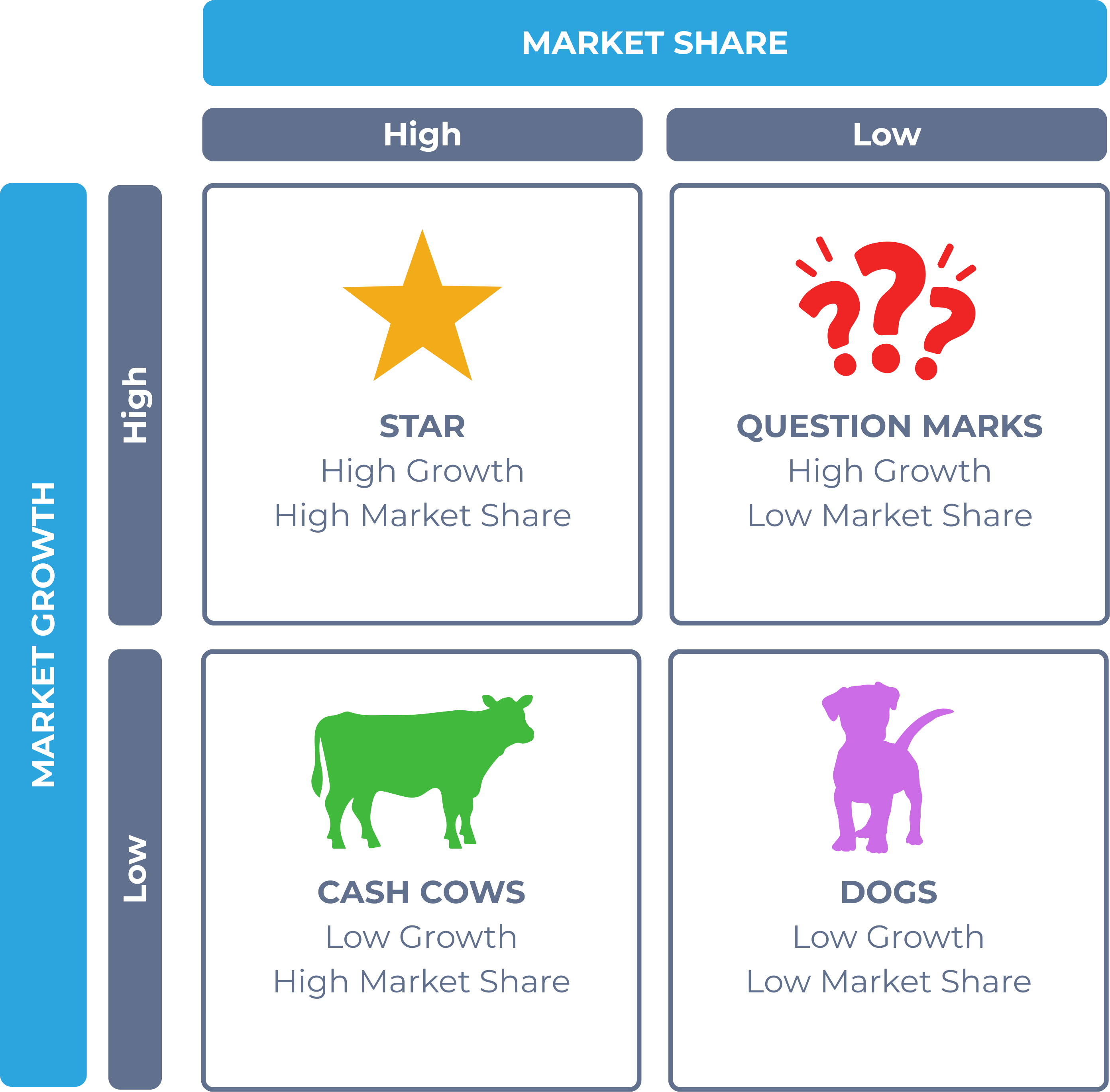
The BCG (Boston Consulting Group) matrix is a tool used to evaluate a company’s product portfolio based on market growth and market share. It categorizes products into four quadrants.

BCG Growth-Share matrix
  • Stars: High market share, high growth. These products require investment to maintain growth.
  • Cash cows: High market share, low growth. These products generate steady cash flow with minimal investment.
  • Question marks: Low market share, high growth. These products require strategic decisions about whether to invest for growth or exit the market.
  • Dogs: Low market share, low growth. These products may be candidates for divestment.

This tool is particularly useful for identifying high-potential areas that need more investment and ensuring that the business focuses on profitable products while avoiding wasted resources on underperformers. It also provides insight into the lifecycle stages of products or business units.

Other tools and techniques

  • Situational analysis: This technique involves a comprehensive review of both internal and external factors affecting the organization. It typically includes an examination of the company’s current position, market trends, and the competitive landscape to identify opportunities for growth or improvement.

  • Scenario planning: Scenario planning involves developing various potential future scenarios and analyzing how different factors may impact the organization. This technique allows businesses to anticipate risks and opportunities and prepare contingency plans for various outcomes.

  • Competitive analysis: A competitive analysis involves studying the strategies, strengths, weaknesses, and market positions of key competitors. By understanding competitors’ approaches, organizations can identify areas for differentiation and competitive advantage.

  • Contingency planning: This planning technique prepares organizations for unexpected events or disruptions that could impact operations. Contingency plans outline specific actions to be taken in response to events such as economic downturns, natural disasters, or operational failures.

Conclusion

Strategic planning models and analytical techniques provide organizations with valuable insights into their competitive environment and internal capabilities. By utilizing Porter’s generic strategies, companies can develop a competitive advantage, while tools like SWOT, PEST, and the BCG Matrix allow them to make informed decisions based on a thorough analysis of both internal and external factors. These tools help guide strategic choices that align with the organization’s long-term objectives and prepare them for future challenges.

Porter’s generic strategies

  • Three main strategies: cost leadership, differentiation, focus
  • Cost leadership: lowest-cost producer, efficient operations, economies of scale
  • Differentiation: unique products/services, premium pricing, brand/image emphasis
  • Focus: targets specific market niche, applies cost or differentiation within segment

SWOT analysis

  • Identifies Strengths, Weaknesses (internal), Opportunities, Threats (external)
  • Structured framework for strategic decision-making
  • Guides leveraging strengths, addressing weaknesses, exploiting opportunities, mitigating threats

Porter’s five forces

  • Analyzes industry competitiveness through:
    • Threat of new entrants
    • Bargaining power of suppliers
    • Bargaining power of buyers
    • Threat of substitutes
    • Industry rivalry
  • Assesses profitability and market dynamics

PEST analysis

  • Examines macro-environmental factors: Political, Economic, Social, Technological
    • Can be extended to PESTEL: adds Environmental, Legal
  • Anticipates external risks/opportunities, informs long-term planning

BCG growth-share matrix

  • Categorizes products/business units by market share and growth:
    • Stars: high share, high growth (investment needed)
    • Cash cows: high share, low growth (steady cash flow)
    • Question marks: low share, high growth (strategic decision point)
    • Dogs: low share, low growth (potential divestment)
  • Guides resource allocation and portfolio management

Other planning tools and techniques

  • Situational analysis: reviews internal/external factors, current position, market trends
  • Scenario planning: develops future scenarios, prepares for risks/opportunities
  • Competitive analysis: studies competitors’ strengths, weaknesses, strategies
  • Contingency planning: prepares for unexpected disruptions, outlines response actions

Sign up for free to take 10 quiz questions on this topic

Previous
Next  | 2.1.5 Characteristics of successful strategic planning process
All rights reserved ©2016 - 2026 Achievable, Inc.

Strategic planning models and analytical techniques

Learning outcome statements

The learning outcome statements relevant for this section are:

  1. describe Porter’s generic strategies, including cost leadership, differentiation, and focus
  2. demonstrate an understanding of the following planning tools and techniques: SWOT analysis, Porter’s Five forces, situational analysis, PEST analysis, scenario planning, competitive analysis, contingency planning, and the BCG Growth-Share Matrix.

Effective strategic planning requires organizations to use various models and analytical techniques to assess their competitive environment and make informed decisions about the direction of the business.

Porter’s generic strategies

Michael Porter’s generic strategies provide a framework for understanding how businesses can achieve a competitive advantage in their industry. The three primary strategies are:

Cost leadership

In this strategy, a company aims to become the lowest-cost producer in the industry. This can be achieved through economies of scale, efficient operations, or leveraging cost-saving technologies. The goal is to offer products or services at a lower price than competitors while maintaining profitability.

Differentiation

The differentiation strategy focuses on offering unique products or services that stand out from competitors. Companies may differentiate based on product features, customer service, brand image, or innovation. By providing distinctive value, the company can charge a premium price.

Focus

This strategy involves targeting a specific niche or segment of the market. The company can either focus on cost leadership or differentiation within this narrow segment, catering to the unique needs of a defined customer group. The focus strategy enables businesses to specialize and build loyalty among a smaller, more defined customer base.

Planning tools and techniques

To develop effective strategies, organizations use several analytical tools to assess their internal strengths and weaknesses as well as external opportunities and threats. Some of the most commonly used techniques include:

SWOT analysis

SWOT Analysis is a versatile tool used to identify an organization’s Strengths, Weaknesses, Opportunities, and Threats.

This framework allows organizations to take a holistic view of both their internal capabilities (strengths and weaknesses) and external environment (opportunities and threats). Its key benefit lies in offering a clear, structured framework for understanding the organization’s current situation and guiding strategic decision-making through this understanding. By leveraging strengths, addressing weaknesses, exploiting opportunities, and mitigating threats, businesses can better align their strategies with market realities.

Below is a sample SWOT analysis of a coffee shop chain:

Porter’s five forces

This model assesses the competitive forces within an industry.

The five forces include:

  • Threat of new entrants: The ease with which new competitors can enter the market.
  • Bargaining power of suppliers: The influence suppliers have over pricing and supply availability.
  • Bargaining power of buyers: The power customers have to influence prices and demand.
  • Threat of substitute products or services: The risk of customers switching to alternative solutions.
  • Industry rivalry: The level of competition among existing firms in the market.

This model’s usefulness lies in helping businesses understand the dynamics that influence profitability in the market the business is operating in. By recognizing which forces are most powerful, companies can develop strategies to mitigate risks.

PEST analysis

PEST stands for Political, Economic, Social, and Technological factors. This external analysis helps businesses understand the macro-environment in which they operate, enabling them to adapt to changes in legislation, economic conditions, social trends, and technological advancements.

This tool is valuable for anticipating external changes that might affect business performance, such as regulatory shifts or emerging technologies. By identifying external risks and opportunities early, PEST helps businesses adapt their strategies to remain competitive in a dynamic environment. It also enhances long-term planning by ensuring that external trends and market conditions are taken into account in strategic decisions. PEST Analysis can also be extended to PESTEL, adding Environmental and Legal factors, giving a more comprehensive view of the macro-environment.

BCG growth-share matrix

The BCG (Boston Consulting Group) matrix is a tool used to evaluate a company’s product portfolio based on market growth and market share. It categorizes products into four quadrants.

  • Stars: High market share, high growth. These products require investment to maintain growth.
  • Cash cows: High market share, low growth. These products generate steady cash flow with minimal investment.
  • Question marks: Low market share, high growth. These products require strategic decisions about whether to invest for growth or exit the market.
  • Dogs: Low market share, low growth. These products may be candidates for divestment.

This tool is particularly useful for identifying high-potential areas that need more investment and ensuring that the business focuses on profitable products while avoiding wasted resources on underperformers. It also provides insight into the lifecycle stages of products or business units.

Other tools and techniques

  • Situational analysis: This technique involves a comprehensive review of both internal and external factors affecting the organization. It typically includes an examination of the company’s current position, market trends, and the competitive landscape to identify opportunities for growth or improvement.

  • Scenario planning: Scenario planning involves developing various potential future scenarios and analyzing how different factors may impact the organization. This technique allows businesses to anticipate risks and opportunities and prepare contingency plans for various outcomes.

  • Competitive analysis: A competitive analysis involves studying the strategies, strengths, weaknesses, and market positions of key competitors. By understanding competitors’ approaches, organizations can identify areas for differentiation and competitive advantage.

  • Contingency planning: This planning technique prepares organizations for unexpected events or disruptions that could impact operations. Contingency plans outline specific actions to be taken in response to events such as economic downturns, natural disasters, or operational failures.

Conclusion

Strategic planning models and analytical techniques provide organizations with valuable insights into their competitive environment and internal capabilities. By utilizing Porter’s generic strategies, companies can develop a competitive advantage, while tools like SWOT, PEST, and the BCG Matrix allow them to make informed decisions based on a thorough analysis of both internal and external factors. These tools help guide strategic choices that align with the organization’s long-term objectives and prepare them for future challenges.

Key points

Porter’s generic strategies

  • Three main strategies: cost leadership, differentiation, focus
  • Cost leadership: lowest-cost producer, efficient operations, economies of scale
  • Differentiation: unique products/services, premium pricing, brand/image emphasis
  • Focus: targets specific market niche, applies cost or differentiation within segment

SWOT analysis

  • Identifies Strengths, Weaknesses (internal), Opportunities, Threats (external)
  • Structured framework for strategic decision-making
  • Guides leveraging strengths, addressing weaknesses, exploiting opportunities, mitigating threats

Porter’s five forces

  • Analyzes industry competitiveness through:
    • Threat of new entrants
    • Bargaining power of suppliers
    • Bargaining power of buyers
    • Threat of substitutes
    • Industry rivalry
  • Assesses profitability and market dynamics

PEST analysis

  • Examines macro-environmental factors: Political, Economic, Social, Technological
    • Can be extended to PESTEL: adds Environmental, Legal
  • Anticipates external risks/opportunities, informs long-term planning

BCG growth-share matrix

  • Categorizes products/business units by market share and growth:
    • Stars: high share, high growth (investment needed)
    • Cash cows: high share, low growth (steady cash flow)
    • Question marks: low share, high growth (strategic decision point)
    • Dogs: low share, low growth (potential divestment)
  • Guides resource allocation and portfolio management

Other planning tools and techniques

  • Situational analysis: reviews internal/external factors, current position, market trends
  • Scenario planning: develops future scenarios, prepares for risks/opportunities
  • Competitive analysis: studies competitors’ strengths, weaknesses, strategies
  • Contingency planning: prepares for unexpected disruptions, outlines response actions

More from Strategic planning

  • Analysis of external and internal factors affecting strategy
  • Long-term mission and goals
  • Alignment of tactics with long-term strategic goals
  • Characteristics of successful strategic planning process