



Continuous (rolling) budgets
Definition, purpose, and time frame
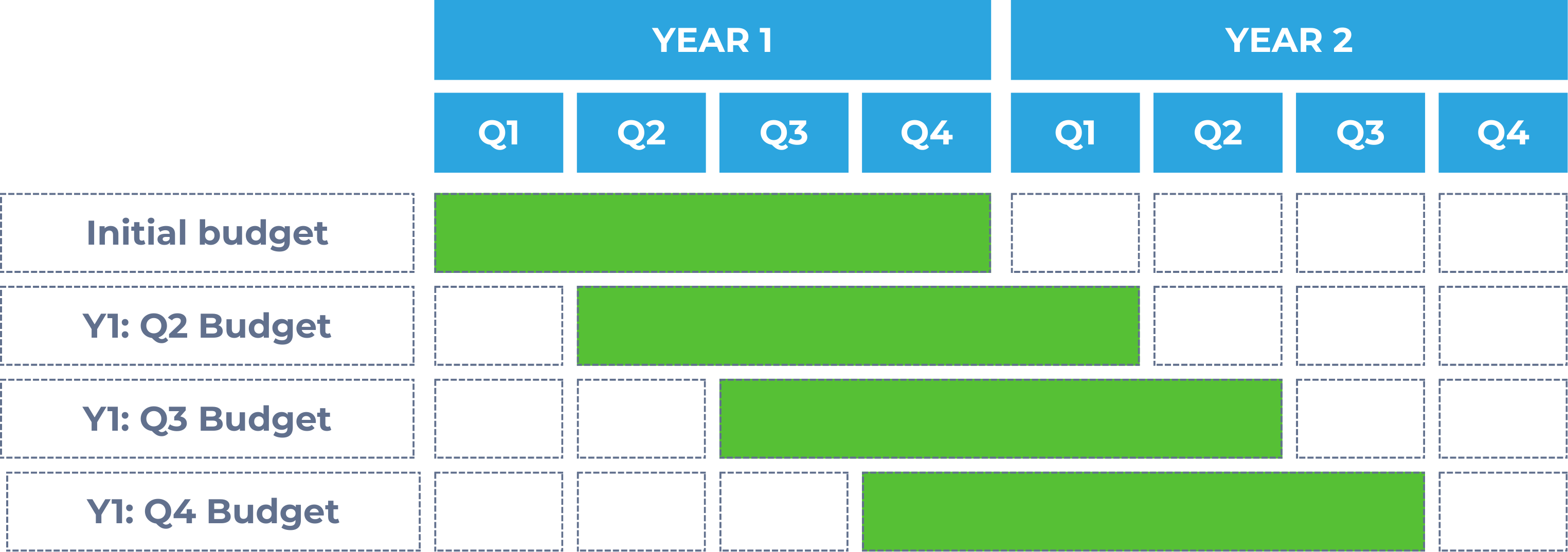
Unlike an annual budget that remains unchanged, a rolling budget adds a new period (such as a month or quarter) as each period concludes. As each period is completed, it drops off the near end of the budget while a new period is added at the far end - so the total planning horizon stays a constant length, typically the next 12 months out. This is what distinguishes a rolling budget from simply extending a static annual budget: a static budget covers a fixed window that shrinks as the year progresses, while a rolling budget’s window never shrinks - it just continuously shifts forward. This method allows for ongoing adjustments and is particularly beneficial for dynamic or unpredictable environments, where flexibility is essential to respond to changes.
Rolling budgets are typically used on a monthly or quarterly basis, making them ideal for organizations that need to adapt quickly to market shifts, seasonal variations, or other external factors. The primary purpose of a rolling budget is to provide a continually updated financial plan that reflects current conditions, helping organizations better anticipate future needs.
Components and interrelationships
A continuous budget includes all typical budgeting components (e.g., revenues, expenses, and cash flows) but with a flexible and forward-looking approach. The core difference lies in how each component is continuously adjusted to remain relevant, making rolling budgets highly adaptable.
For example, suppose a company maintains a rolling 12-month budget. When January closes, its budgeted figures are replaced with January’s actual results, and a new January (12 months out) is appended to the revenue, expense, and cash flow schedules. Every component shifts forward by one period together, so the budget always covers a full year ahead.
Developing the continuous budget
Creating a continuous or rolling budget involves regular updates and reviews. The process typically starts with a base budget that covers all necessary items (revenue, expenses, cash flow) for a full year. However, rather than locking in this budget, the organization revisits it periodically - often monthly or quarterly. At each interval, adjustments are made based on current conditions and future projections. This approach allows for ongoing realignment of resources with organizational goals, reflecting the most recent information available.
For example, if sales projections improve mid-year, the rolling budget can incorporate these adjustments, providing a more accurate and realistic financial outlook. A rolling budget requires coordination across departments to ensure each update is accurate and aligned with the latest strategic priorities.
Benefits and limitations
Benefits
- Enhanced responsiveness: Rolling budgets enable organizations to respond quickly to changes, maintaining a relevant and adaptive financial plan.
- Improved accuracy: By updating projections regularly, rolling budgets provide a more accurate financial picture based on current data rather than relying on outdated assumptions.
- Better alignment with strategy: Regular updates ensure that resources are continually aligned with the latest strategic objectives, fostering agile decision-making.
Limitations
- Higher administrative demand: Continuous updates require more frequent reviews and adjustments, which can increase workload for finance and budgeting teams.
- Potential for overly frequent changes: Regular adjustments can lead to budget volatility if not managed carefully, impacting long-term planning.
- Resource intensive: The need for frequent data collection and analysis requires a reliable flow of information and coordination, which can be resource-intensive for larger organizations.
Application in business situations
Rolling budgets are particularly useful in industries that face frequent changes or need flexibility in their financial planning. For example, retail businesses with seasonal demand fluctuations may use rolling budgets to adjust forecasts and inventory needs throughout the year. Similarly, tech companies in fast-paced markets benefit from rolling budgets by maintaining up-to-date projections that reflect recent innovations or market shifts.