Update it, or open this page in a current version of Chrome, Safari, Firefox or Edge. On an iPhone or iPad, update iOS: every browser there runs on the version of Safari that comes with it.
ChocoDelight Cookies produces gourmet chocolate chip cookies. The production process uses two types of direct materials: premium chocolate chips (Material A) and organic flour (Material B). The company’s production standards and actual results for a recent batch are outlined below.
To produce 1,000 cookies, the following usage and cost standards apply:
Material A: 5 kilograms per 1,000 cookies at $10 per kilogram
Material B: 8 kilograms per 1,000 cookies at $5 per kilogram
Actual results for the recent batch were 1,500 cookies were produced:
Material A: 6 kilograms at $12 per kilogram
Material B: 15 kilograms at $6 per kilogram
Calculate the Direct Materials variances:
Materials price variance
Materials usage variance
Materials mix variance
Materials yield variance
Materials cost variance
If you would like to check the over-all solution, you can skip to the Scenario summary section at the end of this page.
Scenario 2.1. Materials price variance
We need to get the total of the price variances of each direct material.
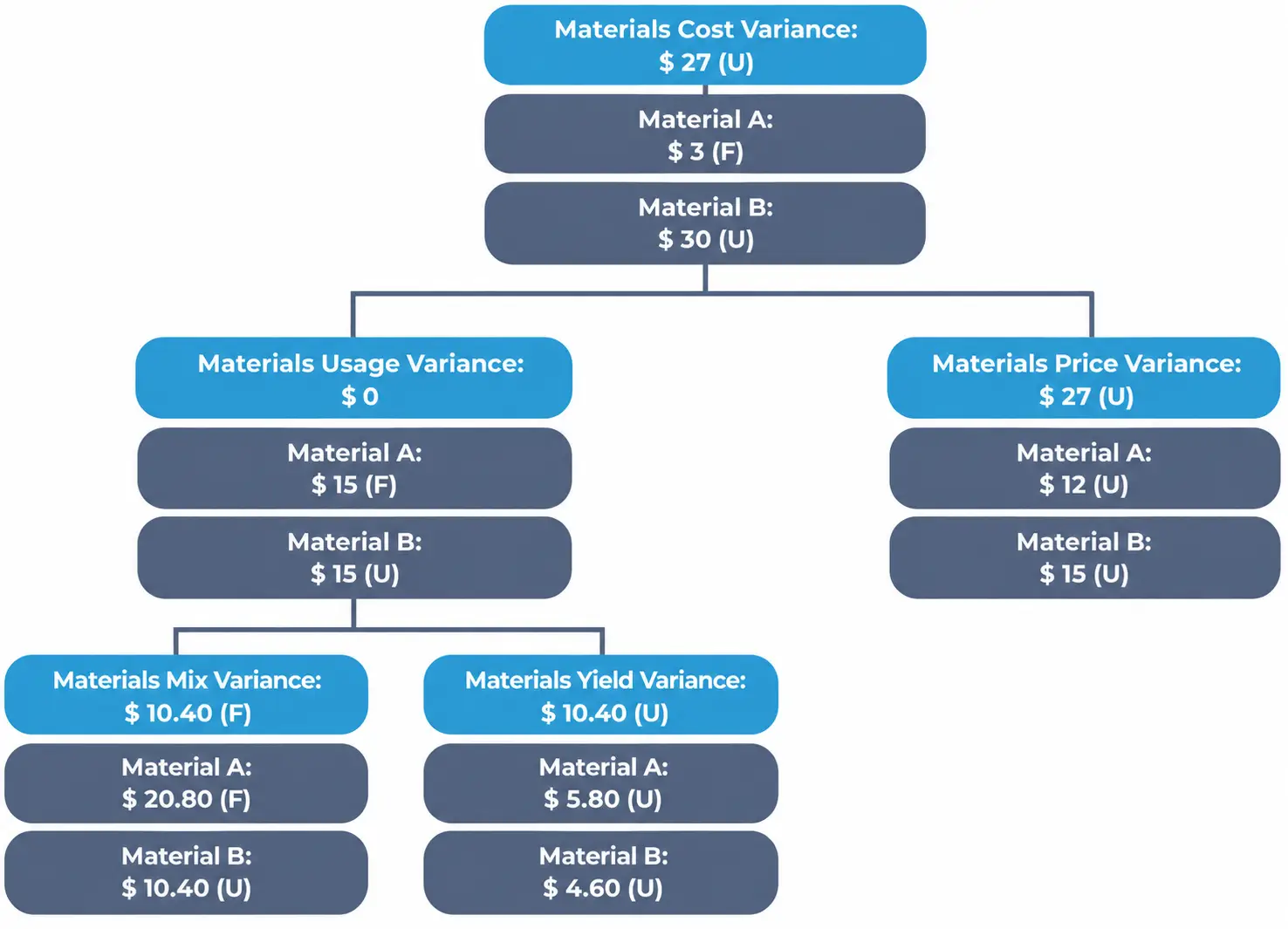
Materials Price Variance Material A=(SP×AQ)−(AP×AQ)=(10×6)−(12×6)=60−72=12(U)
Alternative computation:
Materials Price Variance Material A=(SP−AP)×AQ=(10−12)×6=−2×6=12(U)
The variance is unfavorable because the actual price per unit of Material A ($12) is higher than standard price ($10). Actual Quantity (AQ) of Material A is already available at 6 kilograms and does not need further computations.
Materials Price Variance Material B=(SP×AQ)−(AP×AQ)=(5×15)−(6×15)=75−90=15(U)
Alternative computation:
Materials Price Variance Material B=(SP−AP)×AQ=(5−6)×15=−1×15=15(U)
The variance is unfavorable because the actual price per unit of Material B ($6) is higher than standard price ($5). Actual Quantity (AQ) of Material B is already available at 15 kilograms and does not need further computations.
Scenario 2.2. Materials usage variance
The Standard Quantity (SQ) to be used here is not the one in the master budget but the standard quantity that would have been used by the actual production of 1,500 cookies. The following are the SQ for both Material A and B:
SQ Material A=5 kg×(1,500 cookies/1,000 cookies)=7.5 kg
SQ Material B=8 kg×(1,500 cookies/1,000 cookies)=12 kg
SQ=SQ Material A+SQ Material B=19.5 kg
After the Standard Quantity (SQ) is determined, we need to get the total of the usage variances of each direct material.
Materials Usage Variance Material A=(SP×SQ)−(SP×AQ)=(10×7.5)−(10×6)=75−60=15(F)
Alternative computation:
Materials Usage Variance Material A=(SQ−AQ)×SP=(7.5−6)×10=1.5×10=15(F)
The variance is favorable because the actual Material A used by production (6 kg) is lower than standard (7.5 kg).
Materials Usage Variance Material B=(SP×SQ)−(SP×AQ)=(5×12)−(5×15)=60−75=15(U)
Alternative computation:
Materials Usage Variance Material B=(SQ−AQ)×SP=(12−15)×5=−3×5=15(U)
The variance is unfavorable because the actual Material B used by production (15 kg) is higher than standard (12 kg).
Scenario 2.3. Materials mix variance
Once all the above are determined, we can continue calculating the variances for separately for each direct material.
Materials Mix Variance Material A=((AMU×SM)−(AMU×AM))×SP=((21×38.46%)−(21×28.57%))×10=(8.08−6)×10=2.08×10=20.8(F)
The favorable variance of $20.8 indicates that less Material A was used than expected in the standard mix, resulting in cost savings.
Materials Mix Variance Material B=((AMU×SM)−(AMU×AM))×SP=((21×61.54%)−(21×71.53%))×5=(12.92−15)×5=−2.08×5=10.4(U)
The unfavorable variance of $10.4 shows that more Material B was used than expected in the standard mix, leading to higher costs.
Scenario 2.4. Materials yield variance
Materials Yield Variance Material A=((SMU×SM)−(AMU×SM))×SP=((19.5×38.46%)−(21×38.46%))×10=(7.5−8.08)×10=−0.58×10=5.8(U)
The unfavorable variance of $5.8 indicates that the overall production process required more input than expected, and Material A’s portion of the excess input increased costs.
Materials Yield Variance Material B=((SMU×SM)−(AMU×SM))×SP=((19.5×61.54%)−(21×61.54%))×5=(12.92−12.92)×5=−0.92×5=4.6(U)
The unfavorable variance of $4.6 reflects that additional input was used in production, with Material B’s share contributing to higher costs.
We can also verify the Materials Usage Variance computed in 2.2:
ChocoDelight Cookies produces gourmet chocolate chip cookies. The production process uses two types of direct materials: premium chocolate chips (Material A) and organic flour (Material B). The company’s production standards and actual results for a recent batch are outlined below.
To produce 1,000 cookies, the following usage and cost standards apply:
Material A: 5 kilograms per 1,000 cookies at $10 per kilogram
Material B: 8 kilograms per 1,000 cookies at $5 per kilogram
Actual results for the recent batch were 1,500 cookies were produced:
Material A: 6 kilograms at $12 per kilogram
Material B: 15 kilograms at $6 per kilogram
Calculate the Direct Materials variances:
Materials price variance
Materials usage variance
Materials mix variance
Materials yield variance
Materials cost variance
If you would like to check the over-all solution, you can skip to the Scenario summary section at the end of this page.
Scenario 2.1. Materials price variance
We need to get the total of the price variances of each direct material.
Materials Price Variance Material A=(SP×AQ)−(AP×AQ)=(10×6)−(12×6)=60−72=12(U)
Alternative computation:
Materials Price Variance Material A=(SP−AP)×AQ=(10−12)×6=−2×6=12(U)
The variance is unfavorable because the actual price per unit of Material A ($12) is higher than standard price ($10). Actual Quantity (AQ) of Material A is already available at 6 kilograms and does not need further computations.
Materials Price Variance Material B=(SP×AQ)−(AP×AQ)=(5×15)−(6×15)=75−90=15(U)
Alternative computation:
Materials Price Variance Material B=(SP−AP)×AQ=(5−6)×15=−1×15=15(U)
The variance is unfavorable because the actual price per unit of Material B ($6) is higher than standard price ($5). Actual Quantity (AQ) of Material B is already available at 15 kilograms and does not need further computations.
Scenario 2.2. Materials usage variance
The Standard Quantity (SQ) to be used here is not the one in the master budget but the standard quantity that would have been used by the actual production of 1,500 cookies. The following are the SQ for both Material A and B:
SQ Material A=5 kg×(1,500 cookies/1,000 cookies)=7.5 kg
SQ Material B=8 kg×(1,500 cookies/1,000 cookies)=12 kg
SQ=SQ Material A+SQ Material B=19.5 kg
After the Standard Quantity (SQ) is determined, we need to get the total of the usage variances of each direct material.
Materials Usage Variance Material A=(SP×SQ)−(SP×AQ)=(10×7.5)−(10×6)=75−60=15(F)
Alternative computation:
Materials Usage Variance Material A=(SQ−AQ)×SP=(7.5−6)×10=1.5×10=15(F)
The variance is favorable because the actual Material A used by production (6 kg) is lower than standard (7.5 kg).
Materials Usage Variance Material B=(SP×SQ)−(SP×AQ)=(5×12)−(5×15)=60−75=15(U)
Alternative computation:
Materials Usage Variance Material B=(SQ−AQ)×SP=(12−15)×5=−3×5=15(U)
The variance is unfavorable because the actual Material B used by production (15 kg) is higher than standard (12 kg).
Scenario 2.3. Materials mix variance
Once all the above are determined, we can continue calculating the variances for separately for each direct material.
Materials Mix Variance Material A=((AMU×SM)−(AMU×AM))×SP=((21×38.46%)−(21×28.57%))×10=(8.08−6)×10=2.08×10=20.8(F)
The favorable variance of $20.8 indicates that less Material A was used than expected in the standard mix, resulting in cost savings.
Materials Mix Variance Material B=((AMU×SM)−(AMU×AM))×SP=((21×61.54%)−(21×71.53%))×5=(12.92−15)×5=−2.08×5=10.4(U)
The unfavorable variance of $10.4 shows that more Material B was used than expected in the standard mix, leading to higher costs.
Scenario 2.4. Materials yield variance
Materials Yield Variance Material A=((SMU×SM)−(AMU×SM))×SP=((19.5×38.46%)−(21×38.46%))×10=(7.5−8.08)×10=−0.58×10=5.8(U)
The unfavorable variance of $5.8 indicates that the overall production process required more input than expected, and Material A’s portion of the excess input increased costs.
Materials Yield Variance Material B=((SMU×SM)−(AMU×SM))×SP=((19.5×61.54%)−(21×61.54%))×5=(12.92−12.92)×5=−0.92×5=4.6(U)
The unfavorable variance of $4.6 reflects that additional input was used in production, with Material B’s share contributing to higher costs.
We can also verify the Materials Usage Variance computed in 2.2: