



Materials price variance
Materials price variance
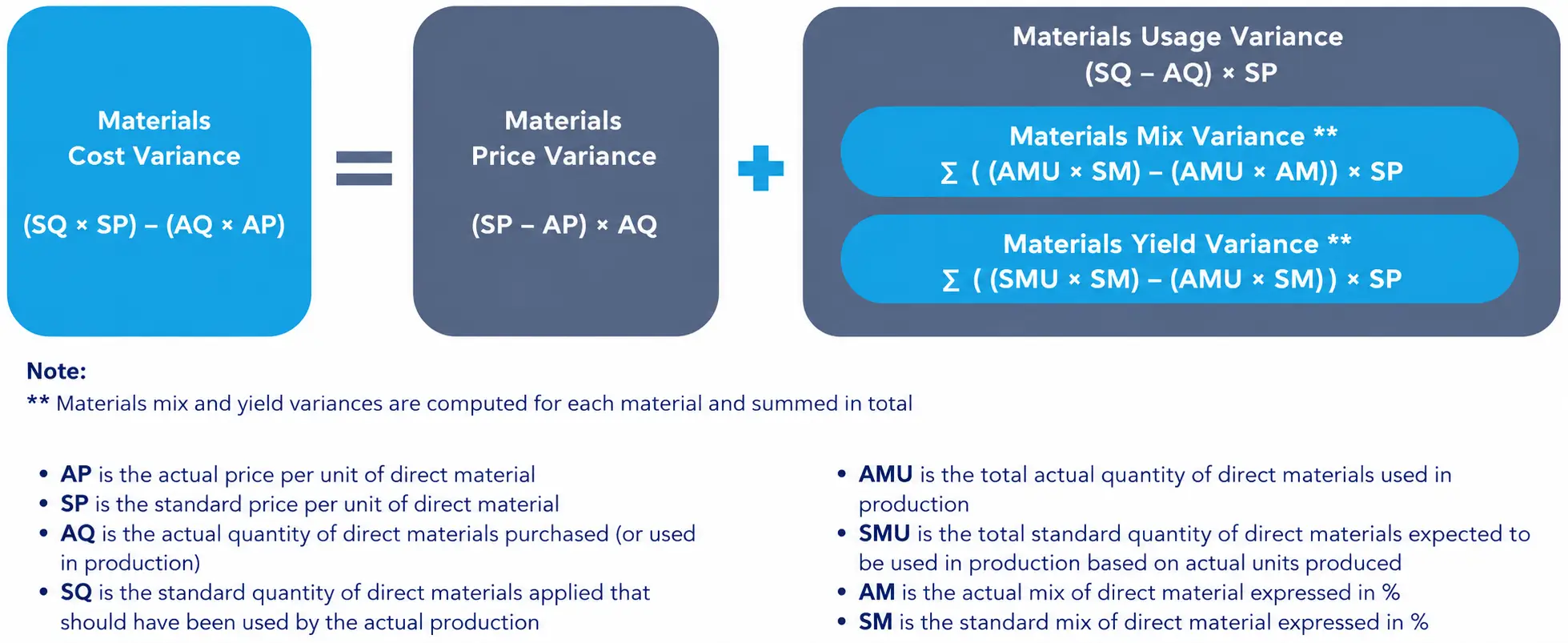
The materials price variance is the difference between the standard purchase price and the actual purchase price for the actual quantity of direct materials purchased. It is important to note that the materials price variance typically uses the actual quantity of direct materials purchased, rather than the quantity deployed to production.
If a CMA exam question does not specify otherwise, the assumption should be that the quantity purchased is used in the calculation. This approach reflects the fact that the purchasing department is responsible for sourcing materials but does not control how much is allocated to production.
By calculating the variance based on the quantity purchased, the analysis isolates the purchasing department’s responsibility and ensures the variance is meaningful by focusing on factors they can control, such as negotiating prices and managing supplier relationships. However, it is worth noting that using the quantity deployed to production is also a valid method of calculating the materials price variance, although it shifts the focus away from the purchasing function. The formula for calculating materials price variances is:
It can also be expressed in terms of the formulas:
Where:
- is the actual price per unit of direct material
- is the standard price per unit of direct material
- is the actual quantity of direct materials purchased (or used in production)
When applying inputs into the formula, a positive variance indicates a favorable variance, while a negative variance signifies an unfavorable variance. However, it is crucial to understand the underlying reasons behind these variances to avoid any confusion. For example, if actual prices exceed standard prices, it results in an unfavorable variance, as higher actual costs negatively impact the company’s financial performance. This understanding helps ensure accurate interpretation of variances and their implications.