



Total sales variance and sales price variance
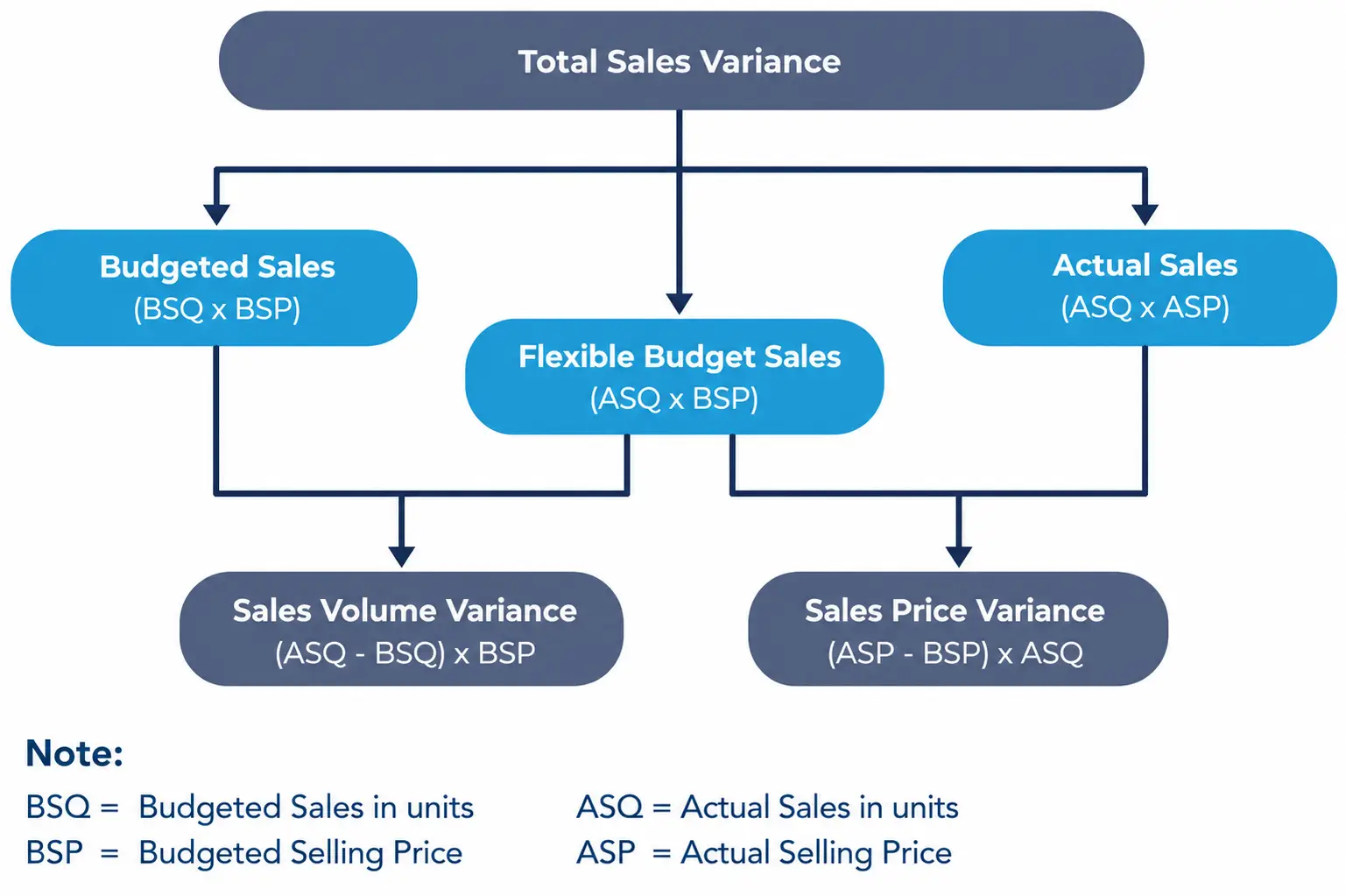
Sales variances help managers analyze deviations in total sales by breaking them into two components: sales price variance and sales volume variance. When the entity is selling more than one product, the sales volume variance can be split between the sales mix variance and sales quantity variance. These variances provide insights into whether deviations arise from selling more or fewer units than planned or from selling at higher or lower prices than expected. This distinction enables managers to identify specific areas requiring attention, such as pricing strategies or market demand, and take appropriate corrective actions.
The total sales variance is the difference between actual sales revenue and budgeted sales revenue (from the master budget). This total variance reflects the combined impact of changes in both sales volume and sales price. By breaking the total variance into sales volume and sales price components, managers gain a clearer understanding of the underlying drivers of performance.
Total sales variance
A summary of the relationships of the sales variances can be seen in the figure below:
The total sales variance can be calculated as:
Alternatively, the total sales variance can be expressed as the sum of the sales volume variance and the sales price variance:
Please refer to the diagram above for other alternative formulas in computing these variances because it will depend on what has been provided in the CMA examination. This relationship ensures that the total sales variance is fully explained by breaking it into its two distinct components. Each component isolates a specific factor affecting sales, providing actionable insights for management.
Sales price variance
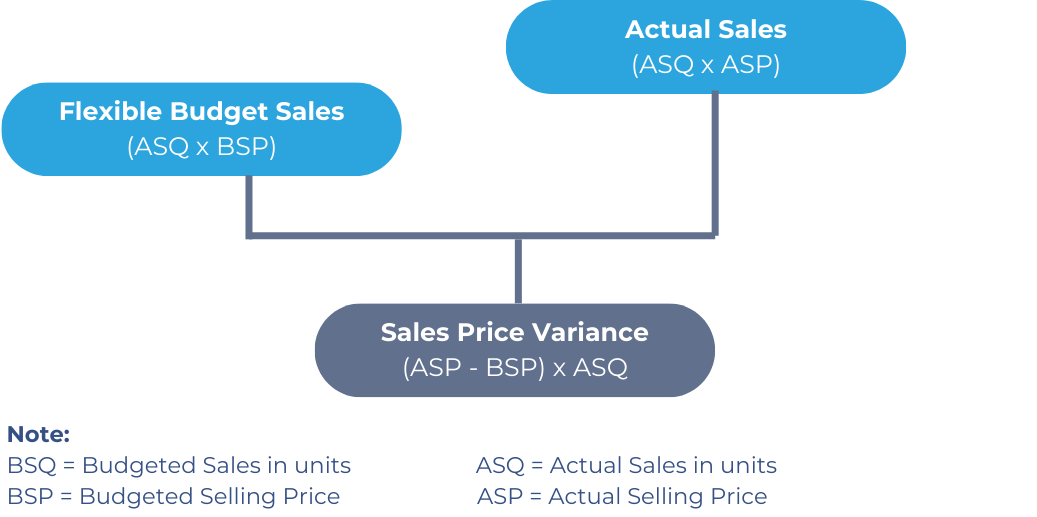
The sales price variance measures the effect of selling products at prices higher or lower than the budgeted price, holding the sales volume constant. It is calculated as:
The diagram below further illustrates alternative computations of the sales volume variance:
A favorable sales price variance occurs when the actual sales price exceeds the budgeted sales price, indicating effective pricing strategies or favorable market conditions. An unfavorable sales price variance occurs when the actual price falls below the budgeted price, which might result from competitive pressures, discounts, or changes in market conditions.