



Statement of cash flows
Discussions in this section reference ASC 230 Statement of Cash Flows.
The primary objective of a statement of cash flows is to provide relevant information about the cash receipts and cash payments of an entity during a period. When used with information in the other financial statements and related disclosures, the statement of cash flows helps investors, creditors, and others to assess factors such as:
- The company’s ability to generate positive future net cash flows
- The company’s ability to meet its obligations and pay dividends and its needs for external financing
- Reasons for differences between net income and associated cash flows
- The effects on the company’s financial position of its cash and noncash investing and financing activities during the period.
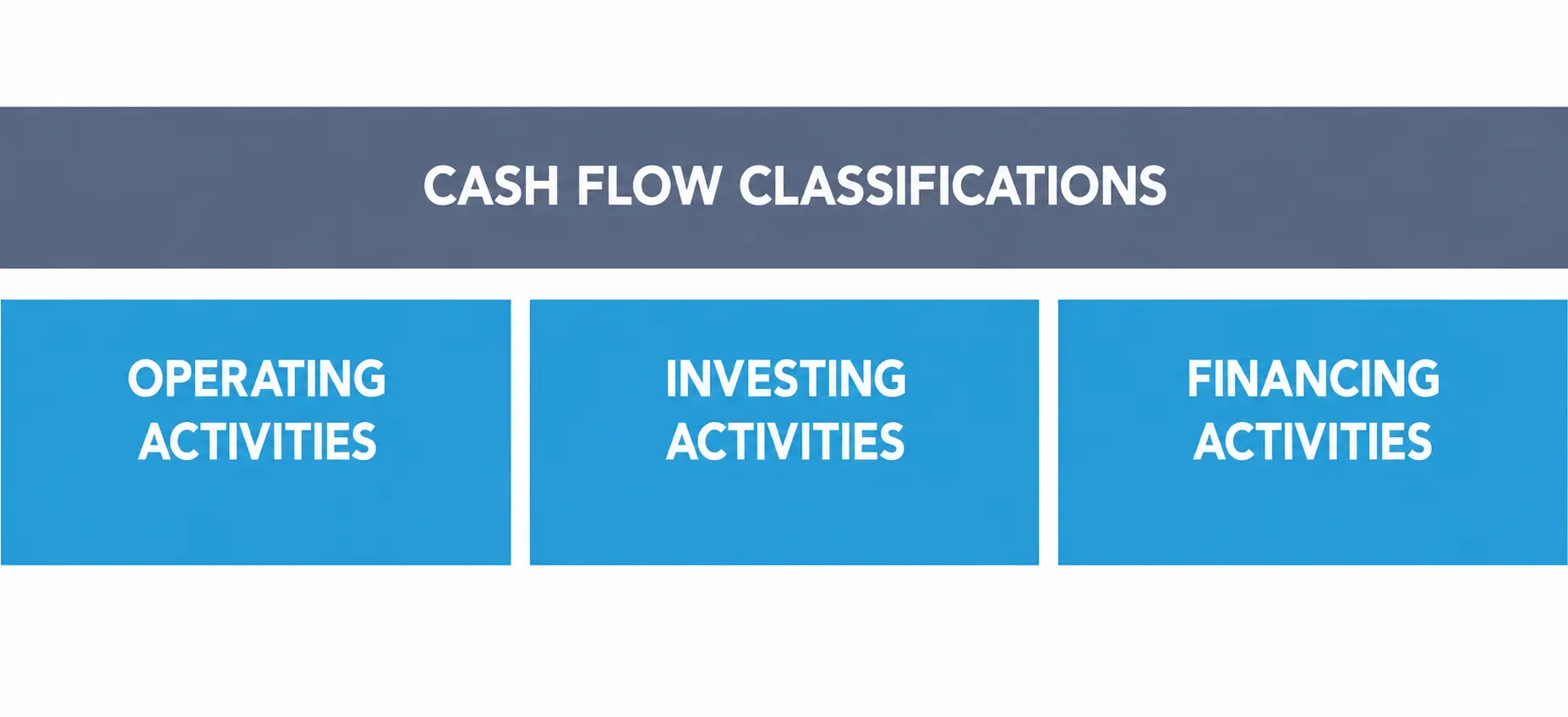
The Accounting Standards Codification also mentions that the statement of cash flows shall report the cash effects by grouping them into three types of activities:
- Operating activities
- Investing activities
- Financing activities
Cash and cash equivalents included in the statement of cash flows
A statement of cash flows shall explain changes during the period in the total of the following items:
- Cash
- Cash equivalents
- Restricted cash
- Restricted cash equivalents
If the cash flows pertain to more than one line in the statement of financial position, there should be an explanatory note of what accounts are covered in the cash flows. The Codification also mentioned that companies should refrain from using ambiguous terms such as “funds” in describing cash and cash equivalents.
The cash flows cover movements of the four accounts above in total. This means that movement between the four items (for example, purchases and sales of cash equivalents, paid for in cash) are not considered as reportable cash flow movements under operating, investing or financing activities, even when there is a transfer from the general cash account to a restricted cash account.
1. Cash
According to the Accounting Standards Codification, the term “cash” includes the following:
- Cash on hand
- Demand deposits with bank and other financial institutions
- Other kinds of accounts that have the general characteristics of demand deposits in that the customer may deposit additional funds at any time and also effectively may withdraw funds at any time without prior notice or penalty.
Movement in these accounts during the period should be analyzed into operating, investing and financing activities for cash flow purposes, except when the movement is a receipt or payment related to cash equivalents or restricted cash balances.
2. Cash equivalents
This commonly includes the following items:
- Treasury bills
- Commercial paper
- Money market funds
- Federal funds sold (for an entity with banking operations).
According to the Accounting Standards Codification, the term “cash equivalents” refers to short-term, highly liquid investments that have both of the following characteristics:
- Readily convertible to known amounts of cash
- So near their maturity that they present insignificant risk of changes in value because of changes in interest rates.
Classifying items into cash equivalents is not straight-forward but generally we look at the original maturity of the item and classify as cash equivalents those that have an original maturity of three months or less.
The original maturity is determined with reference to the party holding the investment. For example the following can be considered as cash equivalents:
- A three-month U.S. Treasury Bill; and
- A three-year U.S. Treasury Bill but purchased by a company three months from maturity
The following is NOT a cash equivalent:
- A three-year U.S. Treasury Bill with remaining maturity of three months at the date of the preparation of the Statement of Financial Position
3. Restricted cash and restricted cash equivalents
The term “restricted cash” or “restricted cash equivalents” are not specifically defined in the Codification. However the Codification defined instances when cash is excluded in the current asset classification as follows:
- Cash that is restricted as to withdrawal or use for other than current operations
- Cash that is designated for expenditure in the acquisition or construction of noncurrent assets
- Cash that has been segregated for the liquidation of long-term debts
- Funds that are clearly to be used in the near future for the liquidation of long-term debts, payments to sinking funds or similar purposes; if such funds are considered to offset maturing debt that has properly been set up as a current liability, they may be included within the current asset classification.
The above items are generally classified as non-current assets and in general this is used as a reference in determining whether a cash or cash equivalent item is considered as “restricted”.
Despite being classified as non-current assets, these restricted cash and cash equivalents form part of the Statement of Cash Flows.
Cash flow classifications
Operating activities
When classifying transactions as operating activity, the company should consider the company’s normal course of business as some activities may appear as investing activity in one but can be considered as operating activity in another, as in the cash for the acquisition of real estate for real estate companies.
The following items are specifically identified in the Codification to be under cash inflows from operating activities:
- Receipts of cash from customers from the sale of goods or services in line with the main business of the company
- Receipts of cash in the form of interest and dividends from loan, other debt instruments and equity securities
- All other cash receipts not included in the investing and financing activities (including amounts received from settlement of lawsuits and refunds from suppliers)
- All receipts of cash of a lessor from an operating lease
- Receipts of interest from a lessor’s sales-type and direct financing leases; the principal portion is an investing activity
The following items are specifically identified in the Codification to be under cash outflows from operating activities:
- Payments of cash to acquire materials for the manufacture of goods or to acquire finished goods for resale. This includes the payments of the principal amounts of trade and notes payable related to goods originally acquired on credit
- Payments of cash to other suppliers and employees. This includes all cash payments paid by a lessee under an operating lease except to the extent that those payments represent costs to bring another asset to the condition and location necessary for its intended use (these are classified within investing activities)
- Payments of cash to governments for taxes, duties, fines, and other fees or penalties
- Payments of cash for interest to lenders and other creditors, including the portion of the payments made to settle zero-coupon debt instruments that is attributable to accreted interest. This includes the interest portion of the lease payment paid by the lessee for finance leases
- Payments of cash to settle an asset retirement obligation
- All other cash payments not included in the investing and financing activities (including payments to settle lawsuits, cash contributions to charities, and cash refunds to customers)
Financing activities
The following items are specifically identified in the Codification to be under cash inflows from financing activities:
- Receipts of cash from investors from issuing equity instruments such as the company’s own common stock
- Receipts of cash from issuing bonds, mortgages, notes, and from other short- or long-term borrowing
The following items are specifically identified in the Codification to be under cash outflows from financing activities:
- Payments of cash dividends or other distributions to owners. Payments of dividend are financing while receipt of dividends are operating activity cash flows
- Payments of cash to re-acquire the entity’s own equity instruments (this becomes treasury stock)
- Repayments of principal amounts borrowed from creditors
- Payments for debt issue costs
- Payments for debt prepayment or debt extinguishment costs
- Payments made by a lessee under a finance lease pertaining to the reduction of lease liability (e.g. excluding the interest portion of the payments since these are classified as operating cash flows).
Example: Classifying dividend cash flows
A manufacturing company receives $8,000 in cash dividends from its investment in another company’s stock, and separately pays $50,000 in cash dividends to its own shareholders. How should each cash flow be classified?
- The $8,000 dividend received is a return on an investment in another entity’s equity securities, so it’s classified as an operating activity cash inflow.
- The $50,000 dividend paid is a distribution to the company’s own owners, so it’s classified as a financing activity cash outflow.
Answer: Dividends received → operating activity; dividends paid → financing activity.
Investing activities
Investing activities include making and collecting loans and acquiring and disposing of debt or equity instruments and property, plant, and equipment and other assets that are used to produce goods and services. Investing activity does not include transactions related to the acquisition and sale of inventory because these are included in the operating activities.
Cash flows from purchases, sales, and maturities of available-for-sale debt securities shall be classified as cash flows from investing activities.
The following items are specifically identified in the Codification to be under cash inflows from investing activities:
- Receipts from collections or sales of loans made by the entity and of other entities’ debt instruments acquired specifically to be resold, and collections on a transferor’s beneficial interests in a securitization of the transferor’s trade receivables
- Receipts from sales of equity instruments of other entities (other than equity instruments carried in a trading account) and from returns of investment in those instruments
- Receipts from the sale of property, plant, and equipment and other productive assets
- Receipts from sales of loans that were not specifically acquired for resale (e.g. loans originally acquired as investments)
- Receipts from proceeds of insurance settlements directly related to the transactions mentioned above such as proceeds of insurance on a building that is damaged or destroyed.
The following items are specifically identified in the Codification to be under cash outflows from investing activities:
- Disbursements for loans made by the company and payments to acquire debt instruments of other companies (other than cash equivalents and debt instruments that are acquired specifically for resale)
- Payments to acquire equity instruments of other entities (other than equity instruments carried in a trading account which are classified as operating activities)
- Payments for the purchase of property, plant, and equipment and other productive assets, including interest capitalized as part of the cost of those assets.
- Advance payments, down payments or other amounts paid for the purchase of property, plant and equipment and other productive assets that are acquired in a financing transaction. The principal payments of the remaining liability are a financing activity while the interests are operating activities
Non-cash investing and financing activities
Investing and financing activities of an entity do not always have cash impact (for example acquisition of property, plant and equipment on credit and remain unpaid at the end of the year).
Such transactions should be disclosed in either narrative or tabular format in the notes to the financial statements. Some transactions are part cash and part noncash. In this case, only the cash portion shall be reported in the statement of cash flows.
According to the codification, some examples of noncash investing and financing transactions are the following:
- Converting debt to equity
- Acquiring assets by assuming directly related liabilities, such as purchasing a building by incurring a mortgage to the seller
- Obtaining a right-of-use asset in exchange for a lease liability
- Obtaining a beneficial interest as consideration for transferring financial assets (excluding cash)
- Including the transferor’s trade receivables, in a securitization transaction
- Obtaining a building or investment asset by receiving a gift
- Exchanging non-cash assets or liabilities for other non-cash assets or liabilities.