


Achievable logoAchievable logo
CMA Part 1
Sign in
Sign up
Purchase
Textbook
Practice exams
Support
How it works
Exam catalog
Mountain with a flag at the peak
Textbook
1. External financial reporting decisions
2. Planning, budgeting, and forecasting
3. Performance management
4. Cost management
4.1 Measurement concepts
4.2 Costing systems
4.3 Overhead costs
4.3.1 Overhead classification and cost behavior
4.3.2 Overhead allocation methods
4.3.3 Overapplied and underapplied overhead
4.3.4 Allocation of service department costs: overview
4.3.5 Allocation of service department costs: direct method
4.3.6 Allocation of service department costs: step-down method
4.3.7 Allocation of service department costs: reciprocal method
4.4 Supply chain management
4.5 Business process improvement
5. Internal control
6. Technology and analytics
Achievable logoAchievable logo
4.3.1 Overhead classification and cost behavior
Achievable CMA Part 1
4. Cost management
4.3. Overhead costs
Our CMA Part 1 course is currently in development and is a work-in-progress.

Overhead classification and cost behavior

7 min read
Font
Discuss
Share
Feedback

Learning outcome statements

The learning outcome statements relevant for this section are:

  1. distinguish between fixed and variable overhead expenses
  2. determine the appropriate time frame for classifying both variable and fixed overhead expenses
  3. demonstrate an understanding of the different methods of determining overhead rates (e.g., corporate-wide rates, departmental rates, and individual cost driver rates)
  4. describe the benefits and limitations of each of the methods used to determine overhead rates
  5. identify the components of variable overhead expense
  6. determine the appropriate allocation base for variable overhead expenses
  7. calculate the per-unit variable overhead expense
  8. identify the components of fixed overhead expense
  9. identify the appropriate allocation base for fixed overhead expense
  10. calculate the fixed overhead application rate
  11. describe how fixed overhead can be over- or under-applied and how this difference should be accounted for in the cost of goods sold, work-in-process, and finished goods accounts
  12. compare traditional overhead allocation with activity-based overhead allocation
  13. calculate overhead expense in an activity-based costing setting
  14. identify and describe the benefits derived from activity-based overhead allocation
  15. demonstrate an understanding of how regression can be used to estimate fixed costs

Introduction

In cost accounting, overhead refers to indirect costs that cannot be directly traced to a specific product, job, or service but are essential to the overall production and operational process. These include expenses such as rent, utilities, factory maintenance, supervisory salaries, and depreciation of manufacturing equipment. Unlike direct materials and direct labor, which are easily attributable to specific units, overhead must be allocated using systematic approaches.

Understanding how overhead is classified, applied, and analyzed is essential for managerial decision-making. Inaccurate allocation of overhead can distort product costs, mislead pricing strategies, and impair profitability analysis. Therefore, companies must choose appropriate allocation bases, determine realistic rates, and distinguish between fixed and variable components of overhead.

This chapter focuses on the practical and conceptual aspects of overhead management. It explores:

  • The behavior and classification of fixed vs. variable overhead
  • The selection and application of allocation bases and rates
  • The comparison between traditional and activity-based allocation methods
  • The use of statistical tools such as regression to estimate overhead behavior

Whether using corporate-wide averages or granular, activity-specific drivers, organizations must treat overhead with precision to ensure accurate product costing and informed strategic planning.

Classification of overhead costs

Overhead costs can be classified in several ways, but one of the most important distinctions is based on cost behavior, how costs respond to changes in production or activity levels. This classification divides overhead into variable and fixed overhead, each with distinct characteristics and implications for budgeting, costing, and performance evaluation.

Variable overhead

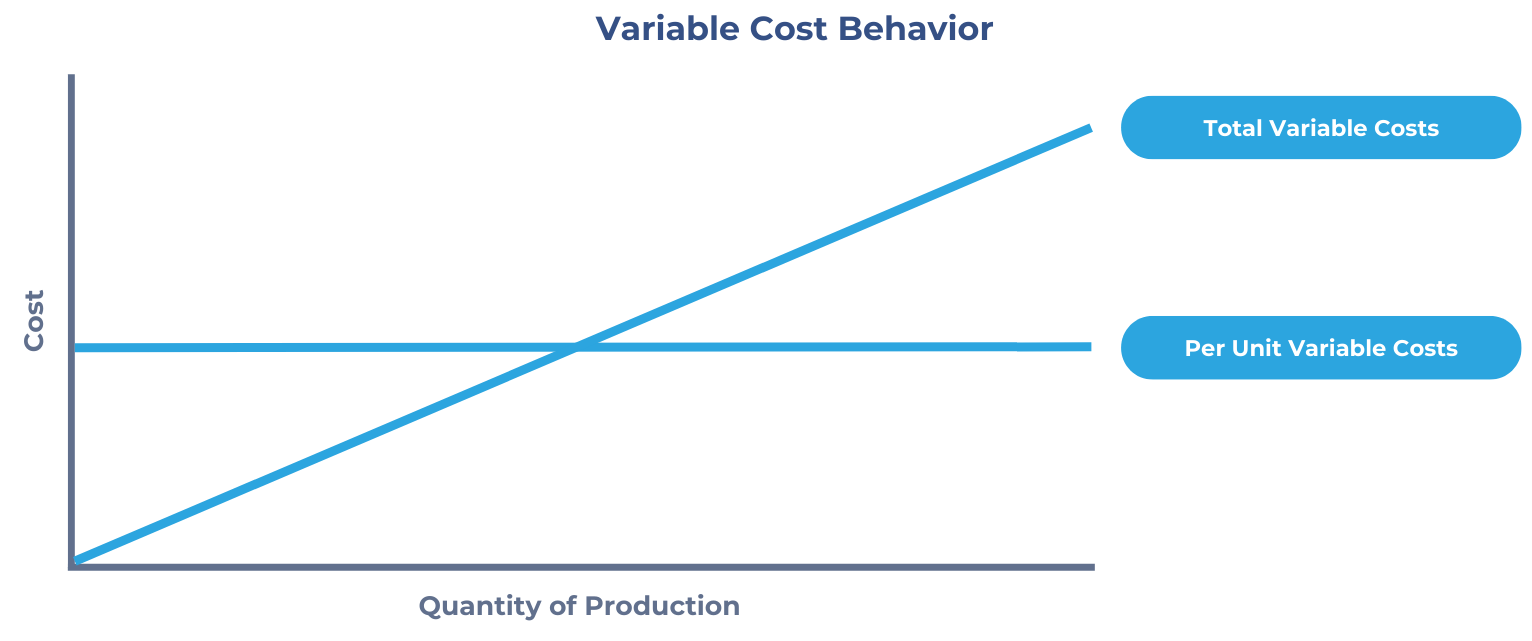
Variable overhead consists of indirect costs that change in direct proportion to activity levels such as units produced, machine hours, or labor hours. These costs fluctuate with production volume and are typically easier to predict in the short term.

Examples include:

  • Indirect materials (e.g., lubricants, cleaning supplies used per unit)
  • Indirect production labor paid hourly (e.g., maintenance staff or production assistants)
  • Utility costs that vary with machine usage (e.g., electricity for running production lines)

These costs are important when calculating per-unit costs, evaluating contribution margins, and making short-term pricing or production decisions.

Variable cost behavior illustration

Fixed overhead

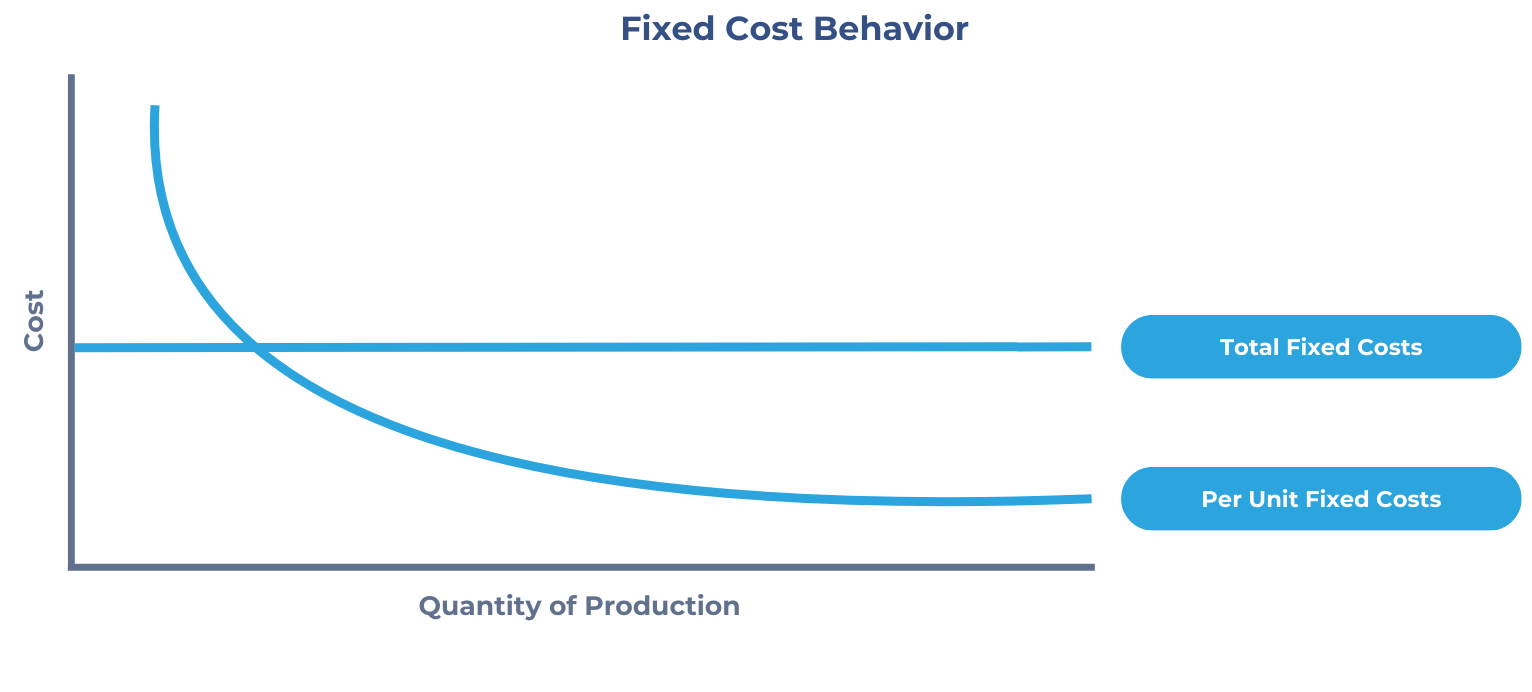
Fixed overhead refers to indirect costs that remain constant in total within a relevant range, regardless of changes in activity or production volume. These costs do not vary with short-term output levels but may change over the long term as capacity or operations evolve.

Examples include:

  • Factory rent or building depreciation
  • Salaries of plant managers and administrative production staff
  • Insurance and property taxes on manufacturing facilities

Although fixed in total, these costs behave inversely on a per-unit basis, as production increases, the fixed overhead per unit declines, and vice versa. This dynamic significantly impacts product costing and profitability assessments.

Fixed cost behavior illustration

Time Horizon and Behavior

Cost behavior may also differ depending on the time frame:

  • In the short term, many overhead costs are fixed because capacity and resources are set (e.g., leased equipment or salaried staff).
  • In the long term, even fixed overhead becomes more flexible. For example, new facilities can be acquired, leases renegotiated, or staff levels adjusted, making these costs more variable over time.

Understanding the time-sensitive nature of cost behavior is critical when planning, forecasting, or assessing capacity decisions.

Note on direct costs: Direct Materials and Direct Labor

It is important to distinguish overhead costs from direct costs, particularly direct materials (DM) and direct labor (DL). These are the two primary components of direct manufacturing costs and are traced directly to individual products, jobs, or batches.

  • Direct Materials include all raw inputs that become a tangible part of the finished product (e.g., wood in furniture, fabric in clothing).

  • Direct Labor refers to the wages and related costs of personnel who directly manufacture the product (e.g., machine operators, assembly line workers).

Because DM and DL can be traced directly to cost objects with high accuracy, they do not require allocation. In contrast, overhead expenses( both variable and fixed) must be systematically assigned to cost objects using allocation methods, which is the focus of the upcoming sections.

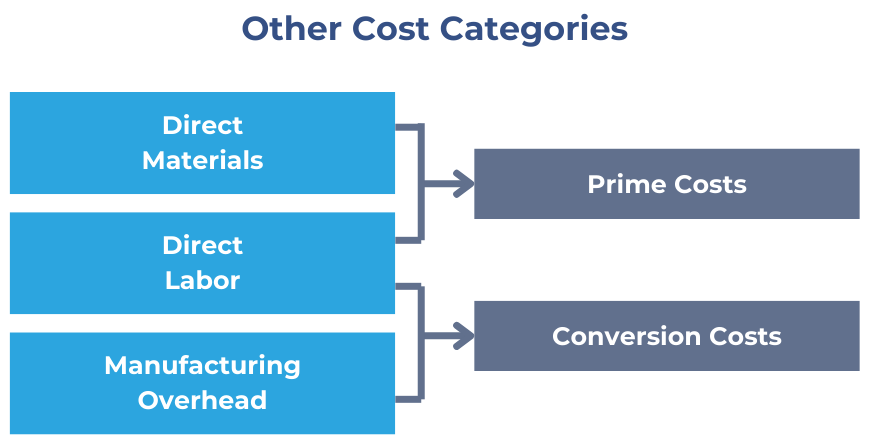
In addition to classifying manufacturing costs as direct or indirect, it is useful to group them based on function and purpose into two key cost categories: prime costs and conversion costs.

Definitions
Prime Costs
Consist of direct materials (DM) and direct labor (DL). These are the primary, traceable inputs required to manufacture a product and represent the bulk of costs in labor- or material-intensive industries.
Conversion Costs
Consist of direct labor (DL) and manufacturing overhead (both fixed and variable). These are the costs incurred to convert raw materials into finished goods. They emphasize the transformation process and are particularly relevant in process costing environments.
Prime and conversion costs

This dual classification helps management analyze production efficiency and identify areas for improvement. For example, high conversion costs may indicate inefficiencies in labor utilization or overhead spending.

Overhead costs: Definition and importance

  • Indirect costs not directly traceable to products (e.g., rent, utilities, supervisory salaries)
  • Must be allocated using systematic methods
  • Accurate allocation is critical for product costing and decision-making

Classification of overhead costs

  • Divided by cost behavior: variable vs. fixed overhead
  • Impacts budgeting, costing, and performance evaluation

Variable overhead

  • Indirect costs that change with activity levels (e.g., units produced, machine hours)
  • Examples: indirect materials, hourly indirect labor, variable utilities
  • Important for per-unit cost and short-term decisions

Fixed overhead

  • Indirect costs constant in total within a relevant range, regardless of output
  • Examples: factory rent, plant manager salaries, insurance
  • Per-unit fixed overhead decreases as production increases

Time horizon and cost behavior

  • Short term: most overhead is fixed due to set capacity/resources
  • Long term: fixed overhead can become variable as capacity changes

Direct costs vs. overhead

  • Direct materials (DM): raw inputs traced directly to products
  • Direct labor (DL): wages of workers directly manufacturing products
  • Overhead (both variable and fixed) requires allocation; DM and DL do not

Prime costs and conversion costs

  • Prime costs = DM + DL (primary, traceable inputs)
  • Conversion costs = DL + manufacturing overhead (costs to convert raw materials to finished goods)
  • Used for analyzing production efficiency and identifying improvement areas

Sign up for free to take 8 quiz questions on this topic

Previous
Next  | 4.3.2 Overhead allocation methods
All rights reserved ©2016 - 2026 Achievable, Inc.

Overhead classification and cost behavior

Learning outcome statements

The learning outcome statements relevant for this section are:

  1. distinguish between fixed and variable overhead expenses
  2. determine the appropriate time frame for classifying both variable and fixed overhead expenses
  3. demonstrate an understanding of the different methods of determining overhead rates (e.g., corporate-wide rates, departmental rates, and individual cost driver rates)
  4. describe the benefits and limitations of each of the methods used to determine overhead rates
  5. identify the components of variable overhead expense
  6. determine the appropriate allocation base for variable overhead expenses
  7. calculate the per-unit variable overhead expense
  8. identify the components of fixed overhead expense
  9. identify the appropriate allocation base for fixed overhead expense
  10. calculate the fixed overhead application rate
  11. describe how fixed overhead can be over- or under-applied and how this difference should be accounted for in the cost of goods sold, work-in-process, and finished goods accounts
  12. compare traditional overhead allocation with activity-based overhead allocation
  13. calculate overhead expense in an activity-based costing setting
  14. identify and describe the benefits derived from activity-based overhead allocation
  15. demonstrate an understanding of how regression can be used to estimate fixed costs

Introduction

In cost accounting, overhead refers to indirect costs that cannot be directly traced to a specific product, job, or service but are essential to the overall production and operational process. These include expenses such as rent, utilities, factory maintenance, supervisory salaries, and depreciation of manufacturing equipment. Unlike direct materials and direct labor, which are easily attributable to specific units, overhead must be allocated using systematic approaches.

Understanding how overhead is classified, applied, and analyzed is essential for managerial decision-making. Inaccurate allocation of overhead can distort product costs, mislead pricing strategies, and impair profitability analysis. Therefore, companies must choose appropriate allocation bases, determine realistic rates, and distinguish between fixed and variable components of overhead.

This chapter focuses on the practical and conceptual aspects of overhead management. It explores:

  • The behavior and classification of fixed vs. variable overhead
  • The selection and application of allocation bases and rates
  • The comparison between traditional and activity-based allocation methods
  • The use of statistical tools such as regression to estimate overhead behavior

Whether using corporate-wide averages or granular, activity-specific drivers, organizations must treat overhead with precision to ensure accurate product costing and informed strategic planning.

Classification of overhead costs

Overhead costs can be classified in several ways, but one of the most important distinctions is based on cost behavior, how costs respond to changes in production or activity levels. This classification divides overhead into variable and fixed overhead, each with distinct characteristics and implications for budgeting, costing, and performance evaluation.

Variable overhead

Variable overhead consists of indirect costs that change in direct proportion to activity levels such as units produced, machine hours, or labor hours. These costs fluctuate with production volume and are typically easier to predict in the short term.

Examples include:

  • Indirect materials (e.g., lubricants, cleaning supplies used per unit)
  • Indirect production labor paid hourly (e.g., maintenance staff or production assistants)
  • Utility costs that vary with machine usage (e.g., electricity for running production lines)

These costs are important when calculating per-unit costs, evaluating contribution margins, and making short-term pricing or production decisions.

Fixed overhead

Fixed overhead refers to indirect costs that remain constant in total within a relevant range, regardless of changes in activity or production volume. These costs do not vary with short-term output levels but may change over the long term as capacity or operations evolve.

Examples include:

  • Factory rent or building depreciation
  • Salaries of plant managers and administrative production staff
  • Insurance and property taxes on manufacturing facilities

Although fixed in total, these costs behave inversely on a per-unit basis, as production increases, the fixed overhead per unit declines, and vice versa. This dynamic significantly impacts product costing and profitability assessments.

Time Horizon and Behavior

Cost behavior may also differ depending on the time frame:

  • In the short term, many overhead costs are fixed because capacity and resources are set (e.g., leased equipment or salaried staff).
  • In the long term, even fixed overhead becomes more flexible. For example, new facilities can be acquired, leases renegotiated, or staff levels adjusted, making these costs more variable over time.

Understanding the time-sensitive nature of cost behavior is critical when planning, forecasting, or assessing capacity decisions.

Note on direct costs: Direct Materials and Direct Labor

It is important to distinguish overhead costs from direct costs, particularly direct materials (DM) and direct labor (DL). These are the two primary components of direct manufacturing costs and are traced directly to individual products, jobs, or batches.

  • Direct Materials include all raw inputs that become a tangible part of the finished product (e.g., wood in furniture, fabric in clothing).

  • Direct Labor refers to the wages and related costs of personnel who directly manufacture the product (e.g., machine operators, assembly line workers).

Because DM and DL can be traced directly to cost objects with high accuracy, they do not require allocation. In contrast, overhead expenses( both variable and fixed) must be systematically assigned to cost objects using allocation methods, which is the focus of the upcoming sections.

In addition to classifying manufacturing costs as direct or indirect, it is useful to group them based on function and purpose into two key cost categories: prime costs and conversion costs.

Definitions
Prime Costs
Consist of direct materials (DM) and direct labor (DL). These are the primary, traceable inputs required to manufacture a product and represent the bulk of costs in labor- or material-intensive industries.
Conversion Costs
Consist of direct labor (DL) and manufacturing overhead (both fixed and variable). These are the costs incurred to convert raw materials into finished goods. They emphasize the transformation process and are particularly relevant in process costing environments.

This dual classification helps management analyze production efficiency and identify areas for improvement. For example, high conversion costs may indicate inefficiencies in labor utilization or overhead spending.

Key points

Overhead costs: Definition and importance

  • Indirect costs not directly traceable to products (e.g., rent, utilities, supervisory salaries)
  • Must be allocated using systematic methods
  • Accurate allocation is critical for product costing and decision-making

Classification of overhead costs

  • Divided by cost behavior: variable vs. fixed overhead
  • Impacts budgeting, costing, and performance evaluation

Variable overhead

  • Indirect costs that change with activity levels (e.g., units produced, machine hours)
  • Examples: indirect materials, hourly indirect labor, variable utilities
  • Important for per-unit cost and short-term decisions

Fixed overhead

  • Indirect costs constant in total within a relevant range, regardless of output
  • Examples: factory rent, plant manager salaries, insurance
  • Per-unit fixed overhead decreases as production increases

Time horizon and cost behavior

  • Short term: most overhead is fixed due to set capacity/resources
  • Long term: fixed overhead can become variable as capacity changes

Direct costs vs. overhead

  • Direct materials (DM): raw inputs traced directly to products
  • Direct labor (DL): wages of workers directly manufacturing products
  • Overhead (both variable and fixed) requires allocation; DM and DL do not

Prime costs and conversion costs

  • Prime costs = DM + DL (primary, traceable inputs)
  • Conversion costs = DL + manufacturing overhead (costs to convert raw materials to finished goods)
  • Used for analyzing production efficiency and identifying improvement areas

More from Overhead costs

  • Overhead allocation methods
  • Overapplied and underapplied overhead
  • Allocation of service department costs: overview
  • Allocation of service department costs: direct method
  • Allocation of service department costs: step-down method