



Overapplied and underapplied overhead
Overapplied and underapplied overhead
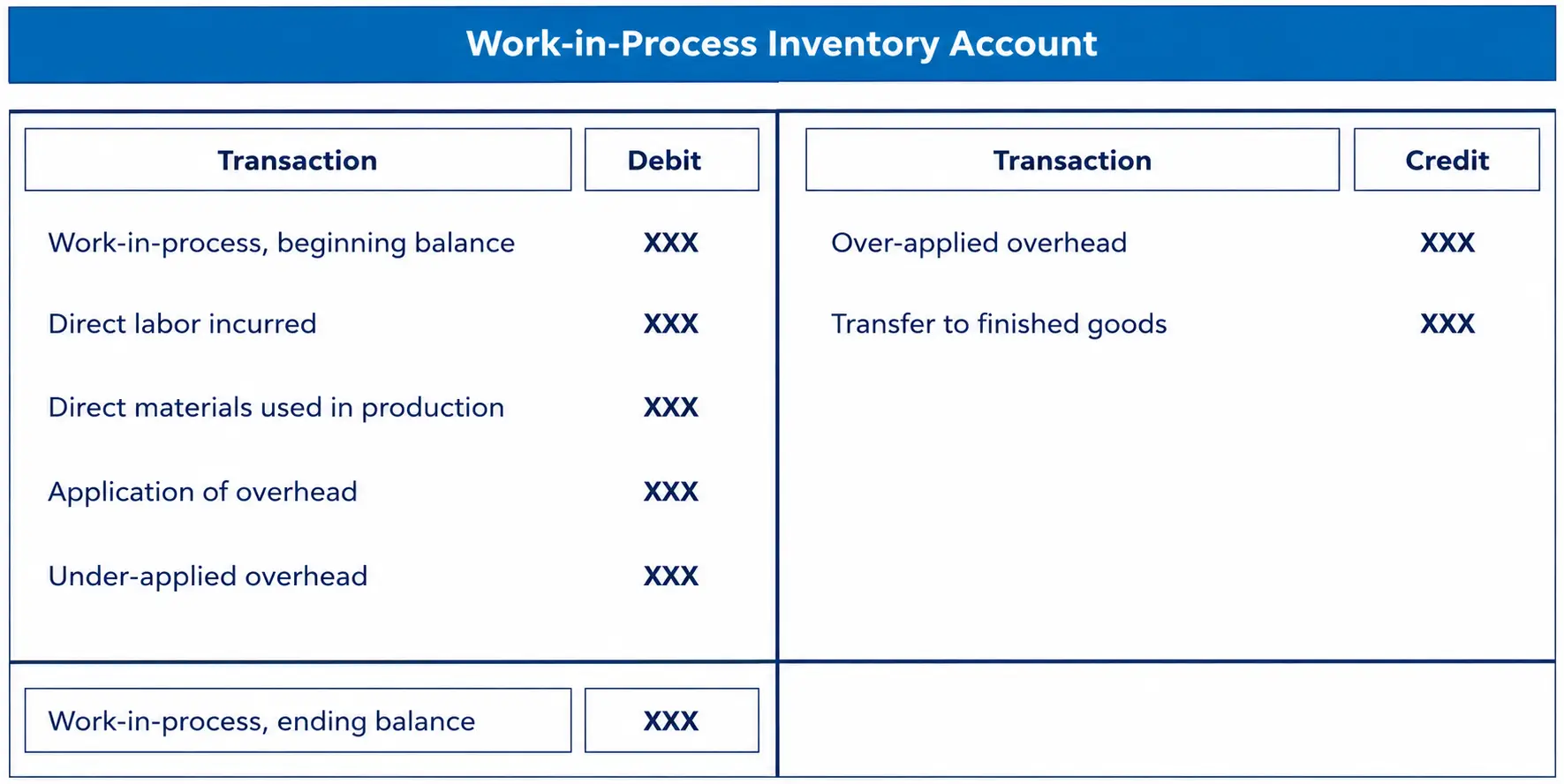
In a manufacturing setting, overhead costs are applied to production using a predetermined overhead rate. Since this rate is based on estimates, the actual overhead incurred will almost always differ from the overhead applied, resulting in either overapplied or underapplied overhead. Understanding and accounting for these differences is critical for accurate cost reporting and financial statement preparation.
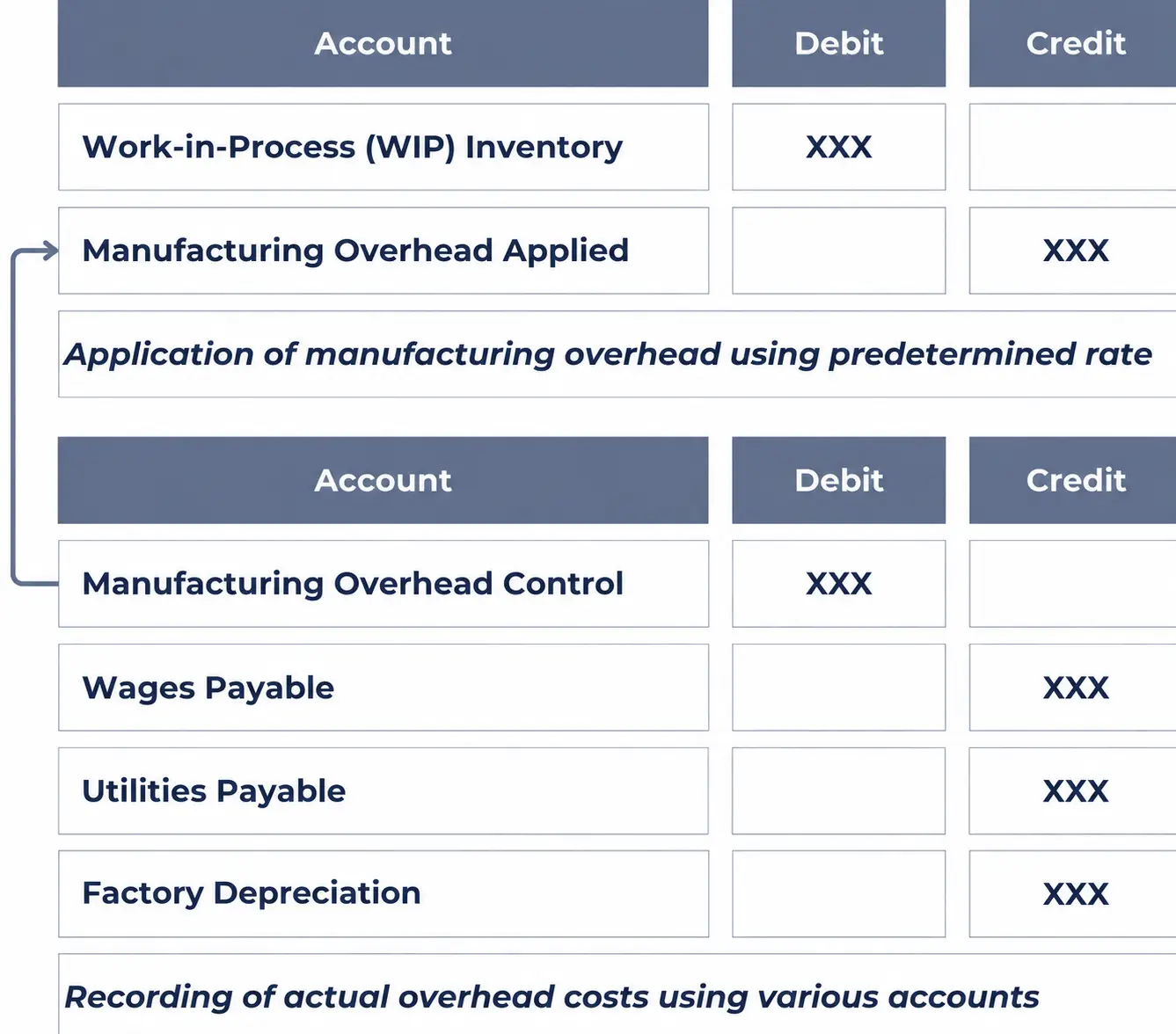
The following are the journal entries throughout the production process that ultimately leads to the over/under application of overhead costs:
Determining overapplied or underapplied overhead
At the end of the accounting period, the organization must reconcile the applied overhead (estimated using a predetermined rate) with the actual overhead incurred during production. This comparison determines whether overhead has been overapplied or underapplied.
This reconciliation is directly related to the two key journal entries presented in the previous table:
- Actual overhead costs are accumulated in the Manufacturing Overhead Control account (e.g., for utilities, depreciation, indirect materials).
- Applied overhead is recorded in the Manufacturing Overhead Applied account as overhead is assigned to production using the predetermined rate.
Ideally, these two accounts should net to zero, meaning all actual costs were accurately allocated to production. However, differences almost always arise:
-
. This means that more overhead was assigned to jobs than was actually incurred. This results in a credit balance and effectively overstates inventory and income unless adjusted.
-
. This means that less overhead was assigned to jobs than was actually incurred. This results in a debit balance and effectively understates inventory and income unless corrected.
The treatment of this difference depends on its materiality:
This reconciliation ensures that overhead costs are not misstated in inventory or the income statement, supporting more accurate financial reporting and performance analysis.
Activity-based overhead allocation
While traditional overhead allocation methods (e.g., corporate-wide or departmental rates) apply overhead using a single or limited number of allocation bases, Activity-Based Costing (ABC) offers a more refined and accurate approach. In ABC, overhead costs are traced to activities, then assigned to products or services based on their actual consumption of those activities.
Since a comprehensive discussion of ABC is already provided in the Activity-Based Costing section of this textbook, you are encouraged to refer to that section for the following topics:
- The rationale and strategic value of ABC
- Key elements: cost pool, cost driver, resource driver, activity driver, and value-added activity
- Calculation of overhead using ABC
- Comparison of ABC to traditional overhead systems
- Practical applications and limitations
In summary, ABC is especially useful when overhead costs are high and diverse, and when multiple products or services consume activities at different rates. It supports better decision-making in pricing, product design, and cost control.