


Achievable logoAchievable logo
CCMA
Sign in
Sign up
Purchase
Textbook
Practice exams
Support
How it works
Exam catalog
Mountain with a flag at the peak
Textbook
1. Medical assistant
2. Electronic records
3. Medical terminology and anatomy
4. The fundamentals of infection control
5. Introduction to vital signs
6. The patient interview and history
7. The physical examination
8. Appointment scheduling
9. Insurance billing
10. Diagnostic coding and the ICD-10-CM System
11. Procedural coding
12. Medical billing and reimbursement essentials
13. Assisting with medical specialties
14. Assisting with the musculoskeletal system
15. Assisting with the cardiovascular system
16. Assisting with the respiratory system
17. Assisting with the nervous system
18. Anatomy and physiology of the urinary system
19. Assisting in obstetrics and gynecology
20. Assisting in endocrinology
21. Assisting in ophthalmology & otolaryngology
21.1 Anatomy and physiology of the eye
21.2 Major ocular disorders: cataracts, glaucoma, and retinal disease
21.3 Refractive errors and common eye infections
21.4 Diseases and disorders of the ear
21.5 The medical assistant's role in eye examinations
21.6 The medical assistant's role in ear examinations and treatments
22. Assisting in gastroenterology
23. Assisting in the immune & lymphatic systems
24. Assisting in pediatrics: the developmental stages and care
25. The medical assistant’s role in caring for the older patient
26. The role of the medical assistant in physical therapy examination and assessment
27. Preparing for minor surgery: room, solutions, and supplies
28. Introduction to the clinical laboratory
29. Urinalysis
30. Blood collection
31. Analysis of blood
32. Electrocardiography and heart structure
33. The principles of pharmacology
34. Essential calculations and measurement systems
35. Solid, liquid, & solutions medication doses
36. Administering medications
37. Metabolism and core nutrient roles
38. Medical emergencies in the healthcare setting
Achievable logoAchievable logo
21.6 The medical assistant's role in ear examinations and treatments
Achievable CCMA
21. Assisting in ophthalmology & otolaryngology
Our CCMA course is currently in development and is a work-in-progress.

The medical assistant's role in ear examinations and treatments

9 min read
Font
Discuss
Share
Feedback

Assisting with examination and diagnostic procedures of the ear

As with examination and diagnostic procedures of the eye, the medical assistant can be involved in the examination and diagnostic procedures of the ear. These examinations and diagnostic procedures will likely be screening in nature with a referral to an otolaryngologist if needed.

The following sections discuss how the medical assistant is involved in the examination and diagnostic procedures of the eye.

Assisting with the examination of the ear

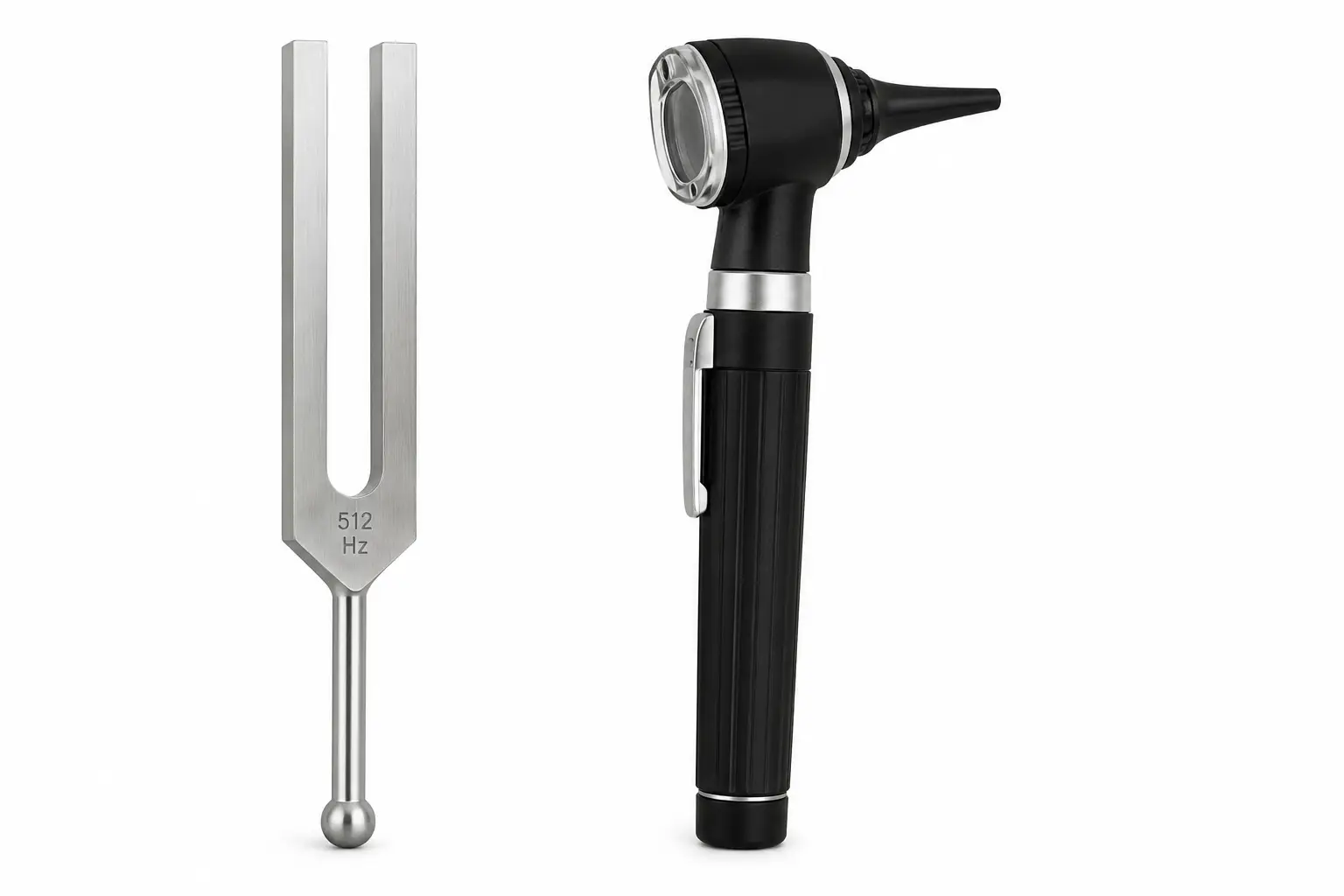
An ear examination involves viewing the external auditory canal with an otoscope covered by an ear speculum. Disposable plastic speculum covers should be used each time to prevent disease transmission. A normal otoscopic examination reveals an external auditory canal with a small amount of cerumen and a pearly gray and concave tympanic membrane. In addition to performing the otoscopic examination, the provider palpates the area around the pinna for abnormalities or sensations. A number of tests are used to assess hearing acuity, ranging from simple tuning fork tests to quantitative and qualitative audiometric testing. If a hearing loss is suspected, the next test usually is performed with a tuning fork.

Tuning fork and otoscope used in ear examinations
Tuning fork and otoscope

Assisting with examination and diagnostic procedures of the ear

As with examination and diagnostic procedures of the eye, the medical assistant can be involved in the examination and diagnostic procedures of the ear. These examinations and diagnostic procedures will likely be screening in nature with a referral to an otolaryngologist if needed.

The following sections discuss how the medical assistant is involved in the examination and diagnostic procedures of the eye.

Assisting with the examination of the ear

An ear examination involves viewing the external auditory canal with an otoscope covered by an ear speculum. Disposable plastic speculum covers should be used each time to prevent disease transmission. A normal otoscopic examination reveals an external auditory canal with a small amount of cerumen and a pearly gray and concave tympanic membrane. In addition to performing the otoscopic examination, the provider palpates the area around the pinna for abnormalities or sensations. A number of tests are used to assess hearing acuity, ranging from simple tuning fork tests to quantitative and qualitative audiometric testing. If a hearing loss is suspected, the next test usually is performed with a tuning fork.

Useful questions for gathering a history of ear problems

  • Are you experiencing nausea, vomiting, dizziness, ear pain, fever, headache, upper respiratory infection, ringing of the ears, drainage, loss of balance, or hearing loss?
  • What are the onset, duration, and frequency of symptoms?
  • Have you taken any medication for the symptoms? If so, what medication? Has it helped?
  • Do you have a problem with both ears?
  • Are you experiencing pain? On a scale of 1 to 10, with 10 being the worst pain, how would you rate the pain? Is it localized or radiating, in one ear or both?
  • Has anything you have tried relieved the symptoms?

Tuning fork testing

Tuning fork tests measure hearing by air conduction and bone conduction. Remember that in bone conduction, the sound vibrates through the cranial bones to the inner ear. Tuning forks are available in different sizes, each with a different frequency. The most commonly used tuning fork is the 512 hertz (Hz), which means that it vibrates 512 cycles per second, the level of normal speech patterns. To activate the fork, the provider holds it by the stem and strikes the tines softly on the palm of the hand. Striking the tines too forcefully creates a tone that is too loud for diagnostic use. The two tests used to evaluate hearing are the Weber and Rinne tests. Both of these procedures are commonly used to evaluate conductive and sensory losses.

The Weber test is used if the patient reports that hearing is better in one ear than in the other. The vibrating fork is placed in the center of the top of the head, and the patient is asked in which ear the tone is louder or if the tone is the same in both ears. Because the patient hears the tone by bone conduction through the head, a normal result is hearing the sound equally in both ears.

The Rinne test is designed to compare air conduction sound with bone conduction sound. In this test, the stem of the vibrating fork is placed on the patient’s mastoid process, and the patient is instructed to raise a hand when the sound disappears. The fork is quickly inverted so that the vibrating tines are approximately 1 inch in front of the external ear canal. If hearing is normal, the patient should still hear a sound. In normal hearing, the sound is heard twice as long by air conduction as by bone conduction.

Audiometric testing

An audiometric test may be done in an otology or a family practice and is performed by medical assistants who have received additional training. Audiometry measures the lowest intensity of sound an individual can hear. The patient, frequently a child, is assisted in placing headphones over the ears.

Newer machines give the operator the choice of performing a traditional manual hearing test or an automated one. In the automatic mode, the patient is prompted through the earphones to press a hand button upon hearing a tone. The advantages of automated machines are that voice prompts are available in multiple languages, and the test requires less time to complete. The medical assistant can watch the progress of the test on the audiometer’s LCD screen. Whether the test is delivered manually or with an automated model, each ear is tested by delivering a single frequency at a specific intensity, starting with low-frequency tones and going up to very high frequencies. The patient is asked to signal when the sound is heard. The results are printed on a graph, called an audiogram, or the medical assistant charts the results on a graph sheet. Adults with normal hearing can hear tone frequencies below 25 decibels, and children with normal hearing can hear those below 15.

If initial screening indicates a hearing deficit, the provider may recommend an appointment with an audiologist for an audiometric evaluation. The evaluation consists of a battery of tests that assesses the level of hearing impairment and provides valuable information as to how the patient may be helped. The first test evaluates speech comprehension and assesses the patient’s ability to follow verbal instructions. Once this evaluation is complete, the patient is placed in a soundproof booth with earphones over the ears. From this point on, the audiologist speaks to the patient and conducts all testing through the earphones. The assessment includes testing the frequency, intensity, and audibility of sound. This process takes approximately 1 hour.

Assisting with treatments of the ear

A medical assistant may be involved in providing treatments for diseases or disorders of the ear. The following sections discuss two of the most common treatments for the ear.

Ear Irrigation

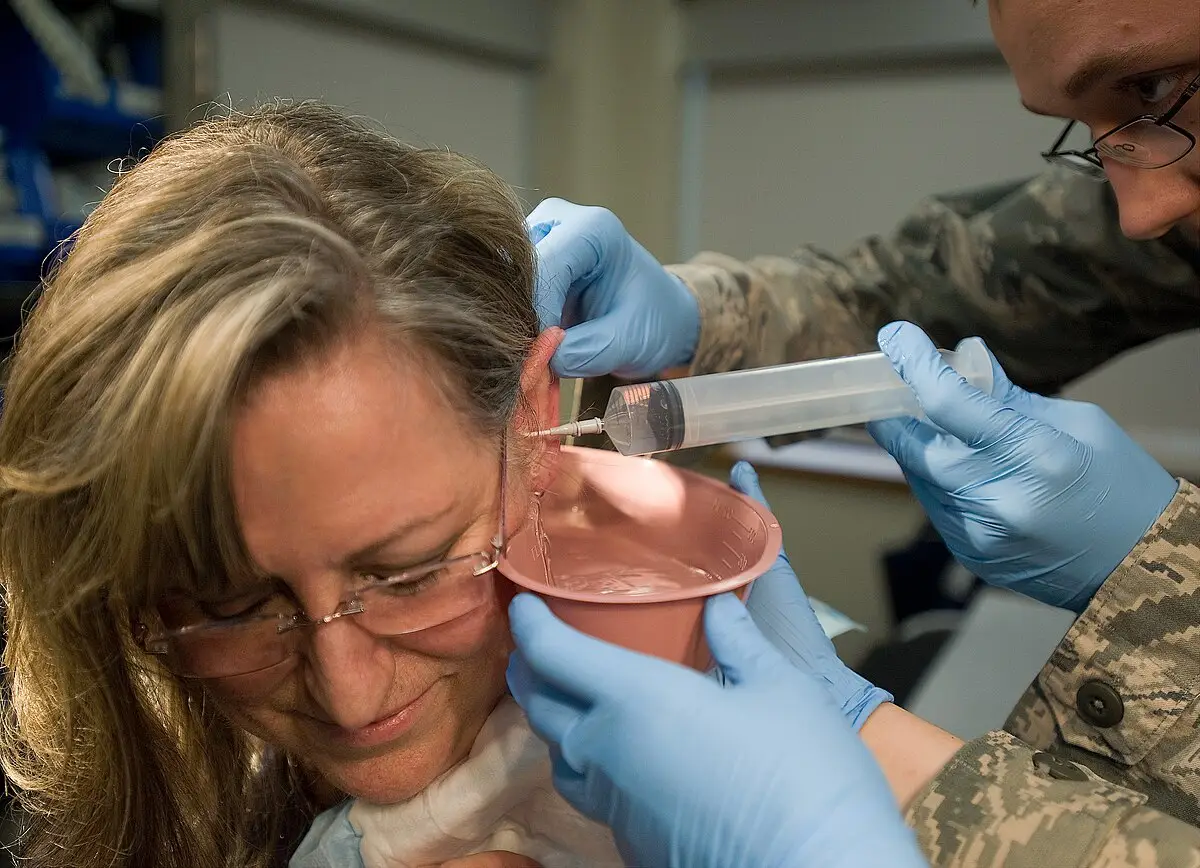
Irrigation of the ear is done to remove excessive or impacted cerumen, remove a foreign body, or treat the inflamed ear with an antiseptic solution. A medical assistant with the proper training and competency may perform the ear irrigation procedure when ordered by the provider. To prevent discomfort for the patient, it is important to administer the irrigating solution with the applicator tilted up toward the top of the external canal, so that the solution is not directed at the tympanic membrane. Some discomforts the patient may experience during ear irrigation include vertigo, coughing, or a tickle in the back of the throat. Perform the procedure as prescribed, making sure the patient is comfortable. Always document the treatment and its results immediately after completion.

Ear irrigation procedure demonstrated
Ear irrigation
Wikimedia Commons
/
Public Domain

Instillation of Ear Medications

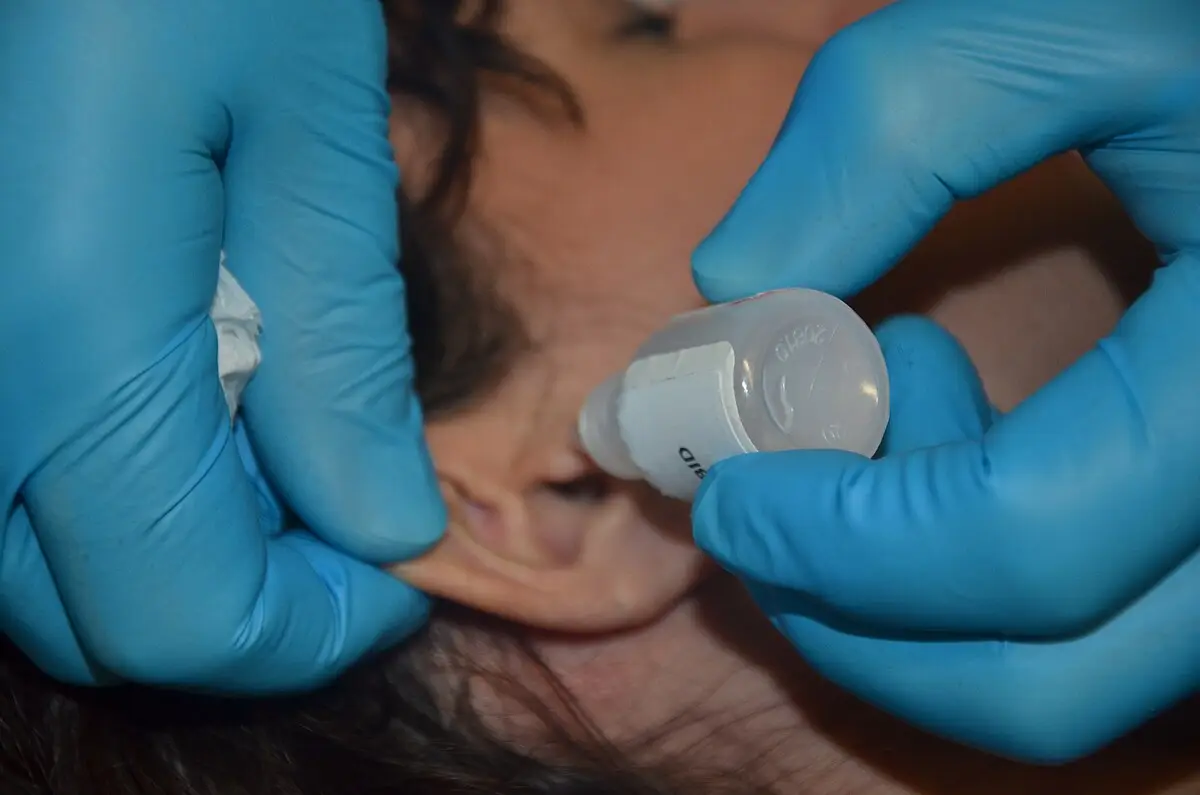
Medication ordered for ear instillation is given to soften impacted cerumen, relieve pain, or as an antibiotic drop for an infectious pathogen. Patients with ear conditions may be in considerable pain and have difficulty hearing, which makes health teaching a challenge. Wait until after the procedure has been completed and the patient is more comfortable to reinforce healthy behaviors.

Technique for instilling ear drops shown
Instilling medication in the ear

Assisting with examination and diagnostic procedures of the ear

  • Medical assistants perform screening exams, refer to otolaryngologist if needed
  • Involvement includes history taking, basic tests, and assisting with procedures

Assisting with the examination of the ear

  • Use otoscope with disposable speculum to view external auditory canal and tympanic membrane
  • Normal findings: small cerumen, pearly gray concave tympanic membrane
  • Provider palpates pinna; hearing acuity assessed with tuning fork or audiometric tests

Useful questions for gathering a history of ear problems

  • Ask about symptoms: pain, hearing loss, dizziness, drainage, etc.
  • Clarify onset, duration, frequency, and medication use
  • Assess pain level, location, and effectiveness of prior interventions

Tuning fork testing

  • Measures hearing by air conduction and bone conduction
  • Common fork: 512 Hz (normal speech frequency)
  • Weber test: fork on top of head, compares sound in both ears
  • Rinne test: compares bone (mastoid) vs. air conduction near ear canal

Audiometric testing

  • Measures lowest sound intensity heard (threshold)
  • Uses headphones; tests each ear at various frequencies/intensities
  • Results charted on audiogram; normal: adults <25 dB, children <15 dB
  • Further evaluation by audiologist if deficit found

Assisting with treatments of the ear

  • Medical assistants may perform treatments under provider order

Ear Irrigation

  • Removes impacted cerumen, foreign bodies, or treats infection
  • Irrigating solution directed toward top of canal, not tympanic membrane
  • Possible discomforts: vertigo, coughing, throat tickle
  • Document procedure and results

Instillation of Ear Medications

  • Used for softening cerumen, pain relief, or antibiotics
  • Patient education is important post-procedure

Patient coaching

  • Use adaptive communication for vision/hearing impaired patients
  • Vision loss: large print, increased lighting, verbal instructions
  • Hearing loss: printed instructions, demonstrations, sign language if needed
  • Include family, provide referrals, assess individual needs
  • Stress sterility and correct technique for home medication administration

Legal and ethical issues

  • Americans with Disabilities Act (ADA/ADAA) prohibits discrimination based on disability
  • Facilities must provide physical and communication accommodations
  • Definition of disability includes physical/mental impairments limiting major life activities

Patient-centered care

  • Always ask if assistance is needed for sensory-impaired patients
  • Escorting: offer arm, describe distance to walk
  • Ensure recovery and safe transport after procedures affecting vision
  • Document if patient leaves before recovery

Professional behaviors

  • Show extra courtesy and respect to sensory-impaired patients
  • Adapt environment: lighting, accessible materials
  • Use empathy to guide respectful communication and care

Sign up for free to take 12 quiz questions on this topic

Previous
Next  | 22.1 Assisting in gastroenterology
All rights reserved ©2016 - 2026 Achievable, Inc.

The medical assistant's role in ear examinations and treatments

Assisting with examination and diagnostic procedures of the ear

As with examination and diagnostic procedures of the eye, the medical assistant can be involved in the examination and diagnostic procedures of the ear. These examinations and diagnostic procedures will likely be screening in nature with a referral to an otolaryngologist if needed.

The following sections discuss how the medical assistant is involved in the examination and diagnostic procedures of the eye.

Assisting with the examination of the ear

An ear examination involves viewing the external auditory canal with an otoscope covered by an ear speculum. Disposable plastic speculum covers should be used each time to prevent disease transmission. A normal otoscopic examination reveals an external auditory canal with a small amount of cerumen and a pearly gray and concave tympanic membrane. In addition to performing the otoscopic examination, the provider palpates the area around the pinna for abnormalities or sensations. A number of tests are used to assess hearing acuity, ranging from simple tuning fork tests to quantitative and qualitative audiometric testing. If a hearing loss is suspected, the next test usually is performed with a tuning fork.

Assisting with examination and diagnostic procedures of the ear

As with examination and diagnostic procedures of the eye, the medical assistant can be involved in the examination and diagnostic procedures of the ear. These examinations and diagnostic procedures will likely be screening in nature with a referral to an otolaryngologist if needed.

The following sections discuss how the medical assistant is involved in the examination and diagnostic procedures of the eye.

Assisting with the examination of the ear

An ear examination involves viewing the external auditory canal with an otoscope covered by an ear speculum. Disposable plastic speculum covers should be used each time to prevent disease transmission. A normal otoscopic examination reveals an external auditory canal with a small amount of cerumen and a pearly gray and concave tympanic membrane. In addition to performing the otoscopic examination, the provider palpates the area around the pinna for abnormalities or sensations. A number of tests are used to assess hearing acuity, ranging from simple tuning fork tests to quantitative and qualitative audiometric testing. If a hearing loss is suspected, the next test usually is performed with a tuning fork.

Useful questions for gathering a history of ear problems

  • Are you experiencing nausea, vomiting, dizziness, ear pain, fever, headache, upper respiratory infection, ringing of the ears, drainage, loss of balance, or hearing loss?
  • What are the onset, duration, and frequency of symptoms?
  • Have you taken any medication for the symptoms? If so, what medication? Has it helped?
  • Do you have a problem with both ears?
  • Are you experiencing pain? On a scale of 1 to 10, with 10 being the worst pain, how would you rate the pain? Is it localized or radiating, in one ear or both?
  • Has anything you have tried relieved the symptoms?

Tuning fork testing

Tuning fork tests measure hearing by air conduction and bone conduction. Remember that in bone conduction, the sound vibrates through the cranial bones to the inner ear. Tuning forks are available in different sizes, each with a different frequency. The most commonly used tuning fork is the 512 hertz (Hz), which means that it vibrates 512 cycles per second, the level of normal speech patterns. To activate the fork, the provider holds it by the stem and strikes the tines softly on the palm of the hand. Striking the tines too forcefully creates a tone that is too loud for diagnostic use. The two tests used to evaluate hearing are the Weber and Rinne tests. Both of these procedures are commonly used to evaluate conductive and sensory losses.

The Weber test is used if the patient reports that hearing is better in one ear than in the other. The vibrating fork is placed in the center of the top of the head, and the patient is asked in which ear the tone is louder or if the tone is the same in both ears. Because the patient hears the tone by bone conduction through the head, a normal result is hearing the sound equally in both ears.

The Rinne test is designed to compare air conduction sound with bone conduction sound. In this test, the stem of the vibrating fork is placed on the patient’s mastoid process, and the patient is instructed to raise a hand when the sound disappears. The fork is quickly inverted so that the vibrating tines are approximately 1 inch in front of the external ear canal. If hearing is normal, the patient should still hear a sound. In normal hearing, the sound is heard twice as long by air conduction as by bone conduction.

Audiometric testing

An audiometric test may be done in an otology or a family practice and is performed by medical assistants who have received additional training. Audiometry measures the lowest intensity of sound an individual can hear. The patient, frequently a child, is assisted in placing headphones over the ears.

Newer machines give the operator the choice of performing a traditional manual hearing test or an automated one. In the automatic mode, the patient is prompted through the earphones to press a hand button upon hearing a tone. The advantages of automated machines are that voice prompts are available in multiple languages, and the test requires less time to complete. The medical assistant can watch the progress of the test on the audiometer’s LCD screen. Whether the test is delivered manually or with an automated model, each ear is tested by delivering a single frequency at a specific intensity, starting with low-frequency tones and going up to very high frequencies. The patient is asked to signal when the sound is heard. The results are printed on a graph, called an audiogram, or the medical assistant charts the results on a graph sheet. Adults with normal hearing can hear tone frequencies below 25 decibels, and children with normal hearing can hear those below 15.

If initial screening indicates a hearing deficit, the provider may recommend an appointment with an audiologist for an audiometric evaluation. The evaluation consists of a battery of tests that assesses the level of hearing impairment and provides valuable information as to how the patient may be helped. The first test evaluates speech comprehension and assesses the patient’s ability to follow verbal instructions. Once this evaluation is complete, the patient is placed in a soundproof booth with earphones over the ears. From this point on, the audiologist speaks to the patient and conducts all testing through the earphones. The assessment includes testing the frequency, intensity, and audibility of sound. This process takes approximately 1 hour.

Assisting with treatments of the ear

A medical assistant may be involved in providing treatments for diseases or disorders of the ear. The following sections discuss two of the most common treatments for the ear.

Ear Irrigation

Irrigation of the ear is done to remove excessive or impacted cerumen, remove a foreign body, or treat the inflamed ear with an antiseptic solution. A medical assistant with the proper training and competency may perform the ear irrigation procedure when ordered by the provider. To prevent discomfort for the patient, it is important to administer the irrigating solution with the applicator tilted up toward the top of the external canal, so that the solution is not directed at the tympanic membrane. Some discomforts the patient may experience during ear irrigation include vertigo, coughing, or a tickle in the back of the throat. Perform the procedure as prescribed, making sure the patient is comfortable. Always document the treatment and its results immediately after completion.

Instillation of Ear Medications

Medication ordered for ear instillation is given to soften impacted cerumen, relieve pain, or as an antibiotic drop for an infectious pathogen. Patients with ear conditions may be in considerable pain and have difficulty hearing, which makes health teaching a challenge. Wait until after the procedure has been completed and the patient is more comfortable to reinforce healthy behaviors.

Key points

Assisting with examination and diagnostic procedures of the ear

  • Medical assistants perform screening exams, refer to otolaryngologist if needed
  • Involvement includes history taking, basic tests, and assisting with procedures

Assisting with the examination of the ear

  • Use otoscope with disposable speculum to view external auditory canal and tympanic membrane
  • Normal findings: small cerumen, pearly gray concave tympanic membrane
  • Provider palpates pinna; hearing acuity assessed with tuning fork or audiometric tests

Useful questions for gathering a history of ear problems

  • Ask about symptoms: pain, hearing loss, dizziness, drainage, etc.
  • Clarify onset, duration, frequency, and medication use
  • Assess pain level, location, and effectiveness of prior interventions

Tuning fork testing

  • Measures hearing by air conduction and bone conduction
  • Common fork: 512 Hz (normal speech frequency)
  • Weber test: fork on top of head, compares sound in both ears
  • Rinne test: compares bone (mastoid) vs. air conduction near ear canal

Audiometric testing

  • Measures lowest sound intensity heard (threshold)
  • Uses headphones; tests each ear at various frequencies/intensities
  • Results charted on audiogram; normal: adults <25 dB, children <15 dB
  • Further evaluation by audiologist if deficit found

Assisting with treatments of the ear

  • Medical assistants may perform treatments under provider order

Ear Irrigation

  • Removes impacted cerumen, foreign bodies, or treats infection
  • Irrigating solution directed toward top of canal, not tympanic membrane
  • Possible discomforts: vertigo, coughing, throat tickle
  • Document procedure and results

Instillation of Ear Medications

  • Used for softening cerumen, pain relief, or antibiotics
  • Patient education is important post-procedure

Patient coaching

  • Use adaptive communication for vision/hearing impaired patients
  • Vision loss: large print, increased lighting, verbal instructions
  • Hearing loss: printed instructions, demonstrations, sign language if needed
  • Include family, provide referrals, assess individual needs
  • Stress sterility and correct technique for home medication administration

Legal and ethical issues

  • Americans with Disabilities Act (ADA/ADAA) prohibits discrimination based on disability
  • Facilities must provide physical and communication accommodations
  • Definition of disability includes physical/mental impairments limiting major life activities

Patient-centered care

  • Always ask if assistance is needed for sensory-impaired patients
  • Escorting: offer arm, describe distance to walk
  • Ensure recovery and safe transport after procedures affecting vision
  • Document if patient leaves before recovery

Professional behaviors

  • Show extra courtesy and respect to sensory-impaired patients
  • Adapt environment: lighting, accessible materials
  • Use empathy to guide respectful communication and care

More from Assisting in ophthalmology & otolaryngology

  • Anatomy and physiology of the eye
  • Major ocular disorders: cataracts, glaucoma, and retinal disease
  • Refractive errors and common eye infections
  • Diseases and disorders of the ear
  • The medical assistant's role in eye examinations