



Capillary puncture: indications, equipment, and procedure
Capillary puncture
Capillaries are small blood vessels that connect small arterioles to small venules. A capillary puncture is an efficient means of collecting a blood specimen when only a small amount of blood is needed. Capillary punctures are also used when a patient’s condition makes venipuncture difficult, such as in a patient undergoing chemotherapy. Also, capillary punctures are performed on infants (as a heel stick) and some young children. The test requisition may not specify a capillary collection, so be familiar with the advantages, limitations, and appropriate uses of this technique. Capillary puncture is warranted for the following patients:
- Older adult patients
- Pediatric patients (especially younger than age 2)
- Patients who require frequent glucose monitoring
- Patients with burns or scars in venipuncture sites
- Obese patients
- Patients receiving intravenous (IV) therapy or chemotherapy
- Patients who have had a mastectomy
- Patients at risk for venous thrombosis
- Patients who are severely dehydrated
- Patients who are undergoing tests that require a small volume of blood (i.e., some CLIA-waived tests)
Capillaries are connections between arteries and veins, so capillary blood is a mixture of the two. Small volumes of tissue fluid also are present in capillary blood, especially in the first drop. Analyte levels are usually the same in capillary and venous blood, with a few exceptions. Hemoglobin and glucose values are higher in capillary blood; calcium and total protein are higher in venous blood. Potassium is less consistent - squeezing the puncture site can falsely elevate it in a capillary sample, so its direction relative to venous blood varies more than the other analytes.
Skin puncture devices
Capillary punctures are performed with specialized equipment; knowing the equipment helps you decide when a capillary puncture should be performed instead of a venipuncture. The device used to perform a dermal puncture is the lancet, which delivers a quick puncture to a preset depth. Puncture depths include the following:
- Finger stick: up to 2.4 mm depth per CLSI guidelines, and the gauge of needle may vary by manufacturer
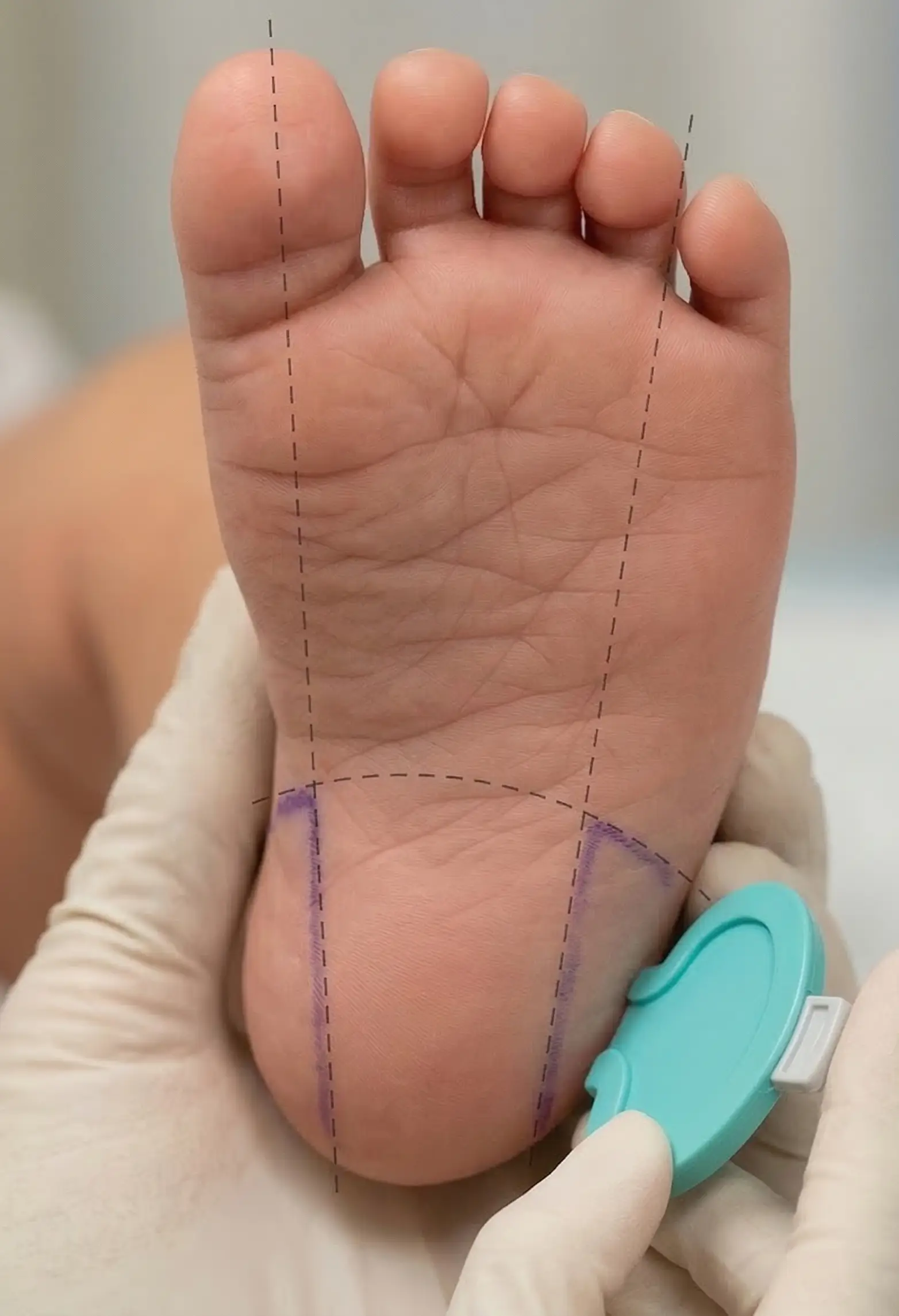
- Heel stick: 2.0 mm depth and the width should not exceed 2.5 mm; for premature infants, the heel stick depth is 0.65 to 0.85 mm, and a puncture width of 1.75 mm
- Bleeding time (BT) test: 1.0 mm depth and a length of 5 mm
OSHA has directed that lancets must have retractable blades. Safety lancets only puncture once and cannot be reused. Lancets are available as needle lancets and blade lancets. The choice of lancet should follow CLSI standards for puncture depth. Lancets should always be discarded in a sharps container immediately after use.
Collection containers
Different types of containers and collection devices are available, and the ones used depend on the test being performed. Microcollection tubes and Microtainers are available with a variety of anticoagulants and additives. Their color-coded tops indicate the same additives as evacuated tubes. Blood drops are collected into the Microtainers through a funnel-like device.
Capillary tubes are another type of blood collection tube used to get a capillary sample. A capillary tube is a glass tube surrounded by a protective plastic coating for safety. The blood is pulled into the tube by capillary action; this means that the blood fills these small, narrow tubes without the help of suction. If the capillary tube is coated with the anticoagulant heparin, a red band will be seen at the top of the tube. A common, heparin-coated capillary tube is the microhematocrit tube. Microhematocrit tubes are used to determine the percentage of packed red blood cells in the blood. Self-sealing capillary tubes are used in the microhematocrit test.
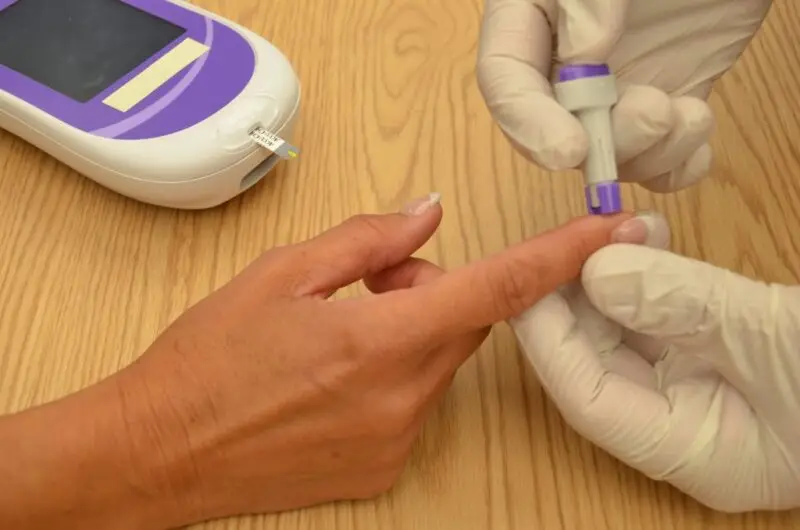
Manufacturers often provide collection devices for obtaining small amounts of blood for point-of-care testing (POCT), such as glucose, hemoglobin A1c, and cholesterol - tests that are typically CLIA-waived and fall within a medical assistant’s scope of practice. Blood is pulled into the collecting device by capillary action after the puncture or applied to a reagent strip that has been inserted into the instrument to be analyzed.
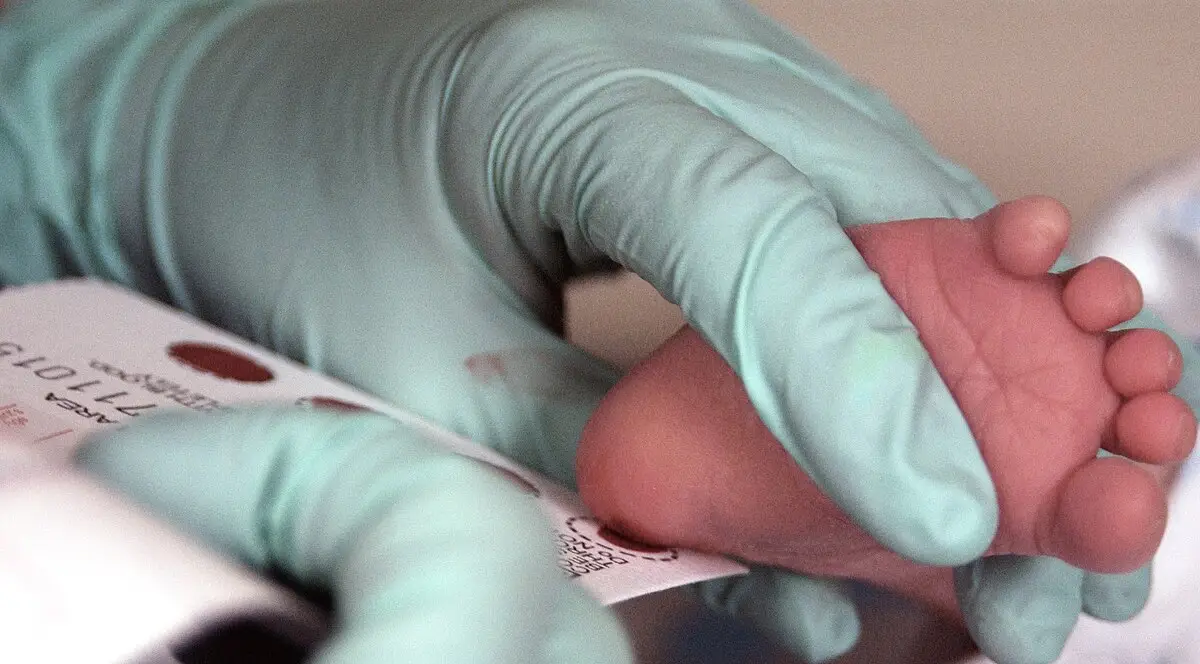
Blood from a capillary puncture may also be deposited on paper cards. The Guthrie card is used to test babies for certain metabolic disorders, such as phenylketonuria (PKU). Blood is deposited into circles on biologically inactive filter paper and is sent to a referral laboratory for analysis within 24 hours of sampling. Federal postal regulations for mailing biohazard material must be followed.
Site selection
In adults and children (older than 1 year), capillary puncture sites include the ring or middle finger. Why do we collect capillary samples only from the middle and ring fingers? The thumb usually is too callused or thick-skinned, and the index finger has nerve endings that make the puncture more painful. The fifth finger (pinky finger) has too little tissue for a successful puncture.
Dermal puncture of an infant should be done on the heel of the foot. A capillary puncture is made on the palmar surface of the finger, near the tip, and slightly to the side of the finger. Punctures should be made across to the whorls of the finger. This helps to create a nice drop of blood to collect. Avoid areas that are callused, scarred, burned, infected, cyanotic, or edematous.
For children younger than 2 years of age, a dermal puncture is performed on the medial or lateral areas of the plantar surface (bottom) of the heel or on the palmar surface of the ring or middle finger. Areas other than these are unsafe, and bone or nerve damage to an infant may occur. Blood flow from an infant’s heel can be increased by applying a warm, moist towel (or other warming device) at a temperature no higher than 108°F (42°C) for 3 to 5 minutes. Never place bandages on the heel or anywhere on infants younger than age 2 because they may peel off and become a choking hazard.
Patient preparation
Preparation for a capillary puncture is similar to that for a venipuncture. Put on a fluid-impermeable lab coat, wash your hands or use hand sanitizer, and wear gloves and protective eyewear.
You must work efficiently when performing a capillary puncture because blood flow stops quickly. Be sure to have the supplies organized and within easy reach. Because you are working with blood that is free flowing, make sure there are spare gloves, extra gauze, and disinfectant nearby. Be prepared if your gloves become contaminated with blood.
If the patient’s hands are excessively soiled, ask the person to wash them before the procedure. If the patient’s hands are cold, warm them in warm water and dry them thoroughly, or ask the person to rub or shake them vigorously. Cleanse the finger well with a 70% alcohol wipe.
Collecting the specimen
The puncture must be on the palm-up surface of the distal fingertip of the middle or ring finger. The puncture should be made across the fingerprint, not parallel to it. Press the lancet firmly against the skin and quickly depress the plunger.
After the skin has been punctured, it is important to wipe away the first drop of blood with gauze. This drop contains tissue fluid that could interfere with test results. Fill the sampling containers according to the manufacturer’s directions. Touch the container to the drop of blood as it is released from the puncture site, but do not touch the skin. If blood flow stops, wiping the site with gauze may restart the flow. After the containers have been filled, ask the patient to apply pressure to the gauze placed over the puncture site. Seal and mix the containers by gently inverting the tubes as recommended by the manufacturer.
Order of draws
The order of draws for capillary punctures is different than phlebotomy. This sequence prevents additive carryover between containers - for example, EDTA from a lavender top can elevate potassium and depress calcium results if it contaminates a tube filled afterward, and clot-activator residue can invalidate a test that requires plasma. A medical assistant should be familiar with the order of draws:
- Capillary blood gas collection tubes: Contain heparin additive. Used for capillary blood gas tests. (Must warm the site before collecting the specimen.)
- Blood smear: Used for hematology blood counts.
- Lavender top: Contains EDTA additive. Used for hematology blood counts.
- Green top: Contains lithium heparin additive. Used for tests that require a heparinized plasma sample.
- Other tubes that contain anticoagulants.
- Red or gold top: Contain a clot activator additive. Used for tests that require a serum sample.
- Red top: Contains no additive. Used for tests that require a serum sample without a clot activator.